


How to Remove Chocolate Stains: The Complete Guide
Your kid just hugged you in a chocolate-covered shirt. Or maybe it was you, eating cake, standing over the couch, and gravity did what gravity does.
Either way, there’s a brown smudge staring back at you now. And you’re wondering if this shirt, or this cushion, is done for.
It’s not. Chocolate stains look scary because they leave such a dark mark, but they’re actually one of the more manageable food stains once you understand what you’re dealing with. You just need the right order of steps, and you need to skip a few “tips” that actually make things worse.
This guide covers every version of this problem. Fresh stains. Dried stains. Clothes, white clothes, cotton, sofas, and carpet. We’ll also answer the question everyone Googles halfway through scrubbing: Are chocolate stains even permanent?
Let’s get into it.
Why Chocolate Stains Are So Hard to Remove
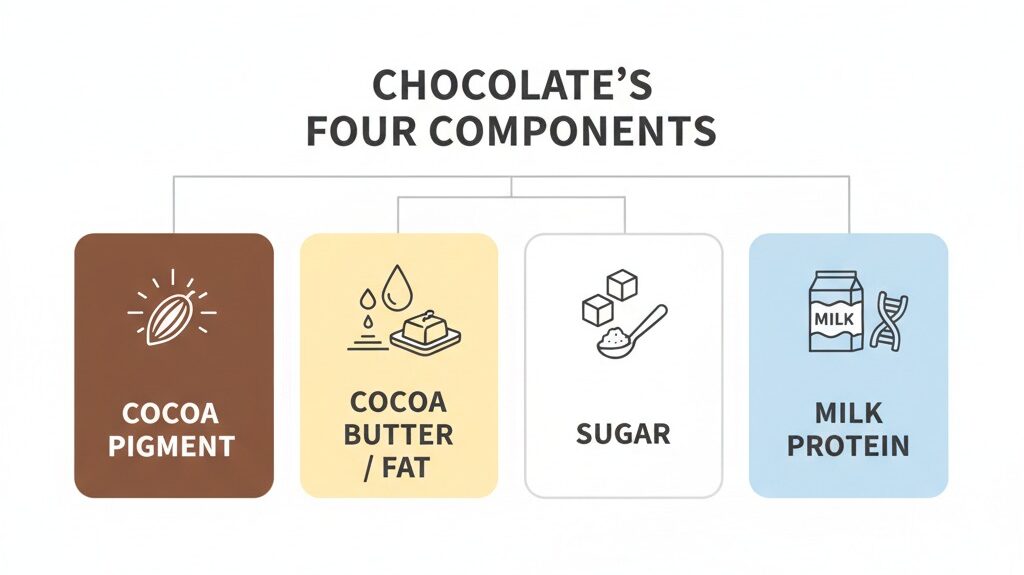
Chocolate is not one simple stain. It’s several stains stacked on top of each other.
Chocolate contains cocoa solids, cocoa butter, sugar, and often milk. That means you’re dealing with a pigment stain, an oil stain, a sugar stain, and a protein stain, all at the same time. Cleaning experts interviewed by Tom’s Guide point out that chocolate’s oil content melts on contact with fabric, then hardens into a greasy base that traps the dark pigment inside the fibers.
That’s why a single cleaning method rarely works on its own. You need cold water to handle the sugar and tannins, then a grease-cutting step for the fat, and sometimes a third step for any remaining pigment.
Here’s the part most people get wrong: heat. Heat is what turns a fixable chocolate stain into a permanent one. Hot water and the dryer both cook the proteins in chocolate, which welds the stain to the fabric fibers. Cold water first, always, no exceptions.
Dark chocolate is the toughest of the bunch. It has the highest concentration of cocoa solids and tannins, which is what leaves that stubborn dark shadow even after the greasy part is gone. Milk and white chocolate contain more fat and sugar, so they leave a stain that feels greasier but often lifts a little more easily once you break down the oil.
What You’ll Need
You probably already own most of this. Nothing here requires a special trip to the store.
| Item | What It’s For |
|---|---|
| Dull knife or spoon | Scraping off excess chocolate |
| Cold water | Flushing the stain from the back |
| Liquid dish soap | Cutting through the fatty, oily residue |
| Liquid laundry detergent | Breaking down protein and sugar |
| White vinegar | Lifting leftover pigment and tannins |
| Baking soda | Absorbing oil on upholstery and carpet |
| Clean white cloths | Blotting without transferring dye from a colored cloth |
| Enzyme-based stain remover (optional) | Best for set-in or old stains |
A quick note before you start. Always test any cleaning solution on a hidden spot first, like an inside seam or the underside of a cushion. This matters even more for colored fabrics and delicate materials like silk or wool.
How to Remove Chocolate Stains from Clothes
This is the process for a fresh chocolate stain on regular clothing, whether it’s a shirt, pants, or a kid’s school uniform. Move fast if you can. Fresh stains come out far more easily than dried ones.
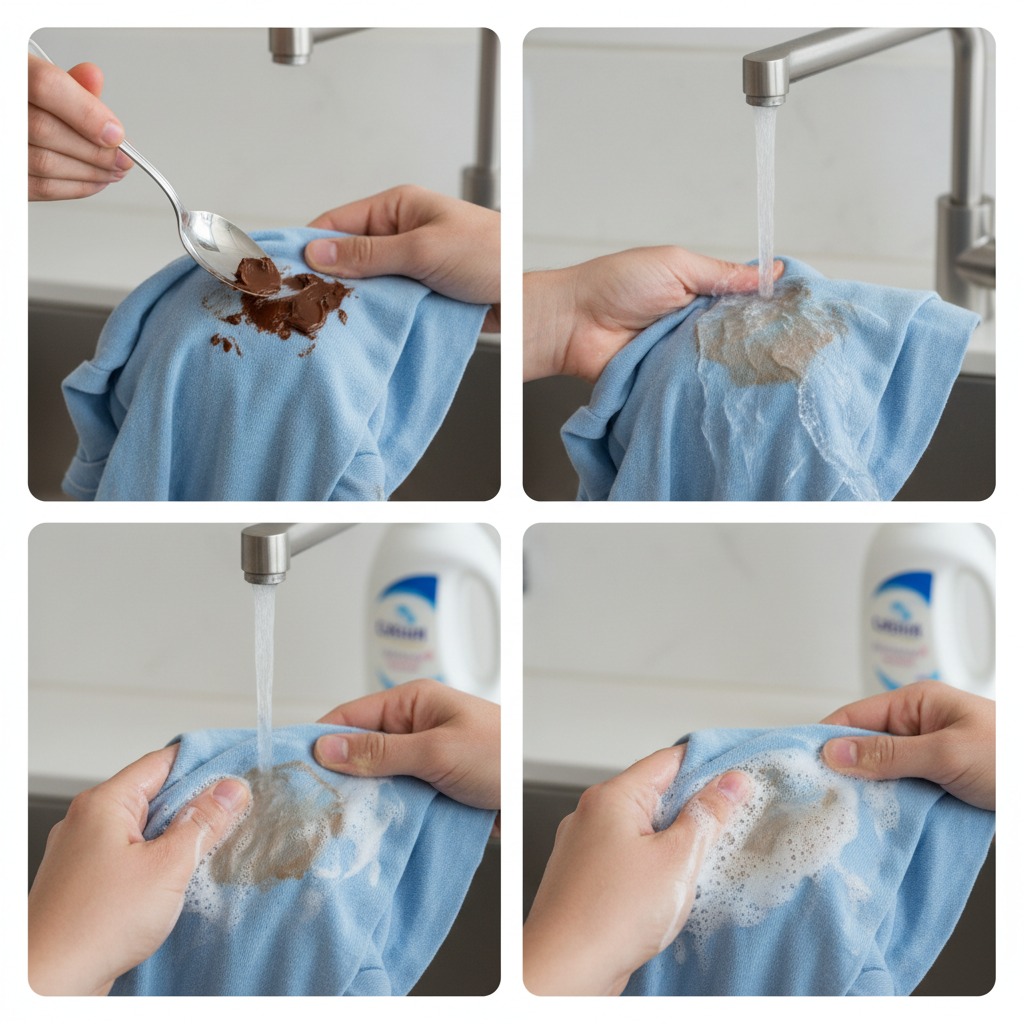
Step 1: Scrape Off the Excess
Use a dull knife or the edge of a spoon to gently lift any solid chocolate sitting on the fabric. Work from the outside of the stain toward the center so you don’t spread it further.
Step 2: Flush the Back of the Fabric with Cold Water
Turn the garment inside out and run cold water through the back of the stain. This pushes the chocolate out and away from the fibers rather than driving it deeper in, which is the opposite of what happens when you rinse from the front. According to Tide’s stain removal guide, hot water at this stage can actually help set the stain, so stick to cold.
Step 3: Apply Liquid Detergent
Rub a small amount of liquid laundry detergent directly into the stain using your fingers or a clean cloth. Work from the outer edge inward. Let it sit for 5 to 10 minutes.
Step 4: Rinse and Check
Rinse the area with cold water and hold it up to the light. If you can still see a shadow of the stain, don’t move on to the dryer yet. Repeat step 3 once more, or move to the enzyme treatment below for tougher marks.
Step 5: Wash as Usual
Once the stain is gone, wash the item according to the care label. Warm water is fine for cotton and polyester at this stage, since the riskiest part of the process is already behind you.
Golden rule: never put the item in the dryer until you’ve confirmed the stain is completely gone. Dryer heat will set anything that’s left, and at that point it becomes a genuinely permanent stain.
How to Get Chocolate Out of Clothes Quickly
Short on time? Here’s the fastest version that still works.
- Scrape off excess chocolate
- Run cold water through the back of the stain for 30 seconds
- Rub in a small amount of dish soap, which cuts grease faster than most laundry detergents
- Let it sit for 5 minutes
- Rinse and toss it in the wash
Dish soap works here because it’s designed to break down fats and oils, which are exactly what’s holding the chocolate pigment to the fabric. It’s not a replacement for laundry detergent on the whole stain, but it’s the fastest way to loosen a fresh spot before you’re out the door.
How to Remove Chocolate Stains from White Clothes
White fabric shows every trace of a chocolate stain, so getting it fully out matters more here than on any other color.
- Scrape away excess chocolate immediately
- Flush the back of the stain with cold water
- Mix 2 parts hydrogen peroxide with 1 part dish soap
- Dab the solution onto the stain with a clean white cloth, working from the outside in
- Let it sit for 5 to 10 minutes
- Rinse thoroughly with cold water
- Wash immediately, as recommended on the care label
Hydrogen peroxide acts as a mild, color-safe bleaching agent, which helps lift the last traces of dark pigment that plain detergent sometimes leaves behind on white fabric. Always spot test first, especially on anything with a printed design or trim, since peroxide can occasionally affect certain dyes.
If any shadow remains after washing, the American Cleaning Institute recommends rewashing with a bleach that’s safe for the specific fabric before drying.
How to Remove Old Chocolate Stains from Colored Clothes
A chocolate stain that’s already dried or has been through the wash once needs a stronger approach. This also applies to colored clothing, where you want to lift the stain without lifting the fabric’s own dye.
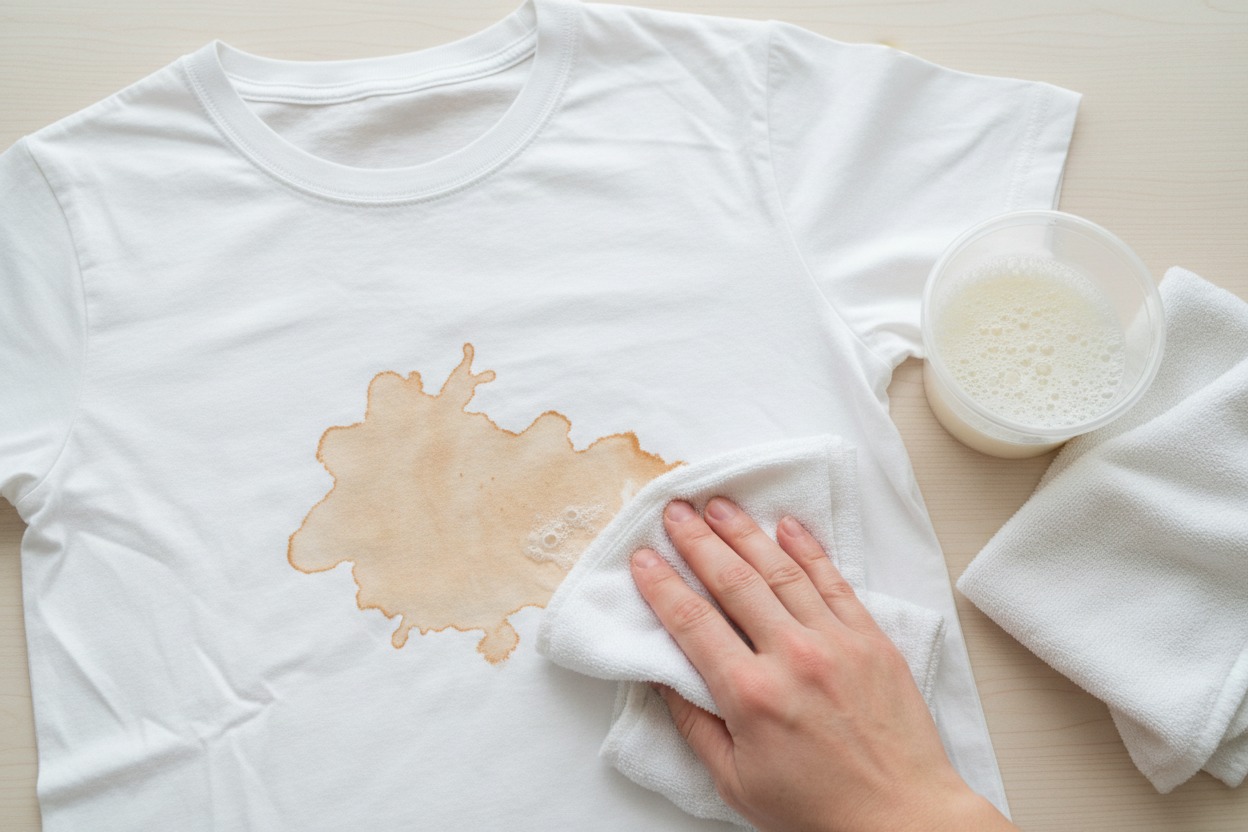
- Scrape off any dried, crusted chocolate with a dull knife
- Soak the garment in a mix of 1 part white vinegar to 2 parts cool water for a few hours, or overnight for a really stubborn mark
- Make a paste using an enzyme-based stain remover and a small amount of water
- Apply the paste directly to the stain and let it sit for 15 to 20 minutes
- Wash in the warmest water the care label allows
Look for a stain remover that lists both lipase and protease enzymes on the label. Those two enzymes are specifically effective at breaking down the fat and protein in chocolate, which is exactly what’s left behind once a stain has dried and set.
Vinegar is doing double duty here. Its mild acidity helps loosen tannins from the cocoa, and it’s gentle enough not to strip color from most fabrics when properly diluted. Still, always spot test on colored garments before soaking the whole item.
Set-in stains sometimes need two full treatment cycles. That’s normal. Check the stain before drying each time, and repeat the process rather than assuming a single wash will finish the job.
How to Remove Chocolate Stains from Cotton
Cotton is one of the more forgiving fabrics when it comes to chocolate, mainly because it can handle both detergent and a warm wash without much risk of damage.
- Scrape off excess chocolate
- Flush the back of the stain with cold water
- Rub liquid detergent into the stain and let it sit for 10 minutes
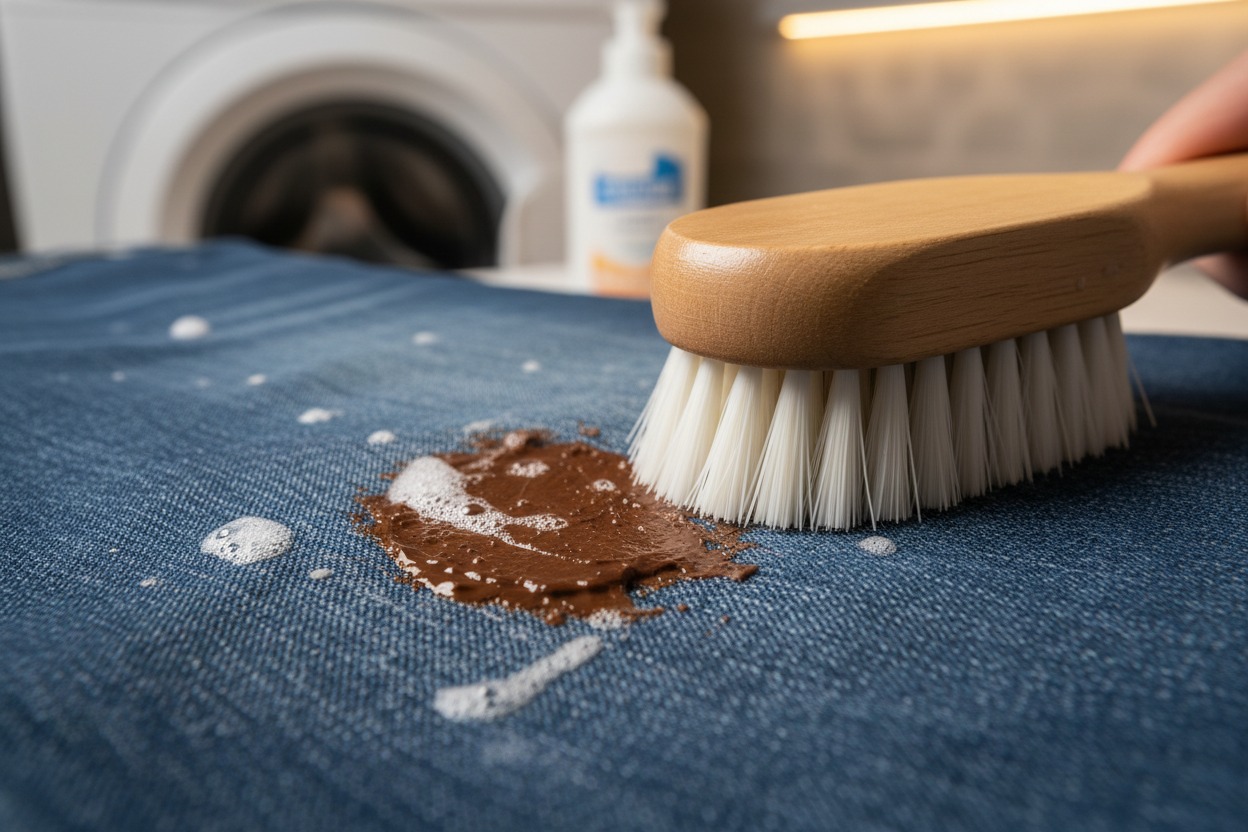
- For denim or heavier cotton weaves, use a soft brush to work the detergent into the fibers before rinsing
- Wash in the warmest water the care label allows once the stain is fully lifted
Cotton’s tighter, more uniform weave means chocolate doesn’t travel as deeply as it does in looser knits, so most cotton stains respond well to a single round of treatment if you catch them early.
How to Remove Chocolate from Fabric Without Washing
Sometimes you can’t just toss something in the machine. Maybe it’s a blazer, a car seat cover, or a fabric item you’re wearing right now at a party.
Here’s how to spot-treat a chocolate stain without a full wash cycle:
- Scrape off any excess chocolate with a spoon or the edge of a card
- Dampen a clean cloth with cold water only, not soaking, just damp
- Blot the stain gently, working from the outside in. Never rub, since rubbing pushes the stain deeper and spreads it across more fabric
- Mix a few drops of dish soap into a small cup of cold water
- Dip a fresh cloth into the solution and blot the stain again
- Use a dry cloth to blot up the moisture and lift the loosened chocolate
- Let the fabric air dry completely before deciding if it needs a full wash later
This method won’t always fully remove a stain on the first try, but it will stop it from setting and often lifts most of the visible mark. It’s the right move when you need a quick fix and a washing machine isn’t an option.
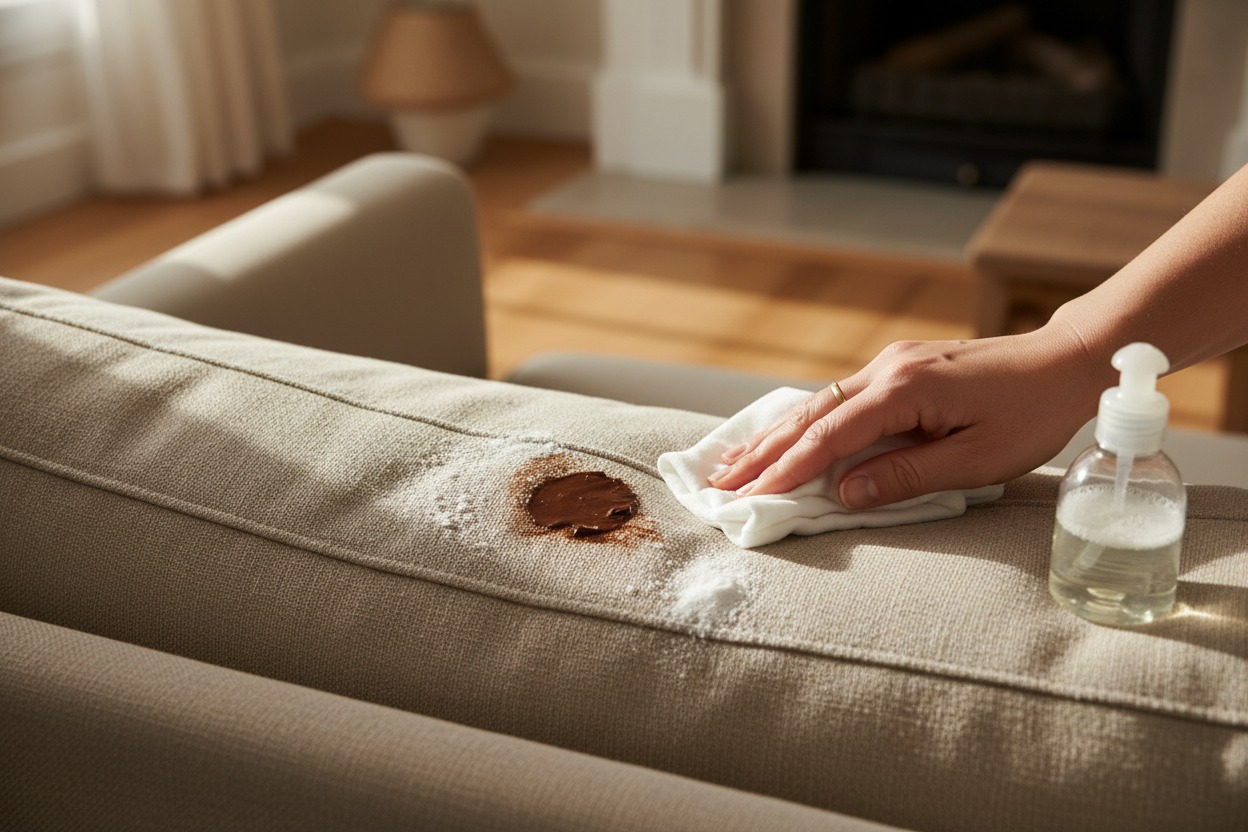
How to Remove Chocolate Stains from a Sofa
Couches and upholstery can’t go in the wash, so the approach has to change. You’re working with what’s already on the surface, and you need to avoid oversaturating the cushion.
- Scrape off any excess chocolate with a plastic spoon or dull knife, being careful not to press it further into the fabric
- Mix 1 tablespoon of liquid dish soap into 2 cups of cold water
- Dampen a clean cloth with the solution, not the fabric itself
- Starting at the outer edge of the stain, gently dab inward
- Rinse by wiping with a clean, damp cloth, then blot dry with a towel
- If any residue remains, apply a few drops of dry-cleaning solvent directly to the spot and blot until it lifts
According to COIT’s upholstery stain guide, sprinkling cornmeal over a stubborn spot can also help absorb both the oil and any leftover moisture. Let it sit for several minutes, then gently brush it away.
One more thing worth knowing. A steam cleaner might seem like the obvious tool here, but avoid it on a fresh chocolate stain. Cleaning professionals quoted by Tom’s Guide warn that steam can drive the stain deeper into the upholstery fibers rather than lifting it out.
If you’re dealing with delicate upholstery like velvet or silk, this is one of the few situations where calling in a professional cleaner genuinely makes sense.
How to Remove Set-In Chocolate Stains from Sofa
A chocolate stain that’s already dried on your couch needs a bit more patience.
- Dampen the area with white vinegar using a clean cloth
- Blot with paper towels to lift as much color as possible
- Sprinkle baking soda over the damp spot and let it sit for 15 to 20 minutes. The baking soda pulls out both the remaining oil and any lingering odor
- Gently brush or vacuum away the baking soda
- Finish with a light pass of upholstery cleaner if any shadow remains
Always check your sofa’s cleaning code first. Fabric tags marked “W” can typically handle water-based solutions like this one. Tags marked “S” mean solvent-only, so skip the water and vinegar and use a dry-cleaning solvent instead. If you’re not sure which code applies, our guide on how to dry clean at home covers how to safely handle solvent-only fabrics without ruining them.
How to Remove Chocolate Stains from Carpet
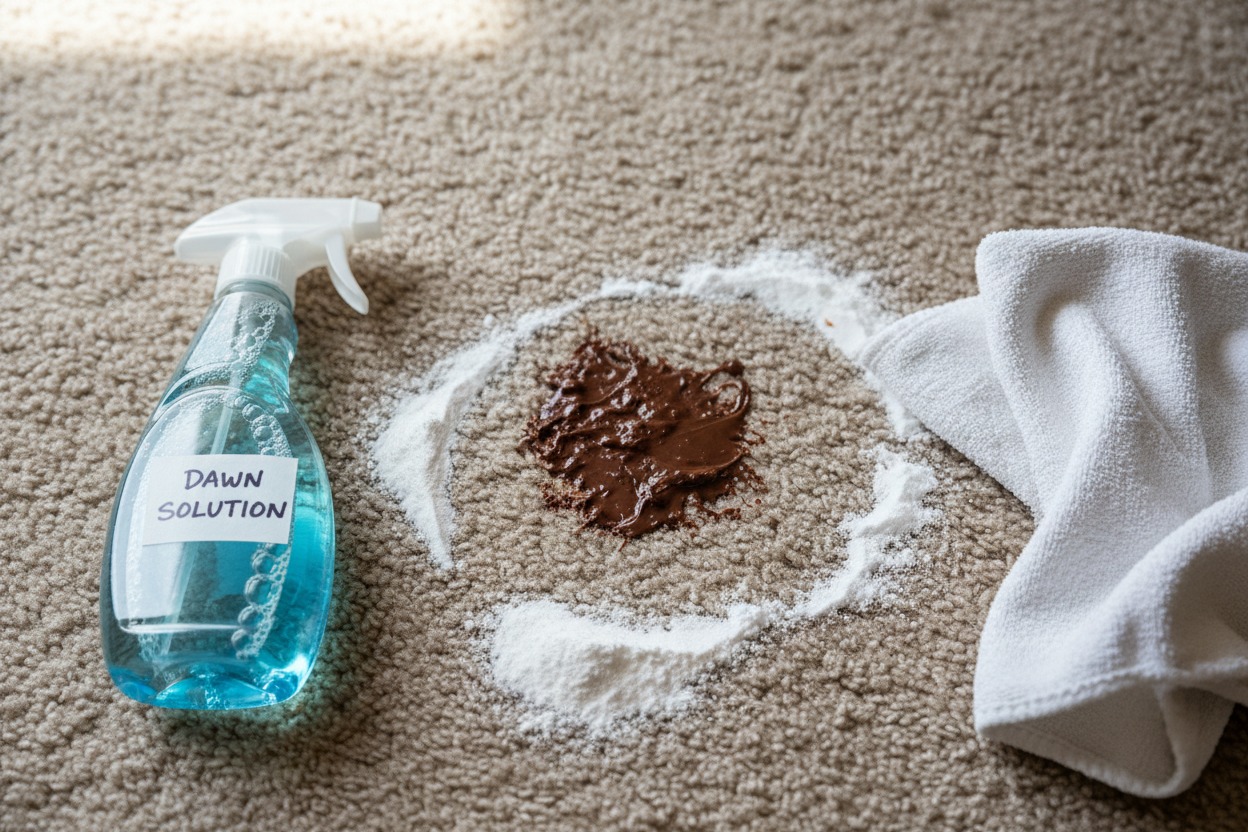
Carpet stains are trickier than fabric ones, mainly because you can’t rinse from the back, and you can’t throw a rug in the washing machine.
- Scrape off any excess chocolate with a spoon, working from the outer edge in
- Blot, don’t rub, the area with a cloth dampened in cold water
- Mix a few drops of dish soap with cold water and blot the stain again, working in small circles from the outside toward the center
- Rinse by blotting with a clean, damp cloth to remove the soap residue
- Press a dry towel firmly over the area to absorb excess moisture
- Sprinkle baking soda or cornstarch over the spot to absorb any remaining oil, let it sit for 10 to 15 minutes, then vacuum it up
For a stain that’s already set into the carpet fibers, follow up with a solution of white vinegar and water, applied the same way, then repeat the dish soap step. Vinegar helps dissolve the sugar and tannin components that plain soap can leave behind.
If your carpet is wool or another delicate natural fiber, skip the vinegar and stick with a carpet-safe enzyme cleaner instead, since acidic solutions can sometimes affect wool’s texture over time.
This process works the same way it does for other stubborn organic stains. If you’ve dealt with a similar situation before, our guide on how to remove grass stains uses many of the same blot-and-absorb techniques, since both stains involve pigment locked in carpet fibers.
Are Chocolate Stains Permanent?
Short answer: usually not, as long as you treat them before they hit heat.
Chocolate stains become permanent almost exclusively because of one mistake: heat exposure before the stain is fully out. That means the dryer, an iron, or hot water is used too early in the process. Heat cooks the proteins in chocolate and bonds them to the fabric fibers in a way that cold water and detergent can no longer undo.
If a stain has already been through the dryer, it’s not automatically hopeless, but it will need repeated treatments with an enzyme-based remover and several soak-and-wash cycles. Some heat-set stains do fade significantly with persistence, even if they don’t disappear completely.
The type of fabric also plays a role. Natural fibers like cotton generally release chocolate more easily than synthetic blends, since synthetic fibers tend to hold onto oil-based stains more stubbornly.
So the real answer is this. Chocolate stains are very rarely permanent if you catch them before drying. They become permanent, or close to it, specifically because of heat and time working against you at the same time.
Chocolate Stain Removal by Fabric Type: Quick Comparison
Different materials need different handling. Here’s a side-by-side look so you don’t have to hunt through the guide above every time.
| Fabric | Safe Water Temp | Best First Step | Avoid |
|---|---|---|---|
| Cotton | Cold, then warm for washing | Detergent + cold rinse | Hot water before the stain is gone |
| White clothes | Cold only | Hydrogen peroxide + dish soap | Chlorine bleach without a color-safe check |
| Denim | Cold, then warm | Detergent + soft brush | Overly aggressive scrubbing |
| Silk / Wool | Cool only, never hot | Gentle enzyme paste, diluted | Oxygen bleach soaks, hot water |
| Upholstery (sofa) | Cold, minimal moisture | Dish soap solution, light blotting | Steam cleaners, soaking the cushion |
| Carpet | Cold | Dish soap + blot, then baking soda | Rubbing, hot water extraction machines |
This table alone can save you a ruined garment. The single biggest variable across every fabric type is the same: keep it cold until the stain is confirmed gone.
Common Mistakes That Turn a Fixable Stain into a Permanent One
Even careful people make these mistakes, usually because the instinct feels right in the moment.
- Rubbing instead of blotting. Rubbing grinds the chocolate deeper into the weave and spreads it outward, giving you a bigger stain instead of a smaller one
- Using hot water first. Hot water melts the fat in chocolate and helps it bond to the fibers faster
- Drying before checking. Even a faint shadow will be set permanently the moment it goes through a hot dryer cycle
- Skipping the spot test. Peroxide, vinegar, and enzyme cleaners can occasionally affect certain dyes or delicate fibers. A 30-second test on a hidden spot prevents a much bigger problem
- Ignoring the care label. Silk, wool, and some blends need a gentler process than cotton or polyester, and using the wrong method can cause more damage than the stain itself
DIY vs Commercial Stain Removers: Pros and Cons
Both approaches work. Which one makes sense depends on how fresh the stain is and what you already have on hand.
DIY methods (dish soap, vinegar, baking soda, detergent)
Pros:
- Already in most kitchens and laundry rooms
- Gentle enough for most fabrics when properly diluted
- No added fragrances or dyes that could interact with a stain
Cons:
- Takes more steps and more patience for set-in stains
- Less consistent on very old or heat-set stains
Commercial enzyme-based stain removers
Pros:
- Formulated specifically to break down fat and protein
- Faster results on dried or set-in chocolate stains
- Good for people who want a one-product solution
Cons:
- Costs more than pantry staples
- Some formulas aren’t safe for delicate fabrics, so always check the label
For a fresh stain, DIY methods are usually enough. For anything that’s already dried or been through a wash cycle, a dedicated enzyme remover with both lipase and protease listed on the label tends to close the gap faster.
Expert Tips to Prevent Chocolate Stains
A little prevention goes a long way, especially around kids, movie nights, and holiday chocolate boxes.
- Keep a stack of napkins or a damp cloth nearby whenever chocolate desserts are served
- Treat any accidental drip within the first few minutes, before it has a chance to dry
- Avoid setting chocolate items directly on fabric surfaces; use a small plate or coaster instead
- Choose darker or patterned upholstery for high-traffic spaces where snacking happens often
- Keep an enzyme-based stain remover stocked in your laundry room so you’re never starting from scratch when a stain does happen
Chocolate Milk and Ice Cream Stains: A Slightly Different Problem
Solid chocolate stains and liquid chocolate stains don’t behave the same way, and most guides lump them together. They shouldn’t be.
Chocolate milk and melted chocolate ice cream spread further and soak in faster than a solid piece of chocolate, since there’s no scraping step to remove bulk material first. That means you’re often dealing with a wider, thinner stain rather than a small, concentrated one.
Here’s the adjusted process:
- Immediately blot up as much liquid as possible with a clean, dry cloth. Press, don’t wipe, so you’re absorbing rather than spreading it
- Rinse the fabric under cold running water from the back, just like a solid chocolate stain
- Soak the item in cold water mixed with a quarter cup of baking soda for at least an hour. Baking soda helps neutralize the milk proteins that plain detergent can struggle with on its own
- Add a few drops of dish soap directly to the stain and gently rub the fabric together
- Rinse again with cold water
- Wash with detergent in the warmest water the care label allows
The milk component is the key difference here. Milk proteins behave much like other dairy stains, so they respond well to an enzyme soak, but they can also curdle and set faster if hot water touches them too early. Treat a chocolate milk stain with the same urgency as a fresh dairy spill, not just a chocolate one.
For carpet or upholstery, the blot-first rule matters even more with liquid chocolate stains, since there’s more moisture that can spread outward or soak deeper into the padding underneath if you wait too long.
Frequently Asked Questions
How do I remove chocolate stains from clothes quickly?
Scrape off the excess, flush the back of the fabric with cold water, rub in a small amount of dish soap, let it sit for 5 minutes, then rinse and wash. This shortened version works well for fresh stains when you’re short on time.
Are chocolate stains permanent?
Not usually. Chocolate stains become difficult or impossible to remove, mainly when they’re exposed to heat, such as the dryer or hot water, before they’re fully treated. Catch it early and stay cold, and most stains come out completely.
Can I remove a chocolate stain without washing the item?
Yes. Scrape off excess chocolate, blot gently with a cold, damp cloth, then follow up with a mild dish soap solution. This works well for spot-treating clothing you’re wearing or items that can’t go through a full wash cycle.
Does vinegar really help with chocolate stains?
Yes. White vinegar helps break down the sugar and tannin components in chocolate that plain soap sometimes leaves behind. It’s especially useful on carpet, upholstery, and set-in stains on colored clothing.
Why does my chocolate stain look lighter but still won’t fully disappear?
A lingering shadow usually means some pigment or tannin is still trapped in the fibers. Repeat the treatment with an enzyme-based stain remover, and avoid the dryer until the mark is completely gone. Some deeply set stains require two full treatment cycles to clear.
Final Thoughts
Chocolate stains look intimidating because of how dark they are, but they’re actually one of the more predictable stains to deal with once you know the order of operations. Scrape first. Stay cold. Cut the grease. Handle the pigment last.
Whether it’s a shirt, a sofa cushion, or a patch of carpet, the same basic logic applies every time. Skip the dryer until you’re sure the stain is gone, and don’t rub when you should be blotting.
If you’re already working through stubborn stains around the house, our guide on how to remove grass stains uses many of the same techniques and is worth bookmarking for the next accident.
Got a stain you’re working on right now? Start with the section that matches your fabric, follow the steps in order, and give it a second round if needed. Most chocolate stains are gone within one wash when you catch them early.