


How to Clean a Weighted Blanket: A Complete Care Guide by Fill Type
There’s a specific kind of guilt that comes with owning a weighted blanket you’re scared to wash.
You bought it because it fixed your sleep. Now it’s been eight, maybe ten weeks. It smells like you, and not in a good way. And every time you think about actually cleaning it, you picture 20 pounds of glass beads exploding through a torn seam mid-spin-cycle, or your washer limping through the rest of its life unbalanced and traumatized.
So it sits there. Getting worse. While you keep sleeping under it anyway, because the alternative, figuring out the actual right way to wash it, feels like more research than the blanket is worth.
Here’s the good news: it’s not actually that complicated. It’s just that most guides treat every weighted blanket the same, when the honest truth is that how to clean a weighted blanket properly depends entirely on what’s inside it. A glass-bead blanket and a sand-filled one are not the same cleaning job, and treating them like they are is exactly how blankets get ruined.
This guide skips the generic advice and walks you through the exact method for your specific filling. Plus what to do when even the manufacturers can’t agree (spoiler: that actually happens more than you’d think).
Why Weighted Blankets Need Different Care Than Regular Bedding
A regular blanket is just fabric. A weighted blanket is a fabric with a very specific structure of internal pockets, each filled with filler material designed to distribute weight evenly across your body.
That construction is what makes them work in the first place. The even, gentle pressure is called deep pressure stimulation, and it’s the same sensation as a firm hug or a swaddle. Research reviewed by the Cleveland Clinic points to improved sleep quality in adults with insomnia after several weeks of regular use, and a peer-reviewed review published on PMC identifies deep-pressure touch as the leading mechanism researchers believe is responsible for the calming effect.
That same careful engineering is exactly why washing it wrong can ruin it. A few things can go sideways in a single wash cycle:
- Filling can shift or clump, throwing off the even weight distribution that made the blanket work.
- Internal seams can tear under the strain of a wet blanket that suddenly weighs even more than its dry weight.
- Plastic pellets can melt if exposed to hot water or high dryer heat.
- Standard home washers can be damaged by the sheer weight and unbalanced load of a soaked weighted blanket.
None of this means you can’t clean one at home. It just means the “throw it in and hope” approach that works for a comforter is a genuinely bad idea here.

Step 1: Check the Care Label Before You Do Anything
This is the step almost everyone skips, and it’s the one that actually determines everything else in this guide.
Your blanket’s care tag (or the manufacturer’s product page, if the tag has worn off) will tell you exactly how it’s meant to be cleaned. According to the Sleep Foundation’s washing guide, most weighted blankets fall into one of these categories:
| Label Says | What It Means | Best Method |
|---|---|---|
| Machine Wash and Dry | Safe for a home washer and dryer on gentle settings | Machine wash, tumble dry low |
| Machine Wash, Air Dry | Washer-safe, but heat-sensitive filling | Machine wash, air dry only |
| Machine Wash, Cover Only | Only the removable cover is washable | Wash cover, spot clean insert |
| Spot Clean or Dry Clean Only | Filling can’t handle water saturation | Spot clean or professional dry clean |
If the tag is missing entirely, check the manufacturer’s website. Most brands, including Bearaby and Gravity Blankets, publish specific care instructions by product line, since the same brand often sells blankets with completely different fillings.
How to Clean a Weighted Blanket in a Washing Machine
If your care label says machine washable, here’s the safest way to actually do it without damaging the blanket or straining your washer.
Which Fillings Are Machine-Wash Safe
Not every weighted blanket filling can handle the agitation of a wash cycle. According to Tide’s laundry guide, blankets filled with plastic pellets, steel shot beads, smooth pebbles, or micro glass beads can generally be washed, whereas organic fillers such as sand, corn, and beans cannot.
Machine-washable fillings:
- Glass beads (most modern weighted blankets use these)
- Plastic or polypropylene pellets
- Steel shot beads
Not machine-washable:
- Sand
- Rice
- Dried beans or corn
Step-by-Step: Machine Washing
- Remove any duvet cover first and wash it separately according to its own label — it’s usually a normal cold-water, gentle-cycle wash.
- Pretreat visible stains. Apply a small amount of liquid detergent directly to the stain and let it sit for about 5 minutes before washing, as recommended in Tide’s step-by-step guide.
- Check your washer’s weight capacity. Weighted blankets typically weigh 10 to 25 pounds dry, and a wet blanket weighs meaningfully more. If your blanket is close to or over your washer’s limit, skip ahead to hand washing instead.
- Wash it alone. Don’t add other laundry to the load — a weighted blanket already uses most of the drum’s capacity, and adding more items risks an unbalanced spin cycle.
- Use cold water on a gentle or delicate cycle. Hot water is one of the fastest ways to damage plastic pellet filling and can shrink cotton or minky outer fabric.
- Choose a mild, bleach-free detergent. Skip fabric softeners entirely. They can build up inside the filling pockets over repeated washes.
- Check the balance before starting. Make sure the blanket is evenly distributed in the drum before you hit start, since a lopsided load is what tends to cause machine strain with heavier bedding.
For blankets over roughly 20 pounds, most cleaning guides, including Star Bright Cleaners’ professional recommendation, suggest using a large-capacity commercial machine at a laundromat rather than a standard home washer, simply because home units aren’t built to handle that much wet weight safely.

How to Clean a Weighted Blanket Without a Washing Machine
If your blanket is too heavy for your washer, has delicate fabric, or you’d simply rather not risk it, hand washing is a completely legitimate option, and for some fillings, it’s actually the recommended method.
Step-by-Step: Hand Washing
- Fill a bathtub or large basin with cold to lukewarm water. Avoid hot water for the same reasons as machine washing.
- Add a small amount of mild, fragrance-free detergent and mix it into the water before adding the blanket.
- Submerge the blanket fully and gently massage the fabric and filling for several minutes, working section by section.
- Drain and refill as needed. Maytag’s care guide recommends draining the dirty water, refreshing it with clean water and a bit more detergent partway through, then repeating the wash steps until the rinse water runs clear.
- Rinse thoroughly. Any leftover detergent residue can attract dirt more quickly next time or irritate your skin if you sleep directly under the blanket.
- Press out excess water gently. Never wring or twist a weighted blanket. This can permanently shift or clump the internal filling. Instead, press down firmly with flat hands or roll it in a large towel to absorb moisture.
How to Wash a Weighted Blanket With Glass Beads
Glass bead blankets are actually one of the more forgiving types to hand-wash, since Whirlpool’s care guide confirms that glass beads hold up well to both water and heat without melting or breaking down the way plastic pellets can.
That said, if you’re specifically looking at how to wash a weighted blanket with glass beads, Reddit-style advice — meaning real-world experiences shared in online communities. The recurring theme tends to be caution around washing machine agitation with heavier glass-bead blankets, since the beads add significant wet weight that can unbalance a standard home washer’s spin cycle, even if the beads themselves survive the water and detergent just fine. The material handles washing well; it’s the sheer weight during the spin cycle that trips people up.
The practical takeaway: if your glass bead blanket is under about 15–20 pounds and fits your washer’s capacity comfortably, machine washing on a gentle cold cycle is fine, as confirmed by Gravity Blankets’ own washing guide. If it’s heavier than that, hand washing avoids the spin-cycle imbalance altogether.
How to Wash a Weighted Blanket That Says Spot Clean Only
Some blankets, especially those with delicate outer fabric like silk, eco-velvet, or wool blends, or those filled with sensitive natural materials, are labeled spot clean or dry clean only. Trying to fully submerge or machine wash one of these can permanently damage the fabric or cause the filling to clump.
Here’s how to spot-clean it properly:
- Blot, don’t rub. Use a clean, damp cloth to blot the stained area rather than scrubbing, which can push the stain deeper into the fibers.
- Apply a small amount of mild detergent directly to the stain and gently work it in with your fingers or a soft-bristled brush.
- Let it sit for 10–15 minutes. This gives the detergent time to break down the stain without needing aggressive scrubbing.
- Blot with a clean, damp cloth to lift the detergent and loosen the stain.
- Air dry completely before using the blanket again. A damp spot on a spot-clean-only blanket is more prone to developing a musty smell than one that’s been fully rinsed.
For blankets with a removable duvet-style cover, it’s worth washing the cover far more often than the insert itself. Since the cover acts as the first barrier against body oils and sweat, Star Bright Cleaners recommends washing it every one to two weeks, even if the insert itself only needs attention every couple of months.
If you’re dealing with a stain on the cover fabric specifically, rather than the filled insert, our guide to how to remove mildew smell from towel covers the same detergent-and-air-dry principles that apply here, especially if the blanket has picked up a musty smell from being left slightly damp.
How to Wash a Weighted Blanket With Sand
Sand-filled weighted blankets are the trickiest category, and if you’ve searched how to wash weighted blanket with sand, the short answer is: you generally can’t, at least not by fully washing it.
Sand, along with other organic or granular natural fillers like rice, corn, and dried beans, doesn’t hold up to water exposure. According to Homeaglow’s washing guide, sand-filled blankets should be spot-cleaned and air-dried only. Never submerged or machine-washed.
Here’s why this matters more than it might seem:
- Sand can clump when wet and won’t fully dry out again inside a sealed fabric pocket, leading to mold or mildew growth inside the blanket itself.
- Rice, corn, and beans can decompose if they absorb moisture and remain damp, since they’re organic material rather than inert minerals or plastics.
- Once clumped, filling can’t be redistributed the way loose beads or pellets can be gently massaged back into place.
If your sand-filled blanket needs more than a quick spot clean, like if it has a strong smell or a big stain, it’s usually safer to get it professionally dry cleaned. This method avoids using water. We’ll explain when this is the best choice next.
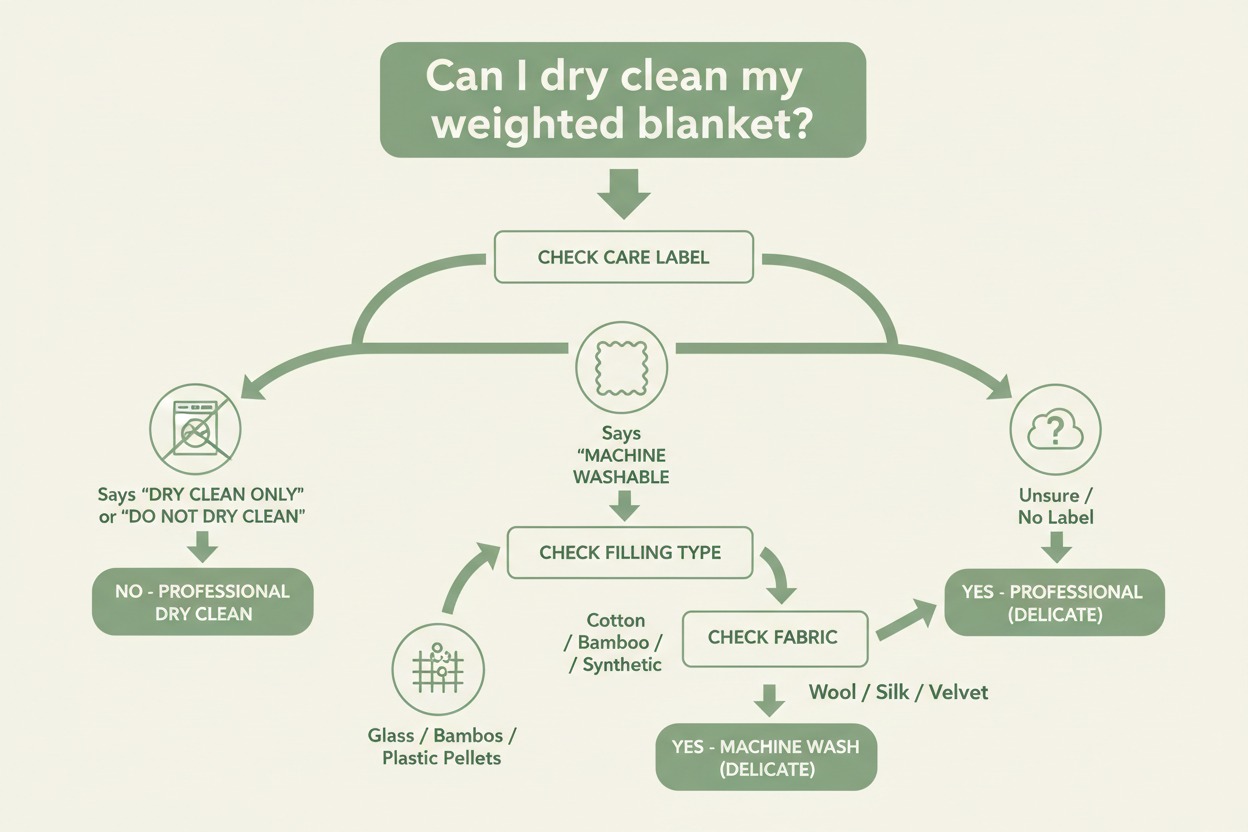
Can You Dry Clean a Weighted Blanket?
This is genuinely one of the more confusing questions in weighted blanket care, because manufacturer advice is split.
Some brands actively recommend it. Puffy’s guide to weighted blanket care states that professional dry cleaning is a reliable method for removing stains and odors without the water and agitation that can shift internal filling, and notes typical costs run between $30 and $60, depending on size and condition.
Others advise against it. Bearaby’s care guide recommends avoiding dry cleaning unless the manufacturer specifically approves it, as the solvents used in the dry cleaning process can damage certain fabrics or filler materials.
And Whirlpool’s care guide splits the difference: it recommends dry cleaning specifically for blankets filled with natural fibers like sand, rice, or beans, the exact fillings that can’t handle water, while suggesting machine or hand washing for glass, plastic, or steel-filled blankets instead.
So who’s right? Honestly, all three, depending on your specific blanket. Here’s the practical way to decide:
- If your care tag explicitly says dry clean only, follow it. This is almost always the case for silk, eco-velvet, wool, or organic-fill blankets.
- If your filling is sand, rice, beans, or corn, dry cleaning (or careful spot cleaning) is safer than risking water damage to the filling.
- If your filling is glass beads, plastic pellets, or steel shot, and the fabric is cotton or polyester, you generally don’t need dry cleaning at all — machine or hand washing works fine and costs nothing extra.
- When in doubt, call the manufacturer or check their website directly, since this is one area where guides genuinely disagree, and your specific blanket’s construction is what actually matters.
How to Dry a Weighted Blanket
Drying is where a lot of people rush and undo all the careful work from the wash step. Weighted blankets take much longer to dry than regular bedding, and getting them wrong risks mildew, uneven filling distribution, or damaged fabric.
Air Drying (Usually the Safer Option)
- Lay the blanket flat on a clean surface, a drying rack, or a sturdy clothesline — avoid hanging it if the fabric or stitching could stretch under the wet weight.
- Spread the filling evenly by gently smoothing the blanket with your hands before it starts to dry.
- Turn it every four to six hours so both sides dry evenly and the filling doesn’t settle unevenly on one side.
- Expect this to take 24–48 hours, according to Tide’s drying guidance. Weighted blankets simply hold more moisture than standard bedding because of the density of the filling.
Machine Drying (If Your Label Allows It)
- Check the care tag first. Not every washable blanket is safe for the dryer, especially those with plastic pellet fillings that can soften or melt under heat.
- Use a low or no-heat setting only. High heat is one of the most common causes of permanent damage to weighted blanket filling.
- Empty the lint trap first so the dryer runs efficiently with the extra load.
- Make sure the blanket has room to tumble. A cramped drum prevents even drying and can strain the machine.
- Stop and fluff periodically. Pausing the cycle every 20–30 minutes to redistribute the filling by hand helps prevent clumping, a tip echoed in Maytag’s drying instructions.
Whichever method you use, make sure the blanket is completely dry before folding it away or using it again. A blanket that feels dry on the surface but is still damp inside the filling pockets is a near-guaranteed path to a musty smell or mold. The same issue covered in our guide on how to remove mildew smell from towels, where trapped moisture is almost always the root cause.
Cleaning Method by Fill Type: Quick Reference Table
Here’s a single table pulling together everything above, so you can check your blanket’s fill type and know exactly what to do without re-reading the whole guide.
| Filling Type | Machine Wash | Hand Wash | Dry Clean | Best Drying Method |
|---|---|---|---|---|
| Glass beads | Yes (check weight limit) | Yes | Optional | Air dry or low heat |
| Plastic/poly pellets | Yes, cold water only | Yes | Not recommended | Air dry preferred |
| Steel shot beads | Yes, if within capacity | Yes | Optional | Air dry |
| Smooth pebbles | Generally hand wash only | Yes | Optional | Air dry only |
| Sand | No | Spot clean only | Recommended | Air dry (spot areas only) |
| Rice/beans / corn | No | Spot clean only | Recommended | Air dry (spot areas only) |
| Silk / eco-velvet outer fabric | No | Spot clean only | Recommended | Air dry only |
Expert Tips for Keeping Your Weighted Blanket Fresh Longer
- Use a removable duvet cover. This is genuinely the single biggest thing you can do — it means you’re washing a lightweight, easy cover regularly instead of the heavy-filled insert, which extends the time between full deep cleans significantly.
- Wash the insert only every 1–2 months. Unless there’s a spill or heavy daily use, most care guides, including Sleep Foundation’s, agree that weighted blankets simply don’t need the frequent washing that sheets or pillowcases do.
- Treat stains immediately. A fresh stain lifts with a quick spot clean; a set-in one often needs a full wash cycle.
- Never skip the balance check before a machine wash. An unevenly loaded washer is the most common cause of both washer strain and uneven cleaning results.
- Store it fully dry. Folding away a weighted blanket that’s even slightly damp inside is one of the fastest ways to develop a musty smell that’s much harder to remove than the original dirt would have been.
Pros and Cons of Each Cleaning Method
| Method | Pros | Cons |
|---|---|---|
| Machine wash | Fast, low effort, thorough | Risk of machine strain with heavy blankets; not safe for all fillings |
| Hand wash | Gentle, works for most fillings, no machine weight limit | Time-consuming; requires a large basin or tub |
| Spot clean | Safest for delicate or organic fillings; quick | Doesn’t fully clean the entire blanket |
| Professional dry cleaning | No water risk, handles delicate fabric well | Costs $30–$60 per clean; not needed for every filling type |
Common Mistakes That Damage Weighted Blankets
- Skipping the care label entirely. This single step prevents most of the damage covered in this guide.
- Using hot water at any stage. It can shrink fabric, melt plastic pellet filling, and set stains rather than remove them.
- Wringing or twisting the blanket to remove water. This is one of the fastest ways to permanently clamp the filling.
- Overloading the washer with other laundry. A weighted blanket needs the drum mostly to itself for a balanced, effective wash.
- Drying at high heat to save time. It might dry faster, but it risks the exact filling damage you were trying to avoid by hand washing in the first place.
- Washing sand or organic-fill blankets like a regular bead-filled one. These simply cannot be treated the same way, no matter how tempting the shortcut looks.
How Often Should You Actually Wash a Weighted Blanket?
Unlike sheets, which most experts recommend washing weekly, weighted blankets don’t need nearly that much attention. General guidance across manufacturers and cleaning sources lands in a similar range:
- Every 1–2 months for regular nightly use, assuming you’re using a removable cover.
- More frequently, if you or a household member has allergies, asthma, or other respiratory sensitivities.
- Immediately for visible stains or spills, rather than waiting for a scheduled wash.
- Less often, if the blanket is used occasionally rather than every night, every few months is generally sufficient.
Washing more than necessary isn’t actually better for the blanket. Each wash cycle puts some stress on both the fabric and filling, so a duvet cover that lets you stretch out the time between full washes genuinely extends the blanket’s lifespan.
Frequently Asked Questions
Can you put a weighted blanket in the washing machine?
Yes, if the care label allows it and the filling is glass beads, plastic pellets, or steel shot. Check your washer’s weight capacity first, wash it alone on a cold, gentle cycle, and avoid bleach or fabric softener.
How do I clean a weighted blanket without a washing machine?
Hand wash it in a bathtub or large basin using cold water and a mild detergent. Submerge and gently massage the fabric, rinse until the water runs clear, then press out excess water without wringing, and air-dry flat.
Is it safe to wash a weighted blanket with glass beads?
Generally, yes. Glass beads handle water and heat well without melting or breaking down. The main concern is weight, not the beads themselves: a heavier glass-bead blanket can unbalance a standard home washer’s spin cycle, so hand washing is worth considering for blankets over roughly 20 pounds.
Can you dry-clean a weighted blanket filled with sand?
Yes, and for sand-filled blankets, dry cleaning or careful spot cleaning is recommended, since sand can clump or promote mold growth if it gets fully saturated with water and doesn’t dry out completely.
How long does it take a weighted blanket to dry?
Air drying typically takes 24 to 48 hours because the dense filling holds significantly more moisture than standard bedding. If your care label allows machine drying, use a low-heat setting and expect a shorter but still lengthy cycle, pausing periodically to fluff and redistribute the filling.
Final Thoughts
Cleaning a weighted blanket isn’t complicated once you know what’s actually inside it. Check the label, match your method to the filling, skip the hot water and the dryer’s high heat setting, and give it the time it needs to dry all the way through.
Do that, and there’s no reason a weighted blanket can’t stay fresh and fully functional for years, without ever risking the deep-pressure comfort that made you want one in the first place.
If your blanket picks up a musty smell after a wash, that’s almost always a drying issue rather than a washing one, our guide to how to remove mildew smell from towels walks through exactly how to fix and prevent it. And for anything with a “dry clean only” tag sitting in your closet, our how to dry clean at home guide covers which items are safe to try yourself first. For more guides like this one, browse our full Cleaning category.