


Upgrading to Energy-Efficient Heating and Cooling Systems: Introduction
Are you tired of seasonal allergies making your Georgia home feel less like a sanctuary and more like a sneeze-inducing zone? We understand the struggle. With indoor air often being two to five times more polluted than outside, finding effective relief is crucial for our well-being. Many of us spend up to 90% of our time indoors, taking thousands of breaths daily. This makes indoor air quality a top health concern, especially for allergy sufferers. This article will help you navigate the choices between air purification and filtration, exploring how Upgrading to Energy-Efficient Heating and Cooling Systems can significantly improve your home’s environment.
To learn more about comprehensive home comfort solutions, visit our main HVAC services page. For immediate assistance with your air quality needs, please contact us today.
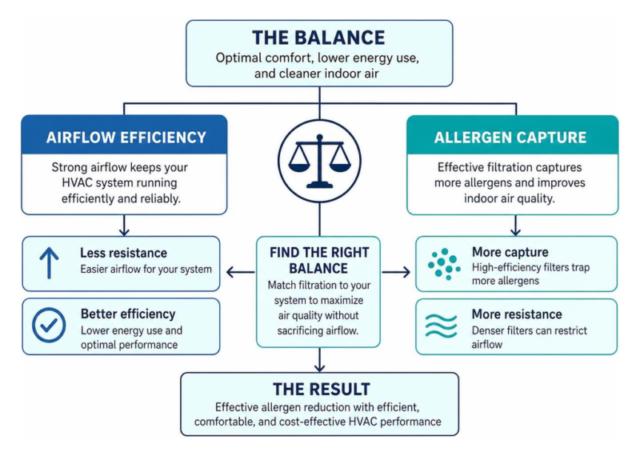
Indoor air quality, energy consumption, ducted systems, and allergen reduction are all interconnected within our homes. Achieving optimal indoor air quality for allergy relief often involves a delicate balance between maximizing allergen capture and maintaining efficient airflow through your heating and cooling system. This balance is critical because while higher efficiency filtration can trap more particles, it can also increase resistance to airflow, potentially impacting your system’s performance and energy use.
Why Upgrade to Modern Energy-Efficient Heating and Cooling Systems?
Upgrading to a modern, energy-efficient heating and cooling system offers numerous benefits beyond just comfort. These systems are designed with advanced energy ratings, which translate directly into lower operating costs for homeowners. Beyond the immediate savings, they also contribute significantly to indoor air quality by integrating more effectively with high-performance filtration options. Older systems might struggle with the increased airflow resistance that comes with denser, more effective filters, leading to reduced system longevity and higher energy bills. Modern units, however, are often built to handle these demands, ensuring a harmonious balance between efficiency and air cleanliness.
If high energy bills, uneven heating, frequent repairs, or declining performance are influencing your decision, review these signs it is time to replace your furnace before choosing a new system.
Balancing Energy Savings and Indoor Air Quality
The pursuit of thermal comfort in our homes often intersects with the challenge of indoor pollution. Particulate matter, including allergens like pollen, pet dander, and dust mite debris, can circulate freely, impacting our health. As of August 2026, HVAC standards continue to evolve, pushing for greater energy efficiency. This means that newer systems are not only designed to heat and cool your home more effectively but also to work seamlessly with improved air quality solutions. For allergy sufferers, this balance is crucial. We want a system that can effectively filter out irritants without becoming an energy hog or prematurely wearing out due to strain.
Consider the following comparison of how different HVAC systems manage airflow and allergen capture:
| Feature | Standard HVAC System (Older) | High-Efficiency HVAC System (Modern) |
| Energy Rating | Lower SEER/HSPF | Higher SEER/HSPF |
| Operating Cost | Higher | Lower |
| Airflow Resistance (with high-MERV filter) | Potentially High (strain on blower) | Managed (designed for higher static pressure) |
| System Longevity | Reduced with high-MERV filters | Enhanced, even with high-MERV filters |
| Allergen Capture Potential | Limited by filter compatibility | High, compatible with advanced filters |
| Noise Level | Often louder | Quieter operation |
The Role of High-MERV Filtration in System Performance
The Minimum Efficiency Reporting Value (MERV) rates a filter’s ability to capture airborne particles. For allergy sufferers, MERV 11-13 filters are often recommended for whole-house HVAC systems. These filters can capture a significant percentage of particles between 0.3 and 10.0 microns, including most pollen, pet dander, mold spores, and dust mite allergens. Specifically, MERV 13 filters capture between 75% and 85% of particles between 0.3 and 1.0 microns, and up to 90% of particles between 1.0 and 3.0 microns.
However, higher MERV ratings mean denser filter material, which can lead to increased pressure drop across the filter. In older HVAC systems, this higher static pressure can put a strain on the blower motors, potentially reducing efficiency, increasing energy consumption, and shortening the system’s lifespan. Modern, energy-efficient HVAC units are often equipped with variable-speed blower motors designed to handle this increased resistance more effectively, maintaining optimal airflow without excessive energy use. Regular filter replacement schedules—typically every one to three months, depending on household conditions and filter type—are paramount to maintaining both air quality and system performance. Neglecting this can turn your HVAC system into an allergen reservoir, recirculating pollutants rather than removing them.
Air Purification vs. Filtration in HVAC Performance
When addressing indoor air quality for allergy relief, we often encounter two primary approaches: air filtration and air purification. Air filtration primarily involves mechanical filtration, where airborne particles are physically trapped by a filter medium. This is the function of the filters in your HVAC system or a standalone HEPA unit. Air purification, on the other hand, often involves active processes that neutralize or destroy pollutants, which can include gaseous pollutants, odors, and even microorganisms, in addition to particles.
While filters excel at particle trapping, purifiers often employ additional technologies like UV-C light or activated carbon to address a broader spectrum of contaminants. For portable room air cleaners, effectiveness is often measured by their Clean Air Delivery Rate (CADR), which indicates how quickly the unit removes smoke, pollen, and dust from a room.
Integrating Advanced Filters with Energy-Efficient Heating and Cooling Systems
For whole-house allergy relief, integrating advanced filters into your HVAC system is a foundational step. High-efficiency whole-house HVAC filtration (MERV 11-13) can significantly reduce indoor mass concentrations of allergens by up to 60%. These filters work by trapping particles as air circulates through your ductwork. However, as we discussed, higher MERV filters can increase static pressure within the system. Modern energy-efficient HVAC systems are better equipped to handle this, often featuring robust blower motors and designs that minimize the impact on airflow.
True HEPA filters, which capture 99.97% of particles 0.3 microns and larger, are considered the gold standard for allergen capture. While full HEPA filtration is rarely practical for an entire HVAC system due to extreme pressure drop, high-MERV filters (like MERV 14-16) can approach HEPA-level efficiency for many common allergens. For comprehensive air quality solutions that integrate seamlessly with your heating and cooling infrastructure, we recommend consulting with professionals who offer expert heating and cooling services. They can assess your specific system and recommend the best filtration strategy to maximize allergen capture without compromising efficiency.
Active Air Purification vs. Passive Mechanical Filtration
The distinction between active air purification and passive mechanical filtration is crucial for allergy sufferers. Passive mechanical filtration, primarily through HEPA or high-MERV filters, physically captures particles like pollen, pet dander, and dust mites. This is highly effective for particulate allergens.
Active air purification, however, goes a step further. Technologies like UV-C light can kill bacteria, viruses, and mold spores as air passes through the system. Activated carbon filters are excellent at adsorbing gaseous pollutants, Volatile Organic Compounds (VOCs), and odors that mechanical filters cannot trap. Some purifiers also use ionization, where charged particles clump together, making them easier for filters to capture. However, be cautious with certain active purification methods.
Some older or poorly designed ionizers can produce ozone, a known lung irritant that can worsen respiratory symptoms, especially for those with asthma or allergies. We strongly advise avoiding air cleaners that produce ozone. Always check for certifications like CARB (California Air Resources Board) which ensure low ozone emissions from ionizers.
For allergy relief, combining these approaches often yields the best results. Filtration handles the physical particles, while appropriate purification technologies can address biological contaminants and chemical irritants.
Optimizing Whole-House Efficiency and Allergy Control
Achieving optimal whole-house efficiency and allergy control requires a multi-faceted approach that extends beyond just your HVAC system. Comprehensive environmental control practices are proven to be more effective than single interventions for managing allergic respiratory diseases. This includes source reduction, such as regularly cleaning to minimize dust and pet dander, and ensuring proper air sealing in your home to prevent outdoor allergens from infiltrating. The goal is to create a clean air delivery system throughout your entire living space.
Managing Humidity with Energy-Efficient Heating and Cooling Systems
Indoor humidity plays a significant role in allergen proliferation. Dust mites, a major allergen, thrive in warm, humid conditions, particularly when relative humidity levels exceed 50%. Mold spores also flourish in moist environments. Energy-efficient heating and cooling systems, especially those with advanced dehumidification cycles, can help maintain optimal indoor humidity levels, ideally between 30% and 55%.
In humid climates like Georgia, a well-functioning air conditioning system inherently removes some moisture from the air. However, for homes with persistent humidity issues, a dedicated whole-house dehumidifier integrated with your HVAC system can be highly beneficial. These systems often work more efficiently at moisture removal than simply over-cooling your home with the AC. Using a humidistat to monitor and control humidity levels allows for precise management, preventing the conditions that allow dust mites and mold to thrive, thus reducing allergy triggers. Conversely, in drier seasons, a whole-house humidifier might be considered, but caution is advised to prevent over-humidification, which can lead back to mold and dust mite problems.
Ductwork Integrity and Maintenance Best Practices
The effectiveness of any air filtration or purification system is heavily dependent on the integrity of your home’s ductwork. Even the most advanced filters cannot fully protect you if airborne allergens and pollutants bypass them through leaky ducts. Duct leakage can draw in unfiltered air from attics, crawl spaces, and wall cavities, introducing dust, mold spores, and other irritants directly into your living spaces.
Properly sealed and insulated ductwork is crucial for both energy efficiency and indoor air quality. It prevents conditioned air from escaping and unconditioned, unfiltered air from entering the system. Regular preventative maintenance, including seasonal inspections of your HVAC system and ductwork, can identify and address issues like leaks, disconnections, or excessive dust buildup. Poorly maintained systems can become reservoirs for allergens, recirculating them throughout your home. Ensuring your filters fit snugly and are replaced regularly prevents airflow bypass around the filter, maximizing their effectiveness.
Frequently Asked Questions About HVAC Upgrades and Air Quality
How do high-efficiency HVAC filters affect energy consumption?
High-efficiency HVAC filters, particularly those with MERV ratings of 11 or higher, are denser than standard filters, which means they create more resistance to airflow. This increased resistance, known as static pressure, requires your HVAC system’s blower motor to work harder to push air through the system. In older or less efficient systems, this can lead to increased energy consumption and higher energy bills, as the motor draws more power.
However, modern energy-efficient HVAC systems are often designed with variable-speed blowers that can adjust their speed to compensate for increased static pressure. This allows them to maintain consistent airflow and efficiency even with high-MERV filters, minimizing the impact on energy consumption. Regular filter replacement is still key, as a clogged high-efficiency filter will significantly increase static pressure and energy use.
Which is better for allergies: air purifiers or whole-house filtration?
For allergy relief, both whole-house filtration and portable room air purifiers have their merits, and often, a combination approach is most effective. Whole-house HVAC filtration (using MERV 11-13 filters) provides a baseline level of air cleaning throughout your entire home, continuously removing allergens as air circulates. This is particularly effective for reducing overall allergen load.
However, portable HEPA units or “sleep breathing zone” purifiers offer targeted, higher-efficiency cleaning in specific areas, such as a bedroom where an allergy sufferer spends a significant amount of time. These units often feature true HEPA filters, capable of capturing 99.97% of particles 0.3 microns and larger, and can achieve very high Clean Air Delivery Rates (CADR) for a single room.
Scientific studies have shown that while high-efficiency whole-house filtration is effective for overall particulate reduction, portable room air cleaners can significantly reduce particulate matter concentrations (30% to 70%) in the specific rooms where they are used. For individuals with severe allergies, the “combination filtration” approach—using high-efficiency whole-house HVAC filtration alongside a portable HEPA air purifier in the bedroom—is often recommended as the most comprehensive and cost-effective strategy.
When should homeowners consider replacing an aging heating and cooling system?
Homeowners should consider replacing an aging heating and cooling system when several factors align. System age is a primary indicator; most HVAC systems have a lifespan of 10-15 years for air conditioners and heat pumps, and 15-20 years for furnaces. If your system is approaching or exceeding these age ranges, it’s likely operating less efficiently. Frequent repairs are another strong sign. If you’re consistently paying for repairs, the cumulative cost might soon outweigh the investment in a new, more reliable unit.
Rising energy bills, despite consistent usage, often indicate that an older system is losing its efficiency and working harder to maintain desired temperatures. Finally, if you’re experiencing persistent allergen buildup or poor indoor air quality that your current system struggles to address, an upgrade can provide the opportunity to integrate advanced filtration and purification technologies more effectively. A new, energy-efficient system will not only reduce your carbon footprint and energy costs but also significantly improve your home’s overall comfort and air quality for allergy relief.
Conclusion
Navigating air purification versus filtration for allergy relief can seem complex, but understanding the differences and how they integrate with modern HVAC systems empowers us to make informed decisions. We’ve seen that while both air filtration and purification play vital roles, their combined strength offers the most comprehensive defense against indoor allergens. High-MERV whole-house filtration provides a broad sweep of your living spaces, while targeted HEPA purifiers offer intense cleaning in critical areas like bedrooms.
Upgrading to energy-efficient heating and cooling systems is not just about saving on energy bills; it’s an investment in your family’s health and comfort. These modern systems are better equipped to handle advanced filtration, manage humidity, and provide the consistent airflow necessary for truly clean air. Regular maintenance, proper ductwork, and a proactive approach to indoor air quality are essential components of this strategy.
Achieving a healthier living environment for allergy sufferers in high-allergen areas like Georgia involves a holistic approach: combining robust air filtration and purification, maintaining optimal humidity, addressing source reduction, and ensuring your HVAC system is operating at peak efficiency. If, despite these measures, allergy symptoms persist or worsen, it’s crucial to consult a doctor or allergist. They can provide personalized medical advice and help identify specific triggers that might require additional interventions. By embracing these strategies, we can transform our homes into havens of clean, comfortable air, allowing everyone to breathe easier.