



If you have ever stood in a nursery aisle trying to remember the name of that fragrant purple bulb your grandmother grew, you already know how satisfying it is to finally match a flower to its name. Flowers that start with f cover an unusually wide range, from tiny spring bulbs to towering flowering trees, and I have grown a good chunk of them in my own backyard over the years. This guide walks you through the prettiest, most useful, and even a few rare flowers that start with f, along with the mistakes I made so you do not have to repeat them.
I am picking up where I left off in my flowers that start with e guide, and honestly, the letter F might be my favorite one to write about. It gave me foxglove, which nearly took over one whole bed of mine, and feverfew, which I originally planted by accident and now cannot imagine my garden without.
A Quick List of Flowers Names That Start With F
Before we go deep on each one, here is a fast reference table. I built this list from flowers I have either grown, researched extensively, or seen thriving in botanical collections, so you get a real mix of annuals, perennials, bulbs, shrubs, and even a few trees.
| # | Flower Name | Type | Bloom Season |
|---|---|---|---|
| 1 | Freesia | Bulb | Spring |
| 2 | Fuchsia | Perennial/Shrub | Spring to Fall |
| 3 | Foxglove | Biennial | Late Spring |
| 4 | Forsythia | Shrub | Early Spring |
| 5 | Feverfew | Perennial Herb | Summer |
| 6 | Four O’Clock | Annual/Tender Perennial | Summer |
| 7 | French Marigold | Annual | Summer to Frost |
| 8 | Flax | Annual/Perennial | Summer |
| 9 | Fireweed | Wildflower | Summer |
| 10 | Flannel Flower | Perennial | Spring to Summer |
| 11 | False Indigo | Perennial | Late Spring |
| 12 | Flowering Dogwood | Tree | Spring |
| 13 | Frangipani | Tropical Shrub/Tree | Summer to Fall |
| 14 | Firethorn | Shrub | Spring (berries in fall) |
| 15 | Flowering Quince | Shrub | Early Spring |
| 16 | Fritillaria | Bulb | Spring |
| 17 | Fairy Slipper Orchid | Wild Orchid | Spring |
| 18 | Fringed Gentian | Wildflower | Fall |
| 19 | Floss Flower | Annual | Summer to Frost |
| 20 | Fan Flower | Annual/Perennial | Summer to Fall |
This list of flowers that start with f is far from complete since there are dozens of cultivars within each genus, but these are the names you are most likely to run into, whether you are planning a garden bed, picking flowers names that start with f for a nursery theme, or just trying to win a trivia game.
Popular Garden Flowers That Start With F
These are the flowers that start with the letter f that most home gardeners in the United States actually plant, and for good reason. They are reliable, easy to find at local nurseries, and forgiving of beginner mistakes.
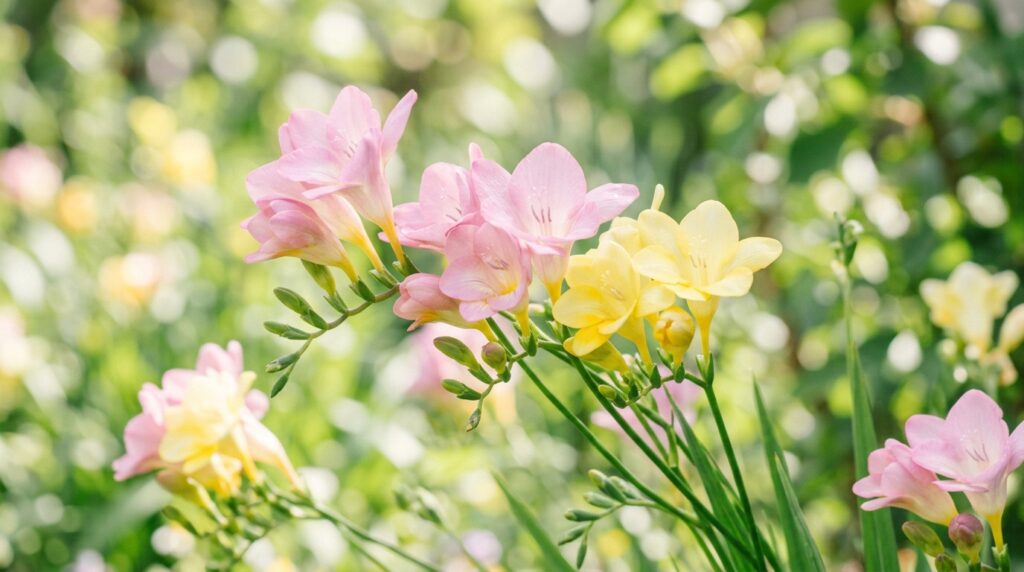
1. Freesia
Freesia is one of the most fragrant bulbs you can grow, and it is originally native to South Africa. The flowers grow along a slightly arching stem, and the scent is sweet without being overwhelming, which is why florists use it so often in bouquets. I grow mine in pots on my patio because Rawalpindi-style hot summers are not kind to freesia bulbs left in open ground, and containers let me move them into shade when the afternoon sun gets brutal.
If you live somewhere with cold winters, plant freesia corms in spring after the last frost. In milder climates, you can plant them in fall for a late winter to early spring bloom. I learned the hard way that overwatering rots the corms fast, so I now water only when the top inch of soil feels dry.
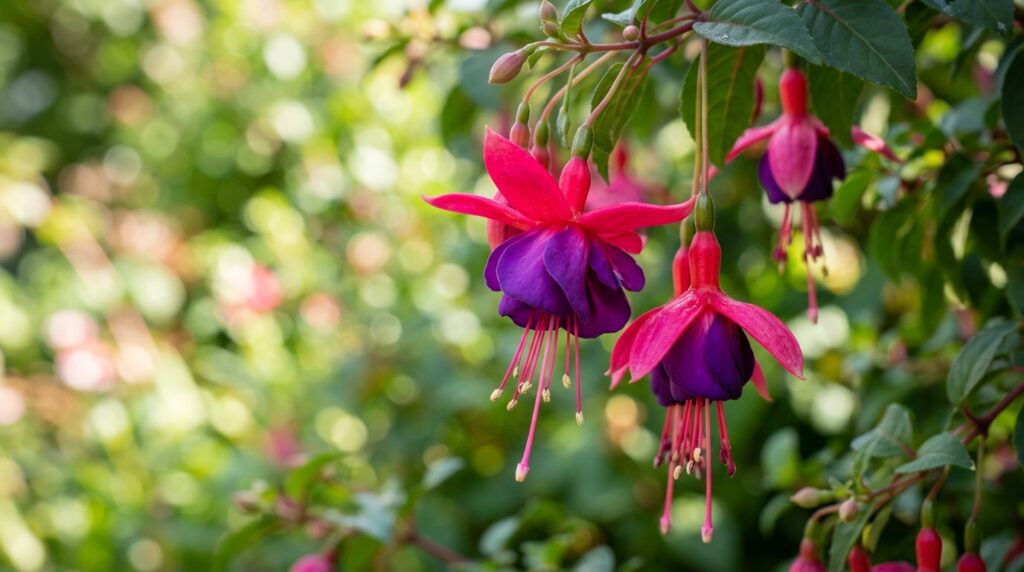
2. Fuchsia
Fuchsia flowers hang like little dancers, and hummingbirds cannot get enough of them. The plant is actually named after Leonhart Fuchs, a sixteenth-century German botanist, which explains the unusual spelling that trips up so many gardeners. Fuchsia prefers cool temperatures, partial shade, and consistently moist soil, and does best in USDA zones 6 through 11.
I keep a hanging basket of fuchsia on my covered porch every summer because direct afternoon sun scorches the leaves within days. One fun fact that surprised me: some fuchsia species actually produce edible berries that taste a bit like mild grapes. I tried one from my own plant last year, and it really does have that faint grape flavor, though it is subtle enough that I would not call it a snack food.
If you are also trying to keep your hanging baskets safe from unwanted visitors, my guide on how to keep bees away from hummingbird feeders covers a few tricks that work just as well near fuchsia baskets, since both attract the same pollinators.
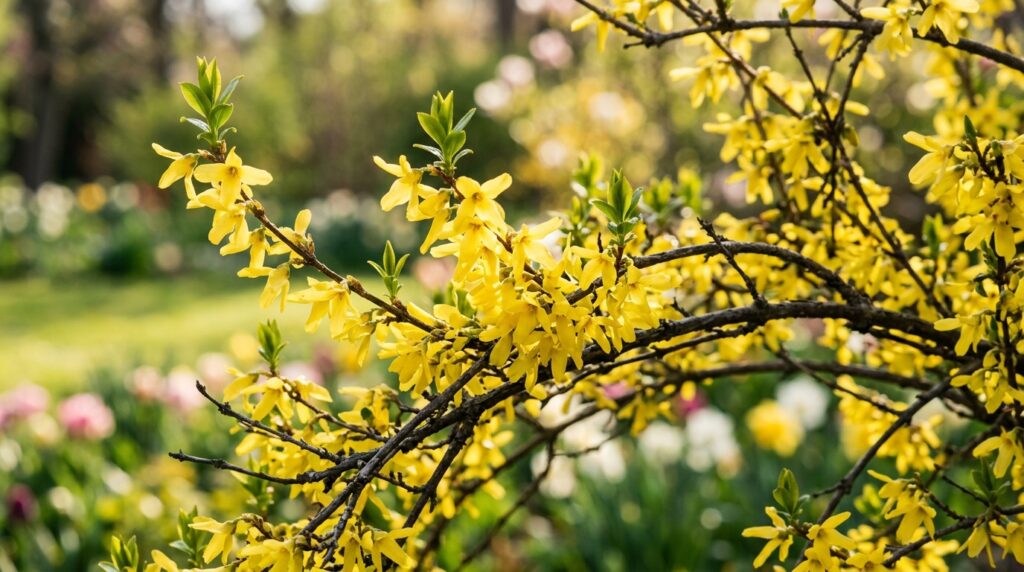
3. Forsythia
Forsythia is the shrub that announces spring before almost anything else in the garden. The bright yellow blooms appear on bare branches weeks before the leaves come in, which is exactly why so many people plant it along fences and driveways. It is low-maintenance once established and tolerates poor soil better than most flowering shrubs.
I planted a forsythia hedge along my back fence mainly because I wanted early color while everything else was still dormant, and it has never let me down. The only pruning rule to remember is to trim right after it finishes blooming, since it sets next year’s buds on old wood.
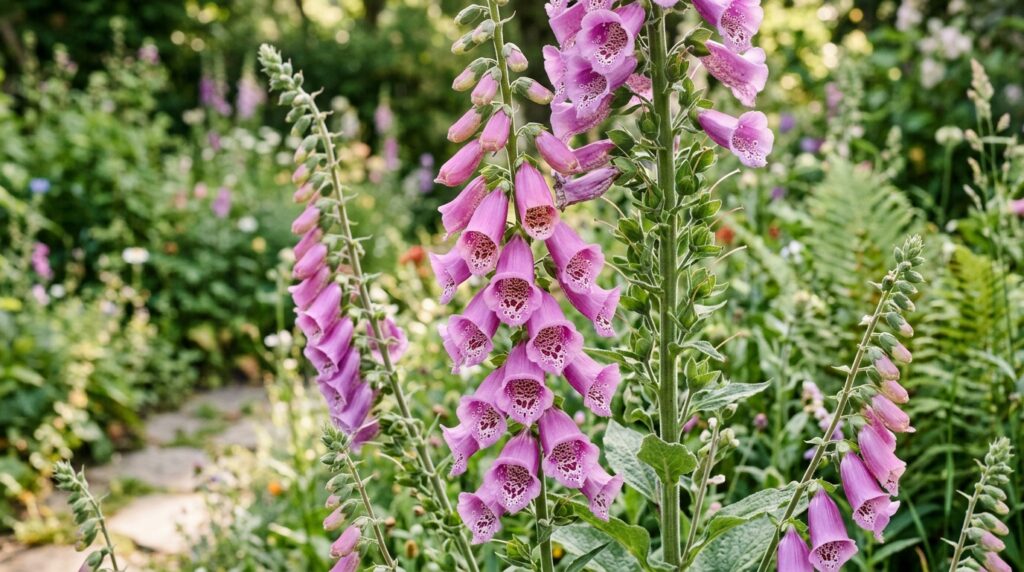
4. Foxglove
Foxglove, or Digitalis purpurea, produces tall spires of tubular, spotted flowers that hummingbirds and bumblebees both love. It is typically grown as a biennial, producing only a rosette of leaves in its first year and then sending up flowering stalks two to four feet tall the following spring. Individual flowers resemble the snipped-off fingers of a glove, hence the common name.
Here is where I have to be direct with you: foxglove leaves are highly toxic if eaten by people and by pets. The genus name digitalis comes from the Latin word for finger, describing the flower shape, but the same plant is the historical source of the heart medication digitalis, and every part of it can cause serious harm if ingested in the wrong amount. I still grow it because it is one of the best plants for attracting hummingbirds to a shaded border, but I keep it well away from any area where kids or pets play, and I always wear gloves when deadheading it.
5. Feverfew
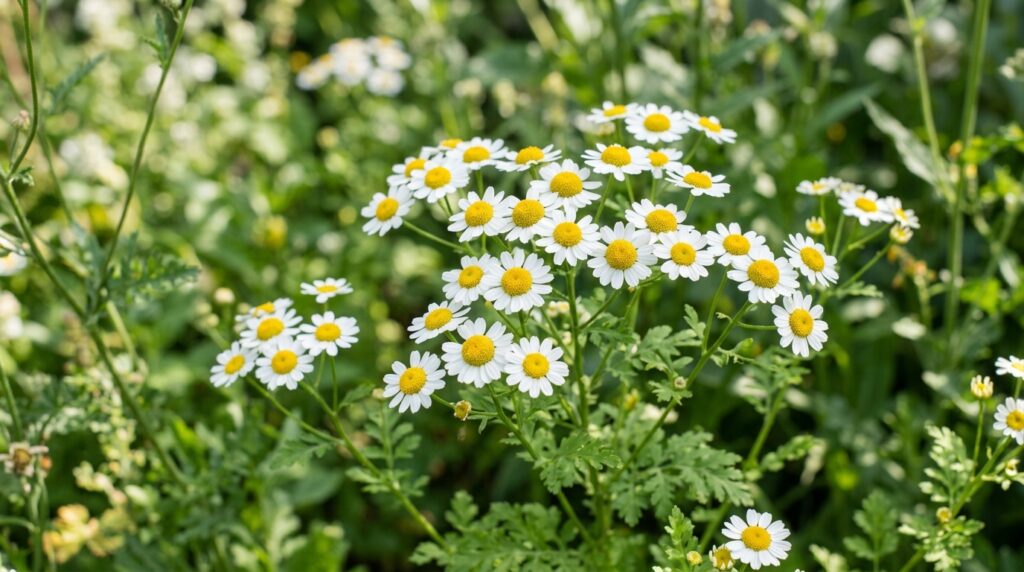
Feverfew looks like a small, daisy-like chamomile, and it has a long history in folk medicine. The plant has traditionally been used for fevers, migraine headaches, rheumatoid arthritis, and stomach aches, and its name comes from the Latin febrifugia, meaning fever reducer. Today, most of the interest in feverfew centers on migraine prevention. According to NCCIH’s clinical digest on headaches, a 2020 Cochrane review of six studies involving 561 participants found a modest difference in migraine frequency between feverfew and placebo, though the reviewers noted that this is low-quality evidence requiring confirmation in larger, more rigorous trials.
I am not a doctor, and I want to be honest: this is not medical advice, just an interesting bit of context about a flower that ended up growing itself in a crack in my patio one spring. I let it stay because the tiny white-and-yellow blooms are genuinely pretty, and it reseeds itself every year without any help from me. If you deal with migraines and want to explore feverfew as a supplement, that conversation belongs with your doctor, not with a gardening blog.
6. Four O’Clock
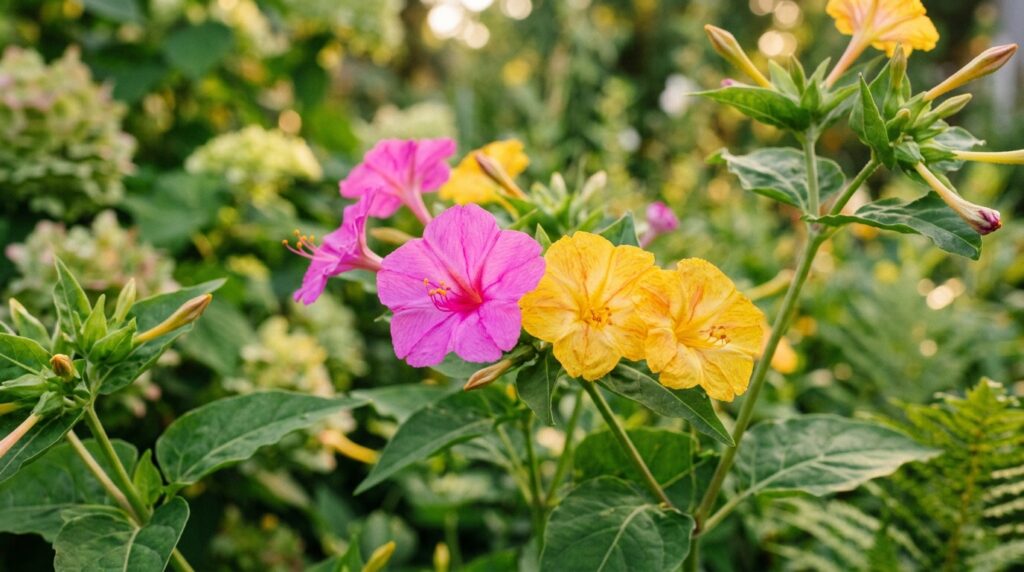
Four o’clock flowers, or Mirabilis jalapa, are named for their habit of opening in the late afternoon and staying open through the night, which makes them a favorite for evening gardens. The trumpet-shaped blooms come in pink, yellow, white, and even striped combinations, and they release a light, sweet fragrance right as the sun goes down.
I planted four o’clocks along my front walkway specifically so I could enjoy them when I get home from work, and it has become one of my small daily pleasures. They self-seed aggressively, so if you do not want volunteers popping up everywhere next spring, deadhead the spent blooms before they form seed pods.
7. French Marigold
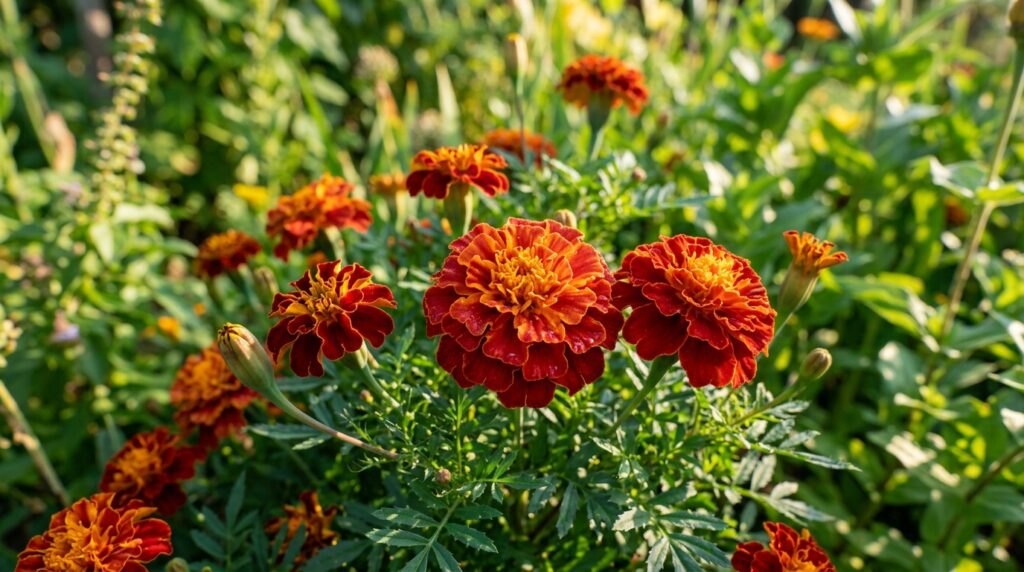
French marigold, or Tagetes patula, is one of the most common bedding flowers in American gardens, and for good reason. It blooms nonstop from late spring until the first hard frost, tolerates heat and drought once established, and many gardeners plant it near vegetables because its scent is believed to discourage certain pests.
I tuck French marigolds into every raised bed I plant, mostly out of habit at this point, but also because they fill in gaps quickly and give me cut flowers all summer long. If you are also working on soil health for beds like these, my guide to how to dose fertilizer for plants explains how to avoid overfeeding annuals like marigolds, which can actually reduce blooming if you go too heavy on nitrogen.
8. Flax
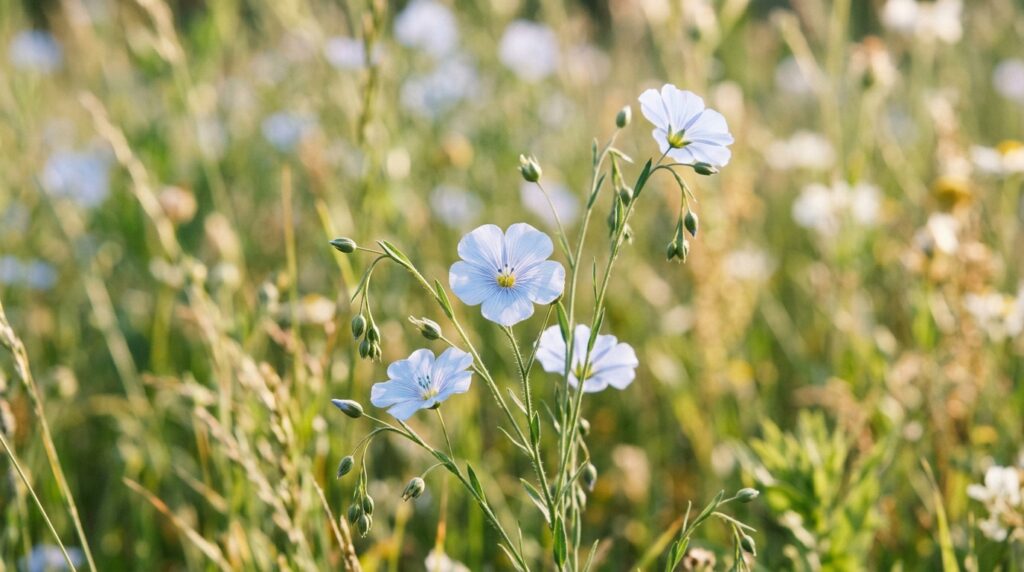
Flax, or Linum, produces delicate, sky blue flowers on thin, wiry stems that sway in the slightest breeze. Beyond its ornamental value, flax has been cultivated for thousands of years for both its fiber, which becomes linen, and its seeds, which are pressed for linseed oil. It is one of those flowers that start with f that quietly does double duty as both a garden plant and a historically important crop.
Wildflowers and Native Blooms That Start With F
Not every flower that starts with f belongs in a formal border. Some of the most interesting ones grow wild across the United States, often in places where little else survives.
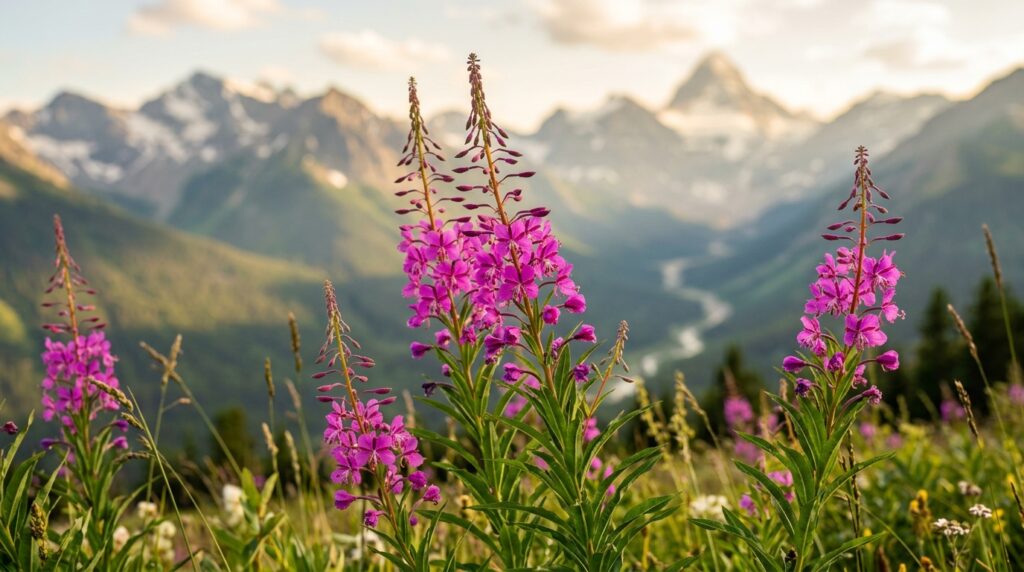
9. Fireweed
Fireweed is famous as one of the first plants to colonize land after a wildfire or other major disturbance, which is exactly how it earned its name. The tall spikes of pink to magenta flowers can carpet entire hillsides within a year or two of a burn, and beekeepers prize the nectar for producing a light, delicately flavored honey.
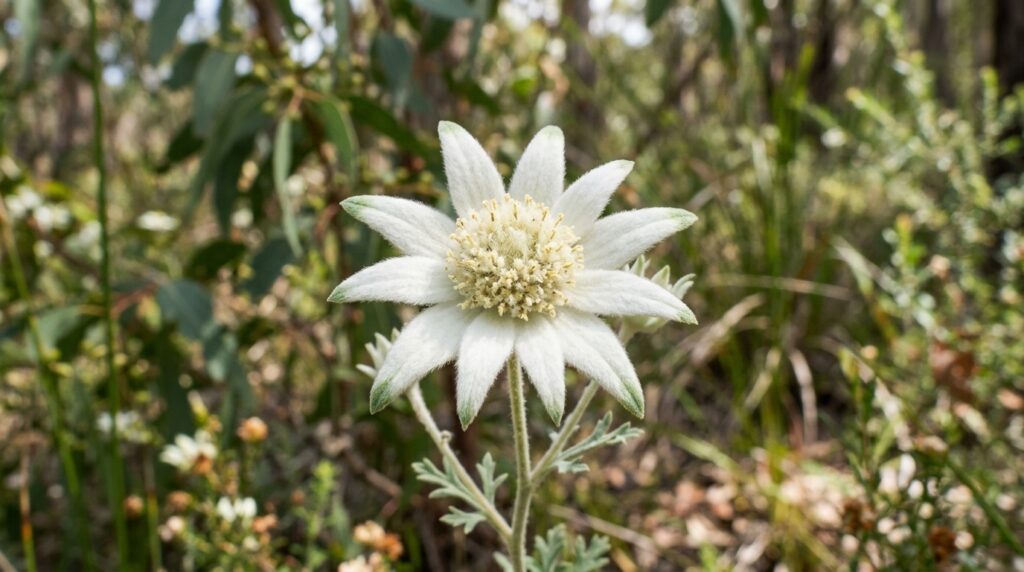
10. Flannel Flower
Flannel flower, native to parts of Australia but increasingly grown in warm American gardens, has soft, velvety white bracts surrounding a small central flower, giving the whole bloom a felt-like texture. It thrives in poor, sandy soil and full sun, which makes it a good pick if you struggle with rocky or dry patches elsewhere in your yard.
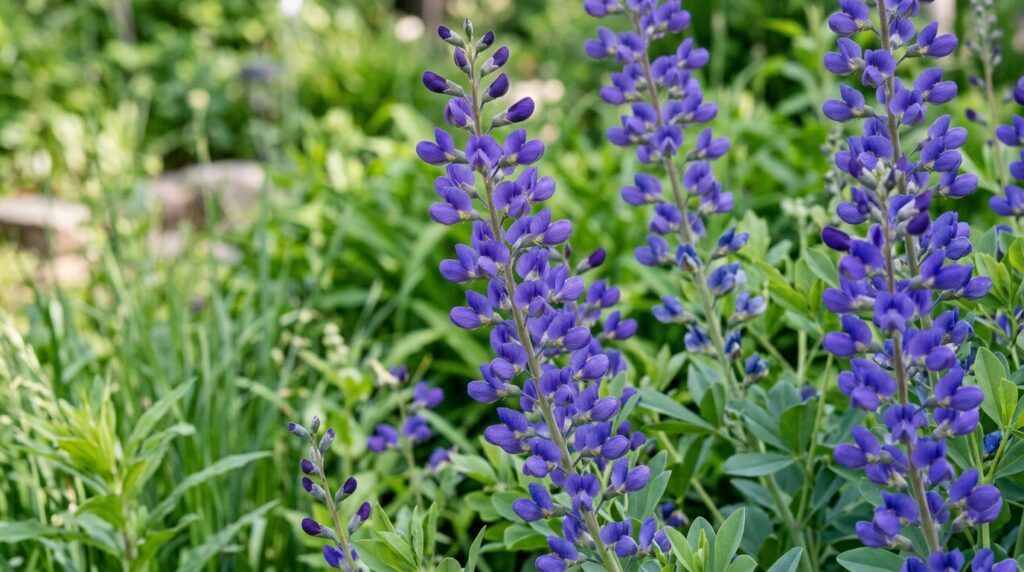
11. False Indigo
False indigo, or Baptisia, is native to midwestern and eastern North America. There are roughly 20 species in the genus, all producing purple, lupine-like blooms in upright clusters up to 12 inches tall on sturdy spikes. It is remarkably low-maintenance once its deep taproot is established, and it tends to live for decades in the right spot, so think carefully before choosing its location.
Flowering Shrubs and Trees Beginning With F
If you want height and structure, several trees and shrubs on this list deliver serious visual impact.
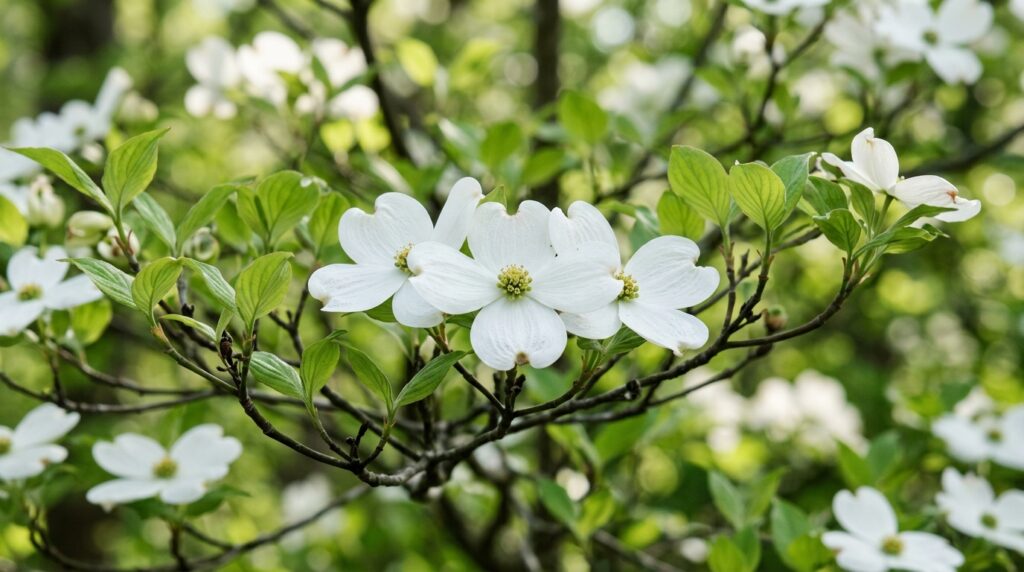
12. Flowering Dogwood
Flowering dogwood is a small ornamental tree that produces broad, four-petaled white or pink bracts in early spring, often before the leaves fully open. It is a beloved native tree across much of the eastern United States and shows up in countless suburban front yards for good reason: it offers spring flowers, summer shade, fall color, and red berries that feed birds through winter.
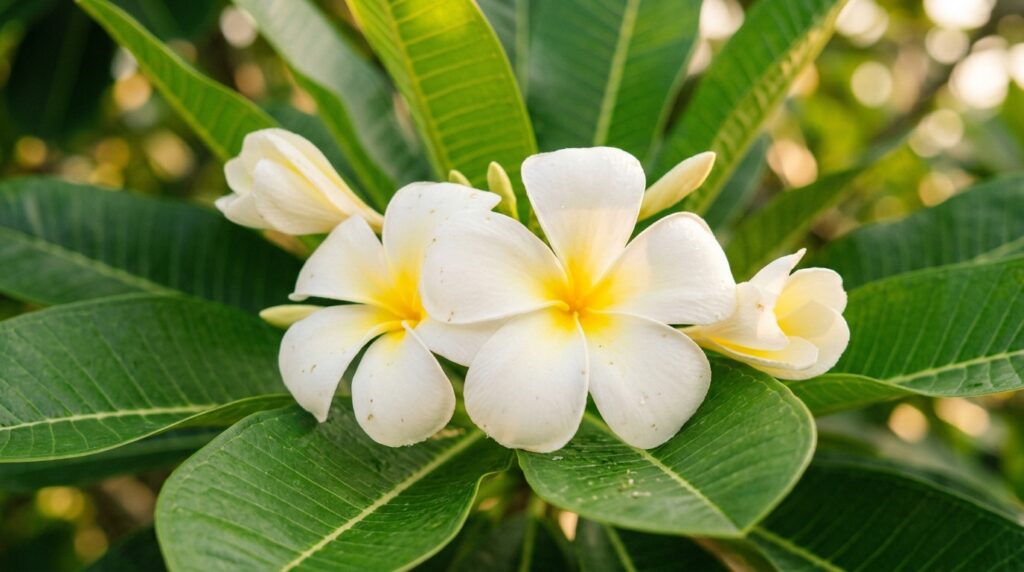
13. Frangipani
Frangipani, also known as plumeria, is a tropical shrub or small tree with fragrant flowers used in Hawaiian leis. The blooms come in white, yellow, pink, and deep red, and the scent tends to intensify at night to attract sphinx moths for pollination. If you live somewhere warm, frangipani makes a striking patio specimen in a large pot that you can bring indoors before the first frost.
14. Firethorn
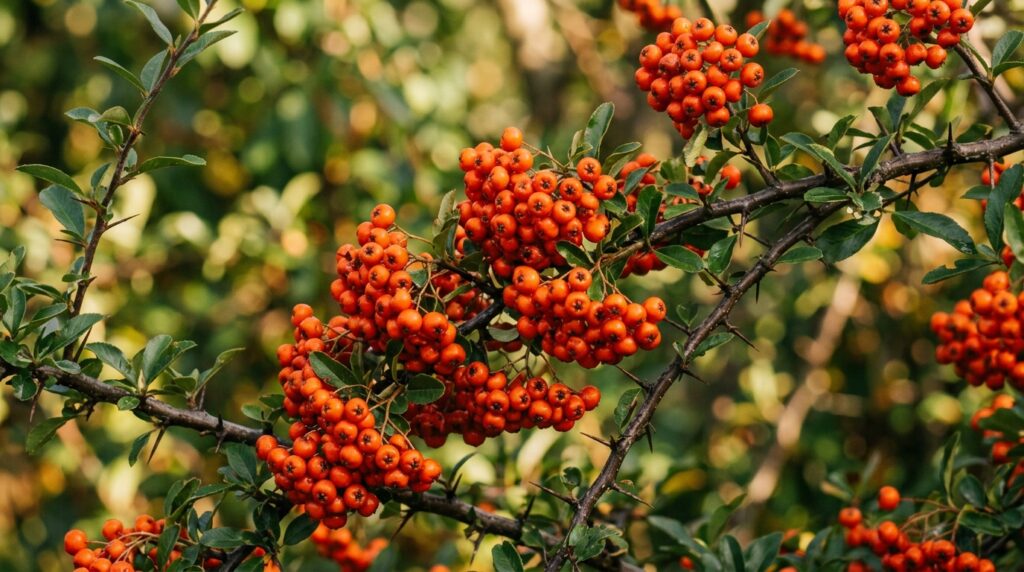
Firethorn, or Pyracantha, is a thorny evergreen shrub covered in small white flowers each spring that later turn into dense clusters of orange or red berries. Because of its thorns and dense growth habit, it is a favorite for security hedges and privacy screens, and its berries persist well into winter, making it useful for wildlife as food becomes scarce elsewhere.
15. Flowering Quince
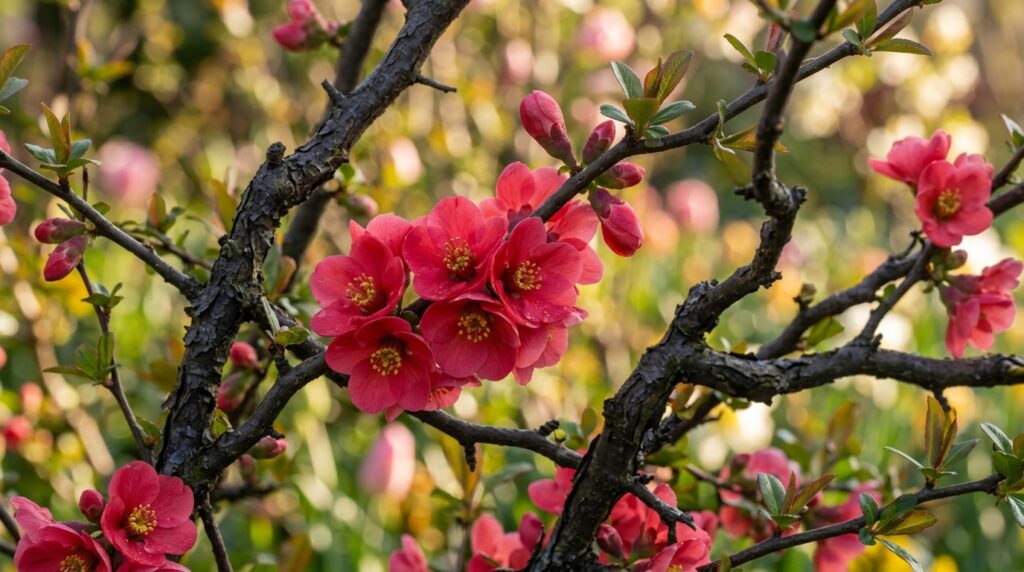
Flowering quince blooms in very early spring, often while snow is still on the ground in colder regions, and the branches are covered in cup-shaped red, pink, or orange flowers before any leaves appear. Florists love cutting flowering quince branches to force indoors in late winter, which brings a burst of color into the house weeks before the garden wakes up.
Fragrant, Rare, and Cut Flowers That Start With F
A few flowers that start with F deserve their own spotlight, either because of their fragrance, their rarity, or their popularity as cut flowers.
16. Fritillaria
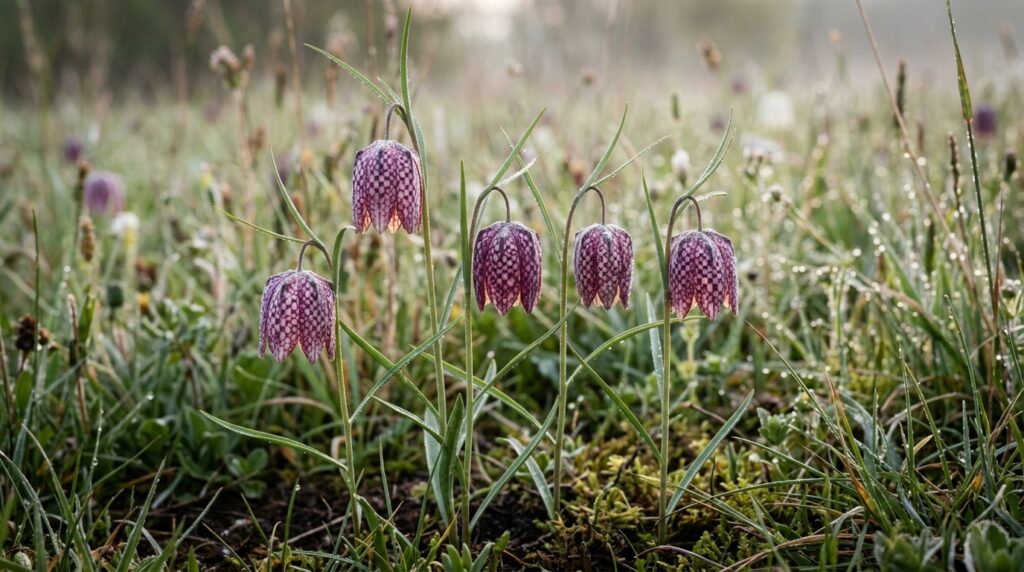
Fritillaria is a genus of spring bulbs with two very different personalities. The snake’s head fritillary has small, nodding, checkered flowers in deep maroon and white that genuinely look hand-painted, and it pairs beautifully with dark flowers if you are building a moody spring bed. The crown imperial fritillary, on the other hand, sends up a tall stalk topped with a crown of orange, yellow, or red bells, and it carries a distinctly musky, almost skunky smell that many gardeners actually rely on to keep deer and rodents away from nearby bulbs.
17. Fairy Slipper Orchid
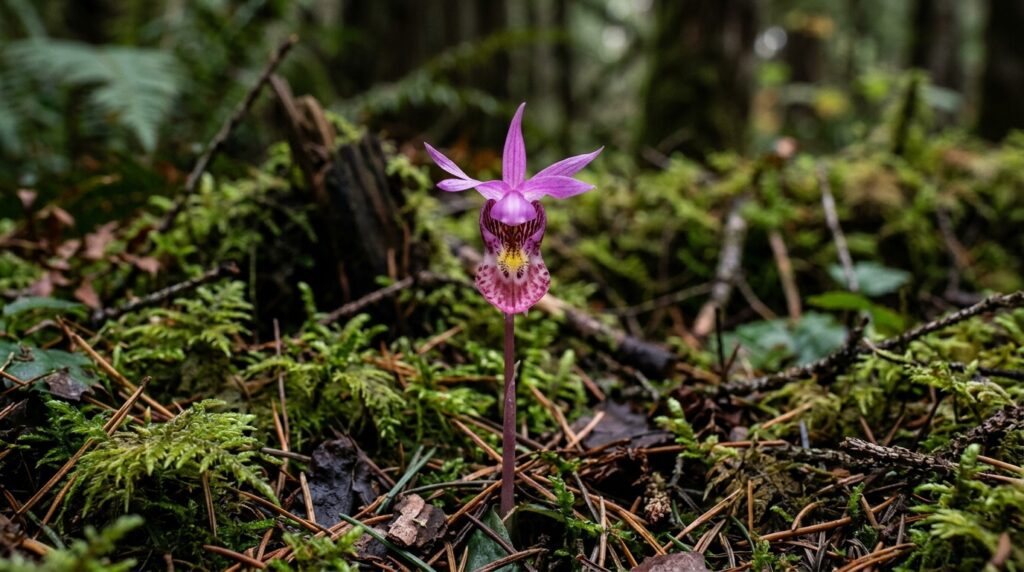
The fairy slipper orchid, or Calypso bulbosa, is one of the rarer flowers that start with f. It grows wild in cool, undisturbed woodland and depends on a very specific relationship with soil fungi to survive, which is why it almost never succeeds when transplanted into a home garden. If you are lucky enough to spot one on a hike, the best thing you can do is admire it and leave it exactly where it is.
18. Fringed Gentian
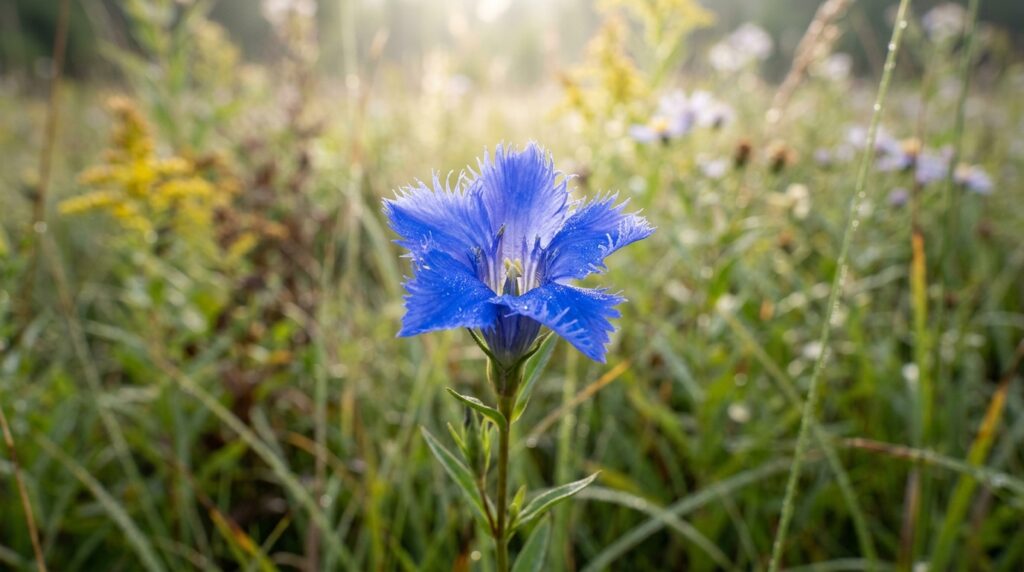
Fringed gentian is a native wildflower with vivid blue, fringed petals that close at night and on cloudy days, opening fully only in direct sunlight. It blooms later than most wildflowers, often into early fall, which makes it a welcome burst of color when most of the meadow has already faded.
19. Floss Flower
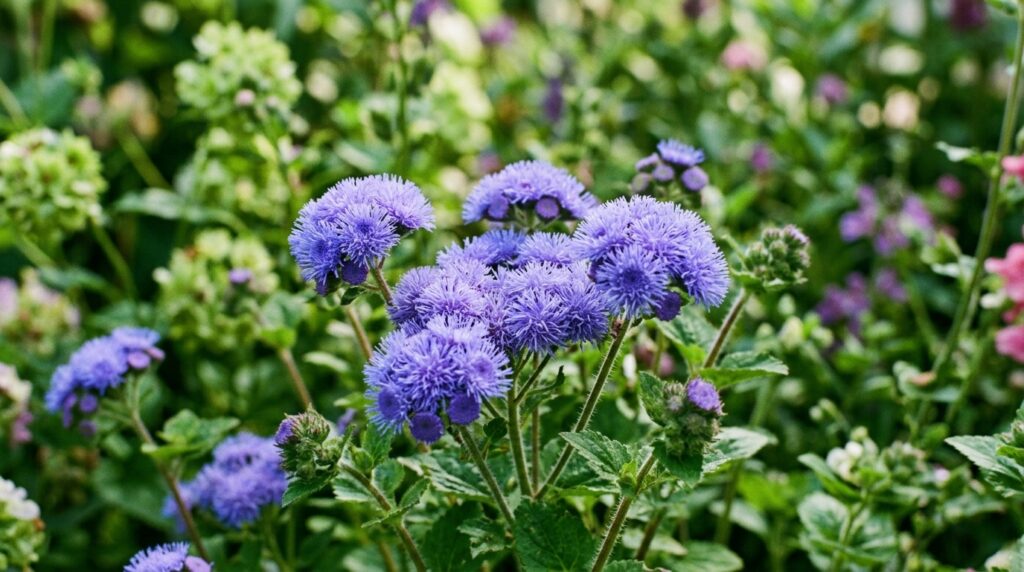
Floss flower, or Ageratum, produces fuzzy, powder-puff blooms in shades of blue, lavender, pink, and white that look almost like tiny pom-poms. It is one of the easiest annuals I have ever grown, since it stays compact, blooms nonstop through summer heat, and rarely needs deadheading to keep producing new flowers. I use it as a border-edging plant because its low, mounding habit hides the bare soil line at the front of a bed better than almost anything else I have tried.
20. Fan Flower
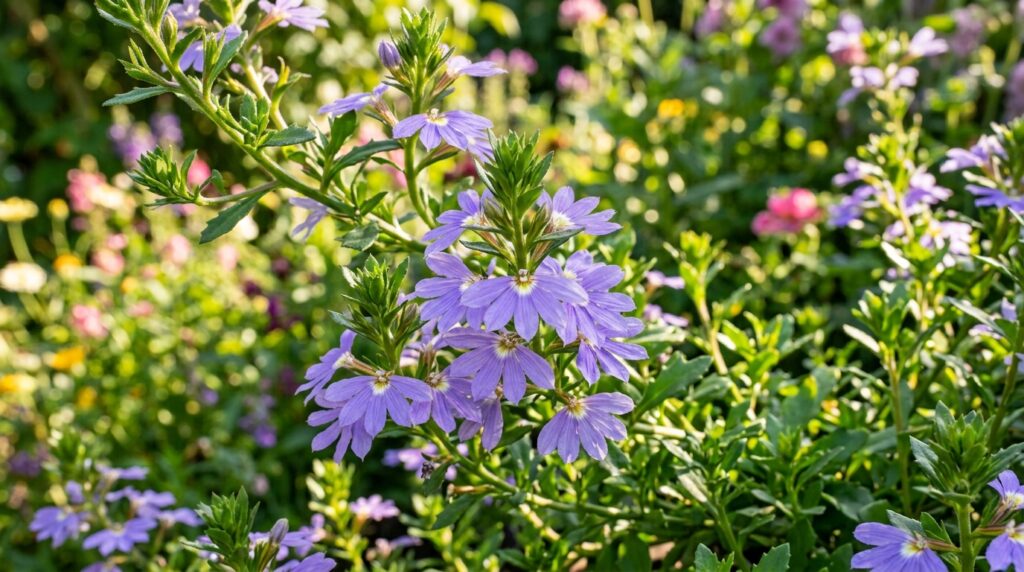
Fan flower, or Scaevola, gets its name from the unusual fan-shaped blooms that look like they are missing half their petals, which is actually just their natural growth pattern. It trails beautifully over the edges of hanging baskets and window boxes, and it withstands heat far better than more delicate trailing plants like lobelia. I switched one of my porch baskets over to fan flower a few summers ago after getting tired of replacing heat-stressed petunias every July, and I have not looked back since.
Using Flowers That Start With F in Garden Design
Once you have a handful of favorites picked out, the next question is usually how to actually combine them so the bed looks intentional rather than random. Here is how I think about layering flowers that start with F into an actual garden plan.
For a cottage-style border, I like pairing tall foxglove spires at the back with false indigo in the middle ground and a low edging of floss flower up front, which gives the bed height, structure, and softness all at once. If you are working with a shadier spot, fuchsia in a hanging basket paired with fritillaria bulbs planted underneath creates a two-tier show, since the fritillaria finishes blooming right as the fuchsia starts to take off for summer.
For anyone gardening in a hot, dry climate, French marigold, flax, and fan flower are a nearly bulletproof trio, since all three tolerate full sun and irregular watering without sulking. I planted exactly this combination along my driest side yard, and it is the one bed I genuinely never worry about, even during the hottest weeks of summer.
If you want fragrance near a patio or entryway, freesia in containers combined with a frangipani in a large pot gives you two very different but complementary scents, one light and sweet, one rich and tropical. Just remember that frangipani needs to come indoors before the first frost if you live anywhere outside the warmest zones.
Are Flowers That Start With F Safe for Pets?
This is a question I take seriously, since I have two cats who like to investigate every new plant that comes into the house. Several popular flowers that start with f are not safe around curious pets. Foxglove appears directly on the ASPCA’s toxic plant list for dogs, and Cornell’s poisonous plants database confirms the whole plant contains cardiac glycosides that can be fatal if ingested, with symptoms ranging from dizziness to serious heart problems.
Fuchsia has a more mixed reputation depending on the species, so I still recommend keeping any unfamiliar flower away from pets that like to chew on leaves, just to be safe. If you ever suspect your pet has eaten something questionable, the ASPCA Animal Poison Control Center is the first resource to call, and I keep their number saved in my phone.
My personal rule after years of trial and error: I plant foxglove and any other flower with a toxicity warning only in beds my pets cannot reach, usually behind a low decorative fence, and I never bring cut foxglove stems inside the house.
Expert Tips for Growing F Flowers in Your Garden
After growing most of the flowers on this list over the years, here is what I actually tell friends who ask me for advice.
- Match sun exposure to the plant, not the other way around. Fuchsia and foxglove both want partial shade and will scorch in full afternoon sun, while French marigold and flax genuinely need full sun to bloom well.
- Deadhead anything that self-seeds aggressively, like four o’clocks and feverfew, unless you actually want volunteers spreading through your beds next year.
- Water bulbs like freesia and fritillaria sparingly once the foliage starts to yellow, since soggy soil during dormancy is the number one cause of bulb rot.
- Prune spring shrubs like forsythia and flowering quince right after they bloom, never in fall or winter, or you will cut off next year’s flowers.
- Keep toxic varieties like foxglove away from pets and small children by planting them in a raised bed or fenced section of the yard.
Pros and Cons of Growing Flowers That Start With F
| Pros | Cons |
|---|---|
| Huge variety across annuals, perennials, bulbs, shrubs, and trees | Several popular options, like foxglove, are toxic to pets and people |
| Many are genuinely low maintenance once established | A few, like fireweed and false indigo, need a lot of space to look their best |
| Strong pollinator and hummingbird appeal across the group | Fragrant types like frangipani need warm climates or container growing indoors |
| Options for every season, from early spring forsythia to fall fringed gentian | Fritillaria’s crown imperial has a strong smell some people dislike |
FAQs About Flowers That Start With F
What flowers that start with f are best for beginners?
French marigold and four o’clock are two of the easiest flowers that start with f for beginners. Both tolerate average soil, need minimal fussing, and reward you with color all summer long.
Which flower that starts with an f is toxic to pets?
Foxglove is the flower that starts with an f that gardeners with pets need to watch most closely, since every part of the plant contains compounds that affect the heart if eaten.
What is the most fragrant flower that starts with the letter f?
Freesia and frangipani are usually considered the most fragrant options on this list, though feverfew has a sharper, more herbal scent that some people find less pleasant.
Are there any flowers names that start with f that grow well in shade?
Yes, fuchsia is one of the best flowering plants for partial shade, and it actually performs poorly in full, hot sun.
What is a rare flower that starts with an f?
The fairy slipper orchid is one of the rarest flowers that start with f, since it depends on specific woodland fungi and almost never survives transplanting into a garden setting.
Final Thoughts
Flowers that start with f cover an impressive range, from the fragrant freesia on my patio to the toxic but undeniably beautiful foxglove tucked behind my back fence. I did not expect this letter to become one of my favorites when I started this series, but between the hummingbird traffic around my fuchsia baskets and the volunteer feverfew that took over a patio crack, F has genuinely earned its spot as one of the more rewarding letters to garden with.
If you are planning your next planting season, I would start with one easy annual, like French marigold or floss flower, and one showstopper, like fuchsia or forsythia, before working your way toward trickier options like fritillaria or foxglove. Keep the pet safety notes in mind if you have curious cats or dogs, feed your beds carefully rather than heavily, and give fragrant options like freesia and frangipani a spot close to a porch or window where you will actually catch the scent. If you want more inspiration by letter, my flowers that start with D guide is a natural next stop, and I would genuinely love to hear which F flower you end up growing first.