



How to Remove Egg Stains: The Method That Actually Works
If you are searching for how to remove egg stains, you are probably standing over a mess right now with a paper towel in your hand and a sinking feeling in your stomach. Maybe it is yolk down your favorite shirt. Maybe your toddler flung a raw egg across the kitchen floor. Or maybe it is that dried, crusty patch on the carpet that you keep stepping over and pretending not to see.
I have been there more times than I would like to admit. I run a home cleaning blog, which means I break things, stain things, and ruin things far more often than the average person, purely in the name of research. Egg is one of those spills that look harmless until you actually try to clean them up, and then they turn into a slippery, sticky, protein-based nightmare that laughs at your regular dish soap.
This guide is not a copy of the same five steps you have already read on ten other sites. It is what I have learned from real trial and error, backed by the actual food science of why eggs behave the way they do on fabric, wood, and carpet fibers.
Why Egg Stains Are So Stubborn (The Part Most Guides Skip)
Most cleaning articles tell you to “act fast” without explaining why. Here is the actual reason eggs are so hard to shift once they set.
Egg white is mostly water, but roughly half of its protein content is a single protein called ovalbumin. Food science research on egg white proteins shows that ovalbumin makes up about 54 percent of total egg white protein, and it is the protein mainly responsible for the gel-like structure that forms when an egg is exposed to heat.
That is the exact same reaction that turns a runny egg into a firm, rubbery texture in a frying pan, and it is exactly what happens to a stain if you rinse it with warm or hot water. The protein bonds tighten, clump together, and lock themselves into the fibers of your clothing, your carpet, or the pores of your wood.
I learned this one the hard way. Early on, I splashed raw egg on a kitchen towel and, out of habit, tossed it straight into a load of hot laundry. Big mistake. What came out was a permanent, slightly yellow film that never fully disappeared, no matter how many times I rewashed it. That single towel taught me more about protein stains than any article ever did: cold water first, always, no exceptions.

Egg yolk adds a second layer of difficulty because it contains fat and pigment on top of protein, which is why it tends to leave a more stubborn yellow tint than egg white alone.
Does Egg Yolk Stain Clothes? Does Egg White Stain Too?
Short answer: yes, both can stain, but they behave differently, and knowing the difference changes how you treat them.
- Does egg yolk stain clothes? Yes, and it is usually the more visible offender. Egg yolk carries fat, protein, and natural pigments called carotenoids, so it leaves both a greasy residue and a yellow tint. This is why a plain water rinse is often not enough for the yolk. You typically need a small amount of dish soap to break down the fat before the color will fully lift.
- Does egg white stain clothes? Yes, but it is more forgiving if you catch it early. Egg white is almost entirely protein and water, so a quick cold-water rinse can often remove a fresh spill completely before the protein has a chance to bond with the fabric.
If you are dealing with both together, treat the stain as a combination problem: rinse for the protein, then soap for the fat.
Related read on my site: if you deal with kitchen spills often, you will probably run into other stubborn food marks too. I have a full breakdown on removing avocado stains that uses a similar cold-treatment approach, since avocado is also an oil-heavy stain that punishes hot water.
What You Will Need Before You Start
Gather these before you touch the stain. Having everything ready saves precious minutes, and with protein stains, minutes matter.
- Cold water (never warm or hot)
- A dull knife, spoon, or old credit card for scraping
- Mild dish soap (something without added oils or moisturizers)
- White vinegar (for laundry stains only, not wood)
- An enzyme-based stain remover or laundry pre-treater
- Clean white cloths or paper towels
- A soft-bristled brush
How to Remove Egg Stains From Clothes (Step-by-Step)
This is the method I use every single time, and it closely aligns with the American Cleaning Institute’s official stain removal guidance, which recommends pretreating or soaking protein-based stains with an enzyme product for at least 30 minutes, or longer for aged stains.
- Scrape off any solid egg. Use the dull side of a knife or a spoon to lift away chunks before you add any liquid. Do not rub it in.
- Flush from the back of the fabric with cold water. Turn the garment inside out and run cold water over the stain from the back. This pushes the residue out instead of driving it deeper.
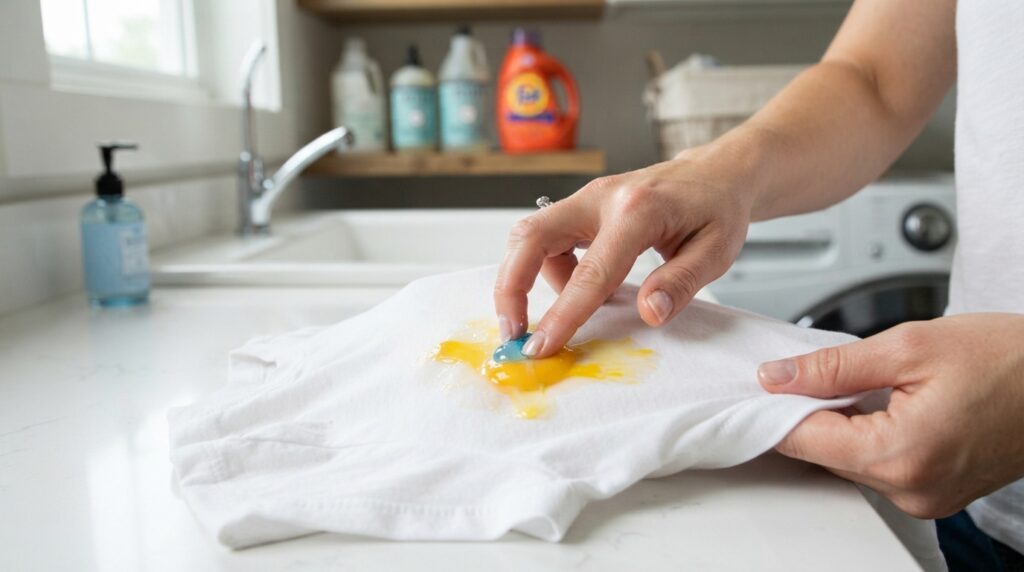
- Apply a small amount of dish soap. Rub it gently between your fingers or with a soft brush in circular motions. This step breaks up any fat from the yolk.
- Rinse again with cold water. Check the stain under good light before moving forward.
- Pretreat with an enzyme-based stain remover. Enzyme cleaners are designed to digest proteins such as ovalbumins in eggs. Let it sit for the time listed on the label, usually 15 to 30 minutes.
- Launder in cold water. Never use warm or hot water until you are certain the stain is completely gone.
- Check before drying. Heat from the dryer will set any remaining trace of protein permanently, so inspect the fabric while it is still damp.
If the stain is old or already set, the American Cleaning Institute’s stain removal chart also suggests sponging the area with white vinegar and rinsing, then repeating the detergent-and-vinegar treatment until as much of the stain lifts as possible. I have used this exact combination on a set of dried yolk stains on a work shirt that had already been through the dryer once, and while it took three rounds, the stain eventually faded to nearly invisible.
How to Remove Egg Yolk Stains From Clothes Specifically
Yolk deserves its own mini-guide because its fat content slightly changes the approach.
- Scrape off as much solid yolk as you can before adding water.
- Pretreat with dish soap first, not detergent, since dish soap is designed to cut grease.
- Let the soap sit for five minutes before rinsing.
- Follow with an enzyme pretreatment for the leftover protein and pigment.
- For white or light-colored fabrics, a diluted oxygen bleach soak can help with the yellow tint left behind. This aligns with the Ask ACI guidance on egg-based stains, which suggests mixing a small amount of oxygen bleach, or, where the fabric allows, chlorine bleach, into cool water and soaking for about 30 minutes before rinsing and laundering.
I keep a small bottle of dish soap in my laundry room specifically for this reason. It has saved more than one dress shirt from a breakfast mishap.
Another useful link on my site: if the yolk mishap happened alongside a mustard packet disaster at the same picnic (it happens more than you would think), check out how to remove mustard stains, since mustard’s yellow pigment behaves very differently and needs its own cold-water and enzyme approach.
How to Remove Egg Stains From Wood
Wood is a different challenge entirely, because water is the enemy here, not the friend. Too much moisture on wood can warp the finish, so the goal is to lift the egg without soaking the surface.
Here is the process I follow, based on both my own trial and error and guidance from woodworking specialists who deal with this constantly:
- Scrape gently with a plastic card. Woodworking specialists in this detailed wood stain removal guide recommend a credit card or plastic scraper, held at an angle, to lift dried egg without scratching the finish.
- Dampen a cloth, do not soak it. Wring it out until it is barely moist.
- Wipe in the direction of the wood grain. Never scrub in circles on a wood surface, since this can dull the finish.
- For lingering residue, use mineral spirits. Once you’ve scraped off as much dried egg as possible, dampen a soft cloth with mineral spirits. It dissolves the leftover residue without stripping or damaging the wood’s finish.
- Dry immediately. Follow up with a completely dry cloth to prevent any water damage.
- Recondition the wood. A light coat of furniture polish or wood conditioner afterward helps restore the shine and adds a protective layer.
I tried this exact process on an antique side table after a breakfast tray incident, and the mineral spirits step made all the difference. Plain soap and water left a faint film behind, while the mineral spirits lifted it cleanly without touching the finish underneath.
If you are dealing with egg grease residue rather than a fresh spill, the same gentle, low-moisture principle that furniture cleaning experts recommend for general grease removal applies: work in the direction of the grain and dry thoroughly afterward.
One more internal resource: wood surfaces attract all kinds of stubborn marks. My guide on removing candle wax from a jar covers a similar low-moisture, gentle-scraping approach that works well on wooden surfaces too.

How to Remove Egg Stains From Couch
Upholstery combines two problems at once: it absorbs liquid like fabric, but you cannot exactly throw a couch cushion in the washing machine.
- Scrape off any excess egg first, working from the outer edge toward the center so you do not spread it further into the fibers.
- Mix a gentle cleaning solution. A widely used Ratio is roughly two cups of cool water with one tablespoon of dish soap, which matches the standard approach recommended in most professional upholstery cleaning guides.
- Sponge, do not soak. Use a clean white cloth so no dye transfers onto your couch.
- Blot repeatedly. Press down and lift, rather than rubbing side to side, until the liquid is absorbed.
- Rinse with plain cold water on a separate clean cloth to remove the soap residue.
- Blot dry, then let it air out fully before sitting on it again.

The biggest mistake I see people make on upholstery is soaking the cushion to try to force the stain out. That extra moisture just pushes the egg deeper into the foam underneath, where it can start to smell days later. Less water, more patience, and more blotting is the actual winning formula.
How to Get Raw Egg Out of Carpet
Carpet is the trickiest surface of all, because raw egg tends to run down into the padding if you are not fast.
- Blot up as much raw egg as possible immediately, using paper towels or an old rag, working from the outside of the spill inward.
- Rinse the area with cold water, dampening a cloth rather than pouring water directly onto the carpet. As this carpet and odor stain guide explains, hot water can cook the protein, causing it to set permanently in the fibers.
- Apply an enzyme-based carpet cleaner. The same guide recommends letting an enzyme formula sit for roughly 15 to 20 minutes, so it has time to break down the proteins, which is far more effective on carpet fibers than soap alone.
- Blot and gently scrub in circular motions, then rinse with a second clean, damp cloth to lift the loosened residue.
- Blot dry and let the carpet air dry completely. Avoid walking on the area or exposing it to heat until it is fully dry.
For a dried, set-in stain, professional cleaning guides recommend a gentle rehydration approach rather than aggressive scrubbing. A small amount of enzyme cleaner applied to a cloth can soften the old protein bond just enough to lift it, without oversaturating the carpet padding underneath. I always test any product on a hidden corner of carpet first, since some enzyme cleaners can affect certain synthetic fibers or dyes.
If your carpet issue is a recurring one because of pets or kids, my guide on removing pet hair from carpet pairs well with this, since both problems usually call for the same gentle blot-and-lift technique rather than heavy scrubbing.

A Quick Note on Leather
If egg lands on a leather couch, car seat, or bag instead of fabric or wood, treat it with extra caution. Water can damage leather’s surface and cause cracking or permanent discoloration if it is not handled carefully. Blot away the wet egg immediately with a dry cloth; do not rub, and avoid home remedies entirely.
For leather specifically, it is worth taking the item to a leather specialist or professional cleaner rather than experimenting, since a mistake on leather is much harder to reverse than one on fabric or wood.
Egg Stain Removal by Surface: Quick Comparison Table

| Surface | Water Temp | Best Product | Time Needed | Risk if Rushed |
|---|---|---|---|---|
| Clothes | Cold only | Enzyme pretreater + dish soap | 30 min soak | Stain sets permanently in dryer |
| Wood | Barely damp | Mineral spirits | 10 to 15 minutes | Water rings or finish damage |
| Couch | Cool | Diluted dish soap | 15 to 20 minutes | Mold or odor in cushion foam |
| Carpet | Cold | Enzyme carpet cleaner | 15 to 20 min contact | Egg soaks into padding |
Common Mistakes People Make With Egg Stains
- Using hot water on instinct. This is the single biggest reason egg stains become permanent, since heat is what makes the protein bond tightly to fibers.
- Scrubbing hard instead of blotting. Aggressive scrubbing spreads the stain wider and pushes it deeper into fabric, carpet, or wood grain.
- Skipping the enzyme step. Regular detergent alone often is not strong enough to fully break down egg protein, especially once it has dried.
- Drying before checking. Heat from a dryer, hairdryer, or direct sun will lock in any trace of egg that was not fully removed.
- Ignoring odor. Egg residue that is not fully removed can start to smell within a day or two, particularly in carpet padding or upholstery foam, since the leftover protein begins to break down on its own.
Expert Tips for Faster, More Complete Removal
After years of running a cleaning blog and testing this more times than I care to admit, here are a few things that made the biggest difference for me personally:
- Keep a small squeeze bottle of diluted dish soap solution near your kitchen sink. Having it ready to grab in the first ten seconds after a spill matters more than any specific product.
- Freeze it first if it is fully dried and crusted. A few minutes with an ice cube wrapped in cloth can harden the residue enough to scrape off cleanly, which is especially useful on carpet and upholstery.

- Always test any cleaner on a hidden spot first, whether that is an inside seam on clothing, a corner of carpet, or an inconspicuous patch of wood.
- Do not throw the item in a hamper and forget about it. Egg protein continues to bond the longer it sits, even at room temperature.
Pros and Cons of DIY Egg Stain Removal
- Inexpensive, using items you likely already own
- Inexpensive, using items you likely already own
- Fast enough to tackle within minutes of a spill
- Works on the majority of fresh stains across most surfaces
- Less effective on stains that have already gone through a hot dryer cycle
- Some delicate fabrics or antique wood finishes may need a professional cleaner
- Enzyme cleaners can take longer to work on very old, set-in stains
How Egg Stains Compare to Other Food Stains
If you clean up spills often, it helps to know that not every food stain follows the same rules as egg. This is one of the biggest points of confusion I see, and it is worth clearing up.
- Egg vs. grass stains: Grass stains are plant-based pigment stains, not protein, so they respond well to rubbing alcohol and detergent. Egg needs enzymes and cold water instead. If lawn stains are more your household’s problem, my guide on removing grass stains covers that pigment-based approach.
- Egg vs. honey or syrup stains: Sugary spills are sticky but not protein-heavy, so warm water actually helps dissolve them rather than setting them. Egg is the opposite. I go into that contrast more in my post on removing honey stains.
- Egg vs. dry erase marker: Ink-based marks respond to alcohol-based solvents, not enzymes. If you have both an egg mishap and a stray dry erase mark to deal with in the same week, my guide on getting dry erase marker out of clothes walks through that separate process.
Understanding which category a stain falls into- protein, pigment, sugar, or oil- saves you from grabbing the wrong product and accidentally making things worse.
How to Prevent Egg Stains Before They Happen
A little prevention goes a long way, especially in kitchens with kids or multiple cooks.
- Crack eggs into a separate bowl before adding them to a pan or batter, rather than cracking directly over the cooking surface. This single habit alone has cut my own kitchen spills by more than half.
- Keep a designated “egg station” near the stove with a small towel ready, so cleanup starts within seconds rather than minutes.
- Use placemats or a splatter guard on wood dining tables during breakfast, since wood is the least forgiving surface once egg has time to sit.
- Store raw eggs upright and toward the back of the fridge shelf, not the door, since door shelves experience more temperature swings and accidental bumps that can lead to cracked shells and drips.
- If you have carpet near your kitchen or dining area, consider a washable rug rather than wall-to-wall carpet in high-traffic breakfast zones. It turns a stressful stain emergency into a simple load of laundry.
None of these tips are complicated, but together they have meaningfully cut down how often I deal with egg stains in my own home, which is really the best outcome of all.
Frequently Asked Questions
Does egg yolk stain clothes permanently?
Not usually, as long as you avoid heat. Egg yolk stains become far more difficult to fully remove after a hot wash or dryer cycle, but a fresh stain treated with cold water, dish soap, and an enzyme cleaner typically comes out completely.
Does egg white stain clothes the same way as yolk?
No. Egg white is mostly protein and water with no fat or pigment, so it is generally easier to remove with just cold water if you catch it quickly. Yolk needs an extra step with soap to cut through the fat and pigment.
Can I use vinegar to remove egg stains from wood?
It is best to avoid vinegar on wood, since its acidity can dull or damage certain finishes over time. Vinegar works well for laundry stains but is not recommended for wood surfaces.
How long can an egg stain sit before it becomes permanent?
There is no exact universal timeline, since it depends on the surface, the room temperature, and whether heat is applied. As a general rule, treating any egg spill within the first hour dramatically increases your chances of full removal.
What is the fastest way to get raw egg out of carpet?
Blot up the excess immediately, rinse with cold water, then apply an enzyme-based carpet cleaner and let it sit for 15 to 20 minutes before blotting dry. Speed matters far more with carpet than with almost any other surface, since padding underneath can absorb egg quickly.
Why does my egg stain smell bad a few days later, even after cleaning?
This usually means a small amount of protein residue was left behind, often deep in carpet padding, couch cushion foam, or a fabric seam that was not fully rinsed. Leftover egg protein starts to break down over time, which produces that sour smell. Going back over the spot with an enzyme cleaner and letting it sit longer usually resolves it.
Is it safe to use bleach on every egg stain?
No. Bleach, even diluted oxygen bleach, should only be used on fabrics where the care label confirms it is safe, and it should never be used on wood, leather, or most upholstery. Always spot-test in a hidden area first, and stick to enzyme cleaners and dish soap on surfaces where bleach is not appropriate.
Final Thoughts
Egg stains are annoying, but they are rarely a lost cause if you understand what is actually happening at a chemical level. Cold water first, patience second, and heat only after you are absolutely sure the stain is gone. I have ruined a towel, nearly ruined a work shirt, and spent an embarrassing amount of time on my knees scrubbing carpet to learn these lessons, so hopefully this saves you a bit of that trouble.
If today’s spill was not your first food-related cleaning emergency and it will not be your last, take a look through my full cleaning category for more real-tested guides on the messes that show up in daily life. And if chocolate is your household’s more frequent offender, my guide on removing chocolate stains follows a similar cold-treatment logic that pairs nicely with what you just learned here.