



If you have ever tried to name a flower for every letter of the alphabet, you already know E is a tricky one. I found myself stuck on it last spring while planning a border for my own backyard. That struggle is exactly why I put together this list.
Flowers that start with E are more varied than most people expect. You get spiky coneflowers, soft alpine blooms, tropical houseplants, and even a few flowers most Americans have never heard of.
I did not just copy a list from somewhere else. I grew several of these myself, accidentally killed a couple, and learned what actually works in a real garden with real weather. This guide gives you something the other rankings pages skip: honest experience, current sourcing, and details you can actually use, not just a name and a stock photo.
By the end, you will know 30 real flowers that start with E, which ones are purple, which ones smell amazing, which ones make good houseplants, and which ones grow wild without any help from you at all. Let’s get into it.
30 Flowers That Start With E
I organized this list from the most common picks you will find at a nursery to the more unusual ones that experienced gardeners love. Each one gets its own short profile so you can skim or read the whole thing.
1. Echinacea (Purple Coneflower)
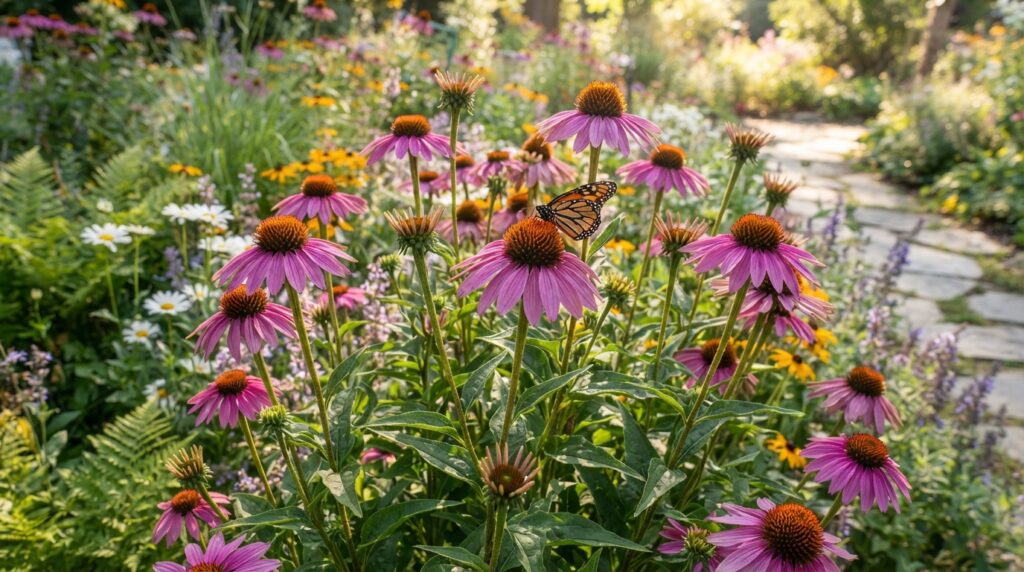
Echinacea purpurea is probably the flower most people picture first. It has a spiky orange-brown center cone surrounded by drooping pink-purple petals, and it blooms from early summer straight through fall. I planted three of these along my fence three years ago, and they still come back stronger every year without any real effort on my part.
Echinacea is also famous outside the garden. Native American communities on the Great Plains used it as a traditional remedy long before it became a supplement aisle staple, and the National Center for Complementary and Integrative Health continues to study its effects on the immune system today.
2. Easter Lily
The Easter lily, or Lilium longiflorum, produces trumpet-shaped white blooms with a heavy, sweet scent. It is native to Japan’s Ryukyu Islands but has become the classic potted flower for spring holidays across the country. If you get one as a gift, keep it in bright indirect light and cool room temperatures so the blooms last longer. I always cut the yellow anthers out of mine early because the pollen stains fabric and countertops badly, and nobody tells you that until it happens once.

3. Edelweiss
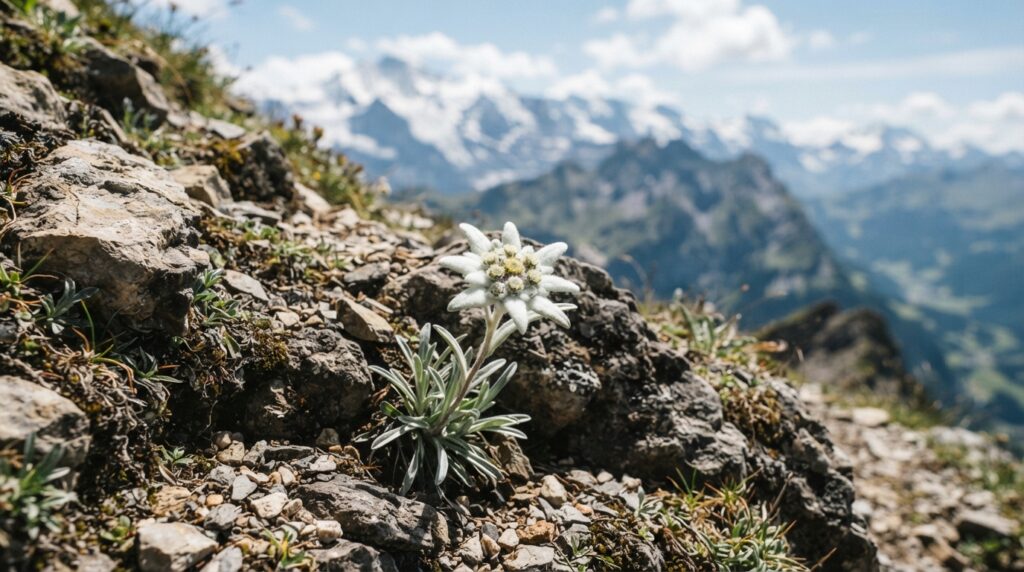
Edelweiss, or Leontopodium alpinum, is the small, star-shaped white flower you probably know from the song in The Sound of Music. It grows wild in rocky, high-altitude spots in the Alps and a few other European mountain ranges, and it is genuinely rare in the wild.
Because of decades of overpicking, the Missouri Botanical Garden Plant Finder notes that the species is now protected in several European countries, including Austria, Germany, Switzerland, Italy, and France. You can still grow it at home in a rock garden with sharp drainage, though it needs cool summers to thrive.
4. English Bluebell
English bluebells, Hyacinthoides non-scripta, carpet woodland floors in a haze of violet-blue every spring. Each stem droops slightly and holds a row of narrow, bell-shaped flowers that release a light, honey-like fragrance. They naturalize well under trees where grass struggles to grow, which makes them one of my favorite recommendations for shady spots that never seem to work with anything else.

5. English Daisy
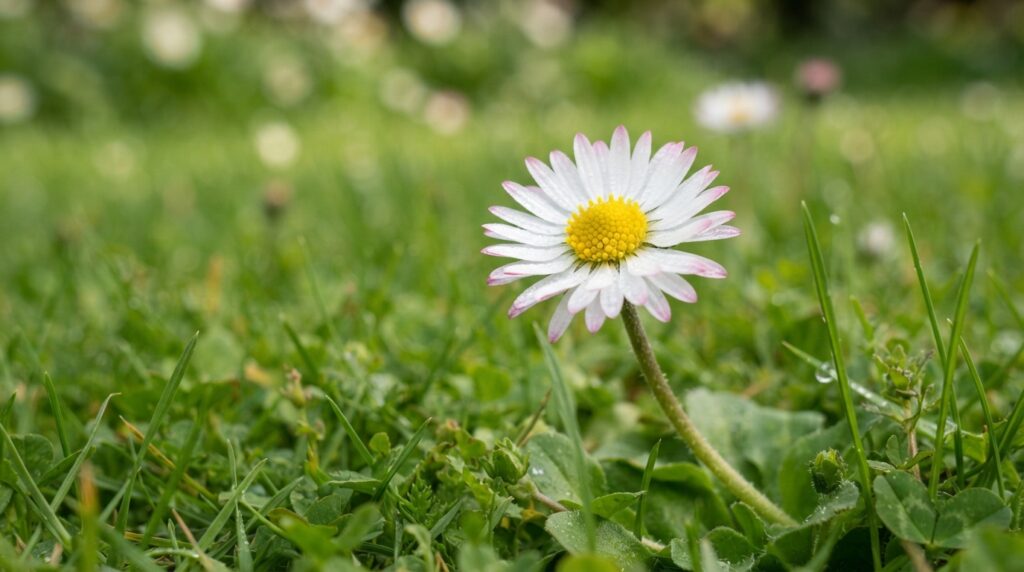
Bellis perennis, better known as the English daisy, is the small, low-growing flower with white or pink petals and a bright yellow center. It rarely grows past four inches tall, so it works beautifully as a border edge or a filler between stepping stones. I use it around my patio pavers because it tolerates light foot traffic better than most people expect.
6. English Lavender
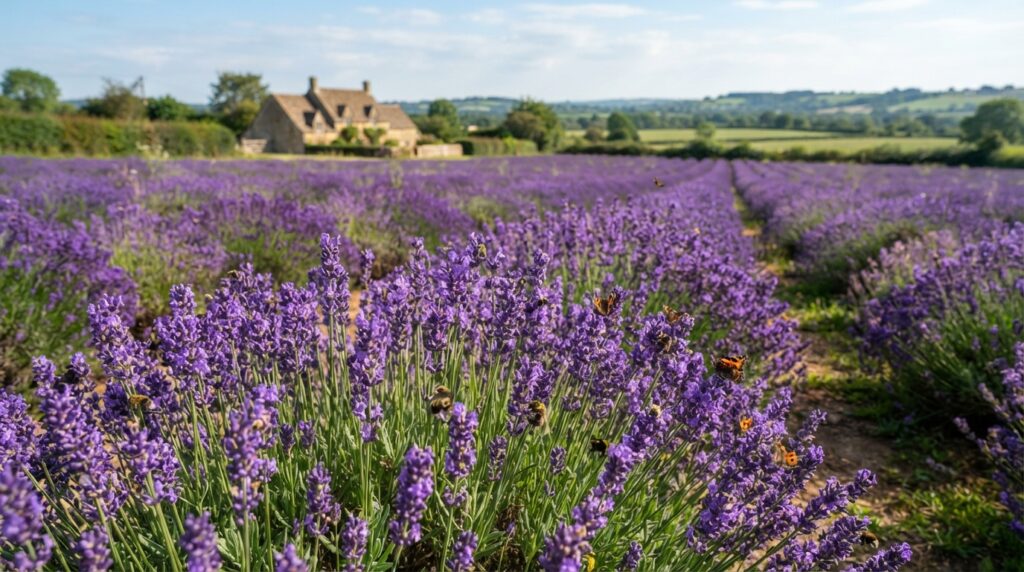
English lavender, or Lavandula angustifolia, is one of the most fragrant flowers on this entire list. Its silvery-green foliage and violet-blue spikes attract bees and butterflies all summer, and the scent holds up well even after drying. I hang my bundles upside down in the closet every August, and it genuinely keeps moths away without any chemicals.
7. English Rose
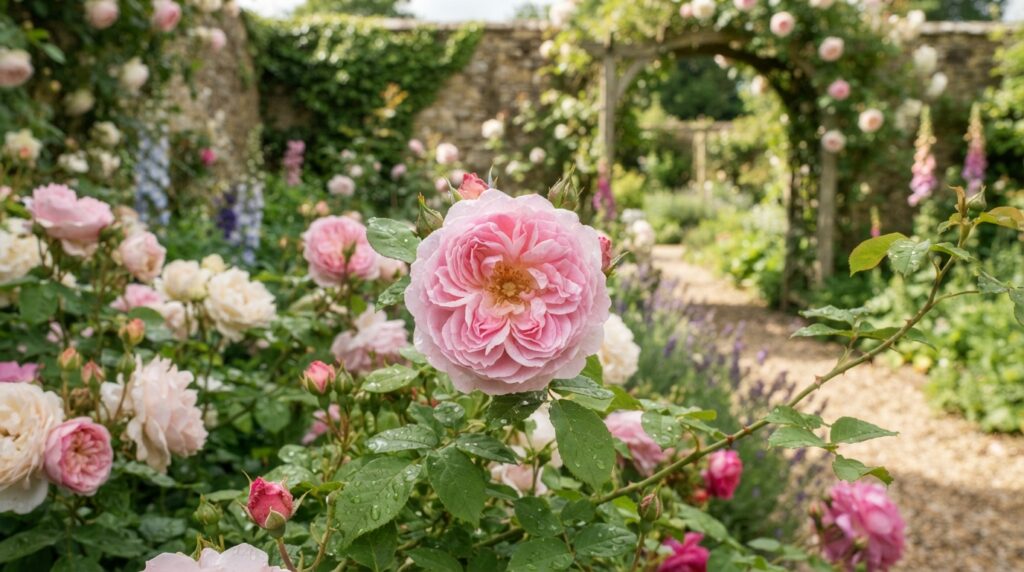
English roses are a group of hybrid shrub roses developed to combine the old-fashioned look and scent of antique roses with the repeat blooming of modern varieties. They come in nearly every shade, from soft apricot to deep crimson, and the fragrance is often stronger than typical hybrid tea roses. If you want a rose that smells like a rose actually should, this category is worth the extra cost.
8. Evening Primrose
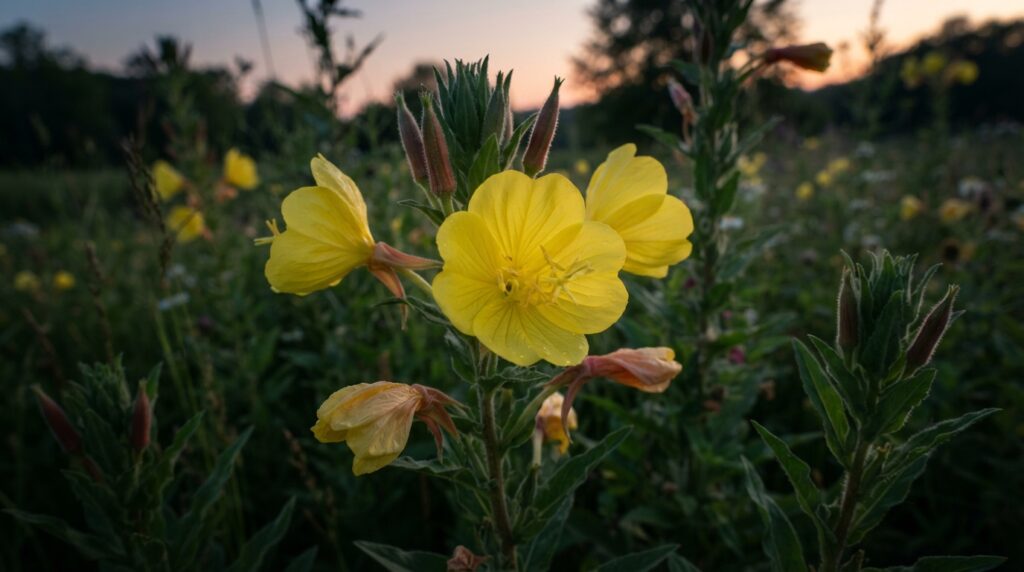
Evening primrose, Oenothera biennis, opens its pale yellow, four-petaled flowers in the late afternoon and stays open through the night, which is a fun one to watch with kids. It is a biennial wildflower native to North America and self-seeds easily once established. The seed oil is also sold as a supplement, though I would treat any health claims with the same caution I use for any unregulated product.
9. Eschscholzia (California Poppy)
Eschscholzia californica, the California poppy, produces silky, cup-shaped blooms in gold, orange, and sometimes pink or cream. It has been the official state flower of California for over a century, and according to the U.S. Forest Service, it is native to the Pacific slope of North America, stretching from western Oregon down into Baja California.
The North Carolina State Extension plant database notes that it grows as an annual in cooler climates and a short-lived perennial in warmer zones 8 through 10. I scattered seeds along a dry, sunny slope in my yard where nothing else would grow, and it filled in within one season.

10. Eremurus (Foxtail Lily)
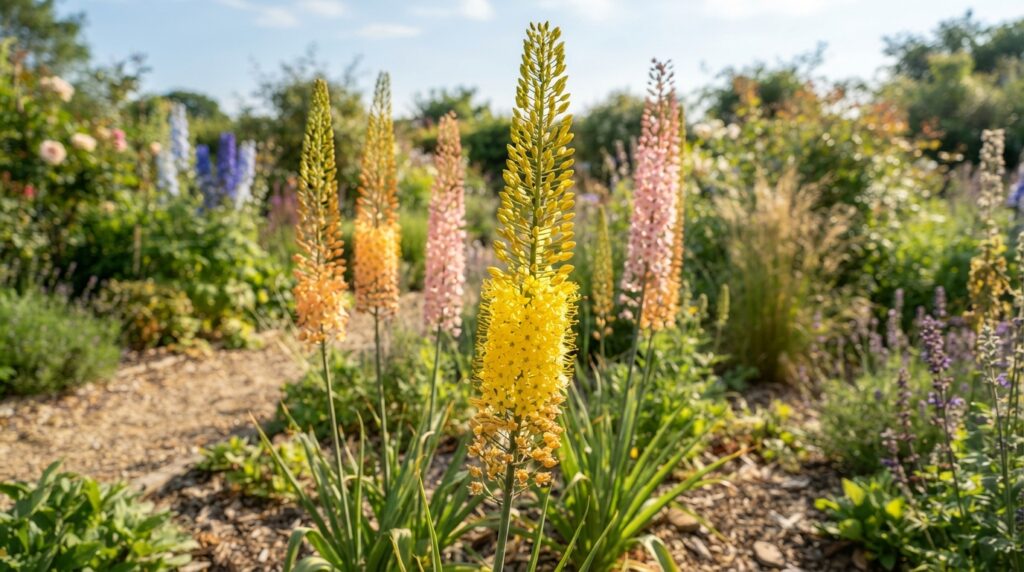
Eremurus, commonly called foxtail lily, sends up a tall, dramatic spike covered in hundreds of small star-shaped flowers, usually in shades of pink, yellow, or white. A single stalk can reach five to eight feet, which makes it an instant focal point in any perennial border. It needs excellent drainage and full sun, and I learned the hard way that soggy soil will rot the crown within a season.
11. Eucomis (Pineapple Lily)
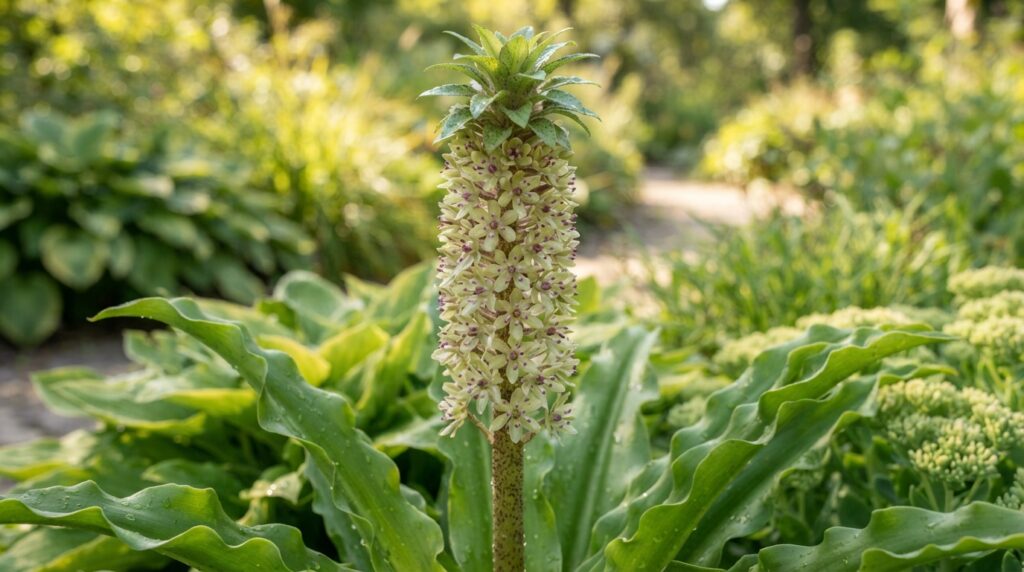
Eucomis comosa gets its nickname from the tuft of leafy bracts that sits on top of the flower spike like a pineapple crown. The star-shaped flowers are usually greenish-white or deep purple, depending on the variety, and they bloom in mid to late summer, when many other perennials have finished blooming. It grows from a bulb and does well in containers if your climate gets too cold for it in the ground.
12. Eryngium (Sea Holly)
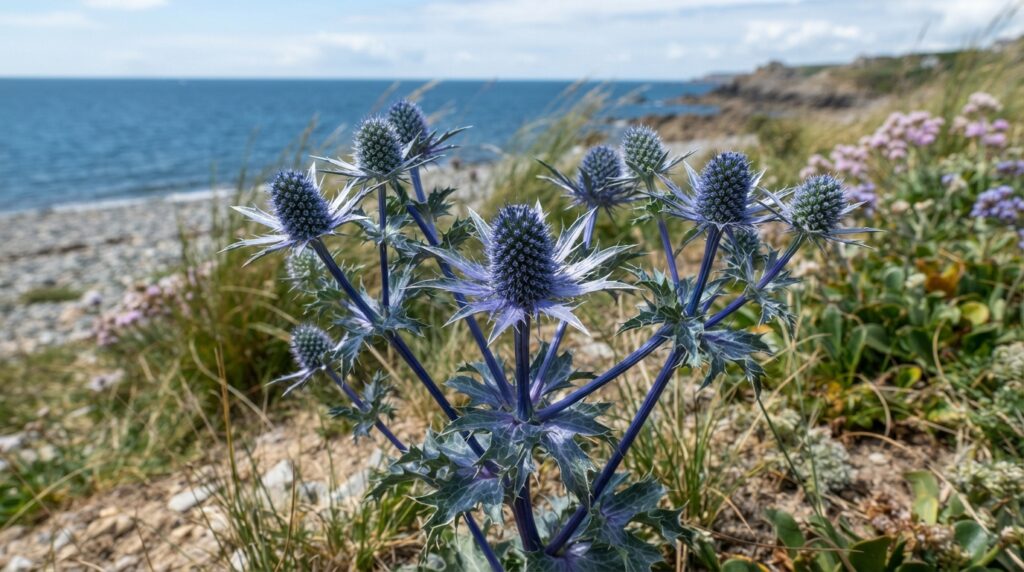
Eryngium, or sea holly, is one of the more architectural flowers on this list. The cone-shaped flower heads are surrounded by spiky, metallic blue-silver bracts that almost look artificial. Pollinators love it, deer generally avoid it, and it holds its color beautifully when dried for arrangements. I added a few to a gravel bed, and they have needed zero maintenance since.
13. Erysimum (Wallflower)
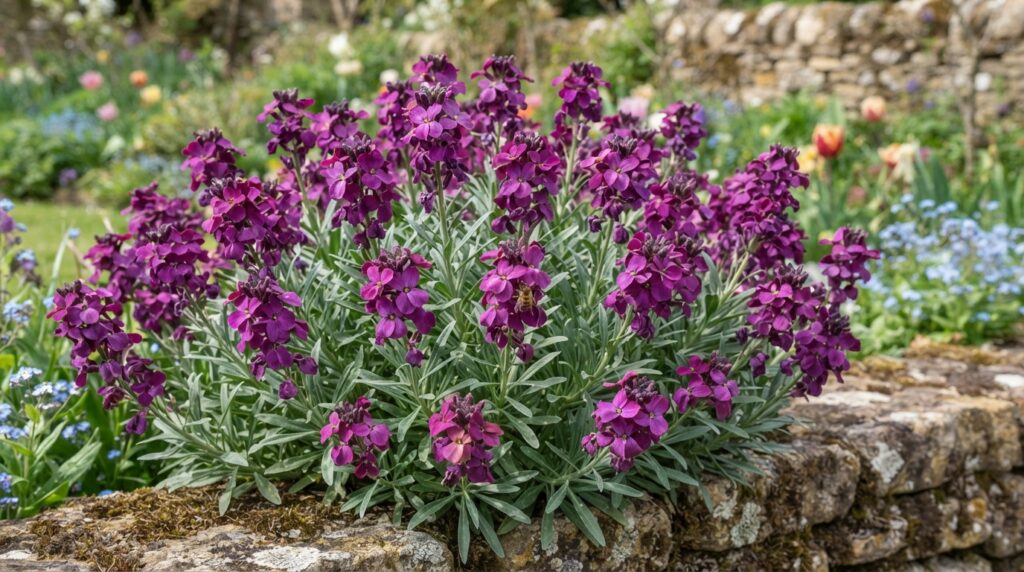
Erysimum cheiri, commonly called wallflower, produces clusters of small, fragrant flowers in warm shades of orange, yellow, red, and purple. It earned its common name because it was once commonly found growing out of stone walls and rocky crevices in the UK. It blooms early, often before many spring bulbs finish, which makes it a great gap-filler in a mixed border.
14. Erigeron (Fleabane)
Erigeron karvinskianus, often called fleabane or Mexican daisy, produces tiny daisy-like flowers that start white and fade to pink as they age, so a single plant can look like it is blooming in two colors at once. It self-seeds into cracks in patios and walls, which some gardeners see as a nuisance and others, myself included, see as free groundcover.

15. Escallonia
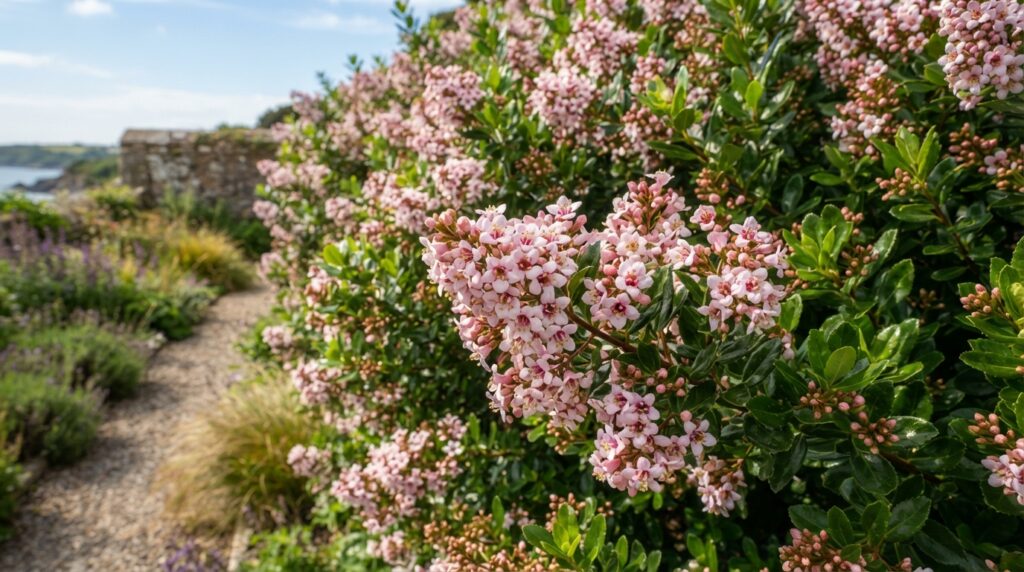
Escallonia is an evergreen flowering shrub with glossy leaves and clusters of small, tubular pink or red flowers. It is often used as a hedge or privacy screen because it tolerates coastal wind and salt spray better than most shrubs. If you live near the coast and want color without constant babying, this one deserves a look.
16. Eustoma (Lisianthus)
Eustoma grandiflorum, better known as lisianthus, has rose-like ruffled blooms in purple, pink, white, and blue that look almost too perfect to be real. It is a favorite in the cut-flower industry because its blooms last far longer in a vase than those of most other flowers, sometimes up to two weeks. I switched to lisianthus for my own dining table arrangements after getting tired of roses wilting within four days.

17. Exacum (Persian Violet)
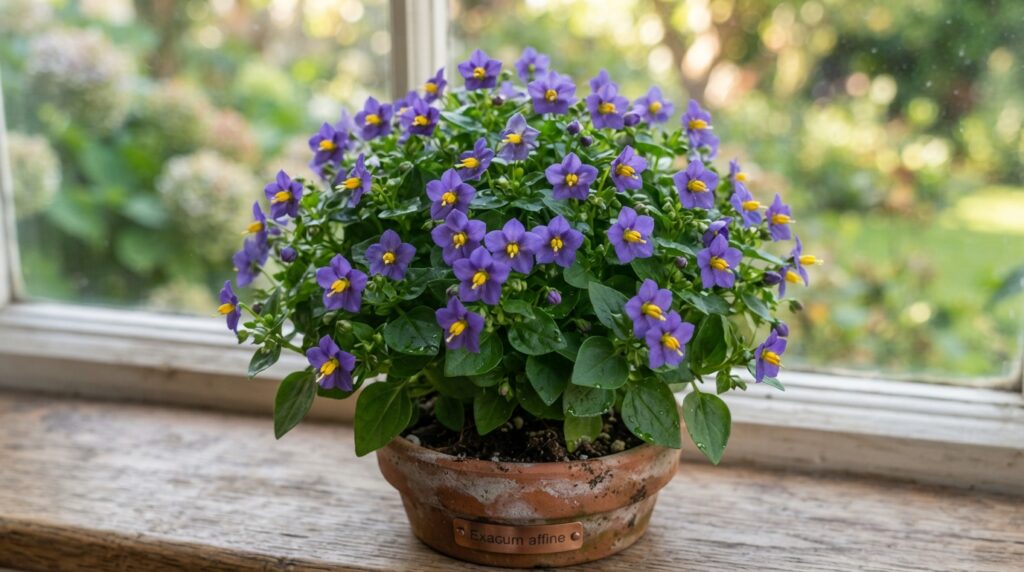
Exacum affine is a compact flowering houseplant with small, star-shaped purple or white flowers and a light, sweet fragrance. It stays under a foot tall, so it fits easily on a windowsill, and it blooms for months if you keep the soil evenly moist and avoid direct hot sun.
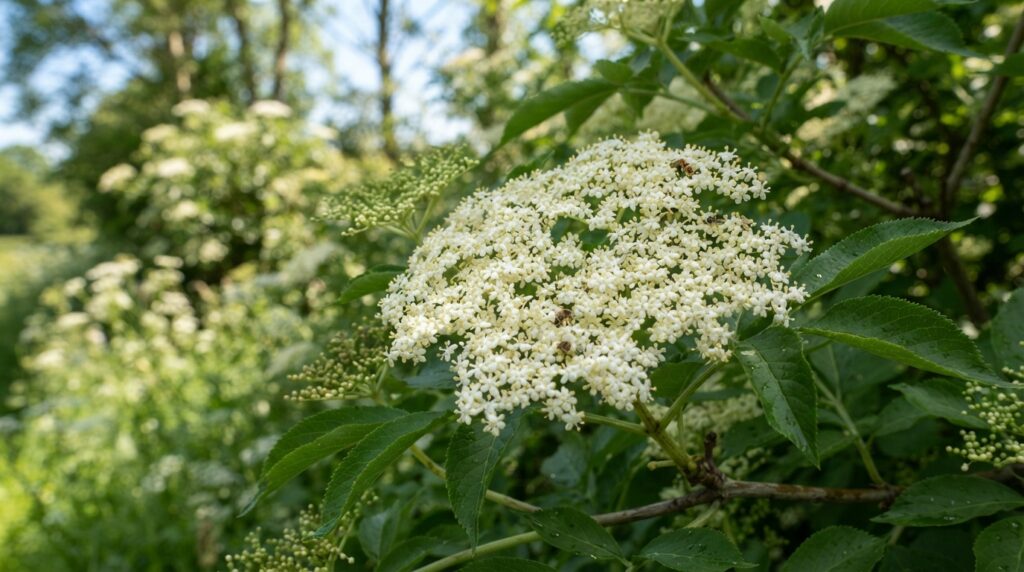
18. Elderflower
Elderflower comes from the Sambucus nigra shrub and grows in large, flat clusters of tiny cream-colored blooms with a distinct floral, almost musky-sweet scent. It is widely used to make cordial, tea, and syrup, and the berries that follow later in the season are used in jams and wine. I made elderflower cordial once from a neighbor’s overgrown shrub, and the smell alone was worth the trip.
19. Everlasting Flower
Everlasting flower, sometimes sold as strawflower, has papery, brightly colored petals in shades of yellow, orange, pink, and red that keep their shape and color long after cutting. That papery texture is exactly why florists use it in dried arrangements and wreaths. If you want flowers that survive past the season they bloomed in, this is one of the easiest options to grow from seed.

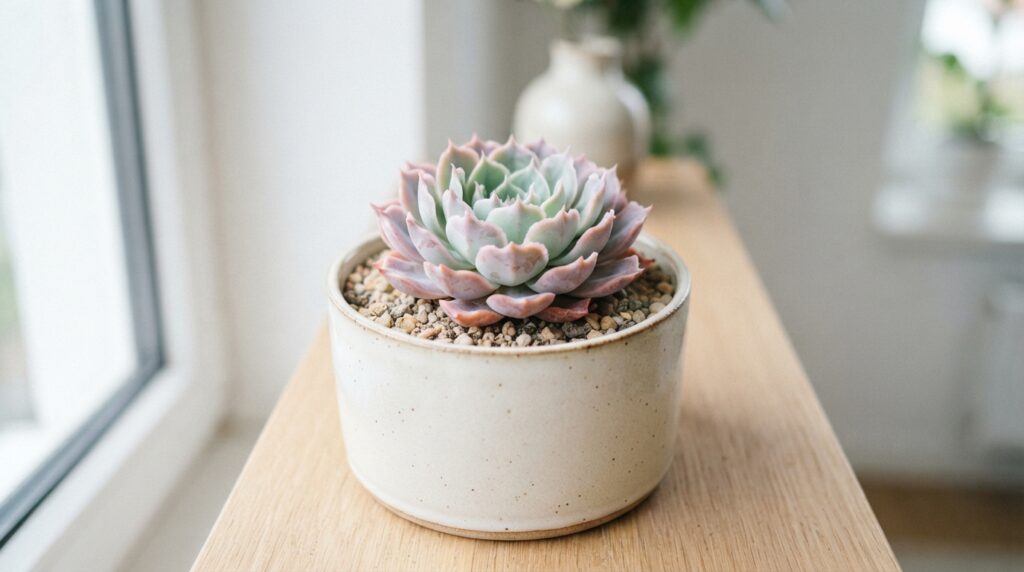
20. Echeveria
Echeveria is grown for its rosette-shaped succulent leaves, but it also produces tall, arching stems bearing small, bell-shaped flowers in coral, orange, or yellow during the warmer months. It is a low-water plant that works well indoors or outdoors in mild climates. If you are new to growing anything with a flowering component, I would point you to our guide on how to plant succulents before starting with echeveria, since the soil and watering rules are different from typical garden flowers.
21. Echinops (Globe Thistle)
Echinops ritro produces perfectly round, spiky, steel-blue flower heads that look like something out of a science fiction illustration. Bees are drawn to it in huge numbers, and the flower heads dry beautifully if you cut them before they fully open. It is drought-tolerant once established and does not need rich soil to perform well.

22. Edgeworthia (Paperbush)
Edgeworthia chrysantha is a winter-blooming shrub that produces clusters of small, tubular, honey-scented yellow flowers on bare branches before the leaves emerge. It blooms in late winter or very early spring, when almost nothing else in the garden is in bloom, making it a genuine standout. The bark has also traditionally been used to make paper in parts of Asia.

23. Epimedium (Barrenwort)
Epimedium grandiflorum produces small, delicate, spurred flowers in shades of pink, purple, white, or yellow that hover just above heart-shaped foliage. It is one of the few flowering perennials that actually thrive in dry shade under trees, a spot where most flowering plants simply give up.

24. Erica (Heath)
Erica carnea, commonly called winter heath, produces tiny, bell-shaped flowers in pink, white, or magenta that bloom in the coldest months of the year when color is hard to find outdoors. It stays low and spreading, making it useful as a flowering groundcover along a border edge or in a rock garden.

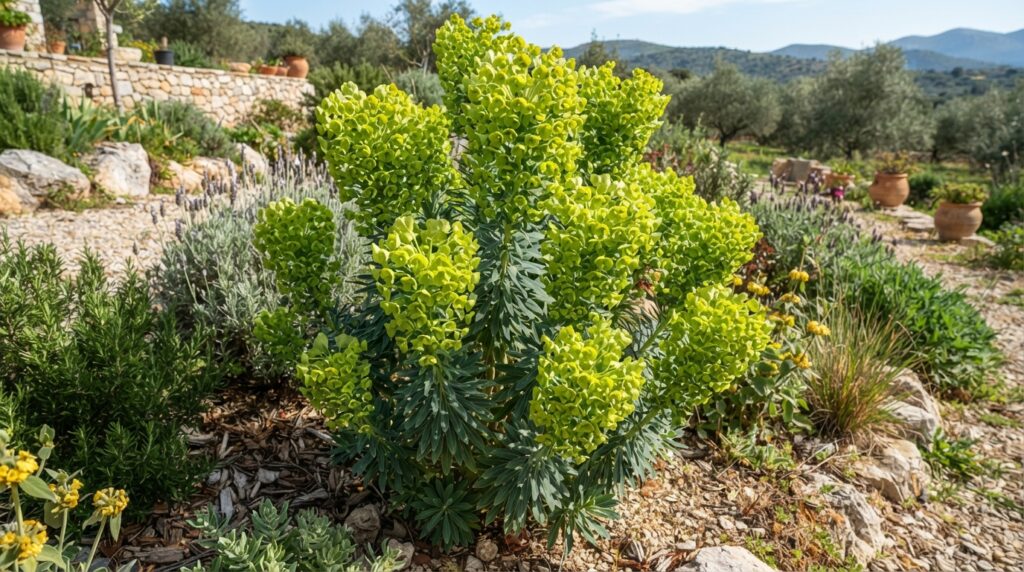
25. Euphorbia
Euphorbia characias is grown for its rounded clusters of chartreuse-green flower bracts that add unusual color to a garden without relying on typical pinks or reds. It is drought-tolerant and structural, holding its shape through winter in mild climates. One word of caution from my own experience: the sap is a skin irritant, so always wear gloves when you cut it back.
26. Empress Tree Flower
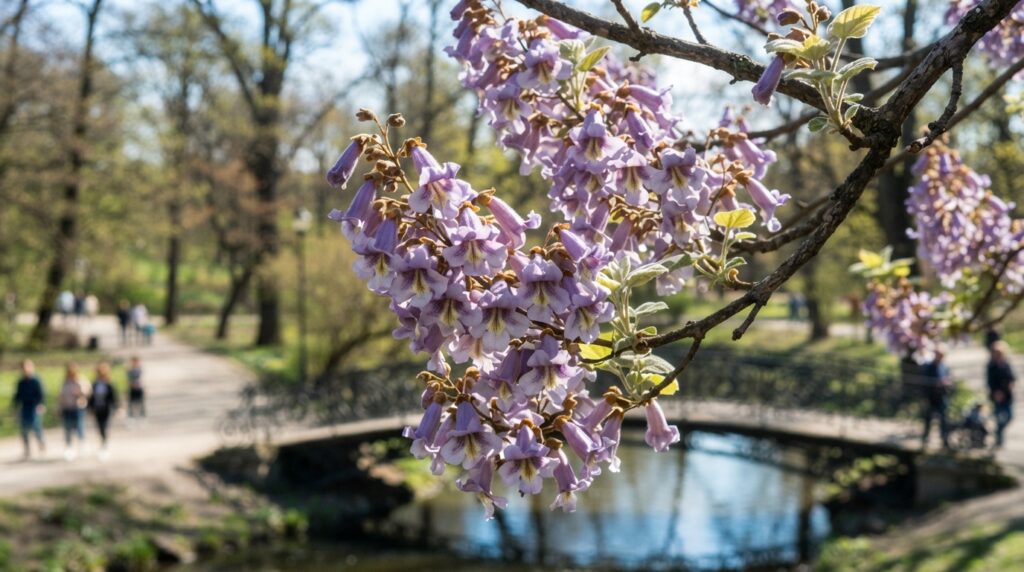
The empress tree, Paulownia tomentosa, produces large clusters of fragrant, trumpet-shaped violet flowers in spring before its enormous leaves fully unfurl. It is one of the fastest-growing flowering trees in the world, which is impressive but also means it needs space and a plan, since it can quickly outgrow a small yard.
27. Emilia (Tassel Flower)
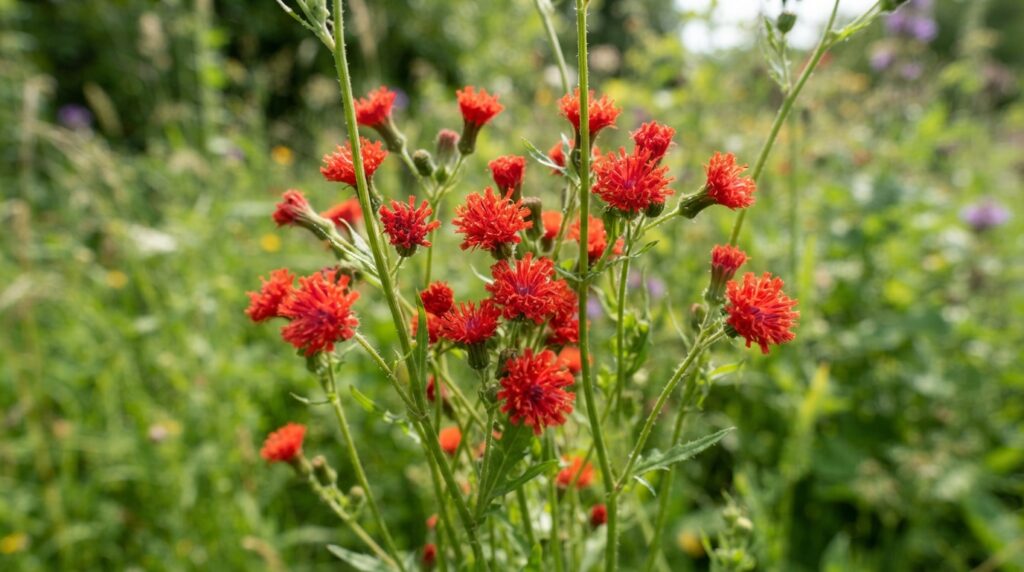
Emilia coccinea, commonly called tassel flower, produces small, brush-like clusters of orange or scarlet flowers on thin, wiry stems that sway in the slightest breeze. It is an easy annual to grow from seed and works nicely mixed into a wildflower meadow or cutting garden for a pop of unexpected color.
28. Erythronium (Trout Lily)
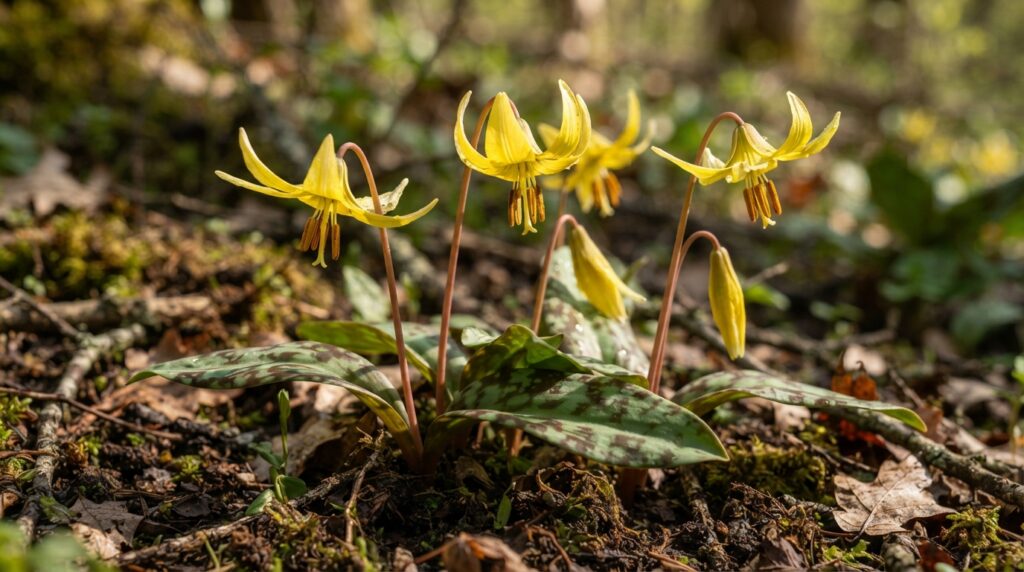
Erythronium americanum, or trout lily, is a small woodland wildflower with mottled leaves and a single nodding yellow flower that appears for just a few weeks each spring before the plant goes dormant. The mottled leaf pattern is where the “trout” nickname comes from, since it resembles the markings on a brook trout’s back.
29. Euryops
Euryops pectinatus is a shrubby, daisy-like flower with bright yellow blooms and finely divided, silvery-green foliage that provides nearly year-round color in mild, frost-free climates. It flowers almost continuously if it gets enough sun, which makes it a reliable filler plant for borders that need color without much fuss.

30. English Marigold
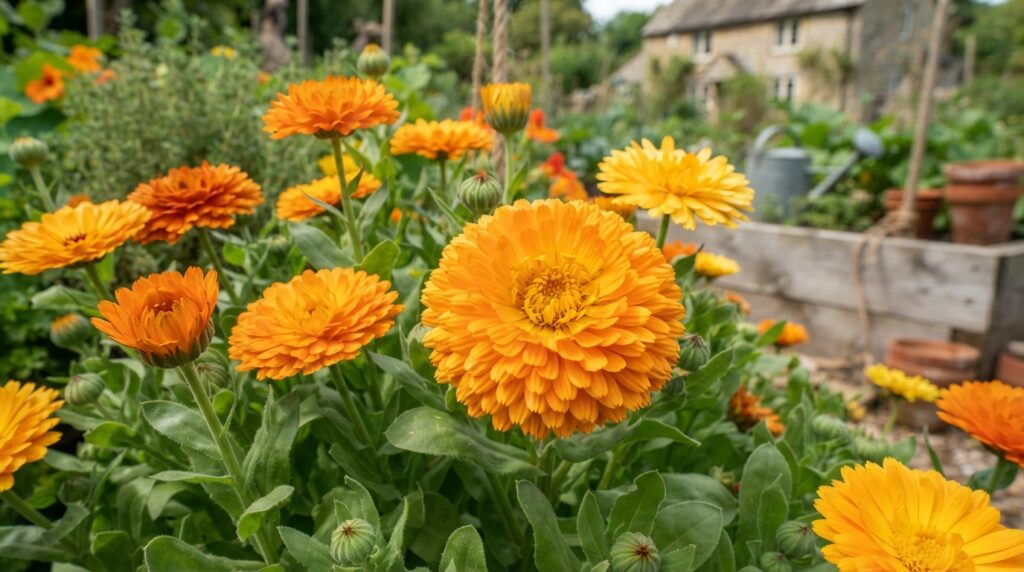
English marigold, more commonly known as calendula or pot marigold, produces cheerful orange-and-yellow daisy-like blooms that open with the sun and close at dusk. It is edible, often used to add color to salads, and the petals have a long history in skin salves and balms. I grow a patch every year specifically to add petals to homemade soap, and it is one of the easiest annuals I have ever planted.
Purple Flowers That Start With E
If you searched for a purple flower that starts with E, a few names on the list above already fit the bill.
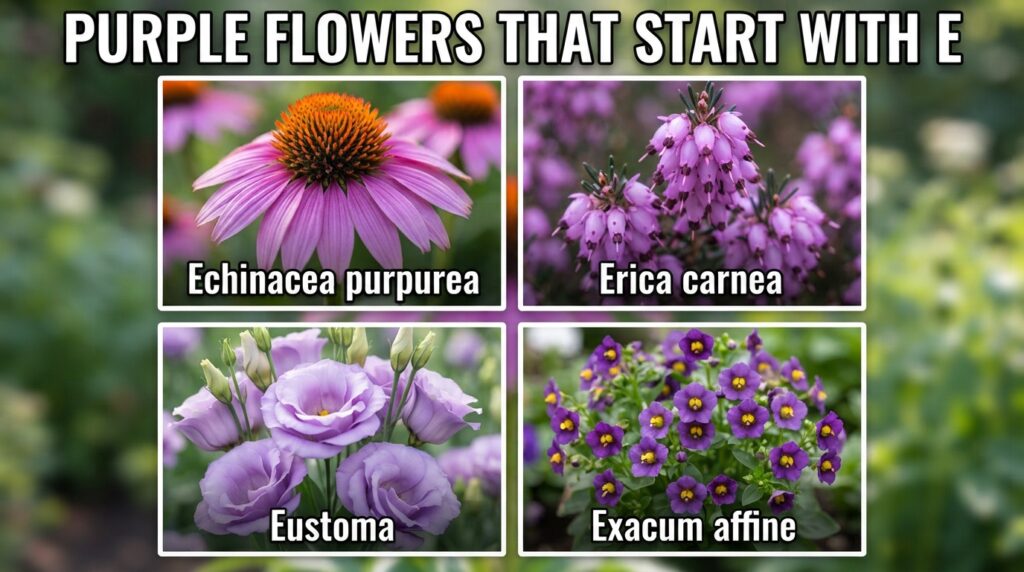
- Echinacea purpurea is the most familiar, with its rich pink-purple petals and spiky center cone.
- Erica carnea offers a purple-pink option for winter color.
- Eustoma, the lisianthus flower, comes in some of the deepest, richest purple shades you will find in a cut flower.
- Exacum affine rounds things out nicely, since its small star-shaped blooms are most commonly sold in a soft violet-purple.
If you generally love purple in the garden, it is worth browsing our flowers that start with A guide as well. Purple shows up across nearly every letter once you start looking closely.
Fragrant Plants That Start With E
A fragrant plant that starts with E is easy to find once you know where to look.
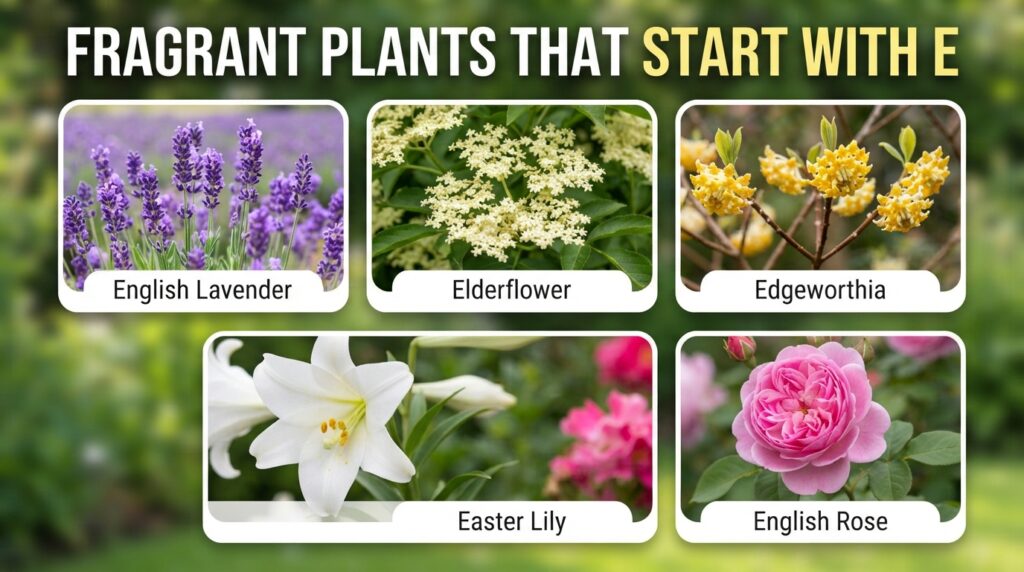
- English lavender is the obvious answer for most people, since its scent is used in everything from soap to essential oil.
- Elderflower has a lighter, sweeter fragrance that comes through strongly in teas and cordials.
- Edgeworthia surprises many people because it blooms in the dead of winter with a rich, honey-like scent that carries through an entire yard.
- Easter lily and English rose round out the list with two of the more classic floral scents most people already recognize from bouquets and holidays.
Flowers That Start With E For Girls
A few flowers on this list also work beautifully as baby names or nicknames. Echo is not a flower itself, but Eden and Erica often draw inspiration from this category.
More directly, two names stand out:
- Lily, taken from Easter lily, and Rose, taken from English rose, are two of the most enduring flower-inspired names in the country.
- Daisy, drawn from the English daisy, has also stayed a popular choice for decades because it feels soft and cheerful without being overly formal.
If you are naming a nursery theme or a baby shower around this idea, English rose and English daisy tend to be the easiest to build a color palette around.
House Plants Beginning With E
Not every flower on this list needs a garden bed.
- Echeveria works well as a low-maintenance flowering succulent for a sunny windowsill.
- Exacum affine, the Persian violet, is one of the better flowering houseplants for someone who wants color indoors without a lot of fuss.
Both stay compact, both tolerate a bit of neglect, and both reward you with real blooms rather than just green foliage.

If houseplants and indoor greenery are new to you, I would also recommend reading our guide on how to dose fertilizer for plants. Overfeeding is the single most common mistake I see with new indoor gardeners, myself included when I first started.
Perennial Plants Beginning With E
Several flowers on this list come back year after year without replanting, which is what makes them worth the initial investment.
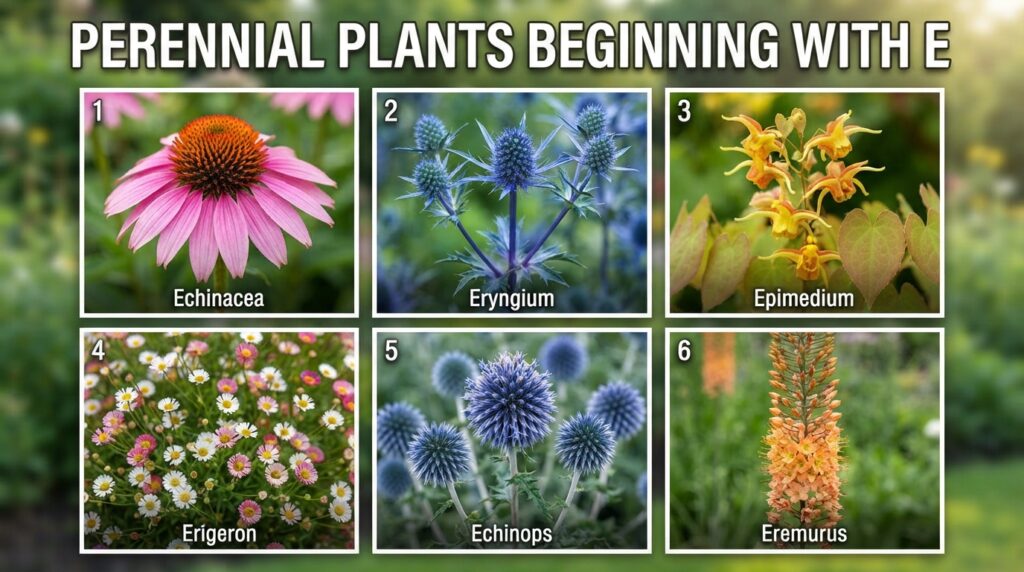
- Echinacea, Eryngium, Epimedium, Erigeron, Echinops, and Eremurus are all true perennials in most U.S. hardiness zones, meaning they die back in winter and return in spring from the same root system.
- Erica and Edgeworthia are technically shrubs rather than herbaceous perennials, but they behave the same way in a garden plan since they come back reliably every season.
If you are building a low-maintenance border, leaning on perennials like these dramatically reduces how much replanting you do each spring.
E Flower Wallpaper Ideas
If you searched for E flower wallpaper, you are probably looking for phone or desktop backgrounds rather than plants for the yard, and that is a fair reason to land on this page too.
- Echinacea’s bold purple and orange coloring photographs beautifully against a plain background and works well as a high-contrast wallpaper.
- Eryngium’s metallic blue tones look almost otherworldly in a close-up macro shot.
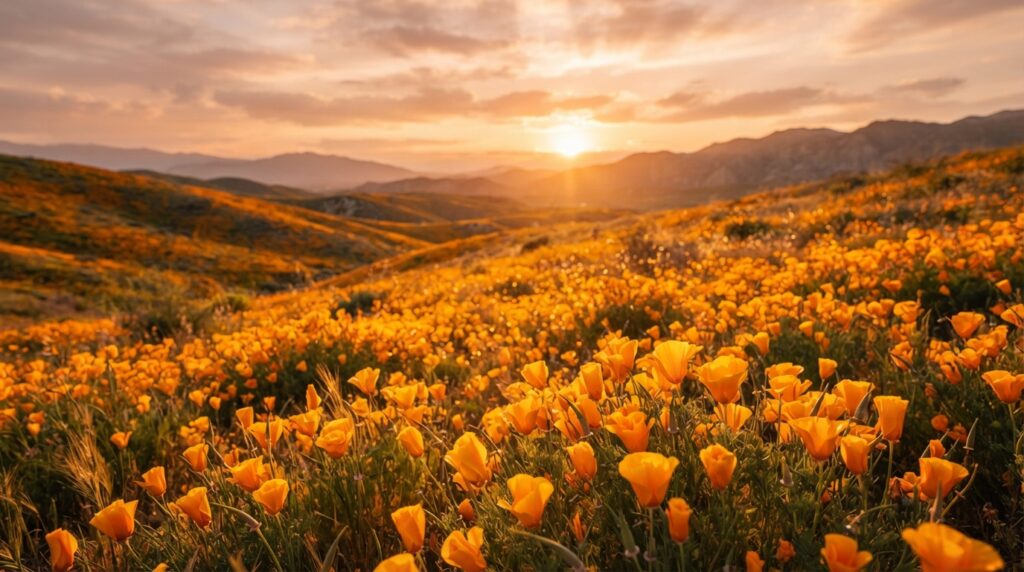
- A field of Eschscholzia, the California poppy, in full golden bloom makes for one of the most striking wide-format wallpapers you can find, especially when shot at sunset, when the petals seem to glow.
If you take your own photos of any of these flowers, a simple close-up with a blurred background usually beats a busy, cluttered shot for wallpaper purposes.
Wildflowers Starting With E
Not everything on this list needs to be planted on purpose.
- Evening primrose, English bluebell, Erigeron, and Erythronium, the trout lily, all grow wild across different parts of the country and Europe without any human help.
- Eschscholzia californica is arguably the most famous wild example, since entire hillsides in California turn gold when it blooms naturally each spring, a sight protected in places like the Antelope Valley California Poppy Reserve.
The Lady Bird Johnson Wildflower Center’s native plant database also lists it as a true perennial wildflower in warmer regions, not just a garden annual.
If you want a low-effort wildflower patch of your own, scattering Eschscholzia or evening primrose seed on bare, sunny soil in the fall is one of the simplest ways to start.
What These E Flowers Symbolize
I did not expect to care about flower meanings when I first started gardening, but once you spend enough time around these plants, the symbolism starts to feel relevant, especially when choosing flowers for a bouquet, a wedding, or a gift.
- Echinacea is tied to strength and healing, which makes sense given how long it has been used in traditional herbal remedies across North America.
- Edelweiss represents courage and devotion, largely because of its association with mountaineering and the difficulty of reaching it in the wild.
- Evening Primrose symbolizes quiet strength and a kind of patience, since the flower waits until evening to reveal itself instead of showing off in the middle of the day.
- English Lavender has long been linked to calm and devotion, which is part of why it shows up so often in wedding bouquets and home fragrance products.
- Elderflower carries a folk association with protection and good fortune, tracing back to old European garden traditions.
Flowers That Start With Each Letter Of The Alphabet
E is just one stop on a much longer list if you are working through the whole alphabet for a project, a nursery theme, or just your own curiosity.
I have already covered several other letters in detail:
- Flowers that start with A
- Flowers that start with B
- Flowers that start with C
- Flowers that start with D
Each one has its own personality once you dig in. If you enjoy moodier, deeper tones rather than bright garden colors, our roundup of dark flowers is also worth a look, since a surprising number of near-black blooms show up across multiple letters of the alphabet.
Expert Tips For Growing Flowers That Start With E
I have grown more than half of the flowers on this list myself, and a few lessons kept repeating no matter which one I was working with.
- Most E flowers, including Echinacea, Eschscholzia, and Erysimum, prefer full sun and well-draining soil. Standing water kills more of these plants than cold ever does.
- Foxtail lily and edelweiss both need sharp drainage specifically, so raised beds or rock gardens outperform flat, heavy clay soil every time.
- Deadheading spent blooms on Erysimum, everlasting flower, and English marigold extends the bloom season noticeably. I skipped this step my first year and regretted it by August.
- Fragrant options like English lavender and elderflower do best planted somewhere you actually walk past often, since you lose most of the benefit if they are tucked in a back corner.
- Houseplant varieties like Exacum and Echeveria need far less water than people assume. Overwatering, not underwatering, is what kills most of these indoors.
Pros And Cons Of Growing E Flowers
| Pros | Cons |
|---|---|
| Huge variety, from houseplants to trees to wildflowers | A few, like edelweiss, are genuinely hard to source and grow |
| Many are drought-tolerant once established | Some, like Euphorbia, have irritating sap that needs careful handling |
| Strong pollinator appeal across the group | Fast growers like the empress tree can outgrow small spaces quickly |
| Options for every season, including winter bloomers like Edgeworthia and Erica | Fragrant types can trigger allergies for sensitive gardeners |
FAQs About Flowers That Start With E
What is a purple flower that starts with E?
Echinacea, also called purple coneflower, is the most common answer. Eustoma, or lisianthus, and Exacum, the Persian violet, are also reliably sold in purple shades.
What is a fragrant plant that starts with E?
English lavender is the most fragrant and widely grown option. Edgeworthia and elderflower are close runners-up, both known for strong, sweet scents.
What flower starts with the letter E and is easy for beginners?
Echinacea and California poppy (Eschscholzia) are two of the easiest E flowers for a beginner gardener. Both tolerate poor soil and need very little maintenance once established.
Are there any flowers that start with E that grow well indoors?
Yes. Exacum affine and flowering Echeveria varieties both do well as houseplants and only need bright, indirect light and moderate watering.
Is edelweiss illegal to pick?
In several European countries, including Austria, Switzerland, Germany, Italy, and France, edelweiss is a protected species, and picking it in the wild is restricted or banned. Growing your own from nursery-sourced seed or plants at home is a legal way to enjoy it.
Final Thoughts
Flowers that start with E cover more ground than most people expect before they actually sit down and look. You get coneflowers that support pollinators for months, alpine rarities that need real patience, houseplants that thrive on a windowsill, and wild poppies that need nothing from you at all.
I genuinely did not expect to end up with 30 solid picks when I started building out my own garden around this letter. I still added Edgeworthia to my yard this past winter after writing most of this list.
If you are planning a bed, a bouquet, or even just a nursery theme around this letter, start with two or three flowers that match your sun, soil, and climate first, rather than trying to grow all 30 at once. That approach has worked far better for me than trying to do everything in a single season.
Have a favorite E flower I missed, or a question about growing one of these where you live? Drop it in the comments and I will get back to you personally.