


Learning how to remove acrylic paint from clothes starts with one question: is the paint still wet, or has it dried into a firm film? Wet acrylic paint can often be flushed out with cool water and liquid detergent, while dried paint usually needs gentle scraping and a fabric-safe solvent treatment.
Act quickly, but do not scrub blindly or put the garment in the dryer. Check the care label and fiber content first, test every treatment on a hidden seam, and work from the least aggressive method to the strongest one your fabric can safely tolerate.
Quick answer: How to Remove Acrylic Paint From Clothes
Lift off excess paint, rinse a wet stain from the back with cool water, work in liquid laundry detergent, and rinse again. For dried paint on a compatible washable fabric, scrape away the surface layer, spot-test 70% isopropyl alcohol, blot the softened paint onto white towels, rinse thoroughly, pretreat with detergent, wash according to the care label, and air-dry until you know the mark is gone.
Why Acrylic Paint Becomes Hard to Remove
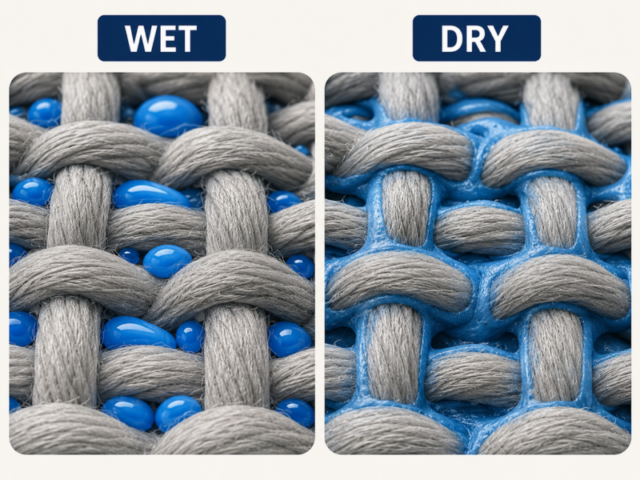
Acrylic paint contains pigment held in a water-based acrylic polymer emulsion. While the paint is wet, water can carry away much of that mixture, which is why a prompt rinse gives you the best chance of a clean result.
As acrylic dries, water leaves and the polymer particles join into a continuous film. Research describing how acrylic paint films form during drying helps explain why an old stain resists plain water even though the fresh paint cleaned up easily.
Heat can make the situation worse by drying the residue more thoroughly and making it harder to lift from the fibers. That is why you should skip the clothes dryer, iron, radiator, and hair dryer until the stain has disappeared.
Check the Garment Before You Treat It
Read both the care instructions and the fiber-content label before reaching for a cleaner. The FTC Care Labeling Rule exists so that garments provide regular cleaning instructions, and those instructions should set the limits for washing, drying, bleaching, and professional care.
The word “acrylic” can describe the paint or the clothing fiber, and that distinction matters. Isopropyl alcohol may help soften dried acrylic paint, but textile-care guidance from the University of Georgia warns that alcohol can fade dyes and damage acetate, triacetate, modacrylic, and acrylic fibers.
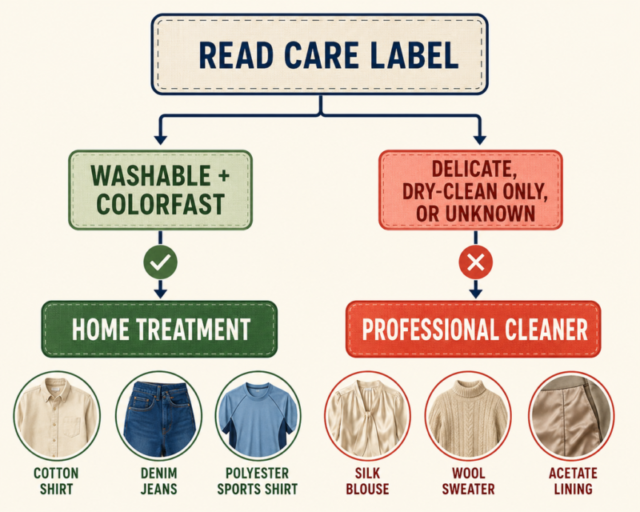
Stop and use a professional cleaner when:
- The label says dry-clean only.
- The fabric is silk, wool, suede, leather, acetate, triacetate, modacrylic, or acrylic fiber.
- The garment has a delicate finish, glued trim, sequins, a printed design, or an unknown fiber blend.
- The stain covers a large area or sits on an expensive, sentimental, or structured garment.
- A hidden-seam test produces color transfer, fading, roughness, stretching, or surface damage.
Tell the cleaner that the stain is water-based acrylic paint and identify every product you already used. This helps the cleaner choose a treatment without unknowingly combining incompatible residues.
What You Need
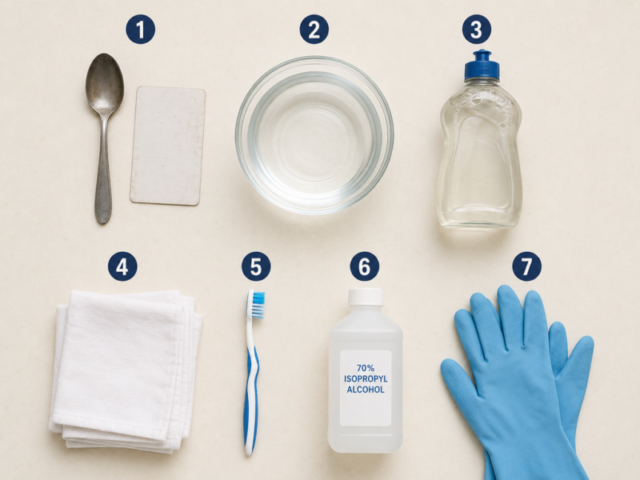
Most fresh stains do not require a cabinet full of specialty products. I recommend starting with simple tools and adding 70% isopropyl alcohol only when the paint is dry and the fabric passes a compatibility test.
| Item | What it does | Important limit |
|---|---|---|
| Spoon, dull knife, or old card | Lifts wet paint or flakes off dried paint | Do not cut, stretch, or abrade the fibers |
| Cool running water | Flushes fresh, waterborne paint | Work from the back of the stain |
| Clear liquid laundry detergent | Suspends loosened paint and pigment | Follow the garment and detergent labels |
| White towels or cloths | Absorb transferred paint and reveal dye loss | Replace or rotate them as they become soiled |
| Soft toothbrush | Gently works detergent through sturdy fabric | Avoid on delicate, fuzzy, or loosely knitted material |
| 70% isopropyl alcohol | May soften dried acrylic film | Spot-test first; unsafe for several fibers and dyes |
| Gloves and good airflow | Reduce direct contact and vapor buildup | Keep alcohol away from children, heat, sparks, and flames |
Plain, fragrance-free 70% isopropyl alcohol is enough for many household stain-removal tasks. The University of Georgia’s fabric-care guidance for rubbing alcohol specifically recommends pretesting and warns that the product is flammable and can harm certain fibers.
How to Remove Fresh Acrylic Paint From Clothes
Fresh paint gives you the best chance of full removal, so begin before it develops a skin. Take off the garment carefully and keep the stained area from touching clean sections.
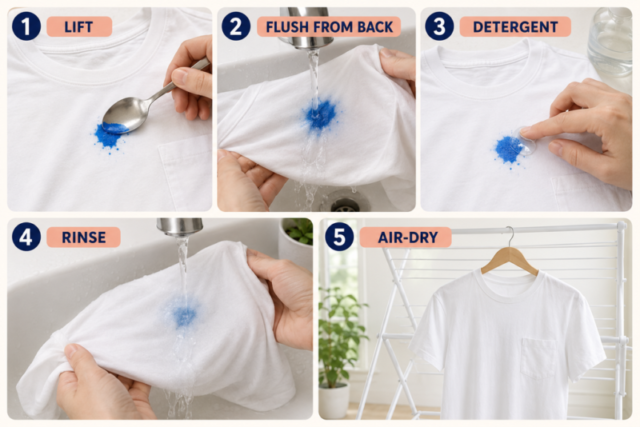
Step 1: Lift away the excess
Use the edge of a spoon, dull knife, or old card to lift paint from the surface. Work from the outside toward the middle so you do not enlarge the stain, and wipe the tool clean after each pass.
Step 2: Flush from the back
Turn the fabric so the reverse side of the stain faces upward, then run cool water through it. This pushes paint back out through the route it entered instead of driving it farther into the weave.
Step 3: Apply liquid laundry detergent
Work a small amount of clear liquid laundry detergent into both sides of the damp stain with your fingers. On durable cotton or denim, you may use a soft toothbrush with light, short strokes, but avoid brushing delicate knits or raised surfaces.
Step 4: Rinse, inspect, and repeat
Rinse thoroughly and inspect the fabric under good light. Repeat the detergent treatment while the stain continues to improve rather than jumping immediately to a stronger chemical.
Step 5: Wash and air-dry
Wash the garment using the warmest water and cycle allowed by its care label. Inspect it before drying, and let it air-dry if any colored shadow remains because dryer heat can make later treatment more difficult.
How to Remove Dried Acrylic Paint From Clothes
Dried acrylic is more difficult because it behaves like a thin plastic film wrapped around the fibers. Complete removal is not guaranteed, especially after the garment has been washed and machine-dried, but a careful treatment may still reduce or remove the mark.
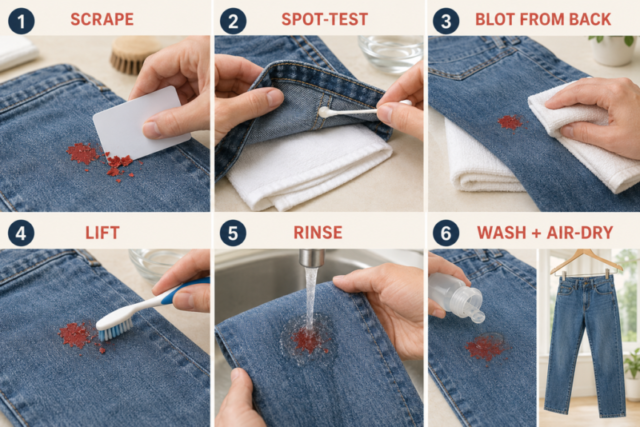
Step 1: Flex and scrape the dry film
Place the garment on a firm surface and gently flex the fabric to crack the paint layer. Lift loose flakes with a spoon, dull knife, or old card, keeping the edge nearly flat so it does not cut threads or create a pale worn patch.
Step 2: Perform a hidden-seam test
Put a white cloth beneath an inside seam and dab on a tiny amount of 70% isopropyl alcohol. Wait briefly, blot, and stop if the garment’s dye transfers, the texture changes, or the fibers become tacky or distorted.
Step 3: Blot with alcohol only if the test passes
Place the stain face down on a stack of clean white towels and apply a small amount of alcohol from the back. Blot with another white cloth, rotate the absorbent towels as paint transfers, and avoid flooding a large area.
Step 4: Gently loosen the softened paint
Turn the garment right side up and use the spoon edge or a soft toothbrush to lift softened particles. Work in short sessions and stop if the fabric begins to pill, fade, stretch, or lose its finish.
Step 5: Rinse out the solvent
Rinse the treated area thoroughly under cool running water before it goes near a washer. Appliance-care guidance also advises rinsing garments treated with flammable substances and keeping them out of the washer or dryer until the solvent has been removed and the item has aired out.
Step 6: Pretreat, wash, and reassess
Apply liquid laundry detergent, allow it to work according to its label, and wash the garment according to its care instructions. Air-dry, inspect under bright light, and repeat only if the stain is improving and the fabric remains undamaged.
The basic approach is consistent with practical guidance for dried paint on washable clothing: scrape first, spot-test, dab rather than smear, rinse thoroughly, wash, and avoid the dryer while residue remains. One detail I would not overlook is the stop point, because preserving the fabric is more important than removing the last faint trace at any cost.
Best Method by Fabric Type
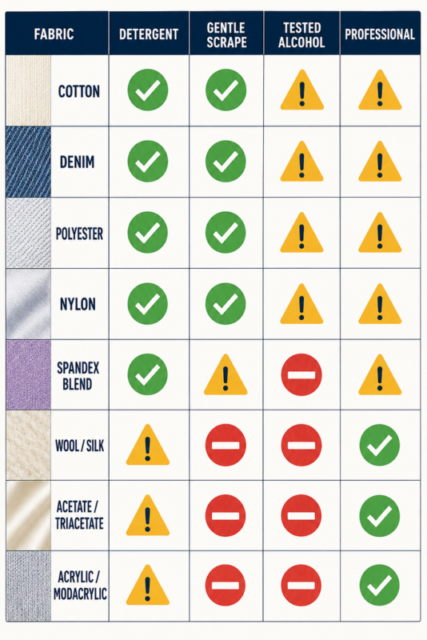
No solvent is safe for every garment. Use this table as a screening guide, then let the actual care label and hidden-seam test decide whether you proceed.
| Fabric | Safer starting approach | Main caution |
| Cotton | Cool-water flush for wet paint; detergent; tested alcohol for dried residue | Dark or printed cotton may lose color |
| Denim | Scrape gently; detergent; tested alcohol if needed | Hard brushing can create a faded patch |
| Polyester | Detergent first; test alcohol carefully | Finishes, prints, and blended fibers may react differently |
| Nylon | Mild detergent and cautious spot-testing | Strong solvents may affect dye or surface finish |
| Spandex blends | Detergent and minimal agitation | Solvents and vigorous stretching can damage elasticity |
| Wool or silk | Blot wet excess and use a professional cleaner | Water, friction, and solvents can distort or discolor fibers |
| Acetate or triacetate | Stop after lifting excess and contact a professional | Alcohol and acetone can damage or dissolve the fiber |
| Modacrylic or acrylic fiber | Professional advice is safest | Alcohol may damage the fiber even though the paint is also called acrylic |
If you regularly handle varied stains, the same label-first habit applies beyond paint. Home Upright’s guide to removing rust stains from clothes safely shows why the cleaner must match the stain instead of relying on one all-purpose remedy.
Do Vinegar, Baking Soda, Hairspray, or Acetone Work?
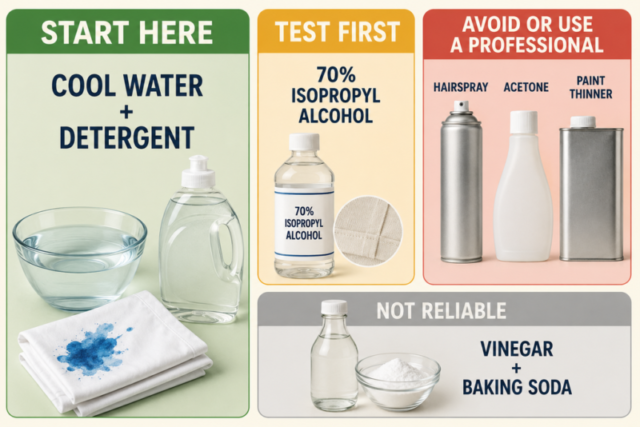
Popular stain hacks are not equally useful, and extra ingredients can create new problems. I would start with water and detergent for wet paint or carefully tested 70% isopropyl alcohol for dried paint on a compatible washable fabric.
| Product | My recommendation | Why |
| White vinegar | Not a first choice for dried acrylic | It may help with some general stains but is not a reliable remover for a cured acrylic polymer film |
| Baking soda | Use only as mild mechanical help, if at all | It does not dissolve dried acrylic and abrasive rubbing can dull fabric |
| Vinegar plus baking soda | Skip it | The acid and base react with each other, reducing the qualities people usually want from either ingredient |
| Hairspray | Skip it | Formulas vary and may add fragrance, oils, resins, dyes, or propellants to the stain |
| Hand sanitizer | Emergency option only | Thickeners, moisturizers, fragrance, and color can leave residue even when alcohol is present |
| Acetone or nail polish remover | Avoid for routine home treatment | It may remove dye, leave residue, or damage fibers, especially acetate |
| Paint thinner or turpentine | Do not use for water-based acrylic on clothing | These strong, flammable solvents increase fabric and safety risks without being the sensible first treatment |
Acetone deserves particular caution. Textile specialists note that it can remove some plastic-type stains but also pull color from dyes and readily dissolve acetate fibers, including acetate linings hidden inside an otherwise sturdy garment.
If you use rubbing alcohol, work in good airflow and keep it away from cigarettes, candles, pilot lights, sparks, and hot appliances. Poison Control’s isopropyl alcohol safety guidance notes that rubbing alcohol is flammable and can be harmful if swallowed or improperly inhaled, so store it securely away from children and pets.
Common Mistakes That Make the Stain Worse
The wrong first move can spread the paint or damage the garment before the cleaner has a chance to work. Avoid these common errors, especially when the fabric is colored, printed, stretchy, fuzzy, or delicate.
- Rubbing wet paint outward: This enlarges the stain and pushes pigment deeper into the weave.
- Starting with a strong solvent: A harsh product may remove dye, soften a print, or damage the fiber before you test it.
- Ignoring the fiber-content label: “Washable” does not mean every solvent is safe.
- Using colored towels: Their dye can transfer, and they make it hard to see whether the garment itself is bleeding color.
- Brushing aggressively: Excess friction can pill knits, lighten denim, and roughen smooth fabric.
- Mixing cleaning chemicals: Combining products creates unpredictable reactions and residues. Never mix chlorine bleach with ammonia, vinegar, alcohol, or other cleaners.
- Machine-drying too soon: Heat can make remaining paint harder to remove and hides your chance to repeat the treatment safely.
Use separate tools and rinse one treatment away before considering another. If the process leaves a faint ring or colored shadow, stop and reassess rather than repeatedly soaking a weakening area.
What to Do If the Paint Still Will Not Come Out
A dry cleaner may be able to improve a stain that survives careful home treatment, particularly when the garment is valuable or delicate. Bring the paint container or a photo of its label if possible, and explain whether the stain has been washed, dried, treated with alcohol, or exposed to another cleaner.
Sometimes a cured stain cannot be removed without unacceptable fading or fiber damage. In that case, consider a patch, embroidery, fabric-safe decoration, shortening or altering the garment, or reserving it for painting and household projects.
For future spills, keep an old shirt or apron near your art supplies and treat paint before it dries. A small, organized stain station in the laundry area can also save time; Home Upright’s laundry room organization ideas can help you keep white cloths, detergent, gloves, and a soft brush easy to reach.
Frequently Asked Questions
Can dried acrylic paint come out of clothes?
Sometimes, but success depends on the paint, fabric, stain age, prior heat exposure, and colorfastness. Scrape away the dry film, spot-test 70% isopropyl alcohol on a compatible washable fabric, blot carefully, rinse, pretreat with detergent, and air-dry after washing.
How do you remove acrylic paint from clothes without rubbing alcohol?
For wet paint, cool water and clear liquid laundry detergent are often the best starting combination. For dry paint, scrape gently and repeat detergent treatment, but take delicate or valuable garments to a professional if the remaining film will not lift.
Does vinegar remove acrylic paint from clothes?
Vinegar is not my first choice for dried acrylic because it does not reliably dissolve the cured polymer film. A detergent treatment for wet paint or carefully tested isopropyl alcohol for compatible dried stains is more targeted.
Does baking soda remove dried acrylic paint?
Baking soda does not dissolve a cured acrylic film. It may add mild abrasion, but friction can fade or roughen fabric, so gentle scraping and a compatible stain treatment are safer choices.
Will hairspray remove acrylic paint from fabric?
Some older tips rely on the alcohol in hairspray, but formulas vary widely. The extra resins, fragrances, oils, dyes, and propellants may create residue, so plain 70% isopropyl alcohol is more predictable when the fabric can tolerate it.
Can I use acetone to remove acrylic paint from clothes?
I do not recommend acetone as a routine home treatment. It can pull garment dye, damage finishes, and dissolve acetate fibers or linings, so a professional cleaner is the safer choice when milder methods fail.
How do I remove acrylic paint from polyester?
Start with cool water and liquid detergent if the paint is wet. For a dry stain, check the full fiber blend and care label, test alcohol on a hidden seam, and stop immediately if the color or texture changes.
How do I get acrylic paint out of jeans?
Lift wet paint and flush it from the reverse, or scrape dry paint gently before a tested alcohol treatment. Use light agitation because hard scrubbing can remove denim dye and leave a pale patch that is more noticeable than the original stain.
Can I remove acrylic paint after the clothes have been washed and dried?
You can try, but heat and time usually make the paint film harder to release. Scrape the residue, perform a hidden-seam test, work in short treatment cycles, and accept that a permanent shadow may remain.
Conclusion
The safest answer to how to remove acrylic paint from clothes is to match the treatment to both the stain and the fabric. Flush wet paint quickly with cool water and detergent, while dried paint needs gentle scraping, a hidden-seam test, and cautious use of 70% isopropyl alcohol only on compatible washable material.
Do not let urgency tempt you into acetone, paint thinner, chemical mixtures, or aggressive scrubbing. Check the care label, rinse treatments thoroughly, air-dry while evaluating the result, and explore Home Upright’s other fabric-stain guides to build a safer laundry routine for the next spill.