


21 Flowers That Start With L for Gardens and Bouquets
Flowers that start with L include lavender, lily, lilac, larkspur, lisianthus, lobelia, lotus, and lupine. Beyond those familiar names, you will find small rock-garden flowers, a winter-blooming hellebore, and plants grown for papery flowers or ornamental seedpods.
The 21 entries below include common flower names and botanical names used in the nursery or florist trade, such as liatris and limonium. Each plant group is counted once: lavender and Lavandula, for example, are not separate additions.
Use the comparison table to find a name quickly, then read its profile for identification clues and growing advice. Seasons refer broadly to outdoor US gardens; species, cultivars, and local weather change the timing.What to know before choosing
- Lavender, lilac, liatris, and selected lobelia and lisianthus cultivars offer purple flowers.
- Lilies, lisianthus, lotus, and selected lupines offer pink blooms.
- Lenten rose and lungwort suit shaded planting areas; lavender needs sun and excellent drainage.
- Common names can overlap. Check the botanical name before buying a plant.
- True lilies are extremely dangerous to cats, and several other plants on this list are poisonous if eaten.
Flowers That Start With L: Quick Comparison
These are useful starting points, not identical care instructions for every species in a genus. Colors refer to available species or cultivars; a single plant will not necessarily produce every listed color. Full sun generally means at least six hours of direct sunlight daily.
Compare 21 flowers by color, season, and use
| Flower | Colors | Typical bloom season | Light | Useful for |
|---|---|---|---|---|
| Lady’s mantle | Yellow-green | Early summer | Sun–partial shade | Soft border edging; bouquet filler |
| Lantana | Yellow, orange, red, pink, white | Summer–fall | Full sun | Warm-season borders and pots |
| Larkspur | Blue, violet, pink, white | Late spring–summer | Full sun | Cool-season cutting gardens |
| Lavatera | Pink, white | Summer–early fall | Sun; light afternoon shade in heat | Large annual flowers |
| Lavender | Lavender-purple | Summer | Full sun | Fragrant borders; dried bundles |
| Lenten rose | White, pink, purple, green | Late winter–spring | Partial shade–shade | Early color in shaded gardens |
| Lewisia | Pink, orange, yellow, white | Spring–summer | Sun–light shade | Rock gardens; sharply drained pots |
| Liatris | Purple, white | Summer | Sun–light shade | Vertical accents; pollinator gardens |
| Lilac | Purple, lavender, pink, white | Spring | Full sun preferred | Fragrant flowering shrub |
| Lily | White, pink, yellow, orange, red | Summer; varies by group | Sun; some groups tolerate shade | Large focal flowers; cut stems |
| Lily of the Nile | Blue, white | Summer | Full sun | Sunny borders; patio containers |
| Lily of the valley | White | Spring | Partial shade–shade | Fragrant groundcover; spreads readily |
| Limonium | Purple, pink, yellow, white | Summer–fall | Full sun | Fresh and dried arrangements |
| Lisianthus | Pink, white, lavender | Summer–fall | Sun; afternoon shade in heat | Rose-like cut flowers |
| Lobelia | Blue, violet, pink, white | Spring–summer; heat-sensitive | Sun–partial shade | Edging and hanging baskets |
| Lotus | Pink; white cultivars | Summer | Full sun | Aquatic containers and ponds |
| Love-in-a-mist | Blue, pink, white, purple | Late spring–summer | Full sun | Direct-sown flowers and seedpods |
| Love-lies-bleeding | Red, burgundy, gold | Summer–frost | Sun–partial shade | Hanging tassels; arrangements |
| Lunaria | Purple | Spring–early summer | Sun–partial shade | Papery seed cases for drying |
| Lungwort | Pink, blue, white | Spring | Partial shade | Cool shade; patterned foliage |
| Lupine | Blue, purple, pink, yellow, white | Spring–early summer | Sun; species-dependent | Flower spikes; cottage borders |
21 Flowers That Start With L, Listed Alphabetically
1. Lady’s Mantle
Botanical name: Alchemilla mollis
Plant type: Herbaceous perennial
Typical bloom season: Early summer
Growing conditions: Sun to shade with adequate moisture; protection from hot, dry exposure
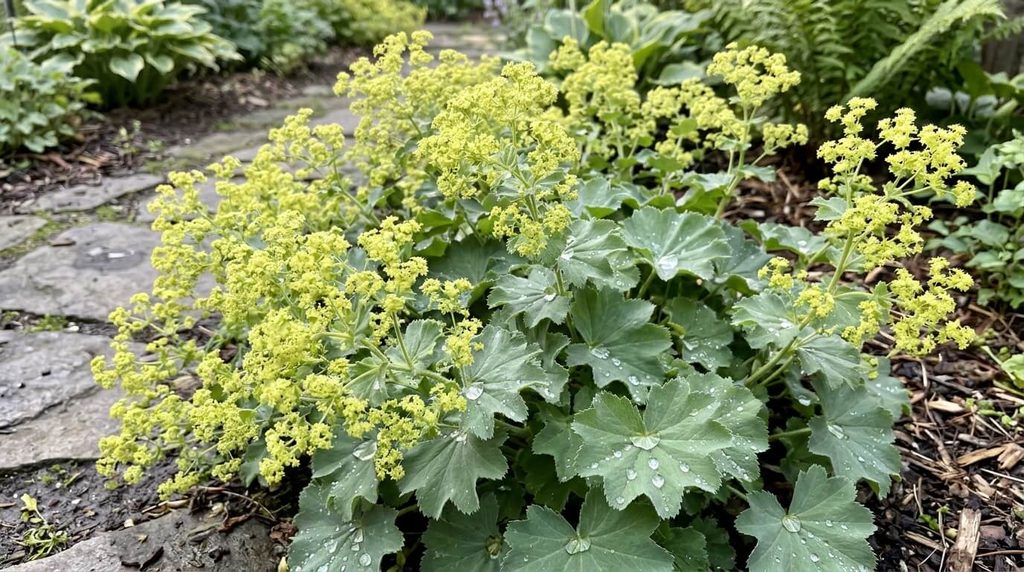
Lady’s mantle offers airy clusters of tiny yellow-green flowers above rounded, softly textured leaves. Its contribution is subtle: it adds a light, frothy layer around larger blooms instead of providing a single dramatic flower.
The foliage also catches droplets after rain. NC State Extension’s lady’s mantle profile notes that the plant can self-seed readily. Removing fading flower stems helps limit unwanted seedlings. Try it at the front of a cottage-style border or as a soft transition between a path and taller planting.
2. Lantana
Botanical name: Lantana camara and garden cultivars
Plant type: Tender perennial shrub; often grown as an annual
Typical bloom season: Summer into fall
Growing conditions: Full sun and well-drained soil
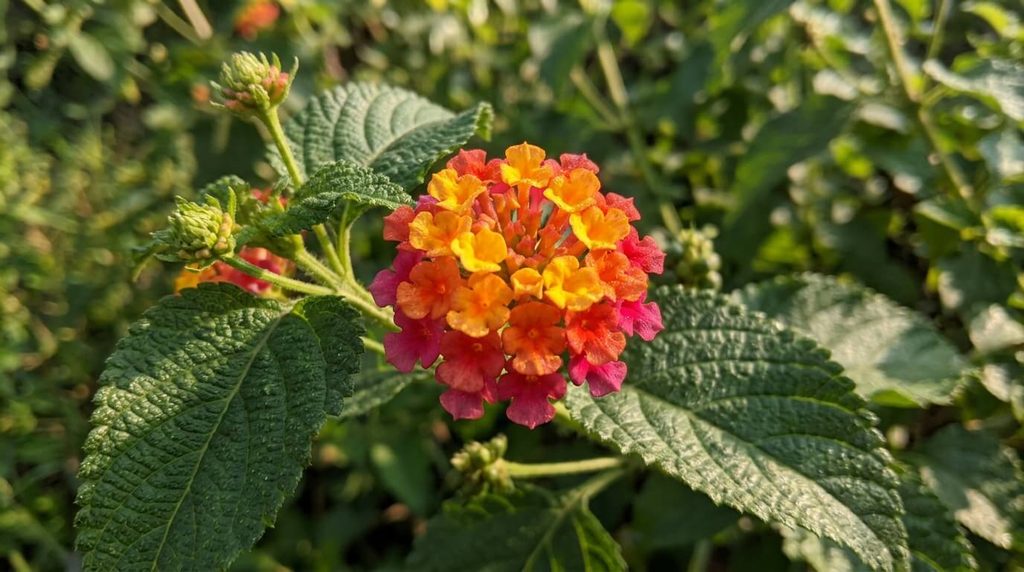
Lantana bears rounded clusters of small flowers, sometimes with several colors in a single cluster. It suits bright summer displays in containers and borders, with compact and spreading forms available.
NC State Extension’s lantana profile notes its drought tolerance and pollinator appeal. However, it can grow aggressively in favorable climates. Check regional invasive-plant guidance before planting, particularly in warm areas where it can persist outdoors. Also check the cultivar’s mature spread rather than assuming a small nursery plant will remain compact. Lantana is poisonous if eaten.
3. Larkspur
Botanical name: Consolida ajacis; also listed as Delphinium ajacis
Plant type: Cool-season annual
Colors and season: Blue, violet, pink, or white; late spring through summer in cool conditions
Growing conditions: Full sun and moist, well-drained soil
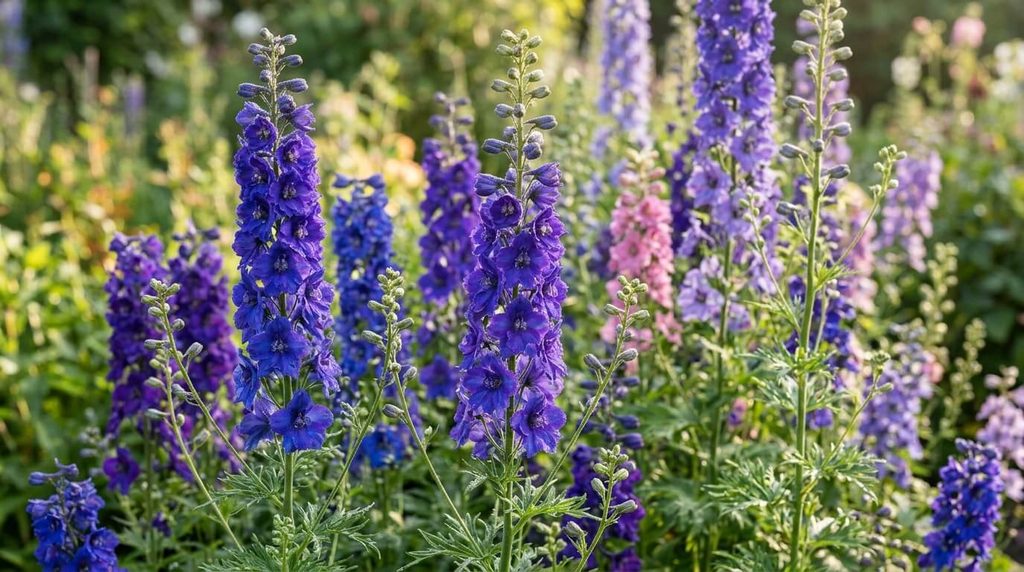
Look for upright flower spikes, finely cut foliage, and a distinctive spur behind each bloom. Annual larkspur works well in cottage borders and for fresh or dried arrangements.
Missouri Botanical Garden’s larkspur profile gives a height of 2–4 feet and notes that southern summer heat can end the display early. Sow in fall in suitable southern climates or early spring farther north. The common name also covers perennial delphiniums, so check the species when buying. Leaves, flowers, and seeds are toxic if eaten.
4. Lavatera
Botanical name: Malva trimestris, formerly Lavatera trimestris
Plant type: Annual
Colors and season: Pink or white; summer to early fall
Growing conditions: Sun and well-drained soil; some afternoon shade in hot locations
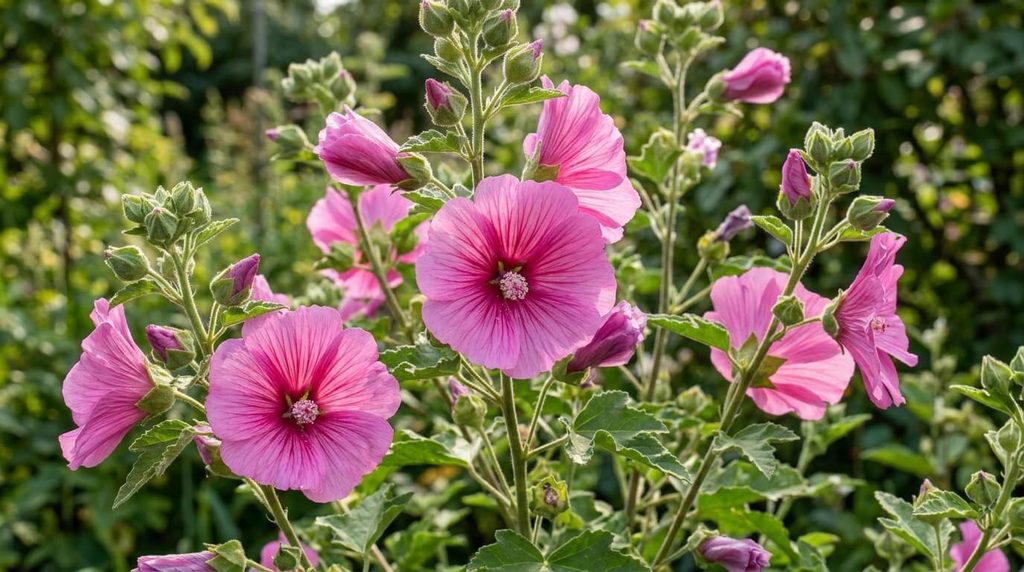
Lavatera has broad, saucer-shaped flowers, often with darker veins running across the petals. It gives a different effect from fine spikes: fewer visual lines and larger patches of color.
The NC State Extension profile for annual lavatera lists plants reaching 2–4 feet tall. Taller selections may need support. Deadheading can extend flowering. This entry refers specifically to annual lavatera; perennial plants sold under the broader lavatera name have different growth habits.
5. Lavender
Botanical name: Lavandula angustifolia
Plant type: Evergreen perennial shrub
Typical bloom season: Summer
Growing conditions: Full sun and exceptionally well-drained soil
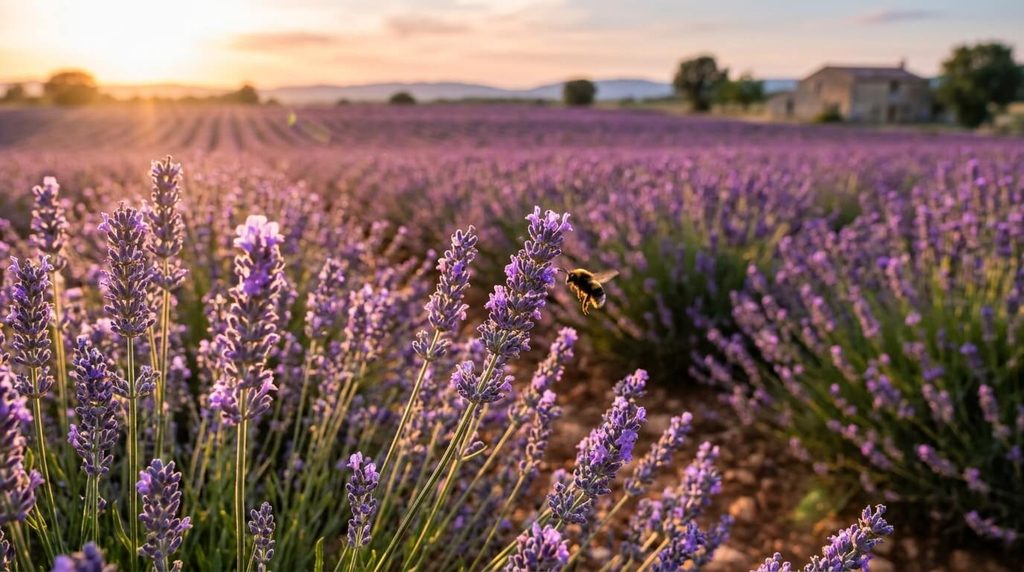
Lavender produces narrow flower spikes above aromatic, gray-green foliage. English lavender works well along sunny paths, in herb gardens, and in containers where you can easily control drainage. Its flowers can also be dried for small decorative bundles.
Main growing pitfall: wet roots. According to NC State Extension’s English lavender profile, heavy clay and overwatering can lead to failure. A spot that stays wet after rain needs attention before planting.
6. Lenten Rose
Botanical name: Helleborus × hybridus
Plant type: Evergreen or semi-evergreen perennial
Typical bloom season: Late winter to spring
Growing conditions: Partial to deep shade and rich, well-drained soil
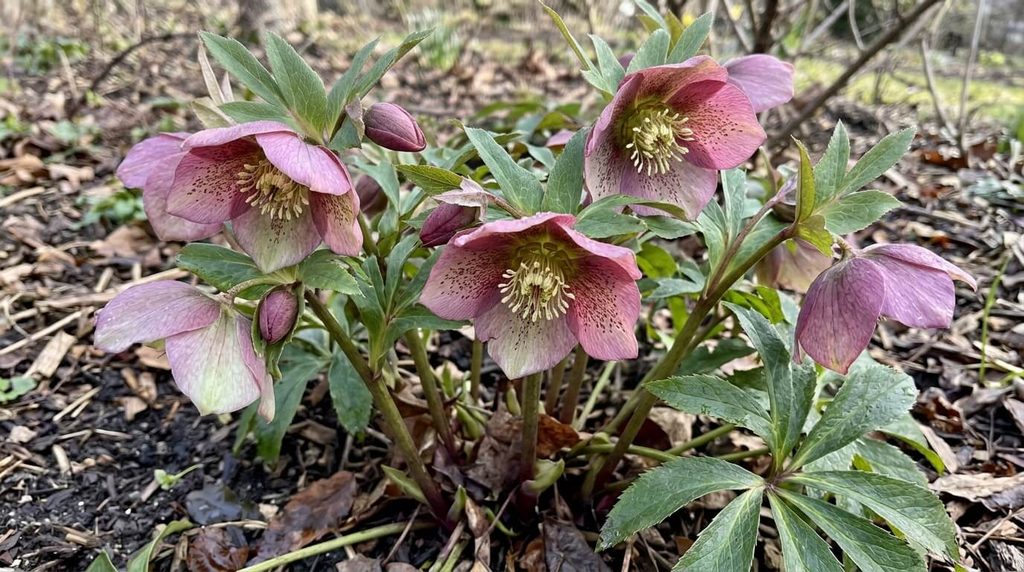
Lenten rose brings early color to shaded gardens with nodding, cup-shaped blooms. Garden selections include white, pink, green, and deep purple shades. Despite the common name, it is a hellebore in the buttercup family, not a true rose.
NC State Extension’s hybrid Lenten rose profile recommends shade and consistent moisture, but not soggy conditions. Place it where the low flowers are visible from a path or window. Wear gloves when handling irritating sap, and keep this poisonous ornamental away from anyone likely to eat plant parts.
7. Lewisia
Botanical name: Lewisia cotyledon
Plant type: Rosette-forming perennial
Colors and season: Pink, orange, yellow, or white; spring and summer
Growing conditions: Sun to light shade with exceptionally good drainage
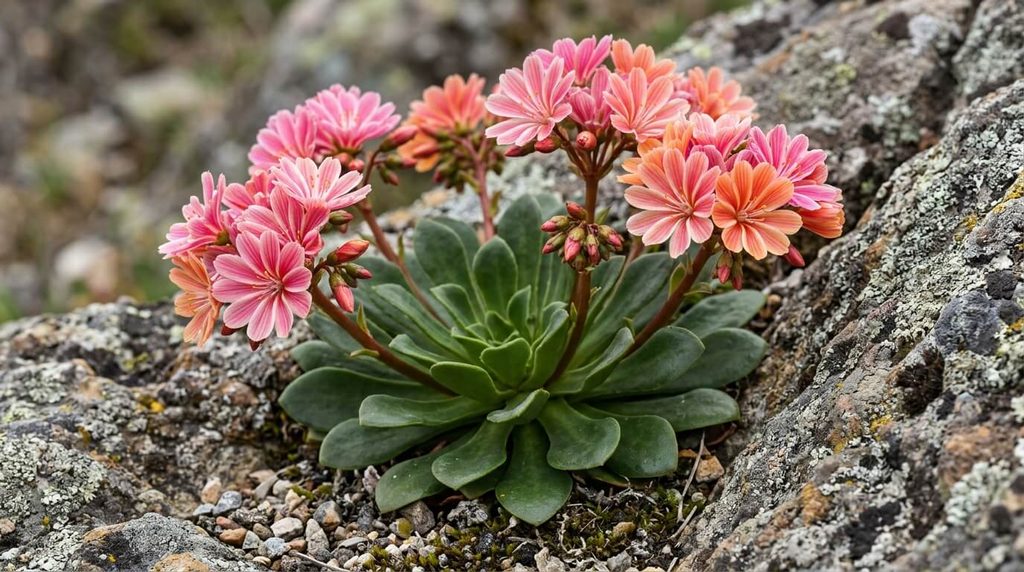
Lewisia carries sprays of bright, open flowers above a low rosette of fleshy leaves. It suits a rock garden, a crevice, or a small container where its flowers can be seen closely.
The Royal Horticultural Society’s lewisia guide emphasizes protection from winter wet. Its fleshy foliage does not mean it will tolerate a waterlogged crown. Choose a sharply drained planting position and adapt sun exposure to local heat.
8. Liatris
Botanical name: Liatris spicata
Plant type: Corm-forming perennial
Typical bloom season: Summer
Growing conditions: Sun to light shade and moist, well-drained soil
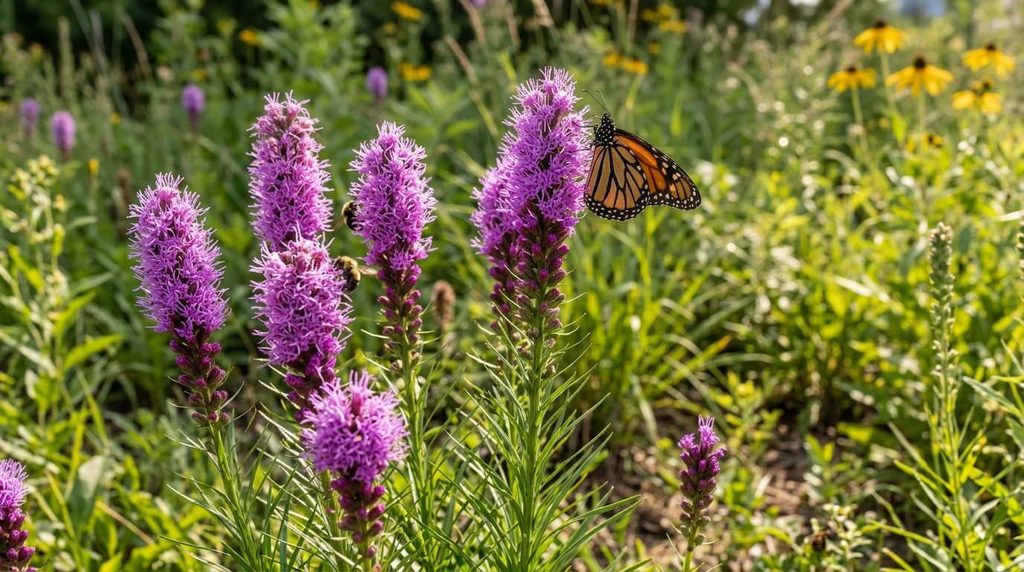
Liatris, also called blazing star, produces upright spikes of fluffy purple flowers above grasslike foliage. White cultivars provide an alternative for a pale planting scheme.
An unusual identification feature is that its flower spikes open from the top downward. NC State Extension’s liatris profile also identifies this species as native to central and eastern parts of North America and valuable to pollinators. Consider it for a native planting where locally appropriate. Avoid assuming every Liatris has identical moisture needs: L. spicata tolerates moister conditions than some related species.
9. Lilac
Botanical name: Syringa vulgaris
Plant type: Deciduous flowering shrub
Typical bloom season: Spring
Growing conditions: Sunny position, good drainage, and sufficient winter chill
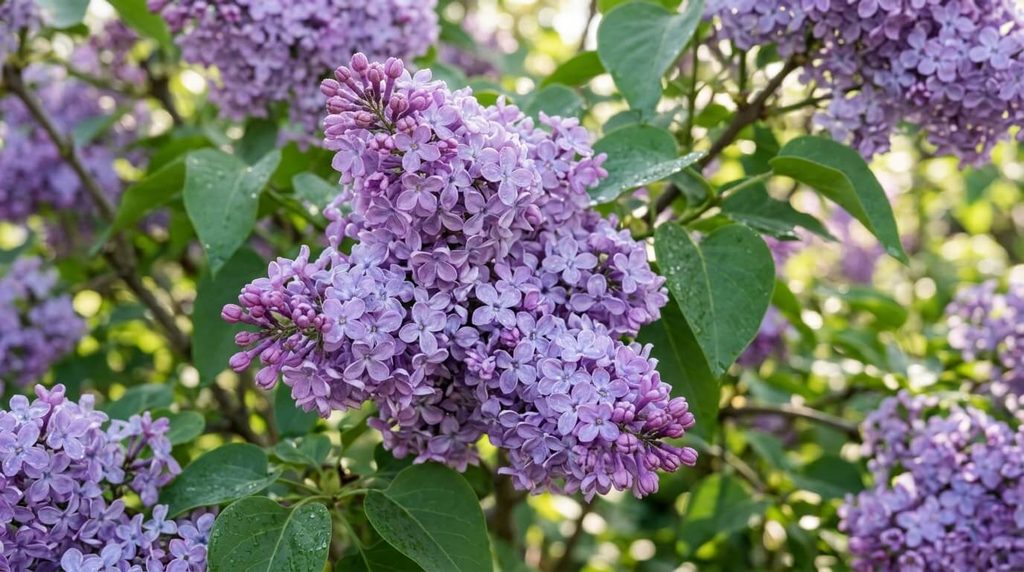
Lilac is a flowering shrub with dense clusters of fragrant blooms. Purple is the familiar color, but cultivars also produce lavender, pinkish, and white flowers. Unlike the smaller plants on this list, lilac needs room for a permanent woody framework.
Climate is a deciding factor. NC State Extension explains that common lilac needs winter chilling for its buds to develop properly. Choose a locally suitable cultivar, and allow room for a shrub rather than a bedding plant.
10. Lily
Botanical name: Lilium species and hybrids
Plant type: Bulb-forming perennial
Typical bloom season: Summer, depending on group
Growing conditions: Generally sun with fertile, well-drained soil
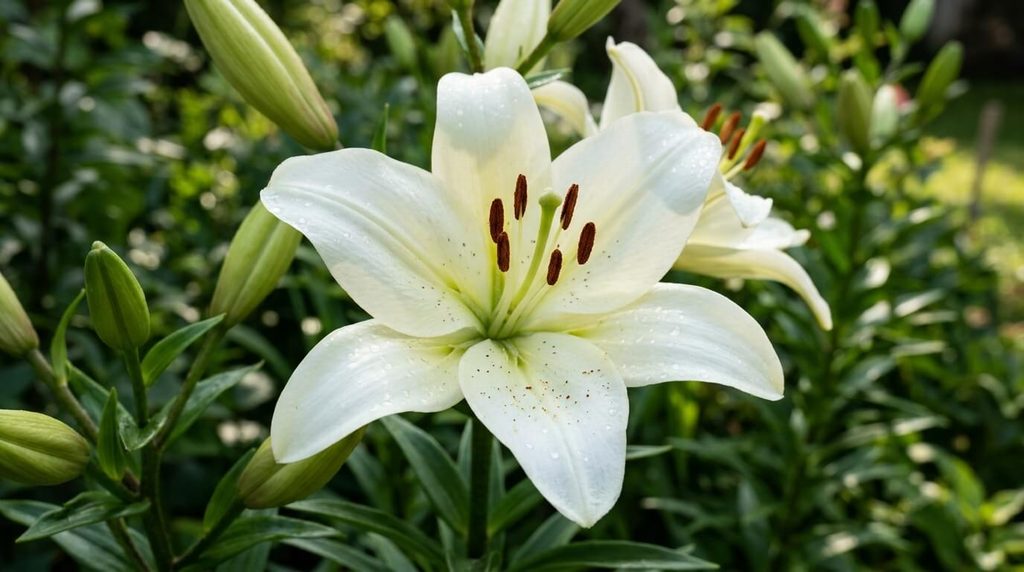
True lilies grow from bulbs and produce prominent flowers with six tepals. Depending on the group, blooms may face upward, outward, or down toward the ground. They add a bold focal point to borders and arrangements.
Choose the group as carefully as the color. NC State Extension’s lily guide distinguishes generally unscented Asiatic lilies from fragrant Oriental and trumpet types. Mature height also varies considerably. Taller selections may need support. In a household with cats, choose a different flower because true lilies present a severe poisoning risk.
11. Lily of the Nile
Botanical name: Agapanthus praecox; other agapanthus species and hybrids share the name
Plant type: Clump-forming perennial
Colors and season: Blue or white; summer
Growing conditions: Full sun and fertile, moist, well-drained soil
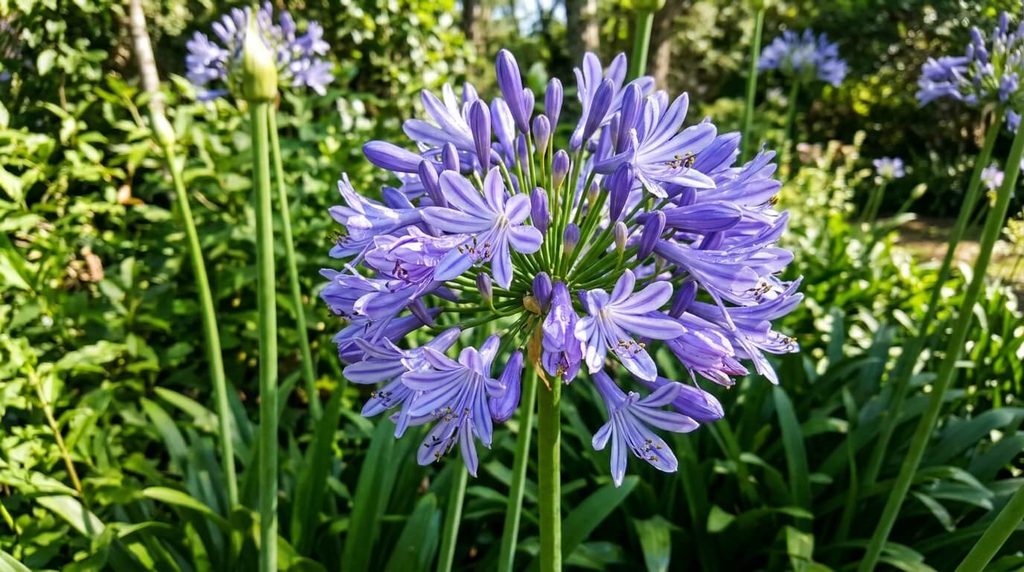
Lily of the Nile produces rounded clusters of tubular flowers on tall, leafless stems above straplike foliage. Unlike lotus, it is a land-grown border or container plant, not a pond plant.
NC State Extension’s Agapanthus praecox profile recommends container growing with winter protection in colder regions. Hardiness varies among agapanthus species and cultivars; do not assume every plant sold as “African lily” survives the same winter. Its sap can irritate skin, and you should not eat plant parts.
12. Lily of the Valley
Botanical name: Convallaria majalis
Plant type: Rhizome-spreading perennial
Typical bloom season: Spring
Growing conditions: Partial to full shade, usually with moist, organic-rich soil
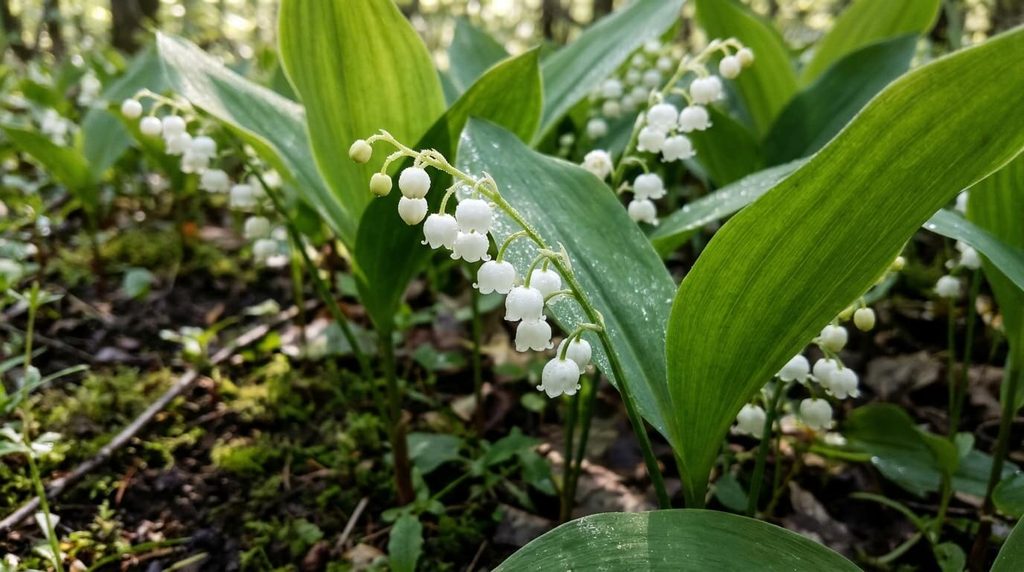
Lily of the valley carries small, fragrant white bells on arching stems. Its low growth makes it visually appealing beneath shrubs or along shaded paths, but you should consider it carefully before planting.
NC State Extension notes that lily of the valley spreads by rhizomes and can crowd out neighboring plants. It is reported as invasive in some regions. It is also poisonous. Despite the shared word “lily,” it belongs to a different botanical family from true Lilium lilies and should not be given the same care or safety assumptions.
13. Limonium
Botanical name: Limonium sinuatum
Plant type: Short-lived perennial, commonly grown as an annual
Colors and season: Purple, pink, yellow, white, and other cultivar shades; summer to fall
Growing conditions: Full sun with light, well-drained soil
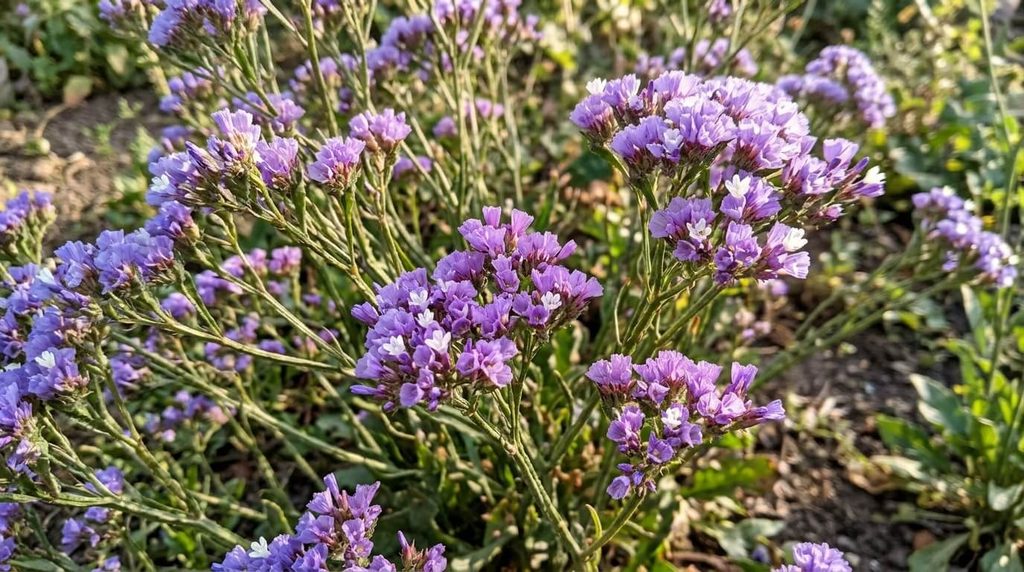
Often sold as statice or sea lavender, limonium works well in fresh and dried arrangements. Its papery, colorful display lasts after the small true flowers fade; much of that color comes from persistent calyces, the outer flower structures.
NC State Extension’s statice profile warns against overwatering because crown and root rot can develop. Despite the name “sea lavender,” it is not a true lavender and does not share lavender’s characteristic scented foliage.
14. Lisianthus
Botanical name: Eustoma grandiflorum
Plant type: Usually grown as an annual
Typical bloom season: Summer to fall
Growing conditions: Well-drained soil with sun; afternoon shade can help in hot locations
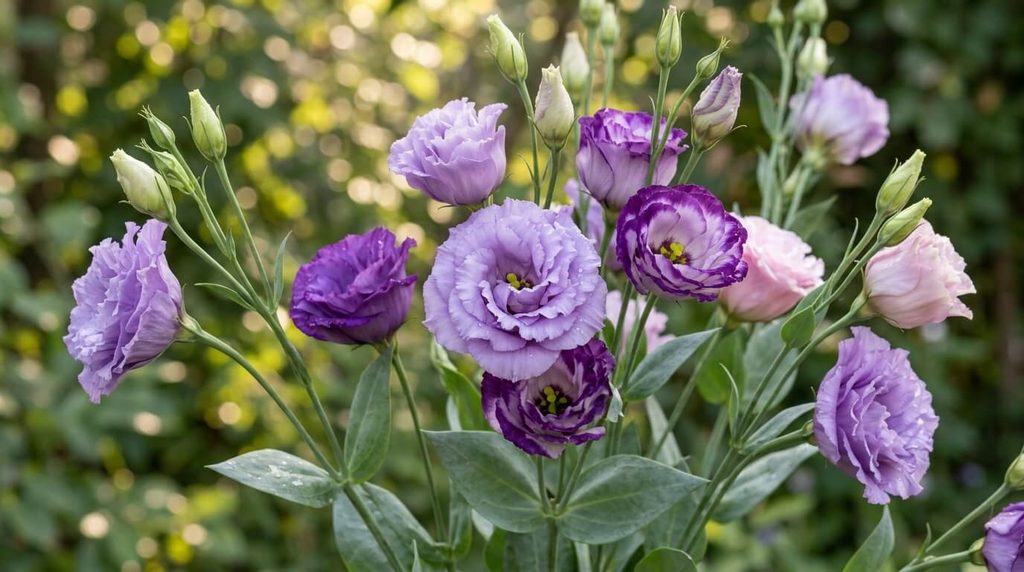
Lisianthus has elegant, flaring flowers, with double forms resembling small roses. Pink, white, and lavender selections make it useful for bouquets and a coordinated cutting garden.
Starting with young plants is often more practical than sowing seed. NC State Extension notes that lisianthus develops slowly from very small seeds. Buying transplants can shorten the wait and simplify the early growing stage. Choose a cultivar for your purpose: a compact patio plant and a tall cut-flower selection may look similar in a close-up photograph but behave differently in the garden.
15. Lobelia
Botanical name: Lobelia erinus
Plant type: Tender perennial; usually grown as an annual in colder climates
Typical bloom season: Spring and early summer; longer in favorable conditions
Growing conditions: Sun to partial shade and consistently moist, well-drained soil
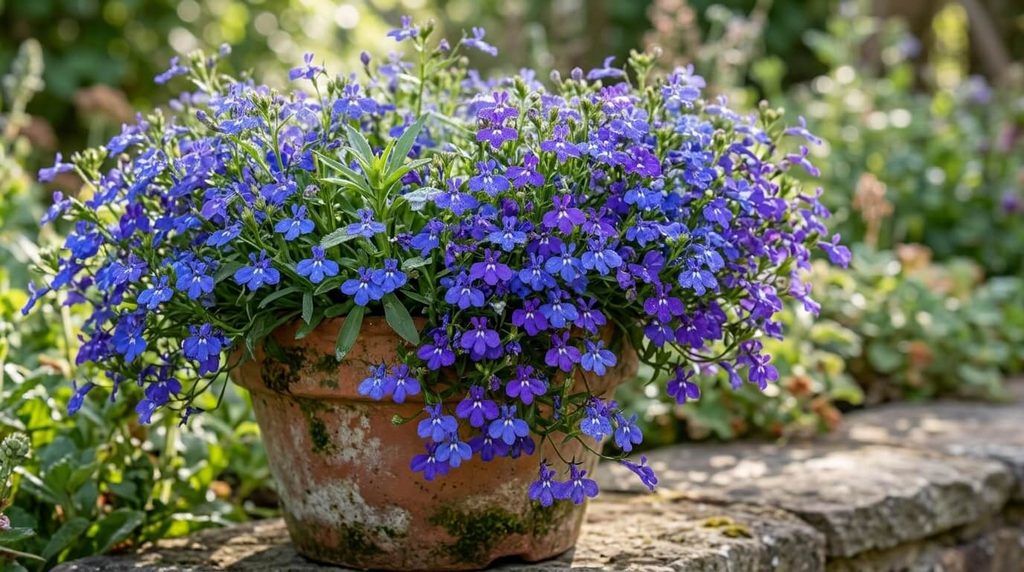
Edging lobelia produces masses of tiny flowers close to the foliage. Trailing forms soften the sides of hanging baskets, while upright types make neat borders around larger container plants.
Its small flowers have a two-lipped shape, often with a pale eye. Blue, violet, white, and pink cultivars are available. NC State Extension describes edging lobelia as better suited to cool spring conditions than intense summer heat. Do not treat it like drought-tolerant lavender. Its watering needs are different, and a basket that dries out repeatedly can lose its display.
16. Lotus
Botanical name: Nelumbo nucifera
Plant type: Aquatic perennial
Typical bloom season: Summer
Growing conditions: Sunny aquatic planting with roots in submerged soil
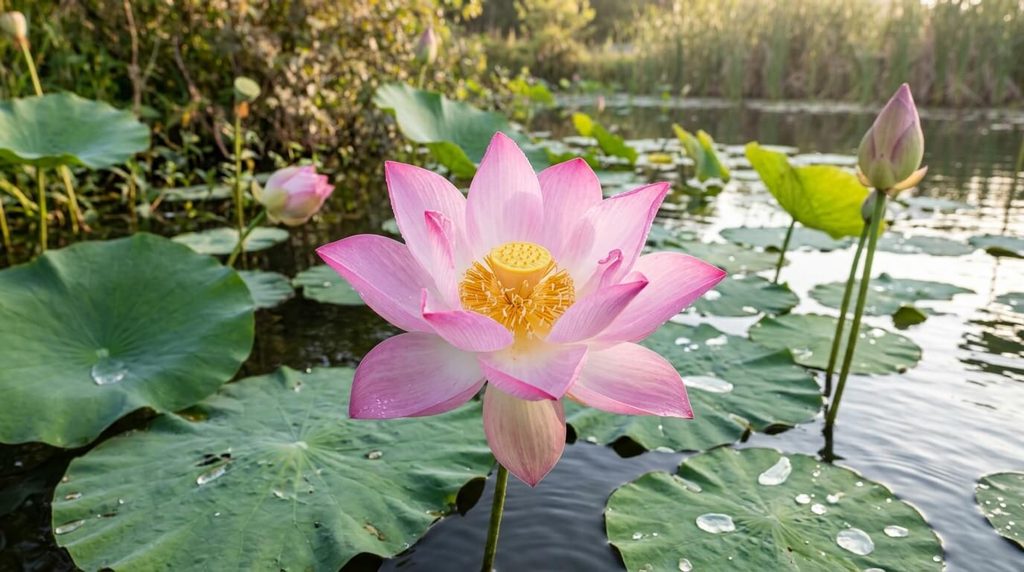
Lotus produces large flowers and rounded leaves, often held above the water. It belongs in a purpose-designed water garden or suitable aquatic container, rather than a regularly watered flower bed.
NC State Extension’s sacred lotus profile describes its spreading rhizomes and notes regional restrictions. Check local rules before introducing it to an outdoor pond, and keep it out of natural waterways. Match your container to the cultivar’s eventual size. A photograph of a single flower does not show how much room the mature plant may need.
17. Love-in-a-Mist
Botanical name: Nigella damascena
Plant type: Annual
Typical bloom season: Late spring to summer, depending on sowing and climate
Growing conditions: Full sun with consistent moisture and good drainage
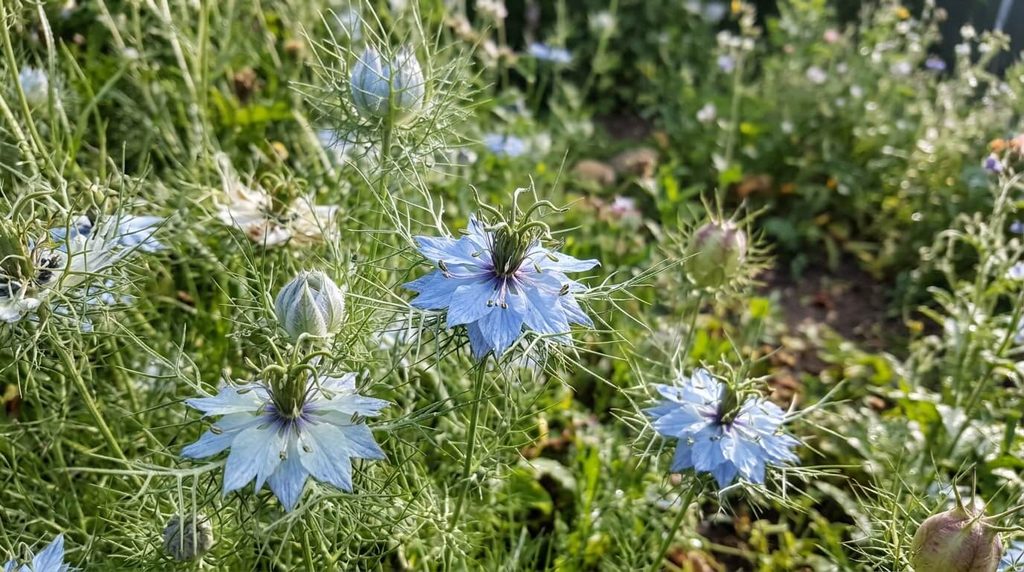
Love-in-a-mist has delicate flowers surrounded by finely divided, lacy foliage. Blue is a familiar color, but pink, white, and purple selections broaden its appeal.
Its seedpods can be as interesting as its flowers. NC State Extension recommends direct sowing for love-in-a-mist because it dislikes transplanting. Decide whether you want more flowers or ornamental pods: deadheading removes the developing pods, while leaving them allows seed production. It can self-seed, so watch for seedlings if you prefer a tightly managed border.
18. Love-Lies-Bleeding
Botanical name: Amaranthus caudatus
Plant type: Annual
Typical bloom season: Summer until frost
Growing conditions: Sun to partial shade and moist, well-drained soil
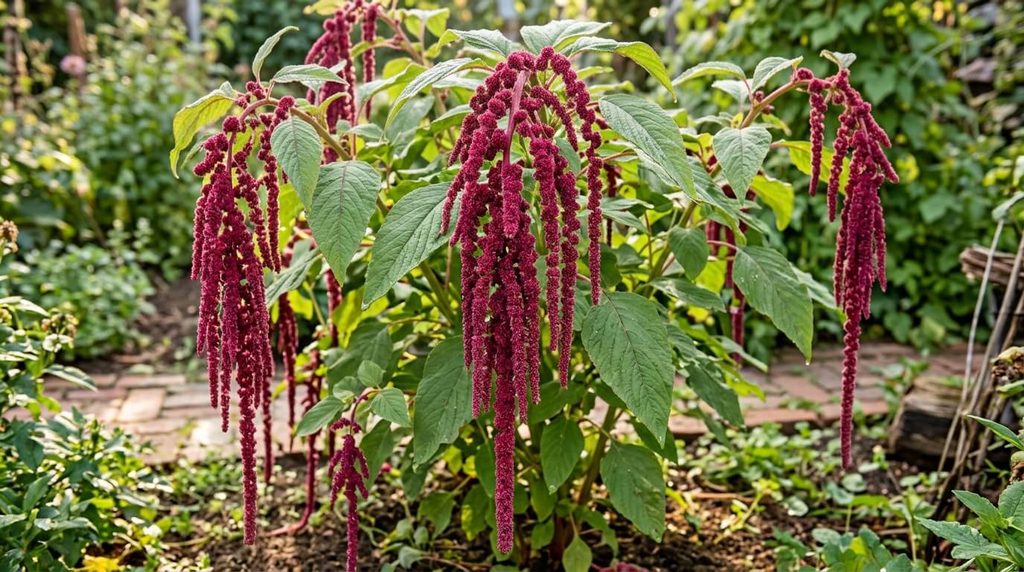
Love-lies-bleeding produces long, hanging flower tassels. Red and burgundy forms add a strong contrast to upright spikes or rounded flowers; gold forms offer a lighter variation.
NC State Extension’s plant profile lists a typical height of 3–5 feet. Give it room to reach its mature size, and plant outdoors after the risk of frost has passed. It can contribute fresh or dried material to arrangements.
19. Lunaria
Botanical name: Lunaria annua
Plant type: Usually biennial
Typical bloom season: Spring to early summer
Growing conditions: Sun to partial shade and moist, well-drained soil
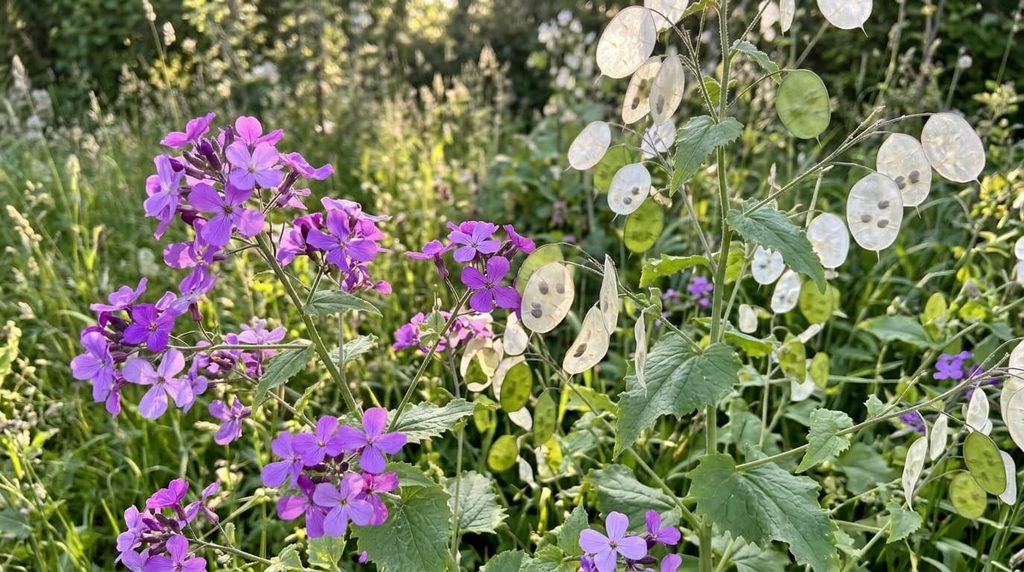
Lunaria, also called honesty or the silver dollar plant, produces purple flowers followed by flat, papery seed cases. These translucent discs are the feature many people recognize from dried arrangements.
Despite the species name annua, it commonly behaves as a biennial, growing foliage before flowering in its second year. NC State Extension’s lunaria guide also warns about prolific self-seeding and invasive behavior in some areas. Check regional guidance before planting, especially near woodland or other natural habitats.
20. Lungwort
Botanical name: Pulmonaria saccharata and garden hybrids
Plant type: Herbaceous perennial
Typical bloom season: Spring
Growing conditions: Cool, moist, organic-rich soil in a shaded planting area
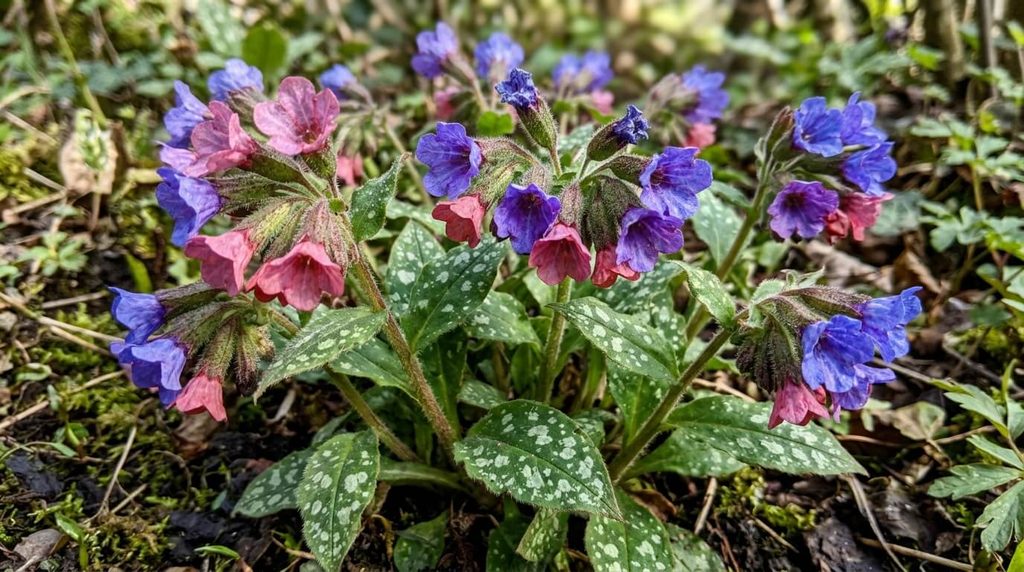
Lungwort combines small spring flowers with decorative foliage. Depending on the selection, flowers may be pink, blue, or white, while spotted leaves continue to provide interest after flowering.
Choose it for a cool, sheltered bed where its patterned leaves remain visible after spring flowering. NC State Extension’s lungwort profile emphasizes cool, moist soil and identifies cultivars with different flower colors. Select by the named cultivar if a particular shade matters.
21. Lupine
Botanical name: Lupinus species and hybrids
Plant type: Annual or perennial, depending on species
Typical bloom season: Spring to early summer
Growing conditions: Species-dependent; many garden hybrids favor cool conditions
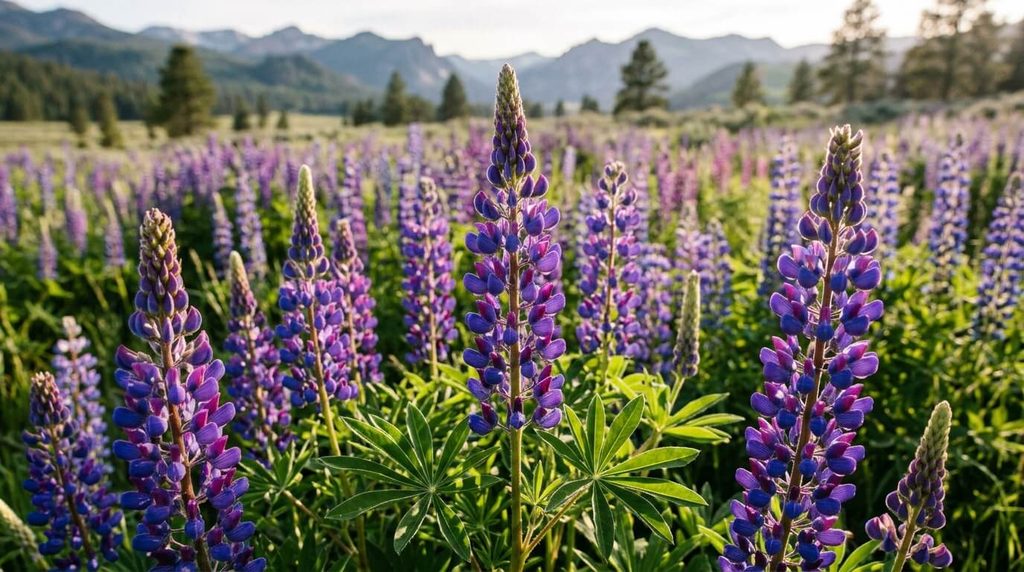
Lupines carry pea-shaped flowers on upright spikes above divided foliage. Garden selections offer blue, purple, pink, yellow, and white blooms, making them useful when you want vertical color.
The fanlike leaves help distinguish lupines from other spiky flowers such as larkspur. NC State Extension’s lupine guide highlights how difficult many garden lupines are in hot, humid conditions. Check the species before buying for a native garden or warm region. The spelling “lupin” refers to the same general group; it is not a separate flower to count twice in an alphabetical list.
Find an L Flower by Color
Purple Flowers That Start With L
Choose from lavender, lilac, liatris, larkspur, limonium, and purple cultivars of lobelia, lisianthus, lupine, or Lenten rose. Lunaria also provides purple spring flowers.
For a narrow vertical accent, compare liatris and larkspur. For low container color, consider lobelia. For a permanent woody feature, look at lilac. Check cultivar photographs: a pale lavender and a deep plum can both be sold as purple.
For a wider planting palette, see HomeUpright’s guide to blue and purple flowers for gardens and bouquets.
Pink Flowers That Start With L
Pink choices include lily, lisianthus, lavatera, lotus, lewisia, and selected cultivars of lupine, larkspur, lantana, lobelia, Lenten rose, lungwort, love-in-a-mist, and limonium.
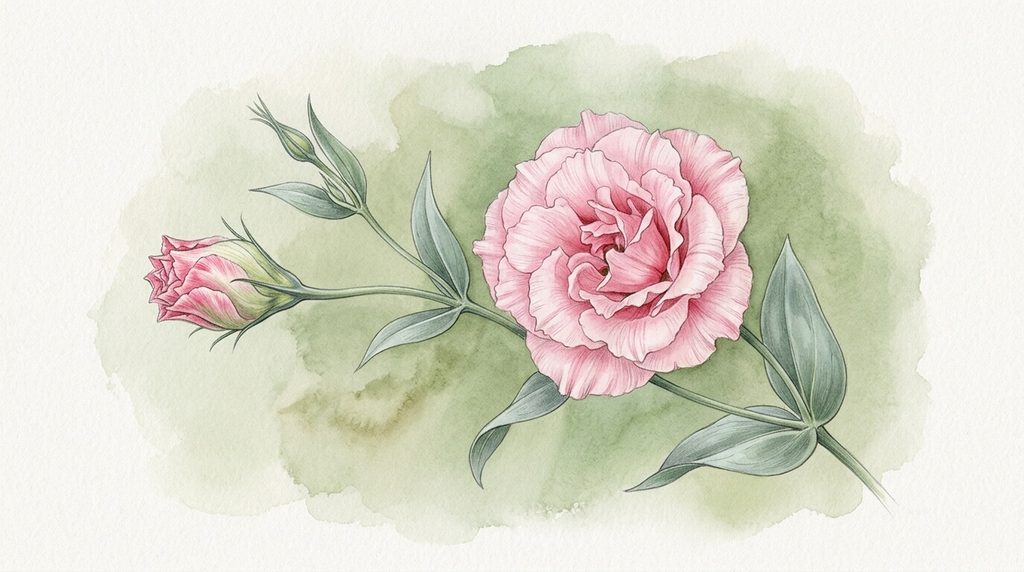
Lisianthus gives a bouquet layered, rose-like flowers; lavatera offers open, saucer-shaped blooms in a border. Lotus needs an aquatic setup, while lewisia needs sharp drainage. Color alone cannot make these plants interchangeable.
White, Yellow, and Red Options
- White: Lily, lilac, lisianthus, lobelia, lavatera, lily of the Nile, and lily of the valley.
- Yellow or yellow-green: Lantana, selected lilies and lupines, yellow limonium, and lady’s mantle.
- Red or burgundy: Love-lies-bleeding, selected lilies, lantana, and some lupine cultivars.
Each list describes available selections, not every member of a plant group. Blue and violet flowers can also look different under changing light or in edited product photographs.
Which L Flowers Fit Your Garden or Bouquet?
For Sunny Borders and Containers
Lavender suits a sunny spot with free drainage. Lantana is an option for warm-season color where locally appropriate, while lobelia suits a container that can be watered consistently. Lewisia fits a small, sharply drained pot or rock-garden position.
A useful pairing rule: don’t put moisture-loving lobelia and lavender on the same watering routine just because both offer purple flowers. Give each the conditions its roots need.
For Shade and Early Flowers
Lenten rose provides late-winter to spring interest; lungwort adds spring flowers and patterned foliage. Lady’s mantle can soften a partly shaded border. Lily of the valley also tolerates shade, but assess its toxicity and spreading habit before using it.
For Cutting and Drying
Compare lisianthus for layered focal flowers, larkspur and liatris for upright lines, and lady’s mantle for airy filler. Consider limonium, lunaria seed cases, and love-in-a-mist pods for dried material. An attractive seedpod is a different feature from a long-lasting fresh bloom.
Garden sunlight instructions do not carry over to cut stems. Next, read whether cut flowers need sunlight and how to position a vase.
For an Annual or Perennial Display
Larkspur, annual lavatera, love-in-a-mist, and love-lies-bleeding complete their life cycle in one season. Lavender, liatris, lungwort, and Lenten rose can return where conditions are suitable. Lilac forms a permanent woody shrub, while lunaria commonly flowers in its second year.
Lobelia, lantana, lisianthus, and limonium are often managed as annuals even where their underlying life cycles can be longer. Check the species, winter hardiness, summer conditions, and cultivar rather than relying on the word “perennial” alone.
Three Name Mix-Ups Worth Checking
Lilies, lilies of the valley, and lilies of the Nile are different plants. Their botanical genera are Lilium, Convallaria, and Agapanthus. Shared words do not mean identical care or toxicity.
Larkspur does not always mean an annual. This guide describes annual Consolida ajacis, also listed as Delphinium ajacis. Other plants called larkspur are perennial delphiniums.
Lavender and sea lavender are unrelated garden choices. True lavender belongs to Lavandula. The statice featured here belongs to Limonium and is grown chiefly for its papery display and usefulness in arrangements.
Before planting, check regional invasive-plant guidance for spreading species such as lantana, lunaria, lily of the valley, and lotus. A plant offered for sale is not automatically appropriate beside natural habitat. Treat this list as ornamental guidance, not an edible-flower list.
Flower-Inspired Girl Names Beginning With L
If you’re looking for a name rather than a garden plant, Lily, Lavender, Lilac, and Lotus are flower words you could consider. Lily is the most immediately recognizable option, while the others offer a more unusual botanical sound.
Lilly is a spelling variation used as a personal name, rather than a separate flower type. For a character, baby name, or creative project, consider how the full name sounds aloud and whether you want to emphasize the floral association.
For another letter in your alphabetical garden or flower-name project, explore flowers that start with K.
Choosing Your Favorite L Flowers
The most useful flowers that start with L match your purpose: lavender for fragrance, lisianthus for layered cut flowers, larkspur for cool-season spikes, or lungwort for a shaded spring display. Use the botanical name to confirm what you are buying, then match its light, moisture, mature size, and climate needs to your space.
Frequently asked questions
What are some well-known flowers that start with L?
Lavender, lily, lilac, lotus, lupine, lobelia, and lisianthus are recognizable examples. They include flowering shrubs, bedding plants, bulb-forming perennials, and aquatic plants.
Which purple flowers begin with L?
Lavender, liatris, lilac, and selected cultivars of lobelia, lisianthus, lupine, and Lenten rose produce purple or lavender-toned blooms. Check the named cultivar for the exact shade.
What pink flowers start with L?
Pink lilies, lisianthus, lavatera, lotus, and lewisia are options. Selected lupine, larkspur, lantana, lobelia, Lenten rose, love-in-a-mist, and lungwort cultivars also offer pink blooms.
Which flowers starting with L grow in shade?
Lenten rose and lungwort are useful candidates for suitable shaded gardens. Lily of the valley also grows in shade, but its toxicity and spreading habit make it a choice to assess carefully before planting.
Are all flowers with “lily” in their names true lilies?
No. True lilies belong to Lilium. Lily of the valley belongs to Convallaria, and lily of the Nile belongs to Agapanthus. Use botanical names to check growing requirements and toxicity.
Are lupin and lupine different flowers?
They are alternative common-name spellings for plants in the genus Lupinus. “Lupine” is commonly used in US gardening. Species within the genus can have very different regional growing requirements.
What flower names beginning with L could be used for a girl?
Lily, Lavender, Lilac, and Lotus are floral words you could consider as names. Lilly is a personal-name spelling variation of Lily, rather than a different flower.
Which L flowers can I grow from seed in one season?
Annual larkspur, lavatera, love-in-a-mist, and love-lies-bleeding are possibilities. Match sowing time to your climate: larkspur favors cool conditions, while love-lies-bleeding is planted outdoors after frost risk has passed.
Is lily of the Nile a water plant like lotus?
No. Lily of the Nile is an agapanthus grown in soil in a border or container with good drainage. Lotus is aquatic, with its rhizomes rooted in submerged soil.