


18 Flowers That Start With N: Names, Colors & Care
Flowers that start with n include familiar garden favorites such as narcissus, nasturtium, nemesia, and nigella. There’s plenty of variety beyond those names, from low-growing annuals to tall fall asters and floating water lilies. Whether you’re filling a porch pot or planning an alphabet garden, you have several very different plants to choose from.
Below are 18 flower names beginning with N, along with what they look like and what they need to grow well. The list uses both common names, such as nodding onion, and botanical names, such as Nepeta. You’ll find the scientific name beside each one, which helps when nursery labels and everyday names don’t quite match.
What to know before choosing
- Narcissus includes daffodils; these are not separate entries in this list.
- Nemesia, nemophila, and nigella generally favor cooler growing conditions.
- New Guinea impatiens suits many partially shaded containers, but light tolerance varies by selection.
- New England aster, New York aster, and nodding onion offer North American native options; check local native ranges.
- Nelumbo and Nymphaea are aquatic plants with different growth habits.
- A flower’s name or appearance does not establish whether it is edible or safe for pets.
Flowers That Start With N: Choose by Garden Setting
If you only need one flower that starts with N, the table below is a good place to begin. Think about where it will grow: a partly shaded porch needs a different plant from a dry, sunny border. Once you’ve found a few possibilities, use the profiles below to compare them more closely.
Which N flower fits your space?
| Your goal | Flowers to consider | Main thing to check |
|---|---|---|
| Spring bulb display | Narcissus | Variety, winter suitability, and soil drainage |
| Color in cool weather | Nemesia, nemophila, nigella | Local sowing dates and summer heat |
| Partly shaded summer pot | New Guinea impatiens | Selection-specific sun tolerance and regular moisture |
| Sunny bed with drier soil | Nepeta, nodding onion, narrow-leaf coneflower | Good drainage; water while plants establish |
| Late-season perennial color | New England aster, New York aster | Mature height, moisture, and airflow |
| Edible flowers | Garden nasturtium | Correct identification and food-safe growing history |
| Evening fragrance or night flowers | Fragrant nicotiana; night-blooming cereus | Exact plant identity; these need different care |
| Pond or aquatic container | Nelumbo, Nymphaea | Mature spread, water depth, and overwintering needs |
18 Flowers Starting With N and How to Grow Them
Use these bloom periods as a rough guide rather than a calendar promise. The same flower may open weeks earlier in a mild garden than it does in a colder one. Sowing dates and varieties also matter, especially when a name covers several different species.
1. Narcissus
Botanical name: Narcissus species and hybrids.
Typical bloom: Late winter–spring, depending on variety.
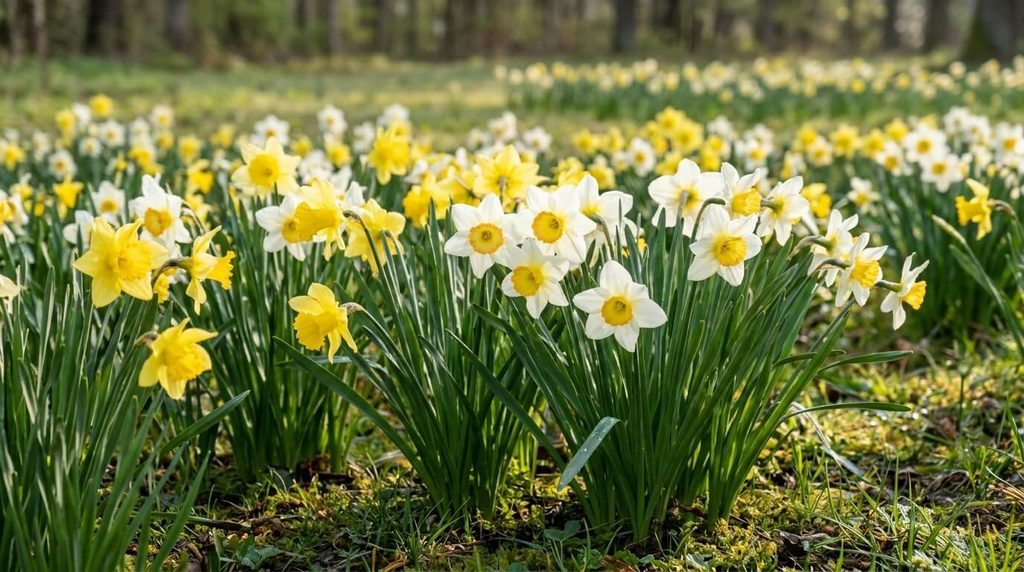
If you know daffodils, you already know narcissus. The familiar yellow trumpet is just one form; others have white petals, orange cups, double blooms, or clusters of smaller flowers. Most garden varieties bring color in late winter or spring, though the exact timing depends on what you plant and where you live.
Plant suitable spring-flowering bulbs in fall, choosing a spot where water drains away freely. After the flowers fade, let the leaves turn yellow before cutting them back, because they help replenish the bulb. Check narcissus growing requirements when choosing varieties, especially if you’re comparing outdoor daffodils with paperwhites sold for indoor flowering.
2. Nasturtium
Botanical name: Tropaeolum majus.
Typical bloom: During suitable growing weather; heat and frost can interrupt flowering.
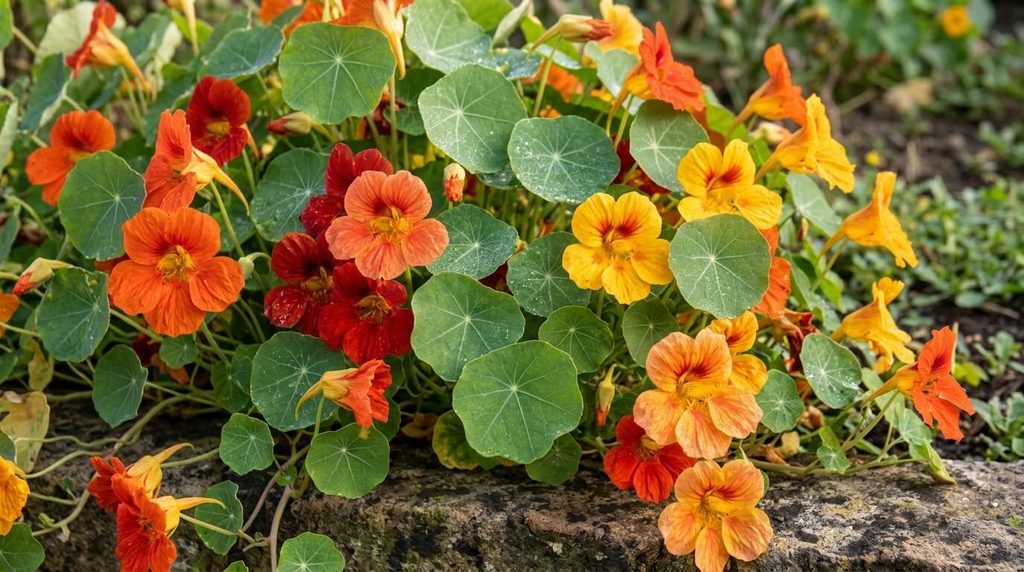
Nasturtiums are easy to recognize by their round, shield-like leaves and orange, yellow, or red flowers. Look closely, and you’ll see a spur extending behind each bloom. Compact types work well at the front of a pot, while climbing or trailing varieties need somewhere to spread.
Choose a sowing date that fits your local frost season, then give them sun and well-drained soil, with afternoon shade in hot areas. If the plants are all leaves and hardly any flowers, too much fertilizer may be part of the problem. Nasturtiums are among the flowers grown for edible use, but only eat correctly identified plants grown with products suitable for food crops.
3. Nemesia
Botanical name: Nemesia species and hybrids.
Typical bloom: Spring and fall in hot regions; potentially longer in mild conditions.
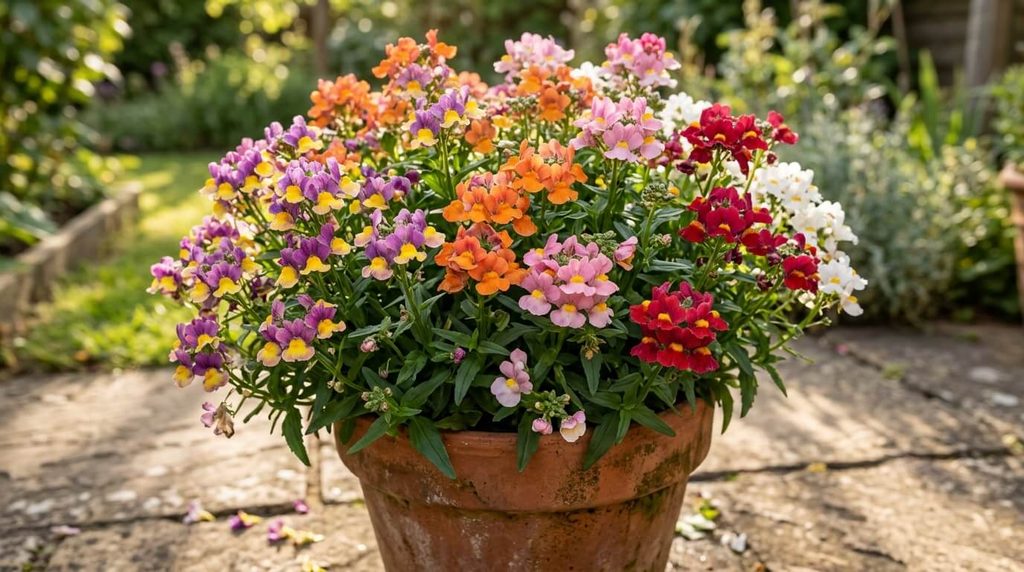
Nemesia is a good choice when you want small flowers that you can enjoy up close. The blooms come in pink, white, yellow, orange, and purple, often with two colors on the same flower. Place it near the edge of a container so taller plants don’t hide the display.
Think of nemesia as a flower for cooler weather, especially if your summers are hot. Keep the soil moist but well-drained, and offer afternoon shade where needed. The care guidance for pouch nemesia helps explain why spring and fall can be better seasons for it than midsummer.
4. Nemophila
Botanical name: Nemophila menziesii.
Typical bloom: Spring–early summer, or winter–spring in suitable mild-winter areas.
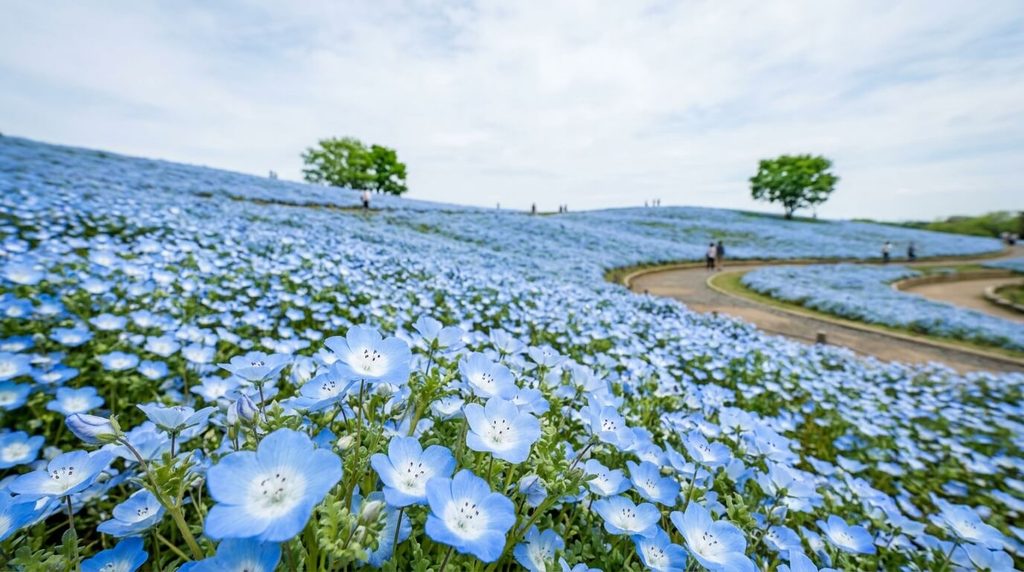
Nemophila menziesii goes by the much easier name baby blue eyes. Its open blue flowers have pale centers, and the low growth suits the edge of a bed or a small container. It’s particularly appealing if you want blue flowers without adding another tall plant.
Give it sun or partial shade and moist, well-draining soil. In suitable mild-winter areas, fall sowing can lead to winter or spring flowers; colder areas need a spring schedule. Hot, humid weather often ends the display, and pouring on more water won’t necessarily bring it back.
5. Nepeta
Botanical name: Nepeta species and hybrids.
Typical bloom: Spring–summer, with possible repeat flowering.
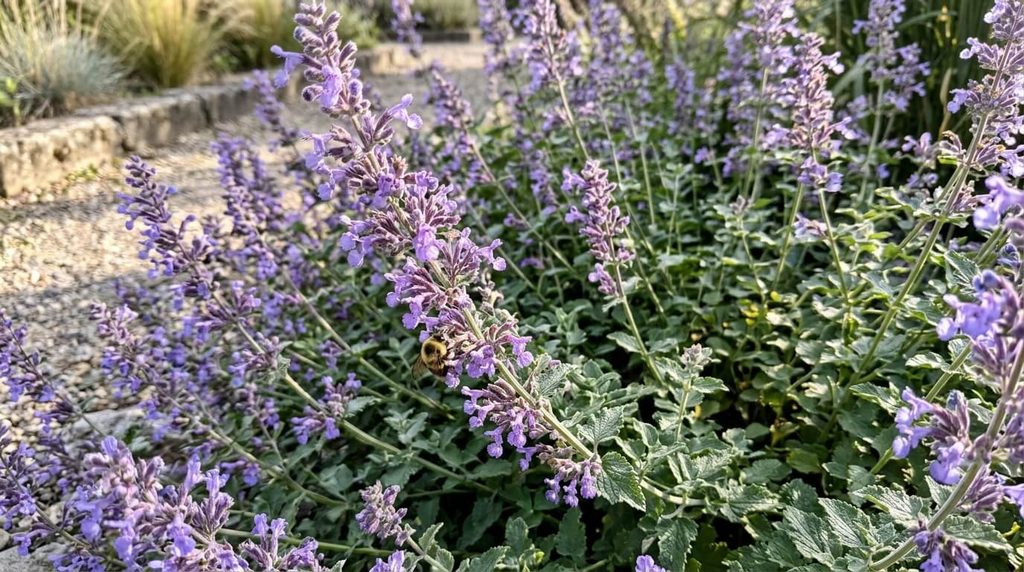
Nepeta, usually sold as catmint, softens the edge of a path with loose mounds of aromatic foliage and small blue or lavender flowers. It fits nicely at the front of a sunny border, as long as you leave enough room for its width. Check the mature size on the label, since a small nursery pot doesn’t tell you how far the plant will spread.
Good drainage is important, and afternoon shade can help in hot southern gardens. Once established, plants tolerate dry conditions, while a trim after flowering can encourage another flush of blooms. If you’d prefer fewer self-sown seedlings, consider a sterile hybrid such as blue catmint, Nepeta × faassenii, but still give the clump space to grow.
6. Nerine
Botanical name: Nerine species, including Nerine bowdenii.
Typical bloom: Often late summer–fall; Nerine bowdenii flowers in fall.
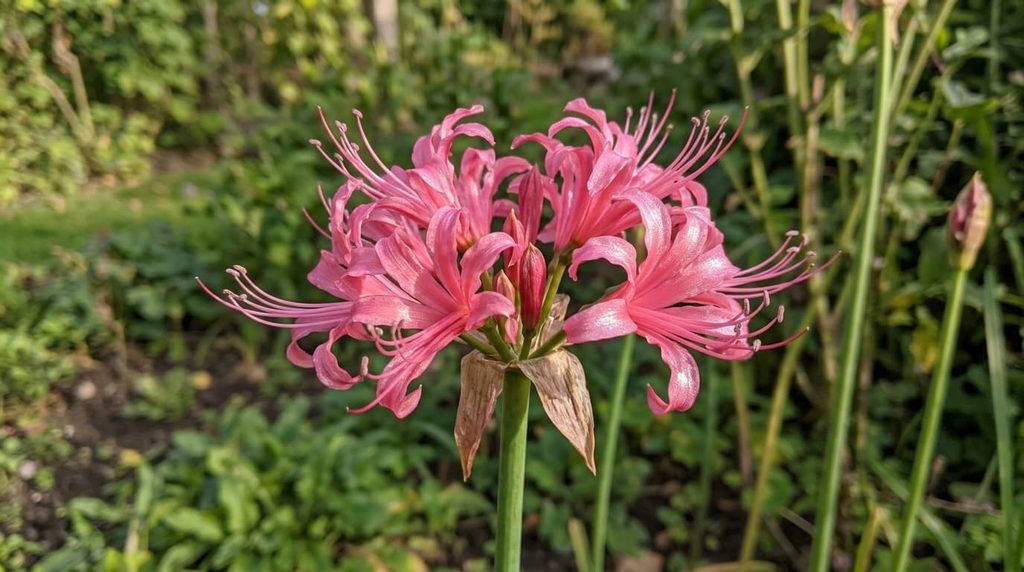
Nerines stand out for their slender, often wavy petals and clusters of flowers held on upright stems. Pink is a familiar color, although the genus includes other shades. Many bloom toward the end of summer or in fall, when their flower shape makes a welcome change from the season’s daisy-like blooms.
For a fall-flowering option, Nerine bowdenii is worth a closer look. It needs a sunny spot, well-draining soil or potting mix, and moisture during active growth. Before leaving it outdoors year-round, check local winter suitability and the care needs of the exact species you’re buying.
7. New Guinea Impatiens
Botanical name: Impatiens hawkeri and related garden hybrids.
Typical bloom: Spring–fall while temperatures remain suitable.
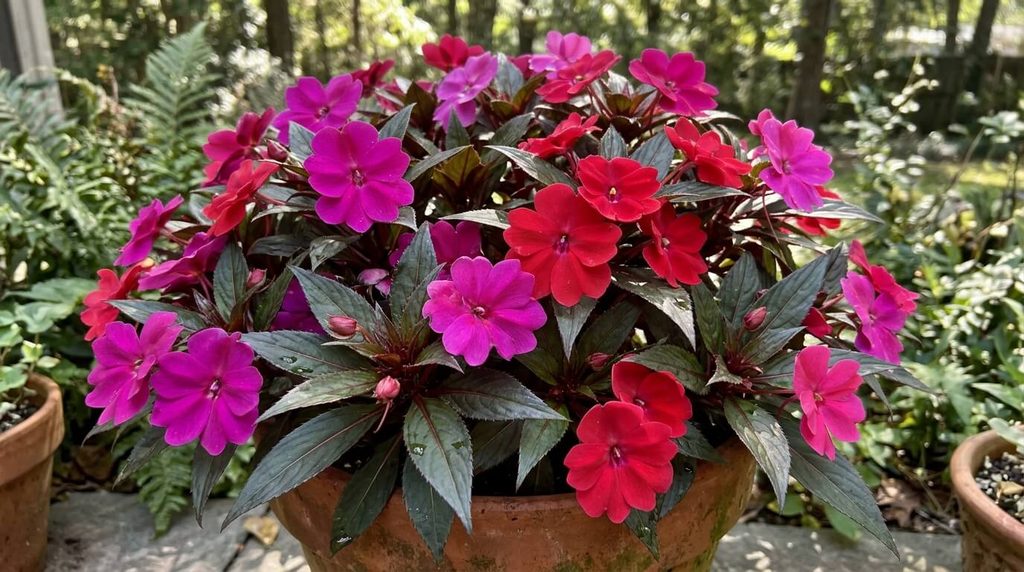
New Guinea impatiens brings broad flowers in white, pink, coral, and red to pots and borders. Its foliage adds to the display, with green or darker leaves beneath the blooms. A sheltered entrance is a useful place for a container where you can appreciate both.
Wait until frost danger has passed before setting plants outdoors, and keep the growing medium moist without leaving it soggy. Sun tolerance varies by selection, and plants receiving more sun usually need more water. Follow the label for your particular plant and expect to grow it as a seasonal annual in much of the US.
8. Nicotiana
Botanical name: Nicotiana alata and ornamental hybrids.
Typical bloom: Generally summer–fall, depending on selection and climate.
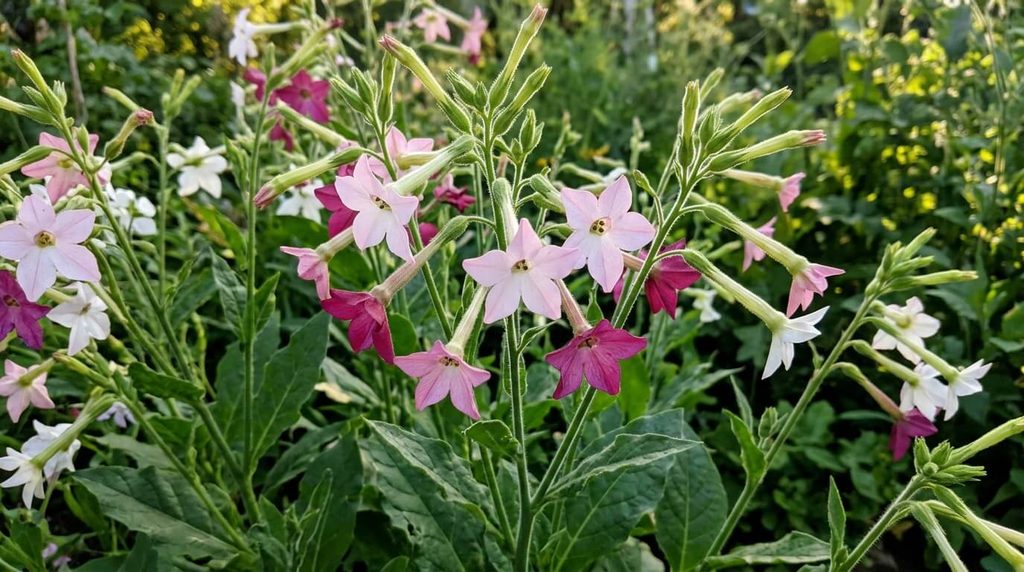
Nicotiana, or flowering tobacco, has long flower tubes that open into star-shaped faces. Some forms release fragrance in the evening and attract nighttime pollinators. That makes a fragrant selection an appealing choice near a place where you sit outdoors after sunset.
Check the flowering tobacco selection before buying, because some compact bedding hybrids have little or no scent. Give it moist, well-drained soil and sun to partial shade, with enough room for its mature height. Keep it as an ornamental plant rather than treating it as food or material for homemade tobacco products.
9. Nierembergia
Botanical name: Nierembergia linariifolia, also encountered under Nierembergia hippomanica.
Typical bloom: Summer–fall in suitable conditions.
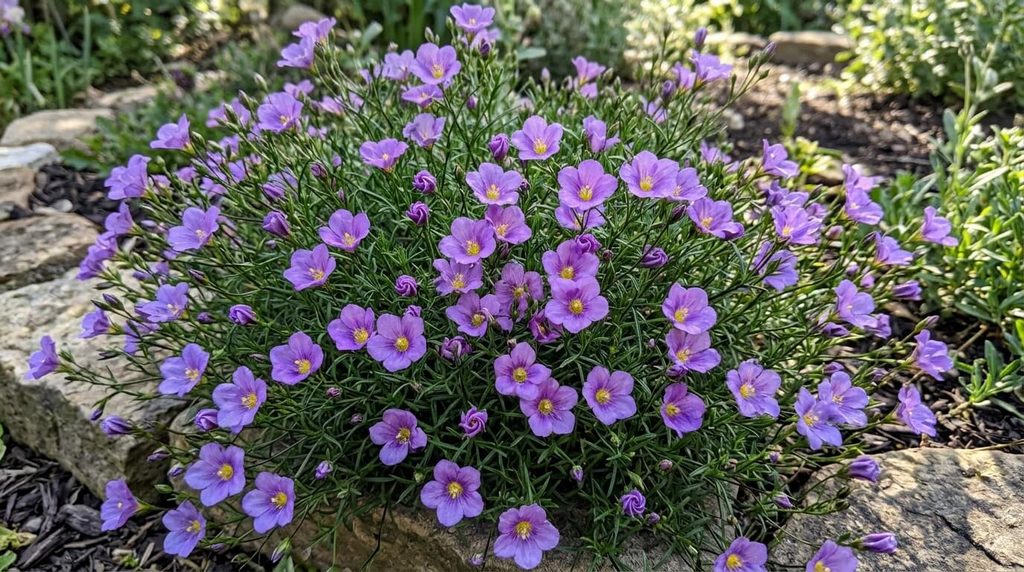
Nierembergia is often sold as cupflower, a fitting name for its small, open blossoms. Purple, blue-violet, and white selections form low mounds of color. Try it at the front of a bed or around a container’s edge, where its small flowers won’t get lost.
Keep the soil around its roots moist, especially while a container is filling out, and let excess water drain away. Sun to partial shade suits it, depending on local conditions. It’s a tender perennial, but gardeners in colder areas usually grow it as an annual.
10. Nigella
Botanical name: Nigella damascena.
Typical bloom: Late spring–summer.
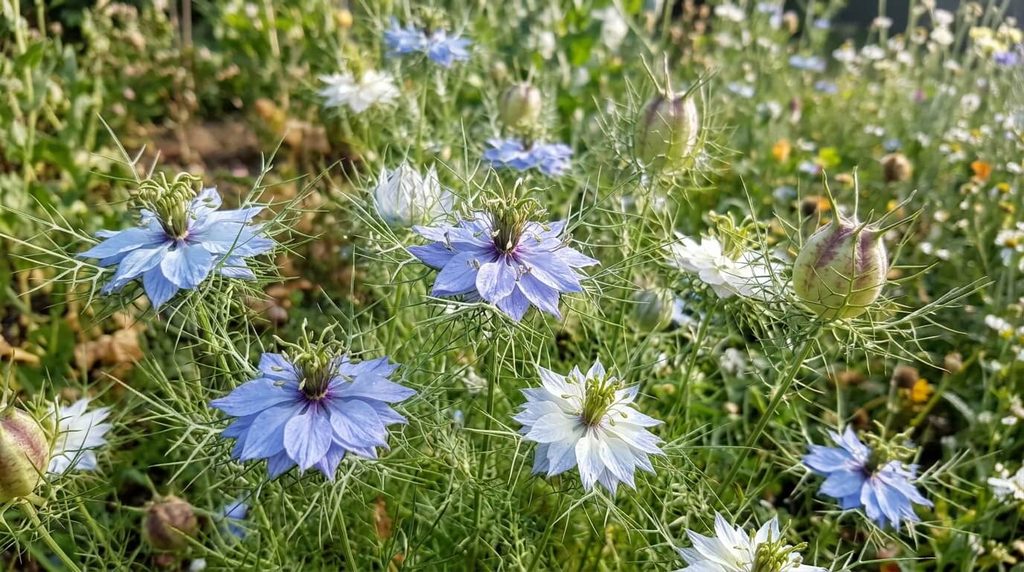
Nigella’s common name, love-in-a-mist, makes sense once you see the fine foliage surrounding its flowers. Blue is the familiar shade, with white, pink, and other selections also available. The plant has something to offer after flowering, too, when its inflated seedpods develop.
Sow it directly in a sunny spot with well-drained soil, following a locally suitable fall or early-spring schedule. Nigella dislikes transplanting, so starting it where you want it to grow saves disturbing the roots later. The growing notes for love-in-a-mist explain the choice after flowering: remove faded blooms to encourage a longer display, or leave some for their decorative pods.
11. New England Aster
Botanical name: Symphyotrichum novae-angliae.
Typical bloom: Late summer–fall.
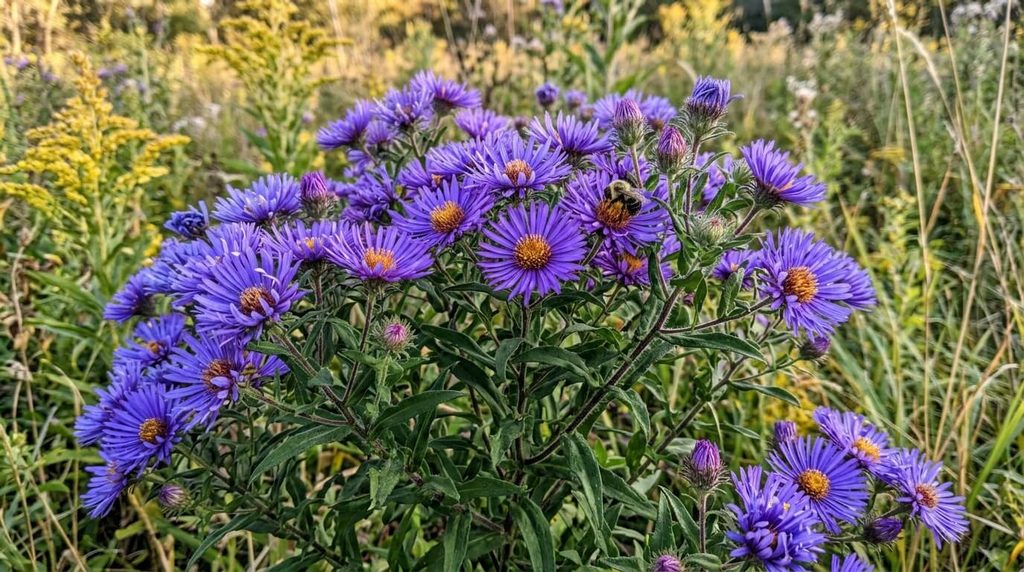
New England aster is one to consider when the garden needs color late in the season. Its many daisy-like flowers are often purple, though cultivars offer other shades and sizes. Bees and butterflies visit the blooms, making it a useful addition to a suitable pollinator planting.
Choose a sunny spot with moist, well-drained soil and room for air to move between plants. Some forms reach 3–6 feet tall and may need support, so check the label if you’re working with a small border. For plants that flower around the same time, explore these flowers for October gardens and allow for your local frost timing.
12. New York Aster
Botanical name: Symphyotrichum novi-belgii.
Typical bloom: Late summer–fall.
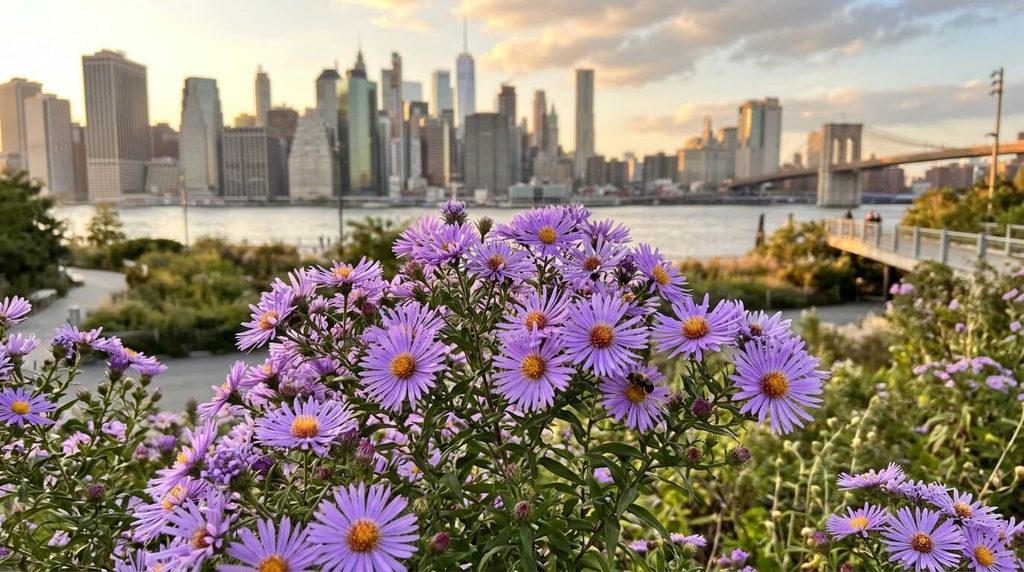
New York aster also brings clusters of small flowers to the late-season garden. Despite the similar name, it’s a different species from New England aster. The botanical name is worth checking if you want a particular species rather than simply a purple-flowering aster.
Give it sun and moist, well-drained soil. The species can grow several feet tall, while cultivars vary, so don’t assume it will stay small enough for the front of a bed. Leave space between plants and watch for powdery mildew, particularly when growth becomes crowded.
13. Nodding Onion
Botanical name: Allium cernuum.
Typical bloom: Summer.
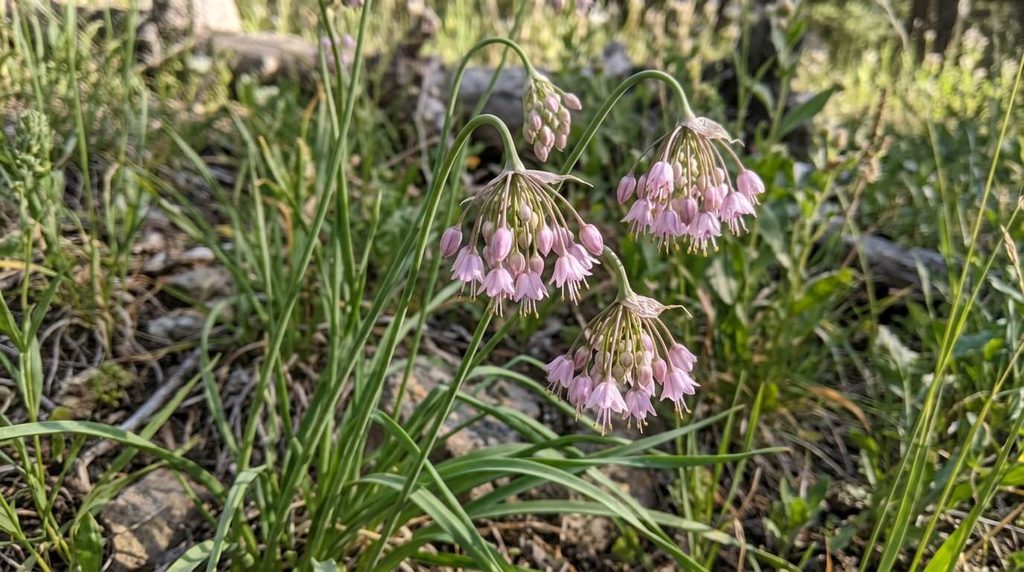
Nodding onion has small pink or white flowers gathered into clusters that hang from bent stems. The narrow leaves and airy flower heads give it a lighter look than the large globe-shaped alliums you may know. This bulbous perennial is native to parts of North America, with flower stalks commonly about 1–2 feet tall.
Choose a sunny spot with well-drained soil. Established plants tolerate dry conditions, and clumps can expand through offsets and seed. A small group near a path lets you see the nodding heads more easily than a single plant tucked behind tall neighbors.
14. Narrow-Leaf Coneflower
Botanical name: Echinacea angustifolia.
Typical bloom: Early–midsummer.
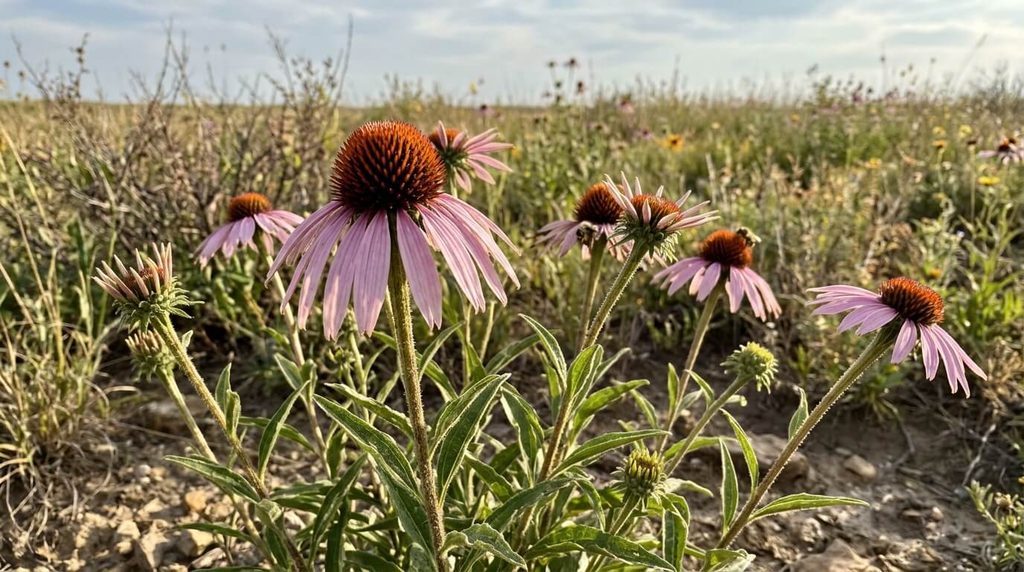
Narrow-leaf coneflower has pink to purple-pink rays around a raised central cone. Its slim leaves help distinguish it from the broader-leaved echinaceas commonly sold at garden centers. Early-summer flowering and its prairie character make it a good candidate for an informal, naturalistic bed.
Give it full sun and deep, well-drained soil. Once established, it handles dry conditions better than moisture-loving plants such as impatiens. Check the narrow-leaf coneflower species profile before buying, especially if you’re choosing plants for a regionally appropriate native garden.
15. Narrow-Leaf Evening Primrose
Botanical name: Oenothera fruticosa.
Typical bloom: Late spring–summer.
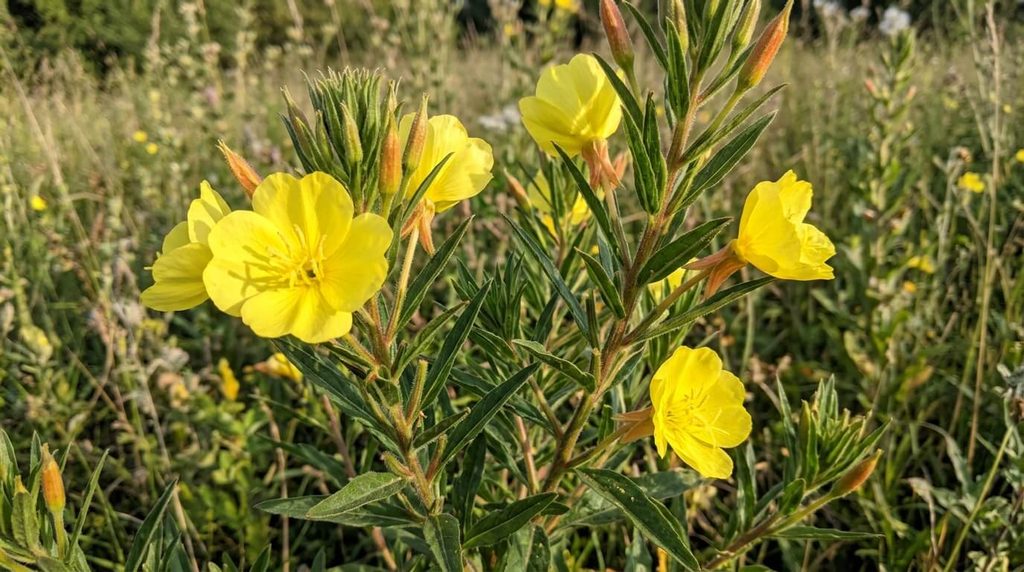
Narrow-leaf evening primrose is also called sundrops, and the bright yellow flowers suit that name well. Despite the word “evening,” this species opens its flowers during the day. Each bloom is short-lived, but more flowers follow.
A sunny spot with well-drained soil suits it, and good winter drainage is especially important. Leave room for a patch to develop because it can spread where conditions suit it. It’s a better fit for an informal border with room to grow than a tightly packed space between delicate plants.
16. Night-Blooming Cereus
Botanical name: Epiphyllum oxypetalum in this entry.
Typical bloom: Often late spring–summer; indoor flowering can be sporadic.
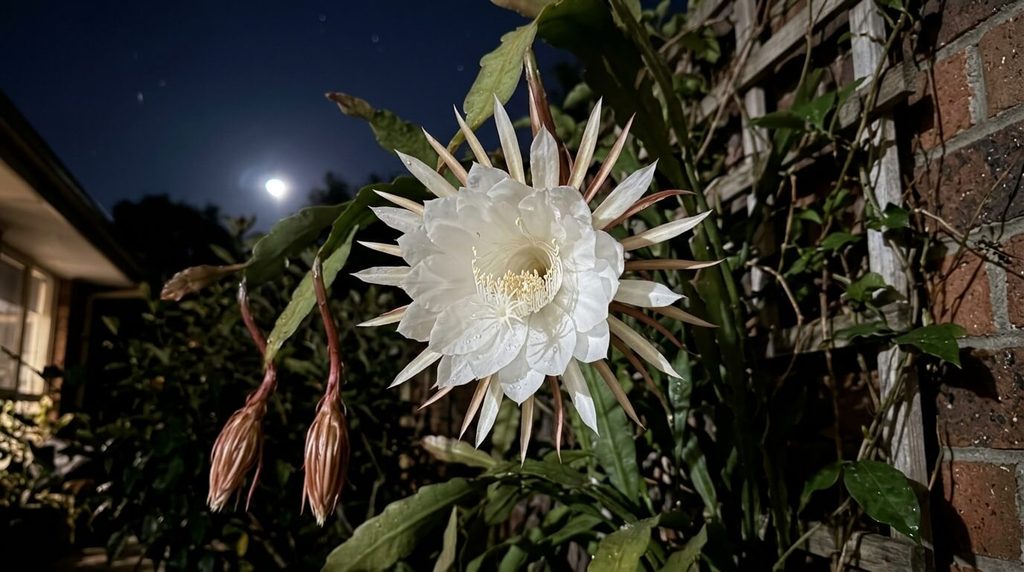
Several different cacti are called night-blooming cereus, so check this name carefully. The plant described here, Epiphyllum oxypetalum, has long, flattened stems and large, fragrant white flowers. They open at night and fade by morning, although an indoor plant won’t necessarily flower on a predictable schedule.
This is a tropical forest cactus with different needs from a desert cactus. Give it bright indirect light, a well-drained mix, and protection from frost and harsh afternoon sun. Use the care guidance for this night-blooming cactus rather than trying to bring on flowers by keeping it dry for long periods.
17. Nelumbo
Botanical name: Nelumbo species, including Nelumbo lutea.
Typical bloom: Summer.
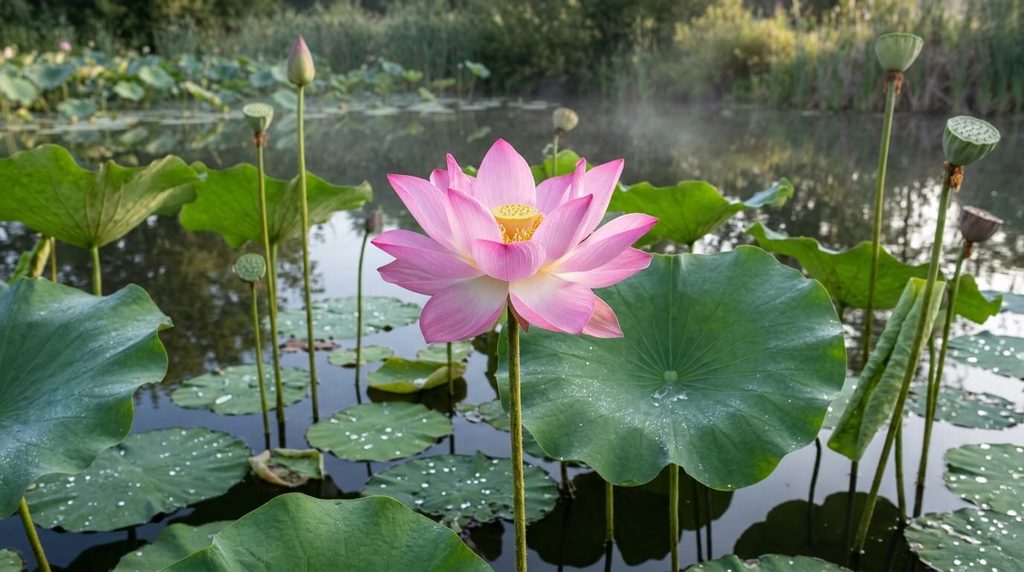
Nelumbo is the lotus genus, so it belongs on this list under its botanical name. American lotus, Nelumbo lutea, has pale yellow flowers and broad leaves that often rise above the water. The distinctive seed heads remain after the petals have fallen.
Plan the growing space before bringing a lotus home. American lotus needs an aquatic setup, can reach several feet tall, and spreads strongly through rhizomes, making it unsuitable for a tiny decorative bowl. Allow for containment and maintenance access, and never release unwanted aquatic plants into natural waterways.
18. Nymphaea
Botanical name: Nymphaea species and hybrids.
Typical bloom: Generally summer, with timing dependent on climate and type.
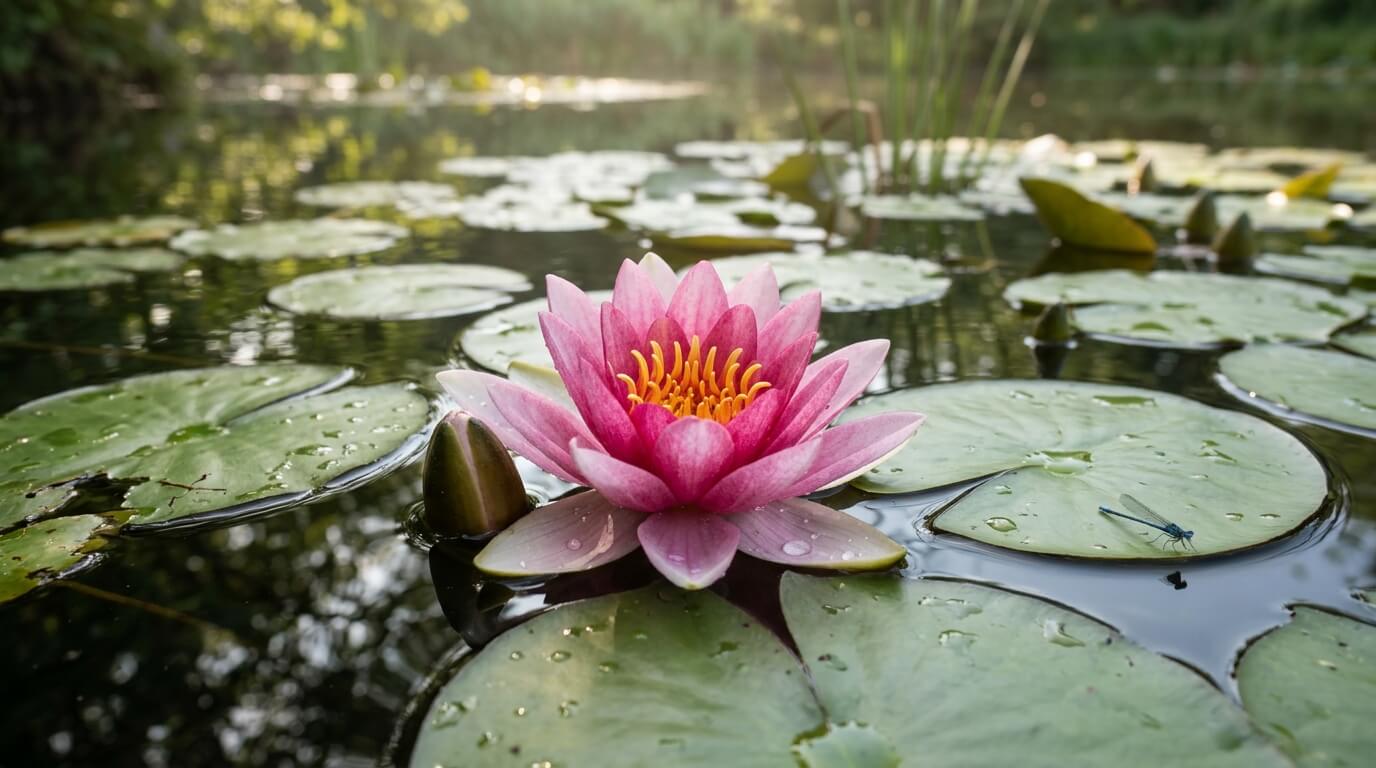
Nymphaea is the water lily genus, known for rounded floating leaves and showy flowers. It’s a different plant from lotus, even though the two often appear together in pond photographs. Depending on the selection, the flowers sit close to the surface or rise above the water.
Check whether you’re buying a hardy or tropical water lily, because their winter care differs. Flowering habits and mature spread vary as well, with some tropical types opening at night and others during the day. Review the differences between water lily types before deciding on planting depth, container size, or winter storage.
How to Turn the List Into a Planting Plan
You don’t need a large collection to make a good planting. A sunny, well-drained bed might suit nepeta and nodding onion, while New Guinea impatiens could fill a moist, partly shaded pot. Start with one space and a few plants that need similar care.
- Check the light. Watch the site through the day, including the hottest afternoon hours. A pot that receives gentle morning sun has different conditions from one beside a west-facing wall. Use the plant label to judge whether that exposure is suitable.
- Choose a season. For spring, start with suitable narcissus bulbs or cool-season flowers such as nemesia and nemophila. For late summer and fall, consider asters or a locally suitable nerine. Flowering periods are approximate, so allow for regional weather and cultivar differences.
- Buy the right form. Nasturtiums may be compact or climbing, and asters can be short or several feet tall. Compare mature width and height before choosing a container or spacing plants. For nigella, direct-sown seed avoids disturbing roots that dislike transplanting.
- Plan beyond the first display. Narcissus leaves need time to yellow naturally, while nigella can be left to form seedpods. Decide whether you want continued flowering, seed heads, or room for a later planting. That decision helps you avoid cutting back plants at the wrong time.
If an alphabet garden is the goal, you can continue with flowers beginning with B or flowers beginning with F. Check each new plant against the same light, soil, and space requirements. A favorite flower is easier to enjoy when it has somewhere suitable to grow.
The plant hardiness map helps you check whether a perennial is likely to cope with local winter cold. For annuals, pay closer attention to frost dates and how long cool or warm growing conditions last. A local extension office or experienced nursery can also help you avoid plants that routinely struggle with your summers.
Mistakes to Avoid With Flowers Beginning With N
It’s easy to buy the same flower twice under different names. Narcissus includes daffodils, and Nigella damascena is the plant commonly called love-in-a-mist. Keep the botanical name on your shopping list so a different label doesn’t look like a different plant.
A shared first letter doesn’t mean shared growing needs. Lotus belongs in an aquatic setup, nepeta needs well-drained soil, and a forest cactus needs its own container routine. Check the soil and the plant’s needs before watering rather than giving everything the same treatment.
Zone listings can also be confusing when you’re buying annuals. A plant may grow well through summer in many parts of the country and still die at the first frost. Read the description carefully to see whether it means seasonal growing suitability or year-round outdoor survival.
Conclusion
There’s plenty to choose from among flowers that start with n, whether you want spring narcissus, a pot of nasturtiums, or fall asters. Pick the space first, then choose a flower whose light, moisture, and climate needs you can meet. A few well-chosen plants will be easier to care for and enjoy than a long list squeezed into the wrong spot.
What is a common flower that starts with N?
Nasturtium is a familiar example, with colorful spurred flowers and rounded leaves. Narcissus is another, although many people know it as a daffodil. Nigella, nemesia, and New Guinea impatiens are other recognizable garden choices.
Which flowers that start with N bloom in spring?
Many narcissus varieties bloom in late winter or spring. Nemesia and nemophila can also provide spring flowers when local conditions suit them. Nigella may begin in late spring, with the timing influenced by sowing date and climate.
Are any flowers that start with N edible?
Correctly identified Tropaeolum majus nasturtiums have edible flowers with a peppery flavor. Grow them with products suitable for edible crops and follow the product labels. Do not extend that advice to other plants simply because their flowers look similar.
Which N flowers are native to North America?
Examples in this list include nodding onion, narrow-leaf coneflower, New England aster, New York aster, and American lotus. Their native ranges differ, and North American origin does not establish that a species is native to your county or state. Check a regional native-plant reference before buying for a local habitat planting.
Are Nelumbo and Nymphaea the same flower?
No, Nelumbo is lotus, and Nymphaea is water lily. Lotus commonly holds mature leaves above the water, while water lilies characteristically have floating pads with a notch. Their growth habits and care requirements differ, so identify the plant before choosing its container and planting depth.