


How to Remove Stickers From Glass Without Damaging It
You just brought home a new vase, a set of glass jars, or maybe you finally scrubbed the windshield stickers off your “new to you” car. And there it is. That stubborn little rectangle of paper and glue that laughs at your fingernail.
Here’s the good news: glass is actually one of the easiest surfaces to get a sticker off of, once you understand what’s holding it there in the first place. You don’t need a hardware store trip or a bottle of something toxic sitting under your sink. In most cases, you already own what you need.
This guide explains every real method that works from the gentlest (soap and water) to the most stubborn-proof (a razor blade and a little patience). We’ll also cover exactly why some stickers leave a hazy film behind, what makes vinyl decals different from paper price tags, and the one heat mistake that can actually crack your glass. That last part is something almost no other guide on this topic explains with real numbers, and it matters more than most people realize.
By the end, you’ll know exactly how to remove stickers from glass on jars, windows, doors, bottles, and anything else in your house without a single scratch.
Why Stickers Stick So Well to Glass (And Why It Matters for Removal)
Before you grab the nearest bottle of whatever’s under your sink, it helps to know what you’re actually up against. This part gets skipped in almost every other guide, but it’s the reason some methods work in five minutes and others just smear the mess around for an hour.
Glass is made mostly of silica, and its surface is covered in tiny hydroxyl groups (chemists call these silanol groups). That makes glass a high surface-energy material. Basically, glass “wants” to bond tightly with things pressed against it. That’s exactly why most labels use acrylic-based adhesives, since acrylic pressure-sensitive adhesives are specifically formulated to grip high-energy surfaces like glass and metal far better than they grip plastic.
This explains two things that confuse people constantly:
- Why the same trick doesn’t always work. A vinyl bumper sticker uses a different adhesive chemistry than a paper price tag, so what dissolves one won’t always touch the other.
- Why “just peeling it” leaves a sticky film. The paper or vinyl layer separates from the adhesive layer more easily than the adhesive separates from the glass. You’re not fighting the sticker. You’re fighting the glue that’s left behind.
Rubber-based adhesives (common on older labels and cheap stickers) respond well to oils and heat. Acrylic adhesives (common on modern retail labels and vinyl decals) respond better to solvents like alcohol, vinegar, or citrus-based removers. Knowing which one you’re dealing with saves you from repeating a method that was never going to work.
What You’ll Need Before You Start
You don’t need everything on this list. Just choose what fits the method you pick below.
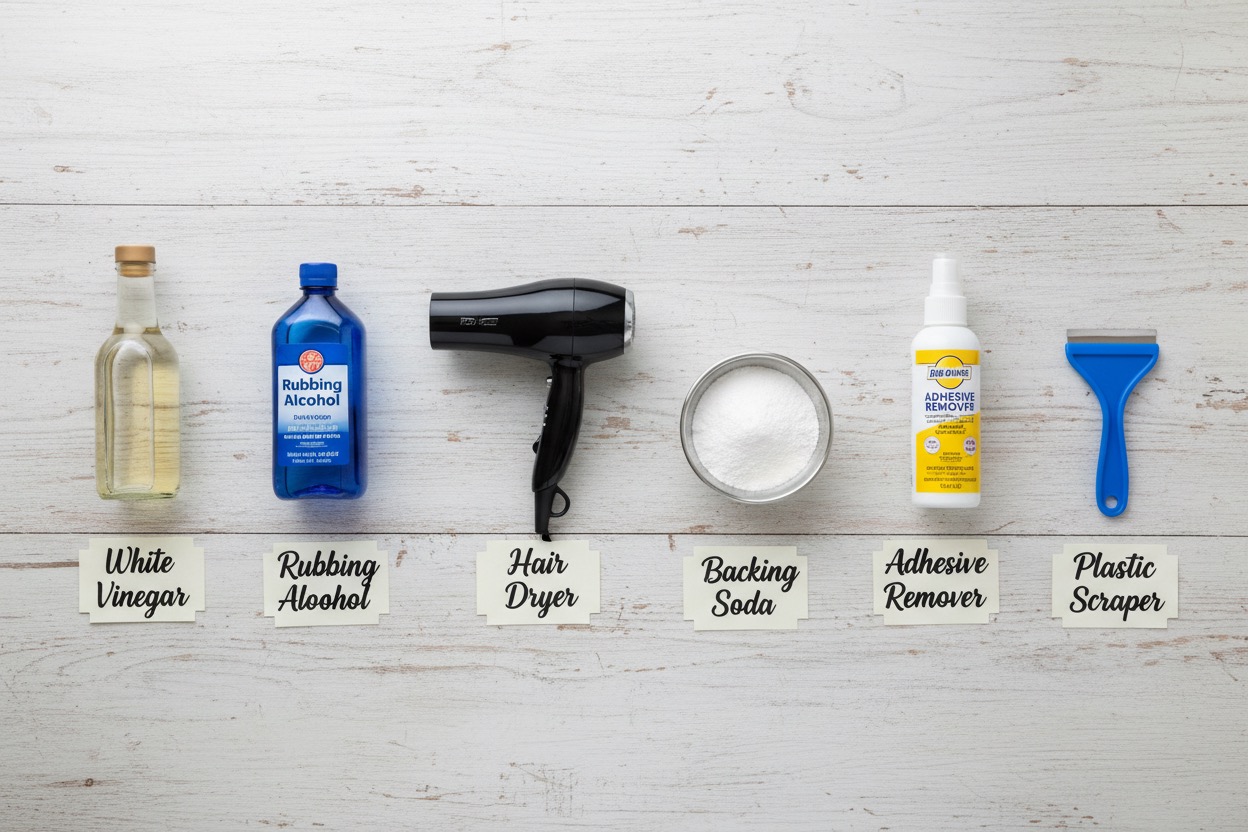
- White vinegar
- Dish soap and warm water
- Rubbing (isopropyl) alcohol
- A hair dryer
- Baking soda and cooking oil (or coconut oil)
- A commercial adhesive remover (Goo Gone, Goof Off, or similar)
- A plastic razor scraper or single-edge razor blade
- Microfiber cloth or paper towels
- A soft-bristled brush for grooves and edges
A quick rule before you touch anything: always test your chosen method on a small, hidden corner of the glass first. Especially on tinted, tempered, or coated glass, where solvents can sometimes affect a surface finish.
How to Remove Stickers From Glass: 7 Proven Methods
Here’s every method that actually works, ranked roughly from gentlest to most aggressive. Start at the top and only move down the list if the sticker is being stubborn.
Method 1: Warm Soapy Water (Best for Fresh Labels and Glass Jars)
This is the go-to method for anything food-safe, and it’s genuinely the best answer if you’re wondering how to remove stickers from glass jars you plan to reuse for storage.
Steps:
- Fill a sink or basin with warm (not hot) water and a squirt of dish soap.
- Fully submerge the jar or item for 15–20 minutes.
- Peel the softened label from one corner using your fingernail or a plastic scraper.
- Wash away any leftover residue with a scrubby sponge and soap.
This works because soap breaks the paper label’s bond to the glass, and warm water loosens water-soluble adhesive layers. It’s the safest method for anything you’ll later use for food or drinks.
Method 2: White Vinegar Soak (Best All-Around Method)
If you only remember one method from this article, make it this one. In a side-by-side test of five popular removal methods, home-and-food editors at The Kitchn found that plain white vinegar consistently outperformed the rest, including specialty products.
Steps:
- Soak a cotton ball, cloth, or paper towel in undiluted white vinegar.
- Press it directly onto the sticker and let it sit for 10–15 minutes (thicker labels may need closer to 20).
- Peel from a corner. In most cases, the label and its adhesive lift off together.
- Wipe with a damp cloth and dry.
Vinegar’s mild acidity breaks down the adhesive bond without being harsh enough to damage glass, which is why it’s such a reliable middle-ground method for both stickers and the sticky residue left behind.
Method 3: Heat With a Hair Dryer (Best for Vinyl Stickers and Decals)
Heat is the go-to answer for how to remove vinyl stickers from glass, since vinyl decals are thicker and often use a stronger acrylic adhesive that softens well under warmth.
Steps:
- Set a hair dryer to medium heat and hold it 4–6 inches from the sticker.
- Move it in slow circles for 30–60 seconds.
- Test a corner. If it lifts freely, peel steadily. If it resists, reheat for another 15–20 seconds.
- Clean the area with soapy water or glass cleaner once the sticker is off.
A heat gun works even faster than a hair dryer because it reaches a higher, more consistent temperature, but a hair dryer is gentler and safer for beginners.
⚠️ Important: Never use boiling water, a heat gun on high, or a lighter/torch directly on glass. We cover exactly why in the safety section below. The short version is that uneven heat is the single most common cause of glass cracking during sticker removal.
Method 4: Rubbing Alcohol (Fast-Acting and Great for Small Areas)
Isopropyl alcohol is a solvent that dissolves acrylic-based adhesives quickly, which makes it ideal for small stickers, price tags, and thin residue.
Steps:
- Soak a cotton ball or cloth in rubbing alcohol.
- Press it onto the residue and let it sit for 2–3 minutes (don’t wipe immediately — let it soak in).
- Rub in small circles until the residue lifts.
- Wipe clean with a damp cloth.
Alcohol evaporates quickly and doesn’t leave an oily film behind, which is a real advantage over oil-based methods when you’re working on glass you want to look streak-free right away. Just work in a ventilated room, since alcohol vapors can be irritating in a closed space.
Method 5: Baking Soda + Oil Paste (Best Gentle DIY for Stubborn Residue)
This is a favorite for people who want something food-safe and non-toxic, especially on glass bottles and jars kids might handle.
Steps:
- Mix baking soda with a small amount of coconut oil or vegetable oil until it forms a thick paste.
- Apply directly to the sticky residue.
- Let it sit for 5–10 minutes.
- Rub gently with a cloth or soft sponge, then rinse and dry.
The oil softens and lifts the adhesive, while the baking soda adds gentle abrasion without scratching the glass. It’s slower than vinegar or alcohol, but it’s a solid choice when you’d rather avoid solvents entirely.
Method 6: Commercial Adhesive Removers (Goo Gone, Goof Off, WD-40)
When DIY methods stall out on old, sun-baked, or triple-layered stickers, a dedicated adhesive remover is worth using.
Steps:
- Apply a small amount directly to the sticker or residue.
- Let it sit for 5–10 minutes to penetrate.
- Wipe or rub gently with a cloth; use a plastic scraper for stubborn spots.
- Wash the area afterward with soap and water to remove any oily film left by the product.
A quick safety note worth knowing: WD-40 is a flammable aerosol product. Its own safety documentation warns to use it only in a well-ventilated area and to keep it away from heat, sparks, and open flames, according to the product’s official safety data sheet. That’s not a reason to avoid it, just a reason to crack a window and skip using it anywhere near a stove or space heater.
Method 7: Razor Blade or Plastic Scraper (For Old, Baked-On, or Painted Stickers)
This is the last resort, and it’s genuinely effective; but only on plain, untreated glass. Skip this method entirely on tinted, coated, tempered, or low-e glass, where a blade can scratch or damage a surface treatment.
Steps:
- Wet the glass with soapy water or glass cleaner to keep the surface lubricated.
- Hold a single-edge razor blade or plastic scraper at a shallow angle (almost flat against the glass).
- Gently push under the sticker’s edge and slide forward in short strokes.
- Keep the glass wet throughout to prevent scratching.
- Wipe clean and dry once all residue is gone.
Glass is hard enough to resist scratching from a steel blade used at a shallow angle, but pressing at a steep angle or using a dry blade is what causes marks. Go slow, keep it wet, and let the blade do the work instead of forcing it.
How to Remove Stickers From Glass Without Damaging It (The Safety Rules Most Guides Skip)
This is the part that separates a quick DIY win from an expensive mistake, and it’s the piece of information genuinely missing from almost every other article on this topic.
The real number behind “don’t use hot water on cold glass”
You’ve probably read the warning a dozen times: don’t pour boiling water on a cold jar or windshield. But how much temperature difference actually causes cracking? This isn’t guesswork. It’s measurable.
According to glass engineering specialists at IQ Glass, standard float glass (the type used in most windows, jars, and household glassware) can fracture from thermal shock at a temperature difference of just 40°C (about 72°F) across the surface. Toughened or tempered glass is far more resistant, tolerating differences of up to 200°C, but you usually can’t tell which type you’re holding just by looking at it.
It gets even more specific for jars and bottles. Industrial drying and thermal engineers at Secomak note that glass containers commonly crack during hot-filling when the temperature difference between the glass and its contents exceeds roughly 35°C (about 63°F). And the weakest point is almost always the thinnest part of the glass, like a jar’s neck or a bottle’s shoulder.
What this means practically:
| Scenario | Safe? | Why |
|---|---|---|
| Hair dryer on medium heat for 30–60 seconds | ✅ Generally safe | Gradual, even heating stays well under the 35–40°C threshold |
| Heat gun on high, held in one spot | ⚠️ Use caution | Can create localized heat spikes fast |
| Boiling water poured onto a cold jar | ❌ Avoid | Can exceed the safe temperature difference instantly |
| Ice pack after removing a sticker in direct sun | ⚠️ Use caution | Rapid cooling of sun-warmed glass creates the same risk in reverse |
| Warm soapy water soak (Method 1) | ✅ Safe | Gradual and even temperature change |
The takeaway: heat and cold are both fine tools for sticker removal, as long as the change is gradual and even, never sudden and localized. That single sentence explains almost every glass-cracking horror story you’ll find in home-improvement forums.
Other damage-prevention rules
- Match your tool to your glass type. Save the razor blade for plain glass only. Tinted windows, tempered shower doors, and coated (low-e) windows can scratch or haze.
- Never scrape dry. A dry blade or dry fingernail is what causes most scratches. Always keep the surface wet with soapy water or glass cleaner.
- Wash off solvents completely. Oil-based removers and WD-40 leave a film that attracts dust if you don’t finish with soap and water.
- Work in sections on large surfaces. For glass doors or windows, treat and peel one section at a time so the solvent doesn’t dry out before you get to it.
Situation-Specific Sticker Removal Guides
Different stickers, different glass, different game plan. Here’s how to handle the most common real-world situations.
How to Remove Price Stickers From Glass
Retail price stickers are usually paper-based with a light rubber adhesive, which makes them one of the easiest to remove. Rubbing alcohol or a vinegar-soaked cloth applied for 2–5 minutes is usually all it takes. If the sticker has been on for years and the paper has hardened, start with the hair dryer for 20–30 seconds first to loosen it, then follow with alcohol for the residue.
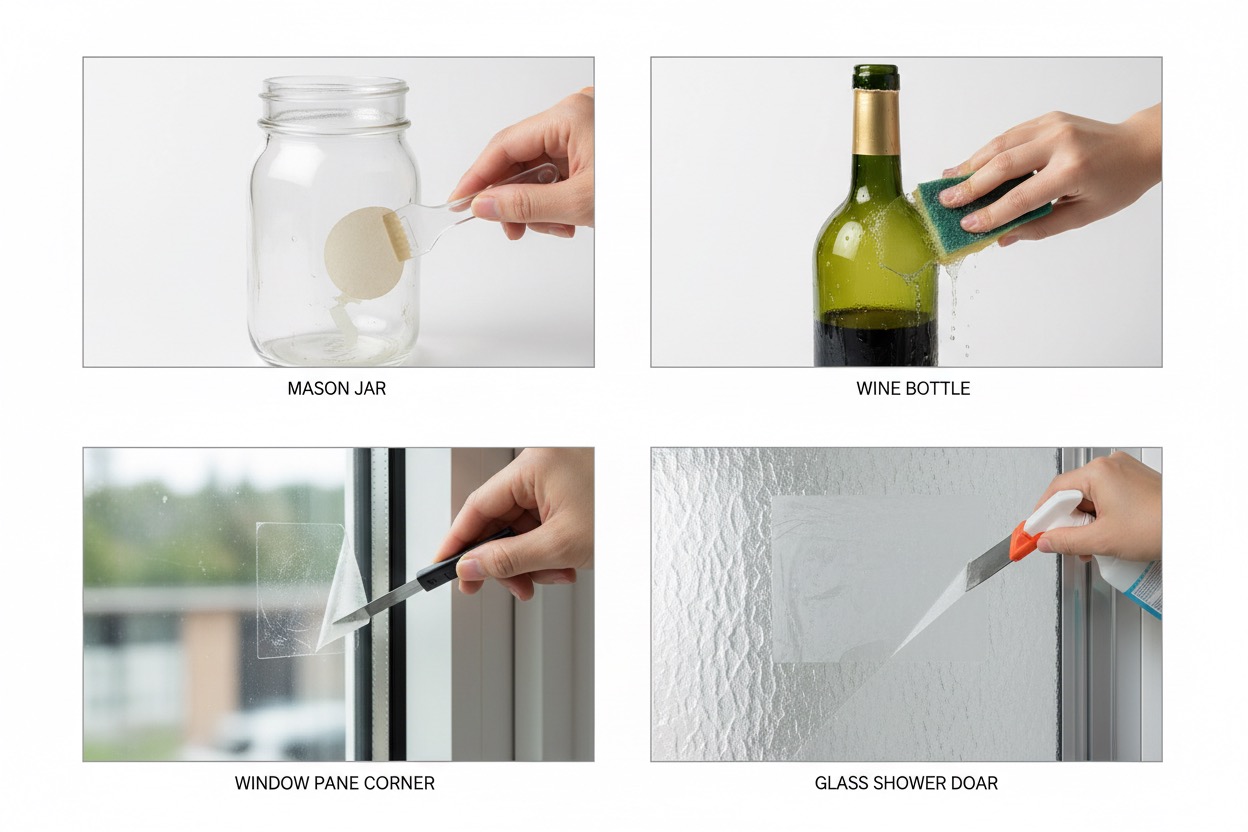
How to Remove Stickers From Glass Jars
For reusing jars for storage, spices, or décor, warm soapy water (Method 1) is the safest bet since it’s food-safe and gentle. If the jar has been in the fridge or the label is extra stubborn, upgrade to a full vinegar soak. Submerge the jar in vinegar-water (roughly equal parts) for 15–20 minutes before peeling.
How to Remove Stickers From Glass Windows
Window stickers are think static clings, old realtor decals, or seasonal decorations. They usually respond well to a soapy water spray followed by a plastic scraper at a shallow angle. For sun-baked, brittle stickers, warm the glass gently with a hair dryer first so the adhesive isn’t so stiff.
How to Easily Remove Stickers From Glass
If you just want the fastest, lowest-effort method with things you already own, the vinegar soak (Method 2) wins almost every time. Soak, wait 10–15 minutes, peel. No scrubbing, no scraping, no trip to the store.
How to Remove Vinyl Stickers From Glass
Vinyl decals (bumper stickers, custom wall clings, storefront lettering) are thicker and often applied with a stronger adhesive designed for outdoor durability. Heat is your best friend here. A hair dryer on medium for 60–90 seconds, then peel slowly at a low angle, following the direction the vinyl naturally wants to lift. Going too fast tears the vinyl and leaves adhesive behind in strips.
How to Remove Window Stickers From Glass
This usually refers to registration stickers, parking permits, or inspection stickers on car windows and household windows. These are built to be tamper-resistant, so they often shred if peeled dry. Heat first, then use a plastic scraper (never metal on tinted auto glass) while keeping the area wet with glass cleaner.
How to Remove Store Stickers From Glass
Store and manufacturer stickers on new glassware (vases, mirrors, picture frames) are typically fresh, clean adhesive that hasn’t had time to bake into the glass. A quick alcohol wipe or a 5-minute vinegar soak usually removes both the sticker and the glue in one step.
How to Remove Stubborn Stickers From Glass Door
Glass shower doors and sliding doors often have stickers that have been baking in sunlight or steam for months or years, making them the hardest category to deal with. Layer your approach: heat first (hair dryer, 60 seconds), then a vinegar or alcohol soak for 10 minutes, then a plastic scraper worked at a shallow angle while the surface stays wet. Stubborn hard-water spots that show up after the sticker is gone respond to distilled white vinegar too. The same bottle does double duty.
How to Remove Stickers From Glass Bottles
Wine, beer, and decorative bottles often have printed labels with strong glue meant to survive refrigeration and condensation. A full soak (submerge in warm water with a squeeze of dish soap, or vinegar-water) for 20–30 minutes is the most reliable method, since bottle labels are usually larger and thicker than jar labels and need more soak time to fully loosen.
Comparison Table: Best Method by Situation
| Situation | Best Method | Time Needed | Difficulty |
|---|---|---|---|
| Fresh price sticker | Rubbing alcohol | 2–5 minutes | Easy |
| Glass jar for reuse | Warm soapy water | 15–20 minutes | Easy |
| Glass bottle | Soak (soapy water or vinegar) | 20–30 minutes | Easy |
| Vinyl decal | Heat + peel | 5–10 minutes | Moderate |
| Window sticker/permit | Heat + plastic scraper | 5–10 minutes | Moderate |
| Old, baked-on residue | Vinegar or Goo Gone + scraper | 15–20 minutes | Moderate |
| Stubborn glass door sticker | Heat + soak + razor (plain glass only) | 20–30 minutes | Hard |
Expert Tips for Getting Stickers Off Glass
- Layer your methods instead of picking just one. Heat softens, solvent dissolves, and a scraper lifts. Using all three in sequence beats relying on a single trick for stubborn stickers.
- Test tinted and coated glass first. A hidden corner test with any solvent takes 30 seconds and can save you from clouding a coated window.
- Let solvents sit before wiping. Almost every failed attempt happens because someone wipes vinegar or alcohol off after 10 seconds instead of letting it actually soak in and break down the adhesive.
- Go with the grain of the peel. Vinyl and decals tear less when you pull steadily in the direction they naturally want to lift, rather than straight up.
- Finish every method with plain soap and water. Oils, solvents, and adhesive removers all leave a light film that shows up as streaks once the glass dries, so always do a final clean pass.
Pros and Cons of Each Method
| Method | Pros | Cons |
|---|---|---|
| Warm soapy water | Free, food-safe, gentle | Slow on old/stubborn labels |
| White vinegar | Cheap, effective, non-toxic | Smell lingers briefly |
| Heat (hair dryer) | No chemicals, great for vinyl | Risk of thermal shock if overheated in one spot |
| Rubbing alcohol | Fast, no oily residue | Needs ventilation, can irritate skin |
| Baking soda + oil | Gentle, food-safe | Slower, needs more scrubbing |
| Commercial removers | Very effective on stubborn glue | Chemical smell, some are flammable |
| Razor blade | Fastest for baked-on stickers | Only safe on plain, untreated glass |
Common Mistakes to Avoid
- Using boiling water on cold glass. This is the single most common cause of cracked jars and windshields during sticker removal. Stay under that 35–40°C temperature swing mentioned earlier.
- Scraping dry. Always keep the surface wet with soap, glass cleaner, or a solvent before using any blade or scraper.
- Using a metal razor on tinted or tempered glass. Stick to plastic scrapers on anything other than plain, untreated glass.
- Skipping the final soap-and-water wipe. Leftover solvent film attracts dust and looks streaky once it dries.
- Giving up too early. Some stickers genuinely need 15–20 minutes of soak time. Rushing it just smears adhesive around instead of lifting it.
- Ignoring ventilation with aerosol removers. Products like WD-40 are flammable and meant to be used with a window open, not in a small, closed bathroom.
If your glass items also tend to develop a cloudy, hard-water film after cleaning (a common issue in homes with hard tap water), it’s worth reading our guide on how to prevent calcium buildup on faucets. The same mineral deposits that build up on fixtures can also leave that stubborn haze on glass shower doors and windows.
And if you’re dealing with candle jars that have both a label and leftover wax residue, our guide on how to remove candle wax from any surface covers the wax half of that job in detail.
FAQs
Does vinegar damage glass?
No. Undiluted white vinegar is mild enough to use on all standard glass surfaces, including jars, windows, and mirrors. It’s acidic enough to break down adhesive but not strong enough to etch or damage glass with normal use.
Will rubbing alcohol remove sticker residue completely?
In most cases, yes, especially on acrylic-based adhesives commonly used in retail and price labels. Let it soak into the residue for 2–3 minutes before rubbing, rather than wiping it off immediately.
Can I use a razor blade on tinted car windows?
No. A metal blade can scratch tint film and damage the window’s coating. Use a plastic scraper instead, and keep the glass wet throughout.
Why does my sticker leave a sticky residue even after I peel it off?
This happens because the adhesive layer bonds more tightly to the glass than the paper or vinyl layer bonds to the adhesive, so the top layer separates first, leaving the glue behind. Any of the solvent-based methods above (vinegar, alcohol, or a commercial remover) will finish the job.
Is it safe to use a hair dryer on a glass jar straight out of the fridge?
Warm the jar up to room temperature first, or use a lower heat setting and keep the dryer moving. Applying concentrated heat to cold glass can create the kind of sudden temperature difference that leads to cracking, so gradual and even heating is always the safer approach.
Final Thoughts
Getting a sticker off glass isn’t about brute force. It’s about picking the right method for the adhesive you’re dealing with and giving it enough time to actually work. Start gentle with soap and water or vinegar, move up to heat or alcohol for anything stubborn, and save the razor blade for plain glass that just won’t budge any other way.
Keep this guide bookmarked next time you bring home a new jar, a mirror still wearing its price tag, or a car with a decade of parking permits stacked on the windshield. And if hard water spots or wax residue are the next thing on your glass-cleaning to-do list, homeupright.com has you covered there too.