


Grass stains can be stubborn because plant pigments can cling strongly to fabric fibers. The sooner you treat the stain, the easier it usually is to remove.
For most washable clothes, pretreating the stain before laundering is more effective than simply putting the garment straight into the washing machine. The method may need adjusting for white clothes, jeans, delicate fabrics or older stains.
Quick Answer: How to Remove Grass Stains
Remove any loose grass or dirt, then apply an enzyme-containing liquid laundry detergent directly to the stain. Gently work it into the fabric and leave it for about 10–15 minutes. Wash the garment according to its care label, using the warmest water that is safe for the fabric. Check that the stain is completely gone before putting the clothing in the dryer.
How to Remove Grass Stains From Clothes: The Core Method
This method works for the vast majority of everyday clothing (cotton, cotton blends, polyester, and most casual wear). Once you understand this base method, the fabric-specific sections below are just small variations on it.
Step 1: Scrape Off Excess Debris
If there’s visible grass, dirt, or mud stuck to the fabric, gently scrape or brush it off first with a dull knife or old toothbrush. Never rub wet mud in. Let it dry completely, then brush it away.
Step 2: Rinse From the Back
Turn the garment inside out and run cool water through the back of the stain. This pushes the stain out and away from the fibers instead of forcing it deeper in.
Step 3: Apply an Enzyme-Based Treatment
This is the step most people skip. And it’s the one that matters most. Enzymes are proteins that target other proteins, and a combination of protease and amylase enzymes is specifically effective at breaking down the proteins and starches found in a grass stain.
You have three easy options here:
- Liquid enzyme laundry detergent, rubbed directly onto the stain
- A dedicated enzyme-based stain remover (check the label for “enzymes” or “bio”)
- Meat tenderizer paste — mix a small amount with water. Tenderizer contains papain and bromelain, natural enzymes that break down protein, which is why it works surprisingly well as a budget stain fighter
Let whichever product you choose sit on the stain for 15–30 minutes before rinsing.
Step 4: Treat the Dye Portion
After the enzyme step handles the protein, you still need to deal with the chlorophyll “dye” left behind. Choose one of these:
- White vinegar solution: Mix equal parts white vinegar and cool water, apply, and let it sit for 30 minutes before rinsing. In a side-by-side comparison of common DIY grass-stain treatments, a vinegar-and-water pretreatment followed by regular detergent laundering proved the most effective, leaving no visible trace of the stain once the garment was fully washed.
- Baking soda and hydrogen peroxide paste: Combine into a thick paste, apply it to the stain, and leave for 30 minutes before gently scrubbing and rinsing. This tied for second-best results in the same comparison test.
- Rubbing alcohol: Dab it directly onto the stain with a cloth. In testing, this method was the least effective of the group, often leaving a faint yellow mark behind, worth knowing before you rely on it as your only method.
Step 5: Launder as Usual — In Cool or Warm Water
Wash the item according to its care label, using the warmest water safe for the fabric. Check the stain before it goes anywhere near the dryer.
Step 6: Check Before Drying
If any shadow of the stain remains, repeat the treatment steps rather than drying. Once dry heat touches a grass stain, it’s far more likely to be permanent.

At-a-Glance: Grass Stain Removal Methods Compared
Here’s a side-by-side breakdown pulling together lab test results and manufacturer guidance, so you don’t have to dig through five different articles to figure out what actually works best.
| Method | Best For | Effectiveness | Notes |
|---|---|---|---|
| Vinegar + water (1:1) | Most fabrics, colorfast items | Very high | Cheapest option: test on colors first |
| Enzyme detergent/stain remover | Fresh stains, all fabric types | Very high | Best paired with a dye-treatment step |
| Baking soda + hydrogen peroxide paste | Whites, light colors, polyester | High | Slightly messier; don’t use on wool or silk |
| Dish soap + hydrogen peroxide | Cotton, denim | High | Good backup if you’re out of detergent |
| Rubbing alcohol | Light, quick spot treatment | Moderate | Often leaves a faint yellow shadow |
| Detergent alone, no pretreatment | Very fresh, light stains only | Moderate | Fine in a pinch, weakest on set-in stains |
| Meat tenderizer paste | Protein-heavy fresh stains | Moderate–High | Enzyme-based budget alternative |
| Oxygen bleach soak | Old, set-in stains | High | Soak at least 4 hours; safe for most colors |
| Ammonia | Not recommended | Low / risky | Can set stains further on some fabrics |
Dealing with a sticky food spill instead? See our guide on how to remove honey stains from clothes and carpet.
Why Grass Stains Are So Stubborn (And Why Regular Washing Fails)
Grass stains feel unfair because they seem to set in almost instantly. There’s a real reason for that.
Grass belongs to a plant family that scientists classify as Poaceae, or Gramineae. When grass blades get crushed against fabric, think of sliding into base, kneeling in the yard, or a dog rolling around outside, the plant cells rupture and release their contents directly onto the fibers.
Two things happen at once:
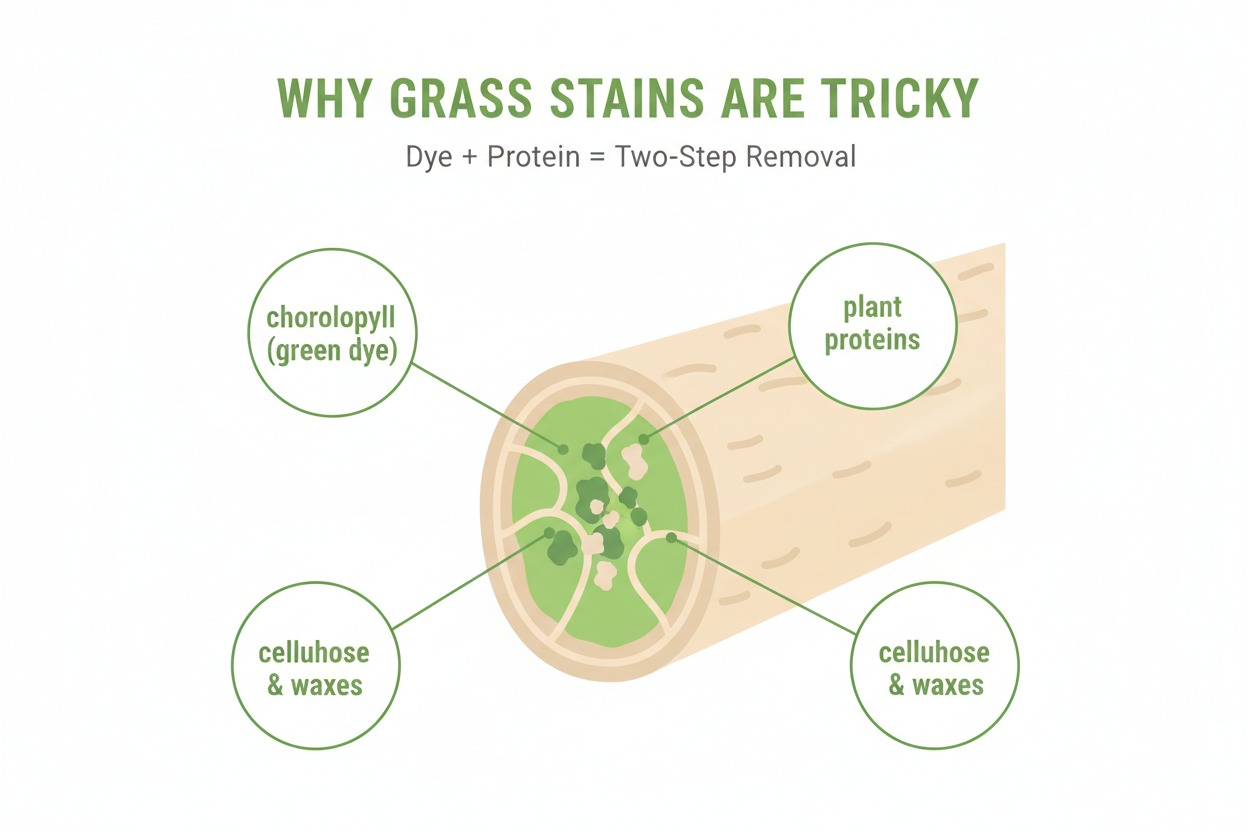
- Chlorophyll acts like a dye. It’s the pigment that makes grass green, and once it transfers onto clothing, it acts much like a fabric dye, binding tightly to the fabric rather than just sitting on the surface.
- Plant proteins and waxes glue it in place. Grass also carries proteins, along with cellulose, lignin, and waxy cuticle compounds that make the stain grip the fabric even harder, according to a breakdown of grass-stain chemistry from Dirty Labs.
That combination is why a plain rinse or a normal wash cycle so often leaves behind a faint yellow-green shadow. You’re not dealing with dirt, you can just rinse away — you’re dealing with a stain that has partially bonded with the fiber itself.
There’s also a timing problem. The longer chlorophyll sits, the deeper it sets, similar to how a fabric dye becomes more permanent the longer it’s left on the material. Fresh stains are dramatically easier to remove than ones that have already been through a hot wash and dryer cycle. Heat is one of the worst things you can do to a grass stain, since it can lock the pigment in for good.
The Golden Rules Before You Treat Any Grass Stain
Before we get into fabric-specific steps, these five rules apply no matter what you’re cleaning. Skip them, and you risk setting the stain permanently.
- Act fast. The sooner you treat it, the higher your odds of full removal.
- Never use hot water first. Heat sets the stain. Always start with cold or cool water.
- Skip the dryer until the stain is gone. Dryer heat can make a stubborn stain permanent, even if it looked mostly gone going in.
- Test in a hidden spot first. Vinegar, hydrogen peroxide, and rubbing alcohol can affect dye on colored or delicate fabric, so test on an inside seam first.
- Don’t rub too hard. Blot and work the product in gently. Aggressive rubbing can push the stain deeper into the weave or damage the fibers.
One more thing worth knowing: some guides recommend ammonia for grass stains, but it’s actually risky. Ammonia is highly alkaline, and on some fabrics, it can react badly with the stain, making it more permanent rather than lifting it. So it’s safest to leave it out of your grass-stain routine entirely.
How to Remove a Grass Stain From Jeans and Denim
Denim is thick and tightly woven, which actually works in your favor. It holds up well to scrubbing and repeated treatment. But it also means the stain can hide deep in the weave, so you’ll often need to repeat the process once.
If you’re wondering how to remove grass stains from blue jeans specifically, the vinegar method is your best friend here, since dark denim usually tolerates it without color loss (still, test an inside seam first).
For dark or blue jeans:
- Apply liquid enzyme detergent directly to the stain and work it in gently with an old toothbrush.
- Let it sit for 20–30 minutes.
- Rinse with cool water.
- Follow with the vinegar-and-water solution, letting it sit another 30 minutes.
- Wash in the warmest water safe for the denim, then check before drying.
For light-wash or white denim, swap the vinegar step for the baking soda and hydrogen peroxide paste instead. It’s gentler on light dye and less likely to cause any fading or discoloration around the stain.
Denim’s thickness means one round of treatment sometimes isn’t enough for a stain that’s already been through the wash once. If it’s still visible after step 5, repeat the whole cycle before drying. Don’t be tempted to just toss it in the dryer and hope. The heat will lock the shadow in permanently.
How to Remove Grass Stains From Pants and Trousers
For how to remove grass stains from pants more broadly (khakis, chinos, dress trousers, or uniform pants), the fabric composition slightly affects your approach.
Cotton or cotton-blend pants: Follow the core method above exactly as written.
Polyester or synthetic-blend trousers: These respond especially well to the baking soda and hydrogen peroxide paste. Maytag’s fabric-care guidance specifically recommends this paste — applied for about 30 minutes, followed by a gentle scrub and cool rinse (for polyester athletic and dress fabrics).
Dress trousers or wool-blend pants: Skip vinegar and hydrogen peroxide altogether. Instead, mix a small amount of mild detergent into cool water, gently work it into the stain with a soft cloth, and rinse. If the stain doesn’t lift or the care tag says dry-clean only, it’s genuinely worth taking it to a professional rather than risking the fabric. Our guide on how to dry clean at home will help you determine which items are safe to treat yourself and which really do need a professional touch.
How to Remove Grass Stains From Shoes and Sneakers
Shoes are their own challenge because the “fabric” is often canvas, mesh, suede, or leather rather than plain cotton. And the stain frequently sits right at a seam or sole edge where it’s hardest to scrub.
Canvas Sneakers and Tennis Shoes
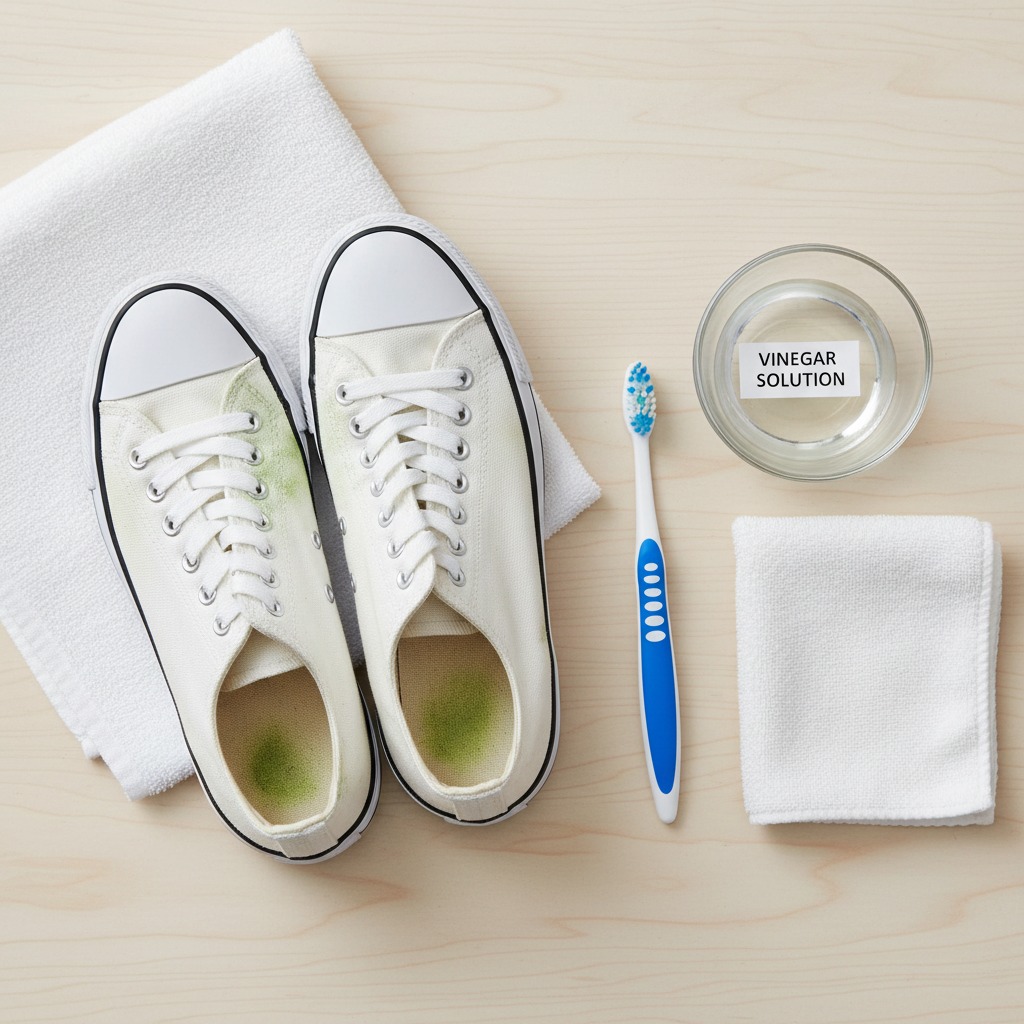
If you’re dealing with how to remove grass stains from tennis shoes or canvas sneakers:
- Use a dry toothbrush or nailbrush to knock off any loose dirt first.
- Mix 1 teaspoon of liquid laundry detergent with 1 cup of water.
- Dip a soft brush into the solution and scrub the stain in small circles.
- Rinse with a clean, damp cloth and let air dry — never use a dryer or direct heat on sneakers.
For how to remove grass stains from white shoes, dip a cotton ball or soft cloth in plain white vinegar and dab it directly onto the stain. This works especially well on a white canvas, where any leftover discoloration is the most visible.
Mesh and Synthetic Sneakers
For sneakers with mesh panels, use the hydrogen peroxide and dish soap combination instead of vinegar. Apply, let it sit for 30 minutes, scrub gently with a soft brush, and rinse. Mesh dries faster than canvas, so you’ll usually see results within one treatment.
Suede and Leather Shoes
These require a different approach entirely — water-based solutions can permanently stain or warp suede and leather.
- Suede: Blot excess grass with a dry cloth, then mix white vinegar with a bit of cornstarch into a paste. Apply, let it dry completely, then brush off the residue with a soft suede brush.
- Leather: Mix a small amount of mild detergent with warm water, dab gently with a cloth, wipe clean, then follow up with leather conditioner to restore moisture.
How to Remove Grass Stains From White Clothes
White fabric shows every trace of a grass stain, making this one of the most-searched versions of this problem. If you’re focused on how to remove grass stains from white clothes, the good news is you have one extra tool available that you can’t always use on colors: oxygen bleach.
Step-by-step for whites:
- Pretreat with enzyme detergent, worked in gently with a soft brush.
- Let sit 15–20 minutes, then rinse.
- For fresh stains, follow with the baking soda and hydrogen peroxide paste.
- For older or set-in stains, soak the entire garment in a solution of warm water and oxygen bleach (not chlorine bleach) for at least four hours.
- Wash as usual in the warmest water the fabric allows.
One thing worth flagging: chlorine bleach can technically remove grass stains, too, and the American Cleaning Institute notes it’s an option for whites where the fabric allows it. But oxygen bleach is generally the safer first choice. It’s gentler on fabric over time and won’t cause the yellowing that chlorine bleach sometimes leaves behind with repeated use.
Avoid mixing vinegar with any bleach product. It won’t create dangerous fumes the way vinegar and chlorine bleach can in other contexts, but oxygen bleach actually performs better in an alkaline environment, so combining it with an acidic ingredient like vinegar just cancels out its effectiveness.
How to Remove Grass Stains From Grey Sweatpants
Grey is uniquely unforgiving. It is worse than white in some ways, because any residual discoloration or faint outline shows up as a visible “halo” against the grey, and heavy scrubbing can leave a lighter patch that’s just as noticeable as the original stain.
For how to remove grass stains from grey sweatpants, go gentler than you would on white or denim:
- Treat with enzyme detergent first, work it in with light pressure — don’t scrub aggressively.
- Rinse with cool water.
- Use the vinegar-and-water solution rather than the hydrogen peroxide paste, since peroxide can occasionally lighten grey dye unevenly.
- Wash inside-out on a gentle, cool cycle to protect the fabric’s texture and color.
- Air-dry, or use the lowest heat setting only once the stain is fully confirmed to be gone.
Cotton-poly sweatpants (the most common grey sweatpants fabric) generally respond well to this gentler routine, and you’ll avoid the blotchy, lighter patches that come from over-treating.
Expert Tips for Better Results
A few extra details that make a real difference, based on how professional cleaners actually approach this stain:
- Layer your treatments, don’t just pick one. The protein-plus-dye nature of grass stains is exactly why a single product rarely gets a 100% result. Enzyme detergent for the protein, then vinegar or peroxide for the pigment, works better than either alone.
- Cold water is non-negotiable at every rinse stage. Even lukewarm water can begin setting the stain before you’ve finished treating it.
- Keep a stain-treatment kit near your laundry area. A small spray bottle of diluted vinegar, a travel-size enzyme stain remover, and an old toothbrush turn a 20-minute ordeal into a 5-minute fix, because you can treat the stain the moment you notice it instead of waiting for laundry day.
- Address dirt and grass separately. If mud is mixed in with the grass stain, let it dry completely and brush it off first. Treating wet mud just grinds it deeper into the fibers.
- Don’t judge the result until it’s fully dry. A stain that looks 90% gone when damp can sometimes reappear as it dries, so always let the item air-dry before deciding whether to repeat the treatment.
Pros and Cons of the Most Common Methods
| Method | Pros | Cons |
|---|---|---|
| Vinegar | Cheap, effective, gentle on most fabrics | Strong smell during treatment; not ideal on wool or silk |
| Enzyme detergent | Targets the protein directly, very reliable | Needs 15–30 minutes of dwell time to work well |
| Hydrogen peroxide + baking soda | Great for whites and polyester, easy to make | Can be messy; not safe on delicate or wool fabric |
| Oxygen bleach soak | Excellent for old, set-in stains | Requires several hours; not an instant fix |
| Rubbing alcohol | Fast, no waiting required | Least effective; often leaves a faint shadow |
Mistakes That Make Grass Stains Worse
- Using hot water at any stage before the stain is fully gone. This is the single most common mistake and the hardest to undo.
- Drying before confirming the stain is gone. Once it goes through the dryer, you’re often looking at a permanent mark.
- Scrubbing too hard, too fast. This can fray fibers or push the stain deeper rather than lifting it.
- Using ammonia as a first response. As mentioned earlier, it can react badly with certain fabrics and set the stain further.
- Skipping the enzyme step entirely. Treating only the color (vinegar or peroxide) without addressing the protein component is why some people end up needing three or four attempts.
And if grass stains keep showing up on the same gym bag or towels that also start smelling musty from being left damp, it’s worth sorting that out too — our guide to how to remove mildew smell from towels covers exactly how to reset fabric that’s dealing with both a stain and an odor problem at once.
How to Remove Grass Stains From Fabric: Upholstery, Car Seats & Furniture
Clothing isn’t the only casualty of a good afternoon outside. Muddy dogs, kids in cleats, and picnic blankets all track grass stains onto upholstery, car interiors, and outdoor cushions and you can’t exactly throw a couch cushion in the washing machine.
If you’re dealing with how to remove grass stains from fabric on furniture or car seats, the approach shifts slightly since you’re working with something you can’t fully submerge:
- Vacuum first. Remove any loose grass or dirt before applying anything wet. Working liquid into debris just grinds it deeper into the weave.
- Spot-test in a hidden area. Upholstery dye reacts differently to clothing dye, so always check an inconspicuous spot, like the underside of a cushion, first.
- Mix a mild solution. Combine a few drops of dish soap or mild detergent with cool water in a spray bottle.
- Blot, don’t soak. Spray lightly and blot with a clean white cloth, working from the outside of the stain inward so it doesn’t spread.
- Follow with a vinegar rinse. Lightly dab a vinegar-and-water mixture over the area to help lift the chlorophyll, then blot dry with a fresh cloth.
- Air dry completely. Open a window or use a fan rather than direct heat, since upholstery fabric can shrink or pucker with heat exposure.
For fabric car seats specifically, avoid oxygen bleach and hydrogen peroxide altogether unless you’re certain the seat fabric is colorfast. Car interiors often use dyes that aren’t tested the same way clothing dyes are, and a bleach-based product can leave a lighter patch that’s more obvious than the original stain.
Outdoor cushions and patio furniture fabric can usually handle a slightly stronger approach, since they’re built to withstand sun and weather. A baking soda paste left on for a full hour, followed by a hose rinse and full air-dry in the sun, works well for canvas-style outdoor fabric.
How to Prevent Grass Stains Before They Happen
Removing a stain is one thing, but preventing it is even better. A few simple habits can help if grass stains happen a lot in your home:
- Keep “outside clothes” separate. If you or your kids are regularly out in the yard, a designated set of older clothes for yard work or sports practice can save your good clothes entirely.
- Apply a fabric protector spray before outdoor activities. A stain-resistant spray creates a light barrier on the fibers, giving grass and dirt less to grip onto in the first place.
- Treat immediately, not later. Keep a small stain-remover pen or wipe in your bag, car, or sports duffel so you can dab a fresh stain the moment it happens, before it has a chance to set.
- Mow and maintain your lawn regularly. Shorter, well-maintained grass releases less chlorophyll and sap on contact than tall, overgrown grass, which can mean lighter stains to begin with.
- Choose darker or patterned fabric for high-activity clothing. This isn’t a fix so much as damage control. Dark colors and busy patterns simply hide a lingering shadow better than solid whites or pastels.
None of these guarantees you’ll never see another grass stain again. But by combining prevention habits with the right removal method for each fabric, you can turn what used to be a laundry disaster into a five-minute inconvenience.
Frequently Asked Questions
Does grass stain removal work on old, set-in stains?
Yes, but it takes more effort. Fresh stains usually clear in one treatment cycle, while older, laundered-and-dried stains typically need an oxygen bleach soak of at least four hours before you repeat the enzyme-and-vinegar steps.
Is vinegar or hydrogen peroxide better for grass stains?
In side-by-side testing, plain white vinegar mixed with water slightly outperformed hydrogen peroxide-based methods, though both are strong options. Vinegar tends to work best on darker fabrics and denim, while hydrogen peroxide paste is gentler and more reliable on whites and light colors.
Can I use bleach to remove grass stains?
Chlorine bleach can work on white, colorfast fabrics, but oxygen bleach is generally the safer choice since it won’t cause yellowing over time and works well on most colors. Always check the garment’s care label first.
Why do grass stains turn yellow instead of disappearing completely?
That faint yellow shadow is usually leftover chlorophyll pigment that wasn’t fully broken down. It happens most often with rubbing alcohol or when only one treatment step (dye or protein) was used instead of both.
How do I remove grass stains from shoes without ruining the material?
Match the method to the material: enzyme detergent and water for canvas, hydrogen peroxide and dish soap for mesh, and a dry vinegar-cornstarch paste for suede. Never soak leather or suede shoes directly in water.
What’s the fastest way to remove a grass stain if I’m in a hurry?
Rub liquid enzyme detergent directly into the stain, let it sit for at least 10 minutes, even if you’re rushing, then rinse with cool water and treat with vinegar once you have more time. A rushed 2-minute rinse alone rarely removes the full stain — the enzyme dwell time is what actually does the work.
Do grass stain removal methods work the same on natural and synthetic fabrics?
Not quite. Natural fibers like cotton and denim absorb chlorophyll dye more deeply, so they often need the full vinegar-plus-enzyme routine. Synthetic fabrics like polyester tend to respond faster to the baking soda and hydrogen peroxide paste, since the fibers don’t bond with the pigment as tightly.
Final Thoughts
Grass stains seem tough, but they are made of two parts: a dye and a protein. To remove them, first use an enzyme detergent to break down the protein. Then use vinegar, peroxide, or oxygen bleach to remove the color from the grass. This method works well on jeans, white shoes, and grey sweatpants.
Keep a small stain kit near your laundry area, treat stains the moment you spot them, and resist the urge to reach for the dryer until you’re sure the stain is gone. That’s really the whole system.
Got a stain that’s stuck around after a few tries, or another stubborn mark elsewhere in the house? Take a look through our Cleaning category for more step-by-step guides, including how to handle stubborn residue on glass surfaces using the same gentle, fabric-safe approach.