


Are Coffee Grounds Good for Plants? The Truth Most Blogs Get Wrong
I used to dump my whole coffee filter, grounds and all, straight onto my tomato bed every single morning. In my head, I was recycling. I was being smart. I was giving my plants a free breakfast. Then one July, my tomato leaves started curling and turning a strange pale yellow, and my basil right next to them just gave up and rotted at the base. That is when I actually started digging into the research instead of trusting garden folklore, and what I found surprised me.
So, are coffee grounds good for plants? The honest answer is yes for some plants, no for others, and it depends heavily on how you use them, not just whether you use them. Coffee grounds are not the magic fertilizer that Pinterest wants you to believe, but they are not useless either. They sit somewhere in the middle, and most articles ranking on Google right now either oversell them as a miracle feed or scare you off them completely. Neither version is accurate.
In this guide, I am going to walk you through what is actually in your coffee grounds, which plants genuinely benefit, which ones you should keep grounds away from, and the exact mistakes that turned my own garden into a cautionary tale for a season. I will also cover indoor plants, tomatoes, succulents, blueberries, and even cannabis, since the same rules of soil chemistry apply no matter what you are growing.
What’s Actually Inside Used Coffee Grounds
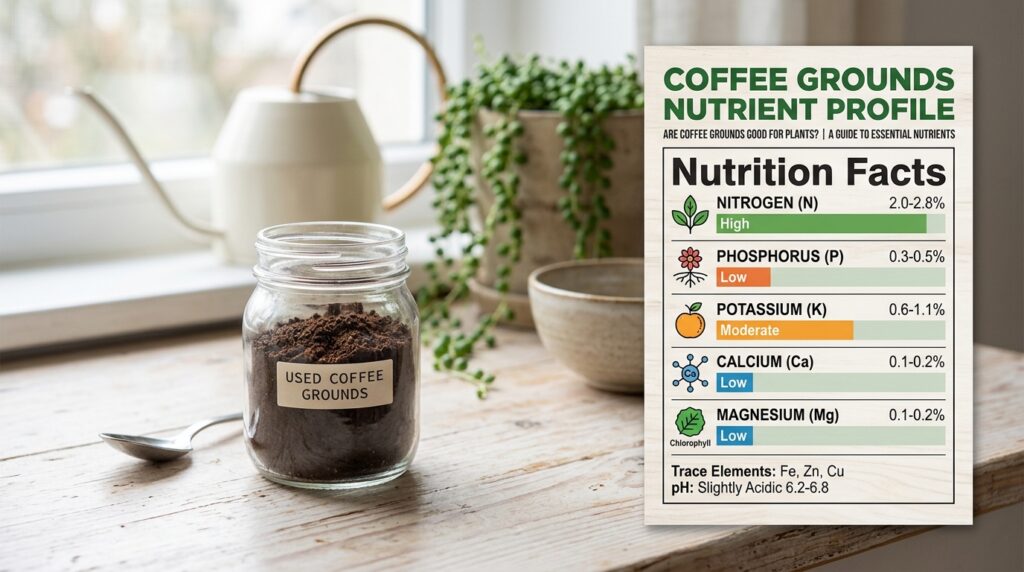
Before we talk about which plants like coffee grounds, it helps to know what you are actually feeding them. Coffee beans are seeds, and seeds are built to carry the nutrients a new plant needs to germinate. According to a fact sheet from Washington State University Extension, nitrogen-rich proteins make up more than ten percent of the content in coffee grounds by weight, and the carbon-to-nitrogen ratio can be as low as 11 to 1, which is genuinely close to ideal for soil and plant nutrition.
Here is a simple breakdown of what used grounds contain:
| Nutrient | Approximate Amount | What It Does for Plants |
|---|---|---|
| Nitrogen | Around 2 percent by volume | Supports leafy, green growth |
| Phosphorus | Small trace amounts | Helps roots and flowering |
| Potassium | Small trace amounts | Supports overall plant vigor |
| Calcium, magnesium, copper, zinc | Micro trace amounts | Minor but useful for plant health |
Notice that nitrogen is the star of the show here, and it is not immediately available to your plants the moment you sprinkle grounds on the soil. Soil microbes need to break the material down first, which is why coffee grounds behave more like a slow release amendment than an instant fertilizer. I made the mistake of expecting overnight results the first year I tried this, and honestly, that expectation is where most people go wrong.
The Big Myth: Are Coffee Grounds Actually Acidic?
This is the part that trips up almost everyone, including me for years. Most gardening blogs will tell you coffee grounds are acidic and perfect for lowering soil pH. That is only half true, and honestly, the more common claim is flat-out wrong for used grounds.
Linda Brewer, a soil scientist with the Oregon State University Extension Service, has pointed out that after brewing, coffee grounds sit close to neutral, usually around a pH of 6.5 to 6.8. The acidity in coffee beans is water-soluble, so most of it ends up in your actual cup of coffee, not in the leftover grounds. Brewer’s research also found that any pH change coffee grounds cause in soil tends to be temporary at best, which means they will not reliably lower the pH enough to make a real difference for genuinely acid-loving plants.
This matters a lot because it flips a huge chunk of common gardening advice on its head. If your goal is to acidify soil for a plant like a blueberry bush or an azalea, coffee grounds alone are not going to get the job done. You will need a real soil acidifier like elemental sulfur, and you should test your soil first rather than guessing.

Are Coffee Grounds Good for Tomato Plants?
This is probably the single most searched question in this whole topic, and it deserves a real answer, not a one-liner.
A study conducted through the De La Salle University Senior High School Research Congress tested tomato plants with different amounts of spent coffee grounds, using 0, 5, 9, and 14 grams applied through side dressing. The researchers noted that the carbon-to-nitrogen ratio of spent grounds is genuinely well suited to plant fertilization, but the results also showed that quantity matters enormously. Too much, applied too close to the stem, is where things go wrong.
From my own experience, the plants that struggled were the ones where I piled grounds directly against the stem. That thick, damp collar of organic matter stays wet and breaks down slowly, which creates the perfect environment for fungal issues like early blight to take hold. If you want to try coffee grounds on your tomatoes, here is what actually works:
- Use a small amount, roughly a quarter cup per plant at most.
- Mix the grounds into the top few inches of soil rather than piling them on the surface.
- Keep the grounds at least six inches away from the main stem.
- Apply once every few weeks during active growth, not daily.
Are Coffee Grounds and Eggshells Good for Plants Together?
You have probably seen the classic combo of coffee grounds and crushed eggshells recommended for tomatoes, especially to prevent blossom end rot. I tried this myself for two seasons, and I need to be honest with you about what the research actually shows.
University of Minnesota Extension reviewed this exact home remedy and found that while blossom end rot is genuinely a sign of calcium deficiency, eggshells added directly to soil break down far too slowly to actually deliver that calcium to a growing tomato in time to prevent the problem. They do add organic material for soil life over the long run, but as a quick fix, eggshells mostly just sit there. If blossom end rot is a recurring issue for you, a calcium soil amendment or consistent, even watering will do far more than a handful of crushed shells.
That said, using both together as a slow, long-term soil builder is not a bad idea. The nitrogen from coffee grounds and the mineral content from finely crushed, fully dried eggshells can complement each other in compost; just do not expect it to solve blossom end rot overnight.

Are Coffee Grounds Good for Vegetable Plants?
Beyond tomatoes, coffee grounds show up constantly in vegetable garden advice, and the results genuinely vary by plant.
Are Coffee Grounds Good for Pepper Plants?
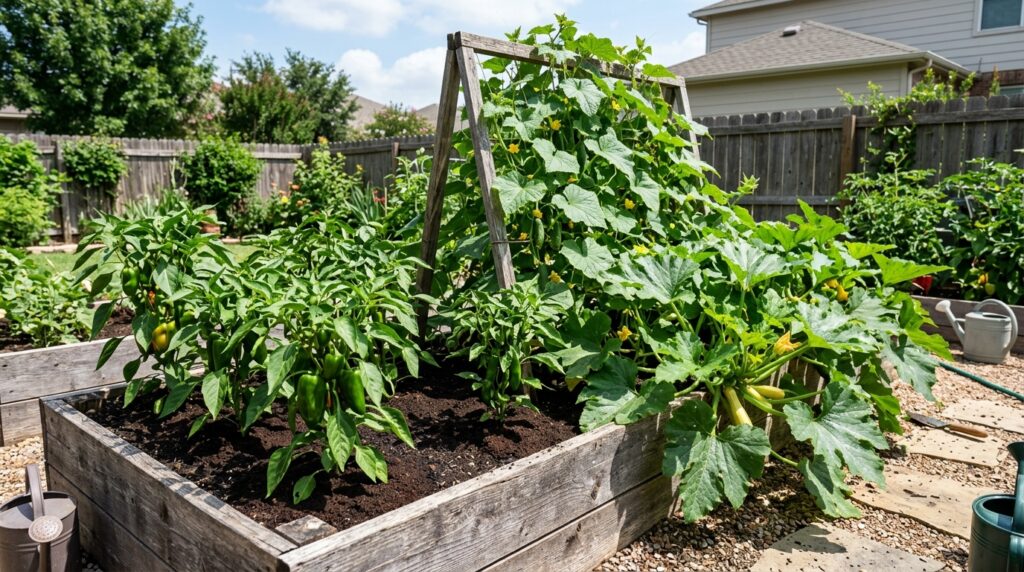
Peppers generally grow well in soil with a pH between 6.5 and 7, which lines up almost perfectly with the near neutral pH of used coffee grounds. The added nitrogen and potassium can support stronger foliage and more vigorous fruiting when used in moderation, mixed lightly into the top layer of soil around established plants rather than seedlings.
Are Coffee Grounds Good for Cucumber Plants?
Cucumbers respond well to the moisture retention and improved soil texture that coffee grounds bring when composted first. A thin layer worked into the soil, not piled directly against the base, helps root development without smothering drainage. Fresh, uncomposted grounds are riskier here since cucumber seedlings are sensitive to caffeine residue.
Are Coffee Grounds Good for Squash and Zucchini Plants?
Squash and zucchini are heavy feeders that appreciate the nitrogen boost, and improved soil structure from coffee grounds can support the sprawling root systems these plants develop. Just remember that squash family plants are also prone to fungal issues, so keeping grounds thin and dry rather than clumped and wet really does matter.
Are Coffee Grounds Good for Basil Plants?
Basil tends to enjoy the nitrogen content in coffee grounds, which supports the lush, leafy growth you actually want to harvest. Mix a small amount into the soil at planting time or as a light top dressing every few weeks during the growing season.
Are Coffee Grounds Good for Fruit Plants?
Are Coffee Grounds Good for Blueberry Plants?
Blueberries need genuinely acidic soil, typically in the 4.5 to 5.5 range, and this is where the coffee grounds myth causes the most damage. As confirmed by a Washington State University Extension fact sheet referenced in a Baltimore Sun garden advice column, coffee grounds simply will not acidify soil by a measurable amount. If your blueberry leaves are turning pale with dark green veins, a classic sign of iron chlorosis from insufficient acidity, coffee grounds will not fix it. You need a real soil acidifier such as elemental sulfur, applied after a proper soil test.
That does not mean coffee grounds are useless for blueberries. Used as a thin mulch layer, they still improve soil structure, feed beneficial microbes, and help with moisture retention, which are all genuinely helpful side benefits even if they are not doing what most people assume.
Are Coffee Grounds Good for Strawberry Plants?
Strawberries prefer slightly acidic, well-draining soil, and they respond reasonably well to a light application of composted coffee grounds mixed into the surrounding soil. Because strawberry plants sit low to the ground with shallow roots, keep any coffee grounds thin and well incorporated so you do not smother the crown of the plant or trap excess moisture against it, which can invite rot in humid conditions.
Are Coffee Grounds Good for Pineapple Plants?
Pineapples actually prefer soil on the acidic side, generally between 4.5 and 6.5, which puts them in a similar category to blueberries in terms of pH preference. A light, composted application can support the nitrogen needs of a growing pineapple plant, but again, do not count on coffee grounds to meaningfully shift your soil’s acidity. Focus on good drainage and consistent moisture instead, since pineapples are far more sensitive to soggy roots than to a slightly imperfect pH.

Are Coffee Grounds Good for Flowering and Aromatic Plants?
Are Coffee Grounds Good for Hibiscus Plants?
Hibiscus generally does well with coffee grounds, since it tolerates and often prefers slightly acidic to neutral soil. A light monthly application during the growing season can support blooming and overall vigor, especially when the grounds are worked into the surrounding soil rather than left as a thick surface layer.
Are Coffee Grounds Good for Lavender Plants?
This is a clear no, and it surprises a lot of people who assume anything organic must be good for a garden. Lavender genuinely thrives in slightly alkaline, dry, well-draining soil. According to horticulture experts featured by Tasting Table, lavender is one of the plants most likely to struggle when coffee grounds are added, both because of the moisture retention issue and because it prefers the opposite end of the pH spectrum from what coffee grounds provide, even in small amounts. If your lavender soil tests acidic, adding lime is a far better fix than reaching for the coffee tin.
Are Coffee Grounds Good for Rosemary Plants?
Rosemary falls into the same camp as lavender. It is a Mediterranean herb that wants dry, neutral to slightly alkaline soil, and the extra moisture retention from coffee grounds can encourage root rot rather than healthy growth. If you love the idea of recycling your morning coffee into the garden, save it for your tomatoes or peppers and skip your rosemary pot entirely.

What Indoor Plants Like Coffee Grounds?
Indoor growing changes the equation quite a bit, since houseplants live in a closed container with limited airflow and no earthworms or open soil microbiome to help process organic matter quickly. This is genuinely the category where I see the most conflicting advice online, so let me break it down plant by plant.
Are Coffee Grounds Good for Spider Plants?
Spider plants are fast growers, and a diluted coffee ground “tea” made by steeping used grounds in water can support fuller leaf growth and healthier baby spiderettes. If you keep spider plants around your home, it is worth knowing more about their overall care, and if you share your space with pets, our guide on whether spider plants are toxic to cats is worth a look before you start experimenting with new soil additives.
Are Coffee Grounds Good for Snake Plants?
Snake plants are hardy, but they strongly prefer dry, well draining soil that mimics their native semi arid environment. Fresh, unwashed coffee grounds carry a pH closer to 5.0 to 6.0 and higher residual caffeine, both of which can stress a slow growing succulent like this. If you decide to try it anyway, only use fully composted grounds, applied very sparingly, and never as a thick top layer.
Are Coffee Grounds Good for Jade Plants?
Jade plants are succulents that do not want consistently wet soil, and fresh coffee grounds are simply too acidic and too moisture-retentive for their taste. That said, jade plants tend to tolerate composted grounds slightly better than many other succulents, so a small amount mixed into the potting mix during repotting, kept well under twenty percent of total volume, is usually fine.
Are Coffee Grounds Good for Aloe and Aloe Vera Plants?
Aloe vera plants come from harsh, nutrient-poor, well-draining environments, and honestly, they do not need much help at all. According to Epic Gardening, coffee grounds are not considered a genuinely suitable fertilizer for aloe vera because the downsides, mainly excess moisture and disrupted pH, outweigh the modest nutrient benefits. A balanced succulent-specific fertilizer applied at half strength once a year is a far safer bet.
The Fungus Gnat and Mold Problem With Indoor Plants
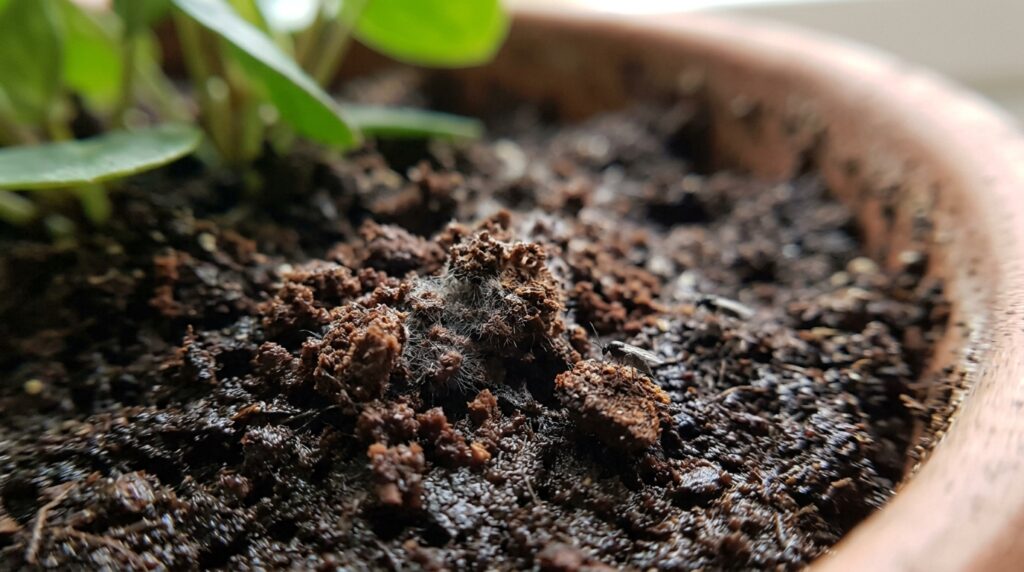
Here is something most articles conveniently leave out. A widely repeated claim online is that coffee grounds repel fungus gnats. The opposite is actually closer to the truth for indoor pots. Damp coffee grounds left sitting on the surface of potting soil create a dark, moist, decaying layer, which is exactly the environment fungus gnat larvae need to thrive, according to horticulture writers at House Digest. I learned this the hard way after sprinkling grounds on a peace lily and watching a small gnat cloud appear within two weeks.
If you want to use coffee grounds on houseplants at all, your safest options are:
- Make a weak liquid coffee “tea” by steeping used grounds in water for a day, straining it, and using the liquid to water your plant occasionally.
- Fully dry grounds before use so they do not create a damp surface crust.
- Mix a tiny amount into the potting soil during repotting rather than sprinkling on top.
- Avoid coffee grounds entirely on succulents, cacti, ferns, and most orchids.
Are Coffee Grounds Good for Potted Plants in General?
Beyond specific species, there is a general rule that applies to any potted plant, indoors or out. According to Garden Design, when coffee grounds are left in a layer on top of soil by themselves, they can dry into a solid, water-resistant crust that actually blocks water and fertilizer from reaching the roots, which is the exact opposite of what you want. The general guideline is to keep coffee grounds under twenty percent of the total soil volume and to mix them in rather than leaving them as a standalone top layer.
Container gardening amplifies every mistake because there is so much less soil to buffer an error compared to open ground. If you are working out how much of any amendment, including coffee grounds, to give a potted plant, our guide to dosing fertilizer for plants walks through how to avoid overdoing it, which is honestly the single biggest mistake I see gardeners make with any kind of homemade feed.

Are Coffee Grounds Good for Cannabis and Marijuana Plants?
Home growers ask about this constantly, and the underlying science is the same as for any other plant. Cannabis generally prefers a slightly acidic to neutral pH, usually cited around 6 to 7, and used coffee grounds contain a nutrient profile that includes nitrogen along with smaller amounts of phosphorus, potassium, calcium, and magnesium, according to growers’ guides published by Herbies Seeds. Their breakdown notes composted grounds increase water retention by roughly 7 to 12 percent and support stronger earthworm activity in outdoor soil, which is a genuinely useful benefit for living soil setups.
The key cautions are the same ones that apply everywhere else in this guide. Fresh, uncomposted grounds carry residual caffeine that can inhibit growth, so composting first matters. Indoor growers in particular should be cautious about quantity since container soil has far less room to buffer excess organic matter compared to an outdoor garden bed. A general guideline of keeping composted coffee grounds to no more than 10 to 20 percent of your soil mix applies here too.

How to Use Coffee Grounds the Right Way
After a few seasons of trial and error, here is the process I actually stick to now, and it has genuinely worked better than anything I tried in my first year of coffee ground enthusiasm.
- Dry your grounds first. Spread them on a tray or newspaper for a day or two so they do not clump or mold before you use them.
- Compost when possible. Layering grounds with brown material like dried leaves or shredded paper in your compost pile lets microbes break the material down before it ever touches your plants, which avoids almost every issue mentioned in this guide.
- Keep the amount small. Stick to roughly 10 to 20 percent of total soil volume for any single application, and never more.
- Mix, do not pile. Work grounds lightly into the top couple of inches of soil instead of leaving a thick surface layer that can crust over.
- Stay away from the stem. Leave a gap of several inches between coffee grounds and the base of any plant to avoid trapping moisture against it.
- Match the plant to the amendment. Save coffee grounds for nitrogen-loving, neutral to mildly acidic plants like tomatoes, peppers, and hibiscus, and skip them entirely on true alkaline lovers like lavender and rosemary, and on drought-adapted succulents like aloe.

Expert Tips for Getting the Best Results
- Always do a soil test before relying on coffee grounds for pH change. A cheap home test kit will tell you far more than guesswork ever will, and it will save you a wasted growing season.
- Never use flavored or sugared coffee grounds. The oils, sugars, and syrups attract pests and encourage mold far more aggressively than plain grounds.
- Rinsing is optional; drying is not. You do not need to rinse used grounds before applying them, but you should let them dry out before storing or spreading them to avoid mold taking hold in your container.
- Watch your plant, not the calendar. Signs like yellowing leaves, a sour smell, or a crusty soil surface mean you should stop applying grounds and let the soil recover before trying again.
- Pair with real compost. Coffee grounds work best as one ingredient in a broader compost mix rather than as a standalone fertilizer, since they lack a genuinely balanced nutrient profile on their own.
Pros and Cons of Using Coffee Grounds on Plants
| Pros | Cons |
|---|---|
| Free, easy to source, reduces kitchen waste | Not a complete or balanced fertilizer on its own |
| Adds nitrogen and trace minerals over time | Nitrogen is not immediately plant available |
| Improves soil structure and microbial activity | Can form a water-resistant crust if applied too thick |
| Near neutral pH suits many nitrogen-loving plants | Will not meaningfully acidify soil for true acid lovers |
| May help deter certain pests like slugs | Can encourage mold and fungus gnats indoors if left damp |
What I’d Tell a Friend Just Starting Out
If a friend asked me today whether they should start using coffee grounds in their garden, I would say yes, but with a much smaller pile than you are probably imagining. Start with one tablespoon mixed into the soil around a single tomato or pepper plant, watch how it responds over two weeks, and expand from there. Do not treat your whole coffee habit as free fertilizer from day one, and definitely keep it away from your succulents and your herb garden. I wasted an entire growing season assuming more was always better, and the truth is that coffee grounds reward patience and restraint far more than enthusiasm.
Frequently Asked Questions
Are coffee grounds good for indoor plants and house plants in general?
In small, carefully managed amounts, yes, but indoor pots are far less forgiving than open garden soil. The safest approach for houseplants is a diluted coffee tea rather than dry grounds sprinkled on the surface, since the closed container environment makes mold and fungus gnats much more likely.
Are coffee grounds good for strawberry plants?
Strawberries generally tolerate a light, composted application well, since they prefer mildly acidic, well-draining soil. Keep the layer thin and away from the crown of the plant to avoid trapping moisture against it.
Are coffee grounds good for pineapple plants?
Pineapples prefer acidic soil in the 4.5 to 6.5 range and can handle a small, composted amount of coffee grounds for the nitrogen boost, though good drainage matters far more to pineapple health than soil acidity from coffee alone.
Are coffee grounds good for snake plants and jade plants specifically?
Both are succulents that prefer dry, well-draining conditions, so fresh grounds are risky for either. Jade plants tend to tolerate a small amount of fully composted grounds slightly better than snake plants, but neither genuinely needs coffee grounds to thrive.
Are coffee grounds good for weed plants grown at home?
If you mean cannabis, yes, in moderation and ideally composted first. The same nitrogen and micronutrient benefits that apply to other nitrogen-hungry plants apply here, and the same caution about limiting quantity to roughly 10 to 20 percent of soil volume still holds.
How much coffee grounds should I use per plant?
As a general rule, keep coffee grounds to no more than 10 to 20 percent of the total soil volume in any single application. For an average garden plant, that usually works out to a quarter cup or less mixed into the surrounding soil every few weeks.
Can I put fresh, unbrewed coffee grounds directly on my plants?
It is generally better to use brewed, used grounds rather than fresh ones. Fresh grounds carry more residual caffeine and a lower pH, both of which are more likely to stress or inhibit young plants and seedlings.
Do coffee grounds actually keep pests like ants and slugs away?
The evidence here is mixed. Some gardeners report reduced slug activity, and there is limited research suggesting caffeine can affect snails and slugs at fairly high concentrations, but coffee grounds in typical garden amounts do not contain enough caffeine to reliably repel most pests on their own.
Can too many coffee grounds actually hurt my plants?
Yes, and this is the most common mistake people make. Excess coffee grounds can compact soil, form a water-blocking crust, tie up nitrogen temporarily as microbes work to break it down, and in some cases stunt seedling growth due to residual caffeine, which functions as a natural growth inhibitor in high concentrations.
Are coffee grounds good for cucumber plants specifically?
Yes, in moderation. Cucumbers respond well to the added nitrogen and improved soil moisture retention from composted grounds, as long as they are worked into the soil rather than piled directly against young seedlings.
Final Thoughts
So, are coffee grounds good for plants? After several seasons of testing this myself, my honest answer is that they are a genuinely useful, free soil amendment for the right plants, used the right way, and a real liability for the wrong ones. Tomatoes, peppers, cucumbers, hibiscus, and even cannabis can benefit from a light, composted application, while lavender, rosemary, aloe, and most succulents are better off without it. The biggest lesson from my own trial and error is simple: less is more, composting beats piling fresh grounds on the surface, and matching the amendment to the actual plant matters far more than the amendment itself.
If you are working through your broader plant nutrition routine and want to get your dosing right across the board, not just for coffee grounds, our fertilizer dosing guide is a solid next stop. And if pets share your home alongside your houseplants, it is always worth double-checking which of your greenery is genuinely safe to have around them before you start experimenting with new soil additives.