


Solar Panel Snow Removal: The Safest Way to Clear Your Panels
Solar panel snow removal is usually safest when you let light snow melt or slide off naturally. If you need to remove snow, stay on the ground and use a long solar panel snow rake with a soft foam or rubber head. Pull loose snow down in small sections while standing away from the falling snow. Never climb onto an icy roof or use a shovel, metal scraper, hot water, salt, pressure washer, or stiff brush. Stop when you reach hard ice. If the panels are high, difficult to reach, damaged, or buried under unusually heavy snow, contact a trained professional.
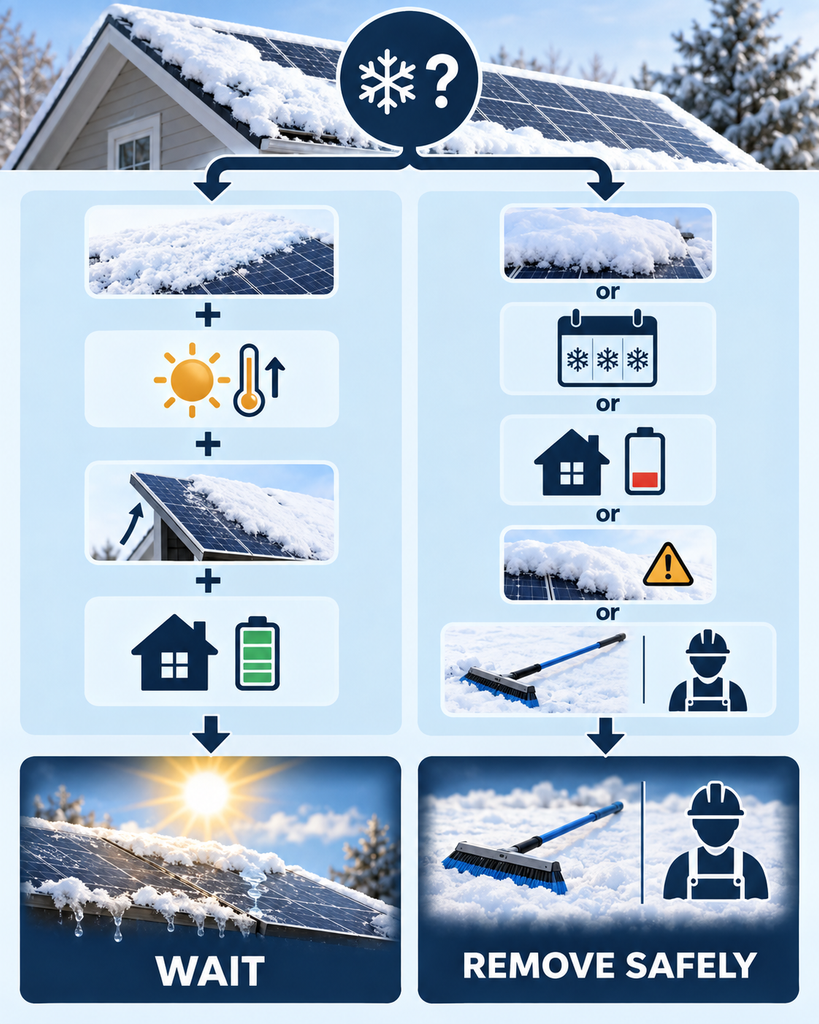
Do You Need to Remove Snow From Solar Panels?
Not every layer of snow needs to be removed.
Solar panels are built for outdoor weather, and tilted panels often shed snow as sunlight warms the dark glass. Wind and rising temperatures can also clear an array without any homeowner effort. A light covering that is likely to melt soon may not justify the risk of using a long tool around a snowy roof.
Removing snow may make sense when:
- The array remains covered for several clear days.
- You rely on solar power or batteries during an outage.
- The panels have a low slope and do not shed snow easily.
- Snow is blocking most of the array during a period of strong winter sun.
- A ground-mounted array can be reached safely.
- An installer or engineer has identified a snow-load concern.
- Snow buildup is hiding damaged panels or creating a hazard below the roof.
Power loss alone does not always mean immediate action is needed. Compare the likely value of a few days of winter production with the risk of breaking a panel, damaging wiring, or being hit by falling snow.
Official winter-weather guidance says that removing built-up snow or ice is generally not recommended. If you must remove excessive snow, it advises using soft tools with great care.
How Snow Affects Solar Panels
A solar panel can produce electricity in cold weather, but the cells need light. A thick, even layer of snow can block most sunlight and sharply reduce production. A thin or uneven covering may let some light through, but output still depends on the panel design, snow depth, and which parts of the module remain covered.
Snow does not always stay for long. Dark panel glass can warm when sunlight reaches it, helping the bottom layer melt. Once a small section begins to slide, more of the panel may clear naturally.
Roof angle also matters. Steeper panels tend to shed snow more easily than low-slope panels. However, a steep array can release a large sheet of snow without warning. Keep walkways, doors, vehicles, outdoor equipment, children, and pets away from the area below.
Snow buildup can create concerns beyond lost production. Meltwater may refreeze along panel edges, gutters, or roofing. Heavy snow may also hide panels from roof workers. The weather vulnerability guide warns that hidden arrays can be damaged if someone walks on them or uses a shovel without knowing where the modules are.
What Is the Best Way to Remove Snow From Solar Panels?
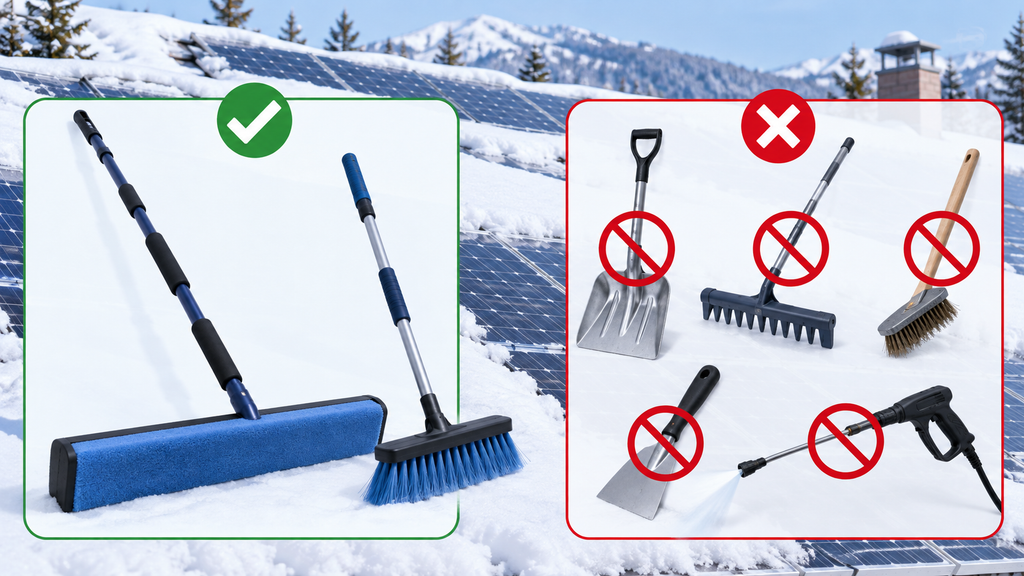
For most reachable residential systems, the safest DIY method is a purpose-made solar panel snow rake used from the ground. It should have a soft foam, rubber, or other panel-safe head with no exposed metal edge.
The goal is not to scrape every trace of snow from the glass. You only need to remove loose snow or create an opening that helps sunlight and gravity finish the job.
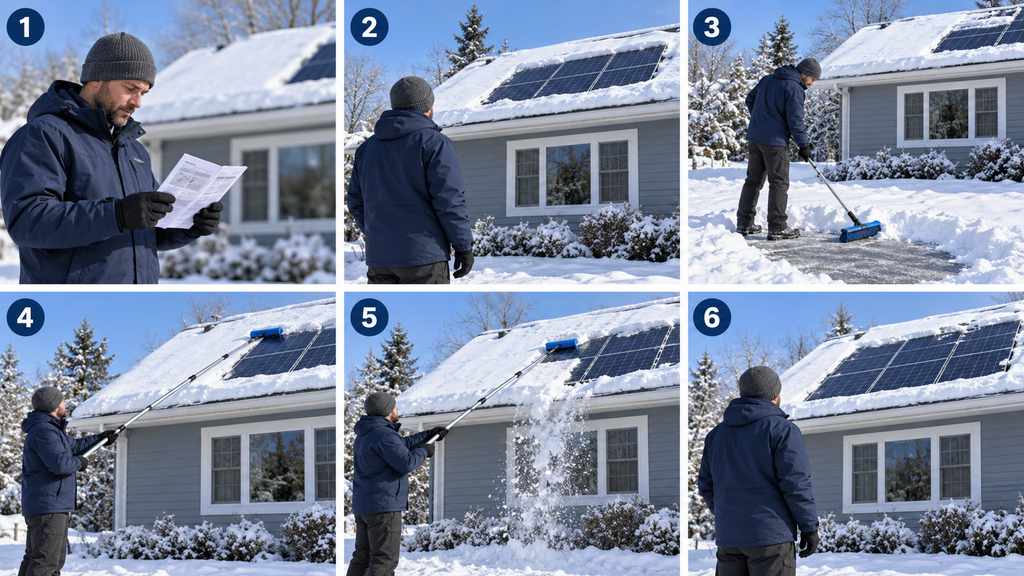
1. Check the Panel Instructions
Read the cleaning and maintenance instructions for your panels before touching them. The warranty may limit which tools you can use.
Don’t assume a product described as a roof rake is safe for solar glass. Many standard roof rakes have hard plastic or metal blades designed for shingles, not coated glass.
2. Inspect the Area From the Ground
Look for hanging ice, overhead power lines, damaged wires, cracked panels, loose mounting parts, and deep snow around your work area.
Do not begin if:
- Snow is still falling heavily.
- Strong wind is moving the rake.
- The ground is icy or uneven.
- You would need a ladder.
- You cannot see the edge of the array.
- Snow could fall onto a person, doorway, vehicle, or power equipment.
- The panels or wires appear damaged.
Solar panels can still produce electricity when exposed to daylight. Snow and cold weather do not remove the electrical risk.
3. Clear a Safe Standing Area
Shovel and treat the ground where you will stand before handling a long pole. Wear warm boots with strong traction.
Stand to the side of the expected snow path, not directly below the panels. Wet roof snow can release in a heavy sheet once it starts moving.
Falls involving wet surfaces and poorly positioned ladders are a serious risk. Review the main fall risks around ladders before deciding whether the job is safe.
4. Extend the Snow Rake From the Ground
Adjust the pole while it is horizontal. This is easier and safer than adding sections while holding the tool overhead.
Keep the rake away from power lines, service wires, antennas, and tree branches. A long aluminum pole can be difficult to control and may conduct electricity.
5. Remove Snow in Small Sections
Place the soft rake head flat on top of the loose snow without pressing into the glass. Pull the snow downward with slow, short movements.
Start near the lower part of the array to open a path for snow above it. Then work upward in reachable sections. Do not force the rake against panel frames or drag it sideways across gaps between modules.
Leave a thin layer if clearing down to the glass would require scraping. Sunlight may melt the remaining snow without risking scratches.
6. Stop When You Reach Ice
Use a snow rake for loose or soft snow, not ice. Do not chip, pry, or scrape ice from a solar panel.
Wait for warmer weather or contact a professional if thick ice remains. Trying to break ice can crack the glass, harm the frame, or damage the protective coating.
7. Check the Array After the Snow Clears
Once the roof is safe to view, inspect the panels from the ground. Look for cracked glass, bent frames, loose wires, shifted panels, or error messages from the inverter or monitoring system.
If ordinary dirt remains after the snow melts, follow a proper solar-panel washing method. Cleaning dirt and removing snow are different jobs and require different tools.
If dirt, salt, or other residue remains after the snow melts, learn how to clean solar panels safely without scratching the glass or damaging the electrical parts. Snow removal and regular panel cleaning require different tools and methods.
Choosing a Solar Panel Snow Rake
A suitable rake should help you reach the array without adding much weight or placing a hard edge against the glass.
| Feature | What to Choose | What to Avoid |
|---|---|---|
| Rake head | Soft foam, rubber, or panel-safe material | Metal blade or hard plastic edge |
| Pole | Lightweight telescopic pole | Heavy pole that bends or is hard to control |
| Edges | Smooth and fully covered | Exposed screws, bolts, or sharp corners |
| Width | Wide enough to move snow without becoming difficult to handle | Oversized head that catches wind |
| Reach | Long enough to use from stable ground | A short tool that requires a ladder |
| Head connection | Secure, smooth, and easy to inspect | Loose joint that may strike the panel |
| Replacement parts | Replaceable soft head | Worn foam with exposed support parts |
Inspect the rake before every use. Dirt, grit, a damaged edge, or an exposed fastener can scratch the panel.
A longer pole is not always safer. It gets heavier and harder to guide as you add more sections. If you must lean, stretch, stand on a ladder, or work directly below falling snow, the array isn’t suitable for DIY removal.
Can You Use a Solar Panel Snow Brush?
A solar panel snow brush can work for light, dry snow on ground-mounted panels or a very low array that is easy to reach. The bristles must be soft, clean, and approved for use on the panel surface.
A brush is less useful for deep or wet snow. Pushing a heavy layer with a brush can place too much pressure on the glass. Bristles may also hold sand or grit that scratches the surface.
Use a brush with gentle sweeping movements. Do not scrub, press down, or use the brush to break ice. A soft foam rake is usually a better choice for pulling loose snow from rooftop panels while standing on the ground.
Tools and Methods That Can Damage Solar Panels
Metal Shovels and Scrapers
A shovel or metal scraper can scratch the glass, chip an edge, bend the frame, or place too much force on one part of the module. Never use one on a solar panel.
Standard Hard Roof Rakes
A tool safe for asphalt shingles isn’t automatically safe for solar panels. Hard rake heads can strike the frame or drag grit across the glass.
Hot Water
Hot water can cause rapid temperature changes on frozen glass. It can also run down the roof and refreeze, creating more ice around gutters, walkways, and the worker.
Salt and Ice-Melting Chemicals
Salt and other melting chemicals can leave residue and may harm metal parts, roof materials, seals, or nearby plants. Do not spread them across solar modules.
Pressure Washers
High-pressure water is not a snow-removal method. It may force water into seals or electrical areas, and the spray can freeze on the roof and ground.
Leaf Blowers
A blower may move a very light layer of dry snow from a safely reachable ground-mounted panel, but it is not a good general solution for rooftop arrays. It becomes less useful with wet snow and may create poor visibility by blowing snow back into the air.
Homemade Heating Devices
Do not place heat tape, portable heaters, heating blankets, or homemade electrical wiring on or under solar panels. A product not designed for the array may create fire, roof, electrical, and warranty problems.
Can You Keep Snow Off Solar Panels?
You cannot stop all snow from landing on an outdoor solar array. The practical goal is to help snow shed naturally and reduce how often you need to remove it manually.
Plan the Panel Angle Before Installation
A steeper angle can help snow slide off panels, but roof shape, wind loads, sunlight, local building rules, and the panel instructions also affect the correct design. Do not change the tilt of an existing roof array yourself.
Adjustable ground mounts may offer more control, but move them only according to the design instructions. Snow and ice can make moving parts difficult or dangerous.
Reduce Winter Shade
Panels in direct winter sun usually warm and clear sooner than panels shaded by trees, chimneys, or roof sections. Safe tree care may improve sunlight, but do not remove healthy trees only for short periods of winter shade without considering their wider value.
Keep branches away from the roof so they do not drop twigs or snow onto the modules. Include this in broader home exterior maintenance.
Leave Room for Sliding Snow
Snow needs a safe place to land. Do not place doors, walkways, air-conditioning equipment, vehicles, or fragile landscaping directly below an area where a large sheet may slide from the panels.
Snow may build up at the bottom of a ground-mounted array and block further sliding. The lower edge should have enough clearance for normal local snow depth. Make this design decision before installation.
Consider Snow Guards Carefully
Snow guards are designed to control sudden snow slides. They may protect people and property below the roof, but they can also hold snow on or near an array for longer.
Do not attach a snow guard directly to a module frame unless the complete system is designed and approved for it. Ask a solar installer and roofing professional to plan a solution that protects the roof, panels, and area below.
Are Automatic Solar Panel Snow Removal Systems Worth It?
A solar panel snow removal system may use heating, airflow, vibration, moving brushes, adjustable mounting, or another engineered method. These systems are more common where winter production is important and manual access is difficult.
For an ordinary grid-connected home, an automatic system may cost more and use more energy than it saves. Its value depends on:
- Local snowfall
- How long snow normally remains
- Winter electricity production
- Battery or backup-power needs
- Roof access
- System size
- Installation and maintenance costs
- Compatibility with the panels and warranty
Heating systems must be designed for the exact array. Heat that melts snow can create runoff and refreezing at roof edges. Added wiring also needs safe electrical control and weather protection.
Automatic tools make more sense when snow causes repeated, measurable production problems or when power reliability is especially important. Ask for an estimate of the expected winter energy benefit before paying for a permanent system.
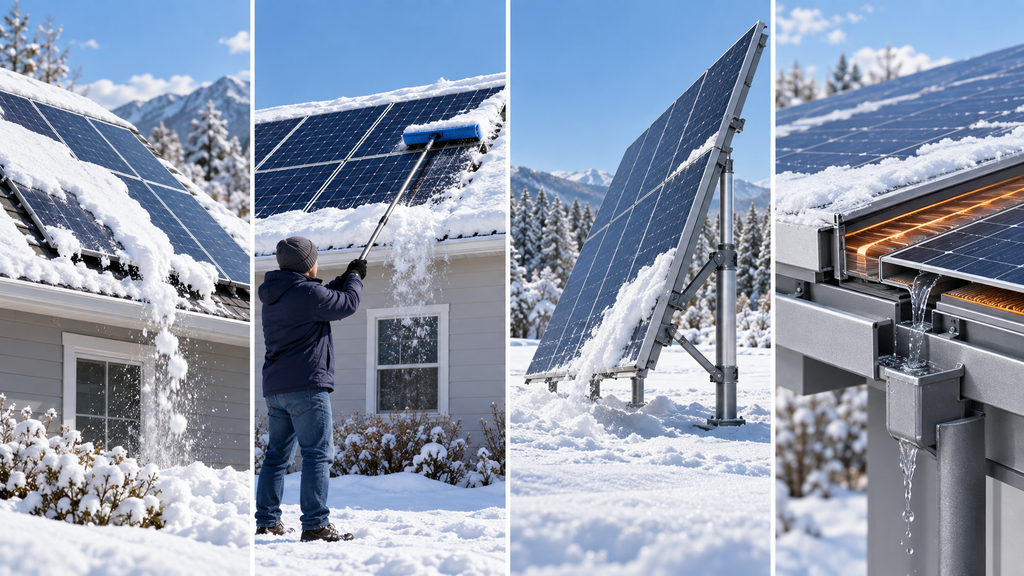
When to Call a Professional
Call a qualified solar service provider when:
- The array cannot be reached safely from the ground.
- A ladder or roof access would be required.
- Ice is frozen to the panel surface.
- The roof is steep, fragile, damaged, or heavily covered.
- Snow buildup appears unusually deep or heavy.
- Panels, frames, mounts, or wires look damaged.
- Snow has shifted a panel or pulled on wiring.
- The inverter shows a fault after the snow clears.
- You are concerned about the roof or array’s snow-load limit.
The safe snow-load limit depends on the exact module, mounting method, roof, and local design conditions. Do not rely on a general number found online. Check the system documents or ask the installer, a structural engineer, or another qualified professional.
System survival matters more than short-term power production during a severe winter storm. Avoid disturbing the array until conditions are safe.
Frequently Asked Questions
Will snow damage solar panels?
Solar panels are designed for outdoor weather, but their snow-load limits vary. Ordinary snowfall may not affect a properly designed system. Unusual accumulation, drifting, ice, weak mounting, or roof damage may require professional inspection.
Can I use a regular roof rake on solar panels?
Only if its manufacturer and your panel instructions clearly state that it is safe for solar glass. Many standard roof rakes have hard or exposed edges that can scratch panels. A purpose-made rake with a soft foam or rubber head is the safer choice.
Should I remove all the snow from my solar panels?
No. Removing loose snow or opening part of the array may be enough to help sunlight and gravity clear the rest. Do not scrape the glass to remove the final thin layer.
Can I pour warm water over snow-covered panels?
No. Warm or hot water can place sudden stress on cold glass and may refreeze on the roof or ground. Allow ice to melt naturally or contact a professional.
Do solar panels work when covered with snow?
A thick layer of snow can block most sunlight and greatly reduce production. Partly exposed panels may still produce some electricity, but output depends on the system design and how much of each module remains covered.
How can I keep solar panels clear of snow?
You cannot prevent every buildup. Good winter sun, a suitable panel angle, safe clearance below the array, and careful system design can help snow shed naturally. Ground-based removal with a soft snow rake may help when loose snow remains for too long.
Conclusion
The best way to remove snow from solar panels is often to wait for safe, natural melting. When removal is necessary, use a soft solar panel snow rake from stable ground and pull loose snow down in small sections while standing out of its path.
Never climb onto an icy roof or scrape frozen snow from the glass. If the panels are difficult to reach, covered in ice, damaged, or carrying unusually heavy snow, leave the job to a trained professional.