


How Long Does Spray Paint Take to Dry? A Complete Guide
You just finished a coat of spray paint, and now you are standing there, can in hand, wondering how long spray paint takes to dry before you can touch it, flip it, or add another coat.
I get it. Waiting is the hardest part of any paint project.
The honest answer is that most spray paint feels dry to the touch in 15 to 30 minutes, but it needs anywhere from 24 hours to a full week to cure completely, depending on the paint type, the surface, and the weather that day.
That is a big range, so in this guide I will explain exactly what changes those numbers, how long you should wait on different surfaces like metal, wood, plastic, foam, and fabric, how long popular brands like Rust-Oleum actually take, and simple ways you can make your paint dry faster without ruining the finish.
I have pulled real manufacturer data sheets, painting professionals, and hands-on DIY guides to put together numbers you can actually trust, not guesses.
Quick Answer: How Long Does Spray Paint Take to Dry
If you only have a minute, here is the short version. These times assume a mild, dry day around 70°F with normal humidity.
| Dry Stage | Typical Time | What It Means |
|---|---|---|
| Dry to touch | 15 to 30 minutes | The surface will not smudge if you gently touch it |
| Safe to handle | 1 to 2 hours | You can pick it up and move it carefully |
| Safe to recoat | 1 hour, or wait 24 to 48 hours | Check the can, most brands offer a short window or a long one |
| Fully cured | 24 hours to 7 days | Paint has reached maximum hardness and durability |
Keep this table in mind as you read, because every section below builds on these four stages.
What “Dry” Actually Means (And Why It Trips People Up)
Here is something most articles skip over, and it is the reason so many spray paint projects go wrong.
“Dry” is not one single moment. It is a process with three distinct stages, and mixing them up is the number one cause of smudges, fingerprints, and tacky finishes.
Dry to the touch means the outer surface has hardened enough that a light touch will not leave a mark. This happens first because the top layer of solvent evaporates fastest.
Dry to handle means you can pick up the item, flip it over, or stack it without denting the finish. The paint under the surface is still softening up at this point.
Fully cured means the paint has reached its final hardness and chemical resistance. This is when it can handle scratches, weather, and regular use without damage.
A professional painting contractor puts it plainly: under ideal conditions, most spray paints dry to the touch within 20 to 30 minutes, at which point the solvents in the outermost layer have evaporated enough that a light touch will not leave a mark. But that same paint can still need a full day or more to fully cure underneath.
If you have ever pulled a “dry” spray-painted item off a drop cloth only to see fabric texture stuck in the finish, this is exactly why. It was dry to the touch, not fully cured.
How Fast Does Spray Paint Dry by Paint Type
Not all spray paint is built the same, and the formula inside the can changes your timeline more than almost anything else.
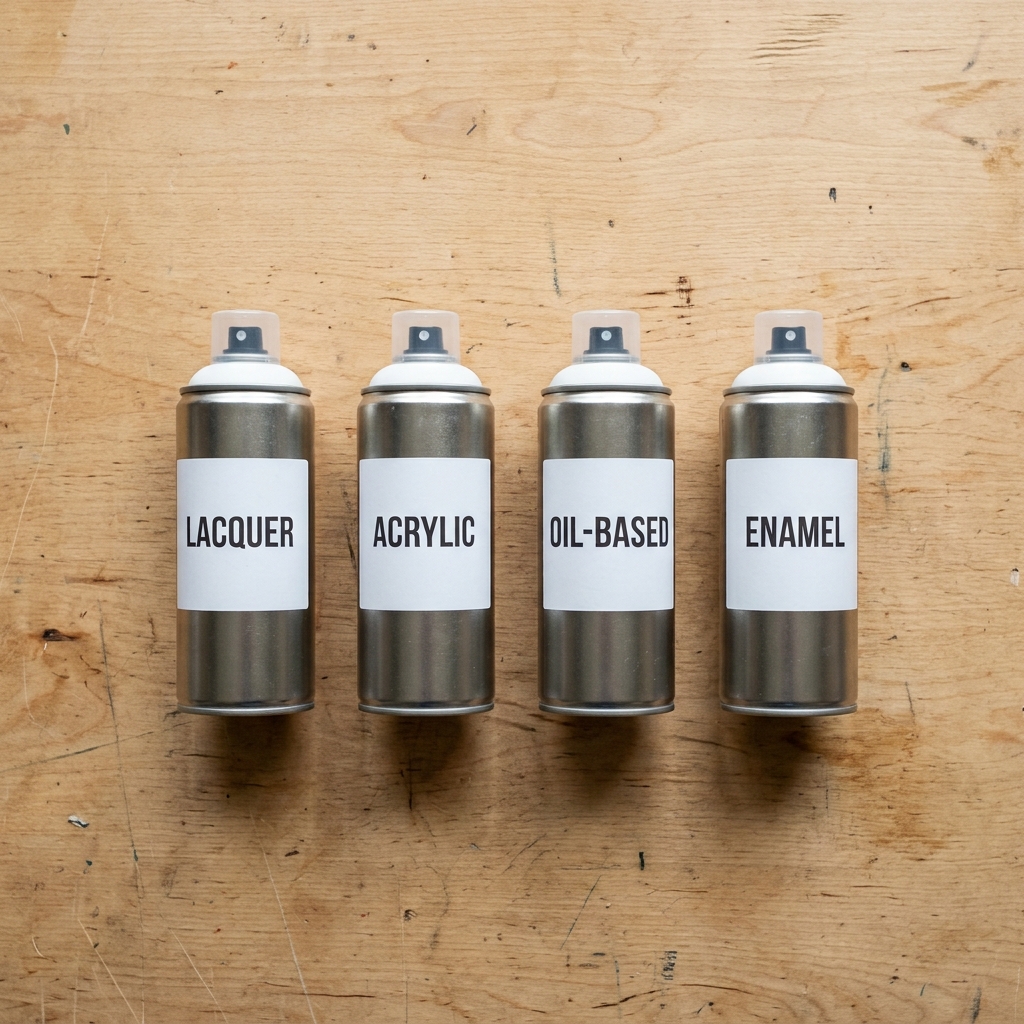
Lacquer Spray Paint
Lacquer is the fastest-drying option you can buy off the shelf. One manufacturer’s own technical data sheet for a lacquer spray states that it becomes dry to the touch in 20 minutes and fully dry in 30 minutes at 70°F and 50% relative humidity, with no minimum wait time before recoating.
Acrylic Spray Paint
Acrylic spray paint is the most common type for craft and furniture projects. It typically dries to the touch within 15 to 30 minutes, though it is recommended to wait at least 1 to 2 hours before handling it or applying another coat.
Oil-Based Spray Paint
Oil-based formulas trade speed for durability. These usually take longer than acrylic, often needing anywhere from 2 to 6 hours or more, depending on the brand and conditions.
Enamel Spray Paint
Enamel has the longest wait of the common types. Full drying typically takes 8 to 24 hours, or longer in some cases, which is why enamel is usually reserved for projects where you are not in a rush, like metal railings or outdoor furniture that needs a tough finish.
Water Based Spray Paint
Water based spray paint has become popular for a simple reason. It swaps out most of the harsh chemical solvents for water, which means it releases far fewer volatile organic compounds, or VOCs, into the air. According to industry sources, water-based formulas can dry up to three times faster than solvent-based paint, with lower odor and easier cleanup using just soap and water.
The tradeoff is that water based spray paint is more sensitive to humidity while it is drying, and it can take a little longer to reach full hardness in damp conditions compared to a well ventilated dry room.
How Long Does Spray Paint Take to Dry on Metal
Metal is one of the trickiest surfaces because it does not absorb anything. Every bit of solvent has to evaporate straight into the air, which slows things down.
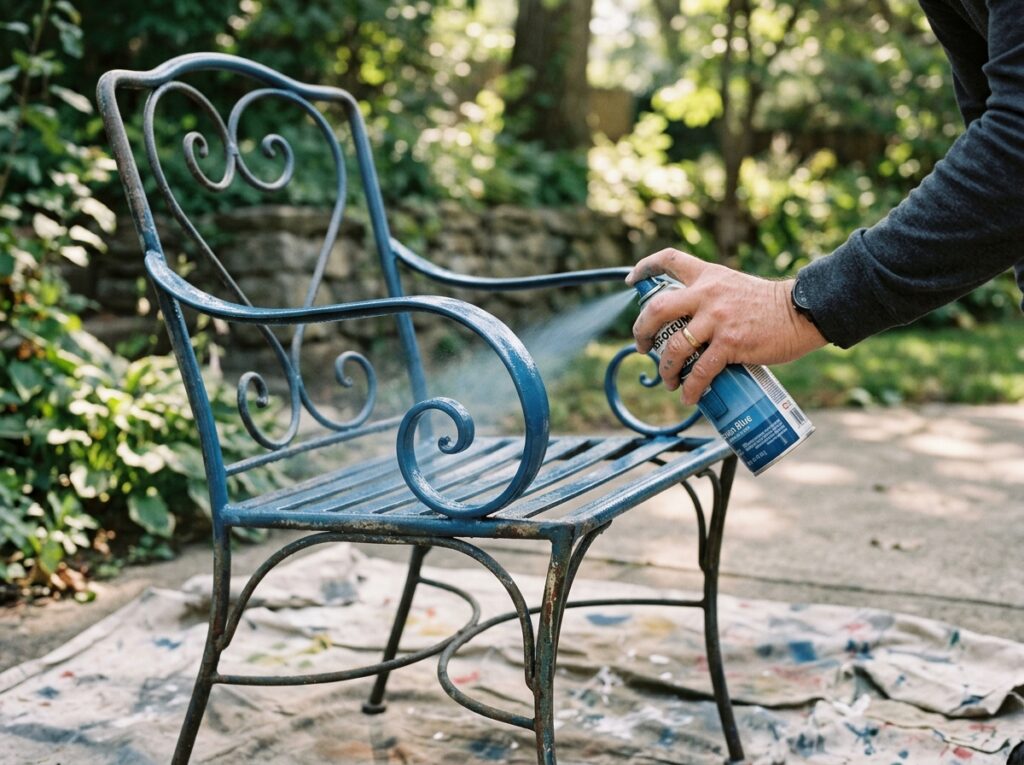
On a standard metal patio chair, you can expect a touch-dry time of about 30 minutes, but you should wait at least 24 hours before putting it back into heavy use. Some sources put the full touch-dry window a bit wider, at 2 to 4 hours for metal, with full curing taking 24 to 48 hours, since the exact number depends heavily on the paint type and the coat thickness.
A quick trick shared by a hobbyist who often paints metal parts: gently warming the object with a hair dryer before you start helps the paint dry noticeably faster, and lightly touching the surface after about 10 minutes is a good way to test whether it still feels tacky.
How Long Does Spray Paint Take to Dry on Wood
Wood is porous, so it actually pulls the paint’s liquid into the surface, which helps it feel dry faster on top. Expect the wood to feel dry to the touch in about 1 to 2 hours, with full curing in about 24 hours.
There is a catch here, though. Wood naturally expands and contracts with humidity, and if you rush a second coat before the wood has settled, that movement can cause the fresh paint to crack later. Give bare wood the full 24 hours between coats whenever the project allows it, especially outdoors, where you might paint a project like a garden shed or fence panel.
How Long Does Spray Paint Take to Dry on Plastic
Good news if you are refreshing plastic patio chairs or storage bins. Plastic surfaces usually have the shortest drying time of common materials, needing roughly 30 minutes to an hour to feel dry.
The one thing to know is that plastic needs a paint formulated to bond with it, sometimes labeled as a “fusion” or “bonding” spray paint. These formulas use hotter solvents that slightly etch the plastic surface so the paint actually sticks, and because of that extra chemical process, it is smart to give plastic pieces at least 2 hours before you handle them, even though they feel dry sooner.
How Long Does Spray Paint Take to Dry on Cardboard
Cardboard is thin and extremely porous, so it soaks up spray paint quickly, which means it also dries quickly, often within 15 to 30 minutes for a light coat.
The real risk with cardboard is not drying time; it is warping. A heavy, wet coat can soak into the fibers, causing the board to bow or ripple as it dries. If you are working on a cardboard craft project, light, even coats, and a bit of extra drying time between passes will help prevent a warped final piece.
How Long Does Spray Paint Take to Dry on Foam
Craft foam and polystyrene require special attention because many spray paints contain solvents that can melt or eat through foam on contact. Always check the can label for “foam safe” before you start.
Foam safe spray paints are usually water-based or specifically formulated to be gentle, and they tend to dry to the touch within 30 minutes to an hour, similar to plastic, since foam does not absorb liquid the way wood does. Because foam is so lightweight and delicate, stick with thin misting coats rather than a heavy spray, and let each layer dry fully before adding another.
How Long Does Spray Paint Take to Dry on Fabric
Fabric is the outlier on this list. It takes noticeably longer than every other surface because the fibers hold onto moisture deep inside the weave, not just on the surface.
Plan on giving fabric 24 to 48 hours to make sure it is completely dry all the way through, not just on top. If you skip this and fold or stack fabric too early, you risk the paint sticking to itself or transferring onto whatever it touches.
Spray Paint for Wicker Furniture: Drying Time and Tips
Wicker, rattan, and all-weather resin furniture are among the most popular spray-paint projects, and they come with their own quirks because of the tight crevices in the weave.
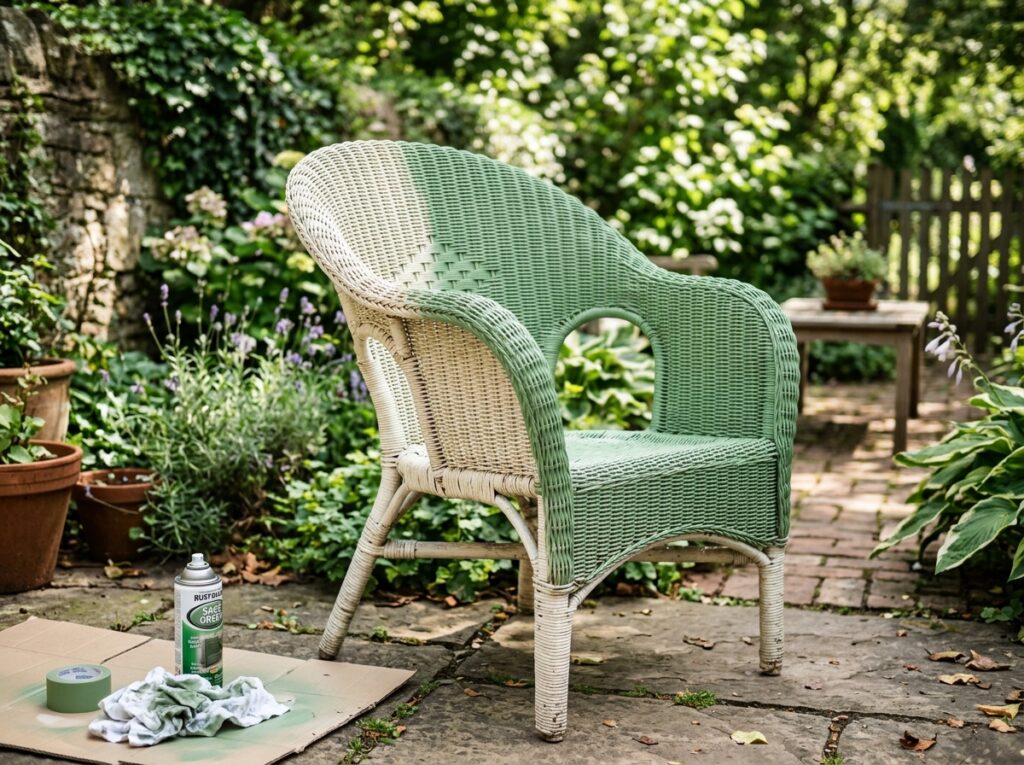
In warm, dry conditions around 70°F, wicker paint should be completely dry within 15 to 30 minutes, though cooler temperatures will extend that window. That said, most experienced painters recommend waiting about a full hour before applying a second coat, since the paint may feel dry to the touch while it is still soft beneath the surface in the deeper parts of the weave.
A few things make wicker projects go smoothly:
- Hold the can about 8 to 10 inches away from the surface to avoid drips pooling in the gaps
- Spray in one direction first, then go back over the piece in the opposite direction so the paint reaches every crevice
- Use an oil-based primer made for wood or wicker before your color coat, since primer helps the paint grip the woven fibers instead of soaking in unevenly
- Always paint the underside first, then flip the piece over to finish the top
If the furniture will live outdoors, give it real curing time before it faces rain or heavy use. Experienced wicker painters often wait about a full week before sitting on freshly painted furniture, since the paint needs that long to reach its toughest, most scratch-resistant state.
How Long Does It Take Rustoleum Spray Paint to Dry
Rust-Oleum is one of the most searched brands for this exact question, so let’s break it down by the numbers.
Most Rust-Oleum spray paints feel dry to the touch within 10 to 30 minutes, are safe to handle within 1 to 2 hours, and reach full cure somewhere between 24 and 48 hours under normal indoor conditions.
Recoating is where people get confused, because Rust-Oleum actually gives you two separate windows instead of one. You can either add your next coat within about 1 hour of the first coat, or wait until it has fully cured for at least 24 hours. Painting in that middle window, somewhere between 2 and 20 hours, is when adhesion problems and a tacky finish are most likely to happen.
One popular Rust-Oleum lacquer product’s technical sheet lists it as dry to the touch in 20 minutes and fully dry in 30 minutes, with no wait required before recoating, which shows just how much drying time can vary even within a single brand’s product line.
The takeaway here is simple: always check the specific can you are holding, since “Rust-Oleum” covers dozens of different formulas with different dry windows.
How Long to Let Spray Paint Dry Between Coats
This is one of the most common mistakes beginners make: spraying the next coat too soon or waiting way too long.
Here is the general rule that professional painters follow. If you can get all your coats on within about an hour of starting, keep going, since applying each light coat and waiting only 5 to 8 minutes between passes helps avoid overspray buildup, as long as you’re layering light, even coats within that hour.
If you miss that window and the paint starts to properly set up, you are usually better off waiting the full 24 to 48 hours for a true cure before adding another coat, then lightly sanding with fine sandpaper or steel wool to help the new layer bond well.
Quick between-coat guide:
- Same session, within about an hour: Light coats every 5 to 10 minutes
- Missed the window, under a day: Wait it out, do not recoat during this in-between stage
- After 24 to 48 hours: Safe to recoat, lightly scuff the surface first for better grip
How Long Does Spray Paint Need to Dry Before Rain
This one matters a lot if you are painting anything outdoors, from patio furniture to a mailbox post.
Since spray paint needs full evaporation of its solvents to properly bond, rain hitting a piece before it has cured can wash the color away, cause streaking, or leave a cloudy, uneven finish. As a safe rule, plan for at least 24 hours of dry weather after your last coat before the piece gets rained on, and ideally give it the full 48 to 72 hours if the paint type or the can label calls for a longer cure.
Always check the extended forecast before you start an outdoor project, not just the day of. A clear morning followed by afternoon showers can catch you off guard if the paint has not finished its first critical hours of drying.
Spray Painting in Cold Weather
Temperature changes everything about how spray paint behaves, and cold weather is one of the biggest variables people underestimate.
Most standard spray paints are formulated to be applied between 50°F and 90°F with humidity below 85 percent. Step outside that range and you start running into real problems.
In cold temperatures, spray paint thickens and can even congeal in the can, so no matter how much you shake it, the paint will not flow evenly and tends to come out in clumpy, uneven blobs.
There is a scientific reason behind this, too. Paint dries by evaporation, and cold air dramatically slows that process. On top of that, if the surface itself is cold, the paint thickens before it can properly bond to the material, and the paint molecules need warmth to fuse together; you end up with a brittle layer that will not last.
If you have to paint in the cold, here is what helps:
- Store the can indoors at room temperature before you use it, not in a cold garage
- Paint during the warmest part of the day, ideally with some direct sun on the surface
- Look for a “low temperature” formula, since some modern paints are rated down to as low as 35°F
- Expect a longer wait for every stage of drying, sometimes double the normal time
How Long Does Spray Paint Last
Two different questions hide inside this one, so let’s separate them.
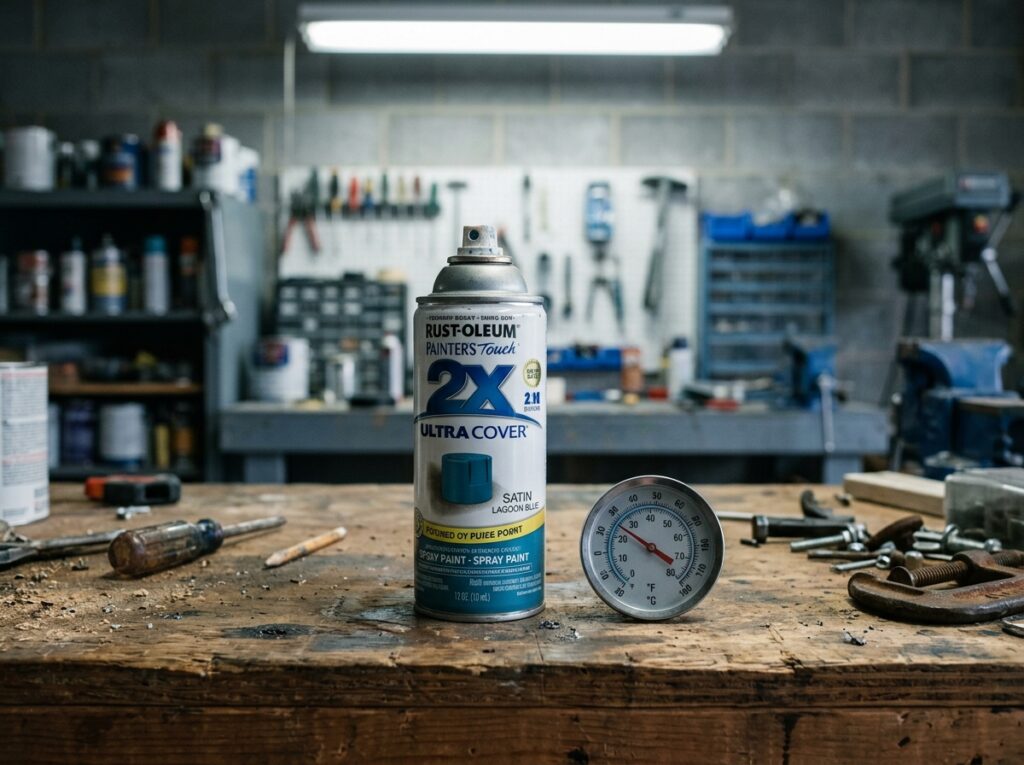
How long does a can of spray paint last in storage? Most unopened cans remain usable for 2 to 3 years when stored in a cool, dry place, away from direct sunlight and temperature fluctuations.
How long does a spray paint finish last once it’s applied? This depends heavily on the paint type and the environment. Once fully cured, a quality spray paint finish on furniture or metal can last for several years indoors with normal use. Outdoor pieces exposed to sun, rain, and temperature swings will fade and wear faster, which is why choosing a paint specifically labeled for outdoor or UV-resistant use matters if your project lives outside.
Solvent-based paints tend to have an edge in raw durability, offering strong resistance to weather, chemicals, and UV radiation compared to water-based alternatives, though modern water-based formulas have closed that gap considerably over the last several years.
How to Make Spray Paint Dry Faster
If you are on a deadline, these methods actually work, based on both manufacturer guidance and real-world painter experience.
- Use thin coats, always. One thick coat takes exponentially longer to dry than three thin coats because thick coats trap wet solvent beneath a “skinned” surface that can remain soft for weeks.
- Improve airflow. A simple box fan pointed toward the room, not directly at the wet paint, helps carry evaporated solvent away so fresh air can keep reaching the surface.
- Warm the object gently. A hair dryer on a low setting, held a foot or so away, can speed up drying of small metal or plastic items.
- Paint in the right humidity. High humidity above 65 percent slows drying and can even cause a hazy “blush” in the finish, so aim for a dry day if you are working outside.
- Pick a fast-drying formula on purpose. Lacquer and many water-based paints are designed to dry faster than enamel, so choosing the right one for your timeline saves you hours.
- Hold the can at the right distance. Spraying too close puts down too much paint at once, which slows drying and causes drips. A distance of 6 to 12 inches, depending on the paint, keeps coats thin and even.
Factors That Affect Spray Paint Drying Time
To wrap up the science, here are the core variables that determine your actual wait time, in order of how much they matter.
Temperature. Warmer air speeds up evaporation. Every guide agrees that the ideal range sits around 65 to 85°F.
Humidity. Moisture in the air competes with the paint for evaporation, so humidity above 65 percent slows drying and can cause a cloudy finish.
Coat thickness. Thin coats always dry faster and more evenly than thick ones.
Surface material. Porous surfaces like wood absorb liquid and feel dry faster, while non-porous surfaces like metal and glass rely entirely on evaporation into the air.
Paint formula. Lacquer dries fastest, followed by acrylic and water-based paints, then oil-based, with enamel taking the longest.
Airflow. Moving air, even from a simple fan, meaningfully shortens drying time by clearing evaporated solvent away from the surface.
Expert Tips for a Flawless, Fast Drying Finish
After going through manufacturer data sheets and dozens of real painting projects, a few pieces of advice keep coming up from people who do this professionally.
Test the paint on a scrap piece of the same material first, whenever you can. Drying time on paper is never quite the same as on your actual project’s wood, plastic, or metal.
Do not trust “dry to the touch” as your green light for handling or stacking. It is only the first stage, and treating it as the finish line is the single most common reason projects get ruined.
Keep the manufacturer’s technical data sheet or label handy during the project, not just before you start. Conditions can shift halfway through a job, and rechecking the recommended times helps you avoid the risky in-between recoat window.
Pros and Cons of Spray Paint
| Pros | Cons |
|---|---|
| Fast initial dry to touch time, often under 30 minutes | Full cure can still take a day or more |
| Even coverage on detailed or textured surfaces | Sensitive to humidity, temperature, and thickness |
| Wide range of formulas for different materials | The wrong formula can react badly with plastic or foam |
| Water-based options offer lower odor and easier cleanup | Water based paint is more humidity sensitive while drying |
| No brush strokes or roller marks | Requires good ventilation and drop cloths for overspray |
FAQs
How long does spray paint take to dry before it rains?
Give it at least 24 hours of dry weather, and ideally 48 to 72 hours if the paint or the can label recommends a longer cure time for your project.
Can I speed up spray paint drying with a hair dryer?
Yes, a low-heat setting, held at a safe distance, can shorten drying time for small metal or plastic pieces, but avoid high heat, which can cause bubbling.
Is spray paint dry to the touch the same as fully cured?
No. Dry to the touch only means the outer surface has hardened. Full cure, when the paint reaches maximum durability, usually takes 24 hours or several days longer.
Does cold weather really slow down spray paint drying that much?
Yes. Below 50°F, most spray paint dries noticeably slower, and the paint itself can thicken inside the can, making it harder to apply evenly in the first place.
How long should I wait to sit on spray painted wicker or outdoor furniture?
Even though the paint may feel dry within an hour, many experienced painters recommend waiting about a week before regular use to allow the finish to reach full hardness.
Final Thoughts
So, how long does spray paint take to dry? In short, plan on 15 to 30 minutes to feel dry to the touch, 1 to 2 hours before you handle it, and a full 24 hours to a week before it is completely cured, depending on the paint, the surface, and the weather.
The biggest mistake I see people make is rushing that last stretch. Give your project the time it actually needs, keep coats thin, and check the label on your specific can, since drying times really do vary between brands and formulas.
If you are working on an outdoor piece next, you might also want to check out our guide on choosing the right size garden shed for your backyard, or browse more outdoor and garden projects, tools and hardware guides for your next weekend project.