



Learning how to clean a cowhide rug starts with one important rule: treat it as hair-on leather, not as ordinary carpet. Shake or vacuum away loose dirt, spot-clean marks with a barely damp cloth and a tiny amount of mild cleaner, then let the rug dry naturally while lying flat.
Do not put genuine cowhide in a washing machine, soak it, scrub it aggressively, or dry it with direct heat. These methods can stiffen, shrink, distort, or discolor the leather backing even when the hair initially appears clean.
This guide covers routine cleaning, spills, grease, mud, pet accidents, odors, drying, and long-term care. I will also explain when a stain is safe to handle at home and when professional treatment is the better decision.
Quick answer: For routine cleaning, take the rug outside and shake it, brush in the direction of the hair, and vacuum with low suction and no rotating brush. For a spill, blot immediately, use a barely damp white cloth, add a drop of mild detergent only if needed, wipe away the residue, and air-dry the rug flat.
Check What Kind of Cowhide Rug You Have
Before using any cleaner, confirm whether your rug is genuine cowhide, printed or dyed cowhide, patchwork cowhide, or synthetic imitation hide. These materials may look similar in a photograph, but they do not always tolerate the same cleaning method.
A genuine cowhide normally has an irregular natural outline, individual hair direction, and a suede-like leather surface underneath. A synthetic cowhide usually has a woven, fabric, rubber, or latex backing and may have a care label allowing a different cleaning method.
Natural, Dyed, and Printed Cowhide Need Different Care
Natural cowhide can usually tolerate careful spot cleaning with a barely damp cloth. Dyed, metallic, or printed rugs may release color or lose their surface design when exposed to water or cleaning products.
Guidance for printed and dyed cowhides warns that water may cause dye bleeding. If you have a colored or printed rug, follow its specific label and begin with dry cleaning methods unless the manufacturer says otherwise.
Patchwork rugs also require extra caution. Water can affect the stitching, adhesive, backing, or joins between panels even when the individual hide sections appear undamaged.
Always test your chosen method on a small, concealed section first. Wait until the test area is completely dry before judging the color, feel, or condition of the hair.

What You Need to Clean a Cowhide Rug
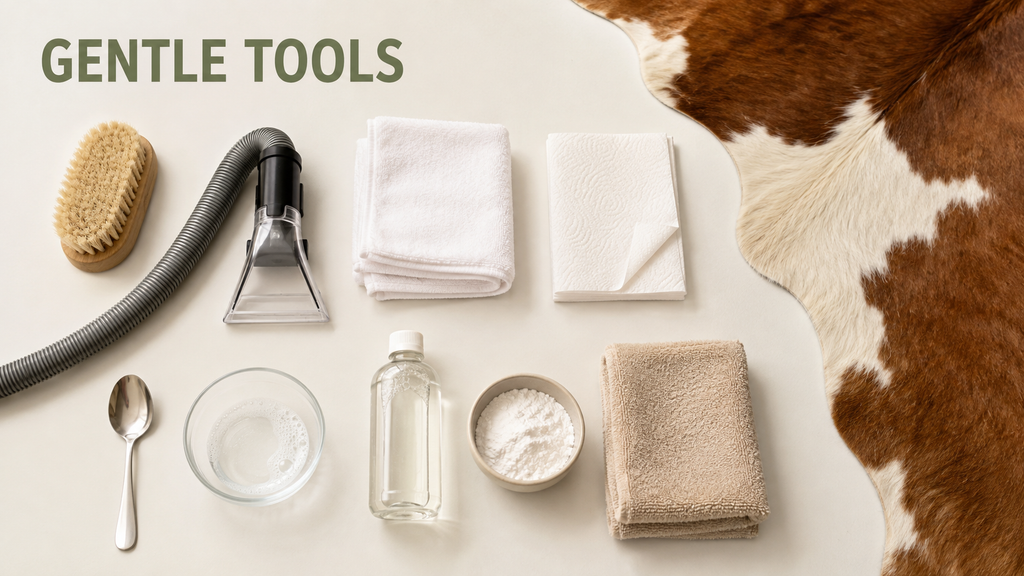
You do not need a carpet-cleaning machine or a collection of strong stain removers. A small group of gentle tools is safer and will handle most everyday dirt.
Gather these items before you begin:
- Vacuum with an upholstery nozzle or non-rotating floor head
- Soft clothes brush or soft-bristled upholstery brush
- Clean white microfiber cloths
- Plain white paper towels
- Blunt spoon or dull plastic scraper
- Small bowl of cool or lukewarm water
- Mild, colorless detergent or manufacturer-approved hide cleaner
- Dry absorbent towels
- Cornstarch for an oily mark
- Fan for gentle air circulation, if needed
White cloths are useful because they make color transfer easy to see. If dye appears on the cloth during your hidden-area test, stop using moisture and consult the rug’s manufacturer or a leather-cleaning specialist.
| Cleaning problem | Safest starting tool | Main risk to avoid |
|---|---|---|
| Loose dust | Soft brush or low-suction vacuum | Rotating beater bar |
| Fresh liquid | White absorbent towel | Rubbing the spill |
| Dried food | Blunt spoon | Cutting or pulling hair |
| Light surface mark | Barely damp cloth | Saturating the backing |
| Oil or grease | Cornstarch | Adding water immediately |
| Persistent odor | Airflow and professional advice | Perfume or excessive deodorizer |
| Large or old stain | Hide-cleaning specialist | Repeated DIY treatments |
One detail I would not overlook is the care label. General guidance is useful, but the manufacturer knows whether a particular rug has been dyed, sealed, printed, stitched, or treated with a special finish.
How to Clean a Cowhide Rug Step by Step
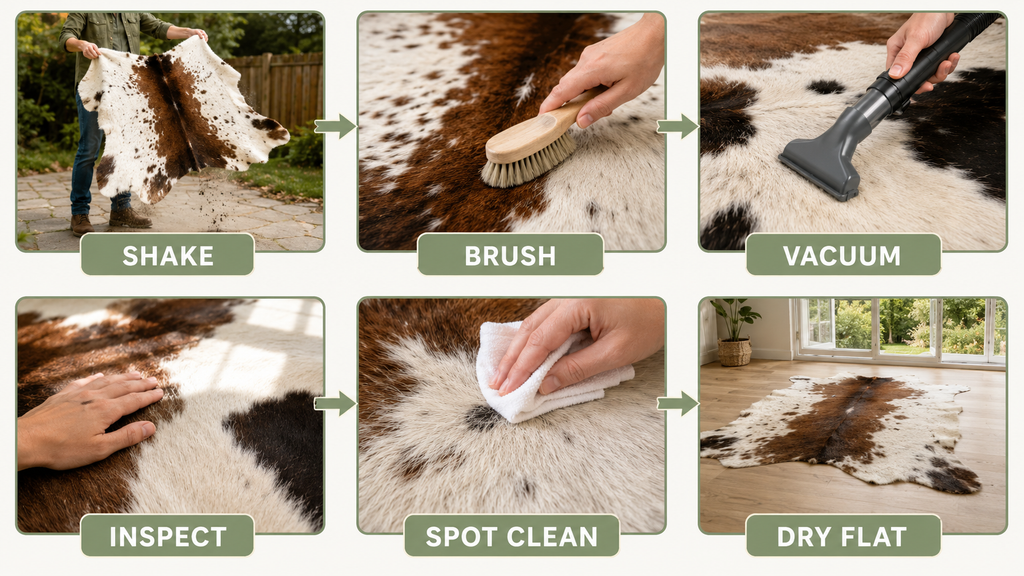
For ordinary maintenance, begin with dry cleaning methods. You should introduce moisture only when there is a visible mark that brushing or vacuuming cannot remove.
Step 1: Shake Out Loose Dirt
Take the rug outside and hold it securely by two sides. Shake it firmly without snapping, twisting, or pulling fragile edges.
If the rug is too large or heavy to shake safely, leave it flat and move to brushing. Do not drag it across rough concrete because abrasion can damage both the hair and backing.
Step 2: Brush With the Hair
Look closely at the rug to see which way the hair naturally lies. Use a soft brush and work with that direction rather than forcing the hair backward.
Brushing lifts crumbs, soil, and pet hair while helping the coat lie smoothly. Pay special attention to areas beneath tables and furniture where dust may remain undisturbed.
Step 3: Vacuum With Low Suction
Use an upholstery nozzle, handheld attachment, or standard floor head with the rotating brush switched off. Move slowly in the direction of the hair and avoid repeatedly catching the thin outer edges.
IKEA’s official cowhide care instructions recommend regular shaking, vacuuming, and rotation. They also specify using a standard floor head rather than a rotating brush.
The aim is to lift surface dirt, not pull forcefully at the hair. If your vacuum does not let you disable its beater bar, use the hose attachment or brush the rug by hand instead.
Step 4: Inspect for Marks
After removing loose dirt, examine the rug in natural light. Some areas that looked stained may simply have contained flattened hair or dust.
Identify the type of residue before adding cleaner. A sugary spill, dried mud, grease, and transferred dye require different responses.
Step 5: Spot-Clean Only Where Needed
Dampen a white cloth with cool or lukewarm water, then wring it out thoroughly. The cloth should feel damp but should not release water when squeezed.
Wipe gently in the direction of the hair. If water alone does not lift the mark, place a very small drop of mild, colorless detergent on the cloth rather than pouring cleaner directly onto the rug.
Step 6: Remove the Soap Residue
Use a second barely damp cloth containing only clean water. Wipe the treated area lightly to remove any remaining detergent.
Soap residue can make the hair feel sticky and attract more dirt. Keep changing to a clean part of the cloth instead of spreading lifted soil over the rug.
Step 7: Blot and Dry Flat
Press a dry towel into the treated section to absorb as much moisture as possible. Reshape the rug gently and leave it hair-side up on a clean, flat surface with good airflow.
Do not hang a wet cowhide from one edge. The added weight and uneven drying can stretch or distort the hide.
How to Clean Fresh Spills on Cowhide
Speed matters more than the cleaning product. A fresh spill sitting on top of the hair is much easier to remove than liquid that has reached the leather backing.
Follow this sequence:
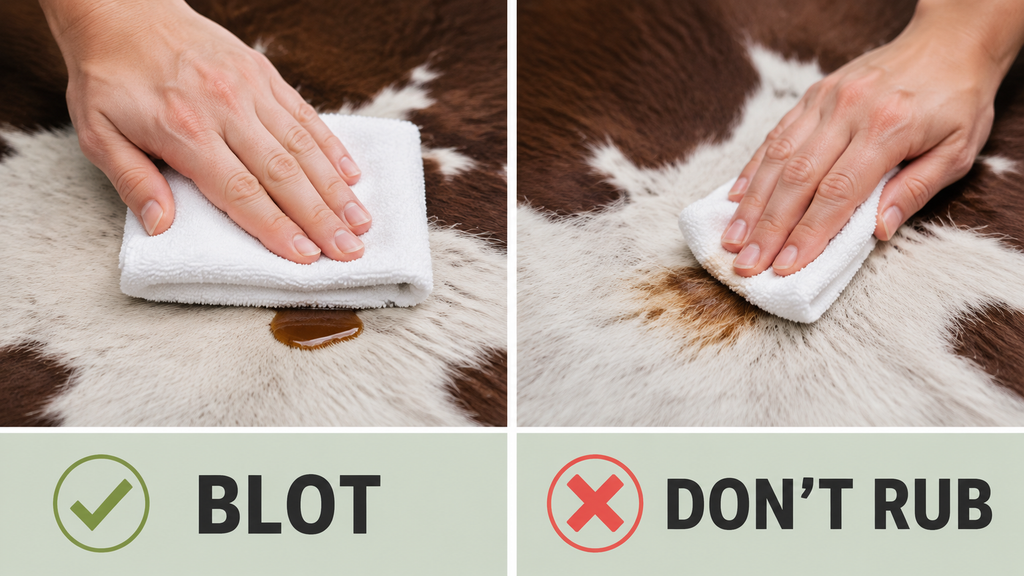
- Place white paper towels or a clean white cloth over the spill.
- Press gently to absorb liquid without spreading it.
- Replace the towel as it becomes wet.
- Work from the outer edge toward the center.
- Use a barely damp cloth after most of the liquid has been absorbed.
- Add a tiny amount of mild detergent only if plain water is insufficient.
- Remove soap with a second barely damp cloth.
- Press the area with a dry towel and leave the rug flat to dry.
Do not rub back and forth. Rubbing can spread the stain, tangle the hair, and force moisture more deeply into the hide.
The furniture maker Carl Hansen & Søn gives similar cowhide stain-removal guidance: absorb liquids promptly, use a clean damp cloth, avoid excessive moisture, and wipe with the direction of the hair.
If the spill is coffee and it also reached an ordinary floor covering underneath, use the correct method for each material. Home Upright’s guide to removing coffee stains from conventional carpet may help with the carpet, but do not automatically apply the same solutions to the leather hide.
How to Remove Different Cowhide Rug Stains
There is no universal treatment for every mark. Start with the least aggressive option and stop if the hair, color, or backing begins to change.
Dried Food and Sticky Residue
Use the rounded edge of a spoon or dull plastic scraper to lift dried material. Scrape gently toward the center of the stain and follow the direction of the hair.
Once the solids are gone, brush or vacuum the crumbs. Use a barely damp cloth with a tiny drop of mild detergent only for the remaining sticky film.
For honey or syrup that also landed on washable fabric or standard carpet, see the separate guide to removing sticky honey stains. Cowhide still requires less water and a much gentler approach than washable textiles.
Mud
Let wet mud dry before trying to remove it. Brushing wet soil usually spreads it across a larger section and pushes it closer to the backing.
Once dry, break up the dirt gently with your fingers or a soft brush. Vacuum the loosened particles and spot-clean any remaining shadow with a barely damp cloth.
Oil and Grease
Blot a fresh oily spill with a dry white towel without pressing it deeper. Cover the remaining mark with cornstarch and leave it for several hours so the powder can absorb some of the oil.
Vacuum the powder carefully with low suction. Repeat once if the stain improves, but stop if continued treatment seems to dull or loosen the hair.
Pet Hair
Brush with the cowhide’s natural hair direction or use low suction with an upholstery nozzle. A lightly used lint roller may help with loose surface hair, but aggressive adhesive or repeated rolling can pull at the cowhide.
For pet hair on standard carpeting elsewhere in the room, Home Upright’s guide to removing pet hair from carpet covers tools intended for ordinary carpet fibers. Avoid transferring forceful carpet-raking methods to a natural hide.
Pet Urine or Vomit
Blot the accident immediately and remove solid material with a spoon. Use a barely damp cloth with a small amount of mild, manufacturer-approved cleaner, then remove the residue with a second cloth.
Do not automatically apply an ordinary enzyme carpet cleaner. Some formulas may not be approved for leather, dyed hair, or the rug’s finish, so check the product label and test first.
Persistent urine odor often means liquid has reached the leather backing. Repeatedly soaking the area in vinegar, fragrance, or enzyme solution may spread the problem, so a leather or hide specialist is safer for a large accident.
Ink, Paint, Dye, and Nail Polish
Do not experiment with alcohol, acetone, paint thinner, hairspray, or concentrated stain removers. These substances can remove the rug’s color or finish along with the stain.
Blot any fresh material without spreading it, then contact a specialist. The chance of professional improvement is usually better before several incompatible chemicals have been applied.
| Stain | First action | Safe next step | When to stop |
|---|---|---|---|
| Drink spill | Blot immediately | Barely damp cloth | Color transfers |
| Dried food | Scrape gently | Mild spot clean | Hair begins pulling |
| Mud | Let it dry | Brush and vacuum | Backing is damp |
| Grease | Blot | Cornstarch | Mark spreads |
| Pet accident | Absorb quickly | Approved mild cleaner | Odor remains after drying |
| Ink or paint | Blot only | Professional advice | Do not add solvent |
| Unknown stain | Photograph and test | Start dry | Material is changing |

How to Dry a Cowhide Rug Properly
Drying is part of the cleaning process, not an afterthought. Water exposure can cause some leather and skin materials to shrink, harden, stain, or distort, as explained in the Canadian Conservation Institute’s detailed guidance on caring for leather, skin, and fur.
Lay the cowhide flat with the hair facing upward. Keep it in a ventilated room away from radiators, fireplaces, heating vents, hair dryers, and strong direct sunlight.
A fan can circulate room-temperature air across the room, but do not aim intense hot air at one small area. Smooth the hair in its natural direction while it is still slightly damp and leave the rug untouched until both the surface and backing feel completely dry.
Do not return a damp rug to wood flooring. Trapped moisture can affect both the leather and the floor beneath it.

Can You Deep-Clean or Steam-Clean a Cowhide Rug?
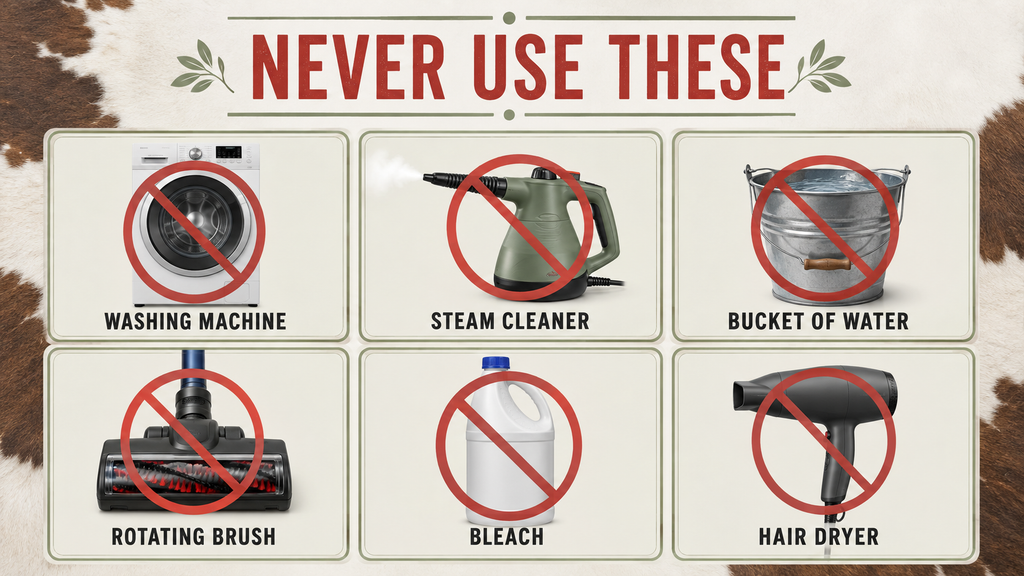
Some cleaning articles recommend carefully steaming cowhide, while many hide sellers and manufacturers warn against it. Because heat, moisture, tanning method, dyes, and backing construction vary, I would not use a household steam cleaner unless your rug’s manufacturer explicitly approves that method.
A carpet-cleaning machine is also risky because it applies and extracts far more liquid than controlled spot cleaning. Even if the hair dries quickly, moisture may remain in the leather underneath.
The safest version of “deep cleaning” at home is:
- Shake the rug outside.
- Brush the whole surface gently.
- Vacuum with low suction.
- Spot-clean only visible marks.
- Dry the rug flat with good ventilation.
If that process does not solve the problem, look for a cleaner experienced with hair-on hides and leather. Do not assume that every general carpet cleaner has the equipment or knowledge required.
Professional conservators test materials and treatments before proceeding because cleaning agents can react differently with dyes, finishes, adhesives, and natural materials. The National Park Service describes this test-before-treatment approach as part of professional conservation work.
What You Should Never Do to Genuine Cowhide
A cowhide rug may feel durable, but the leather backing does not behave like machine-washable fabric. Many serious cleaning mistakes produce damage only after the hide begins drying.
Avoid the following:
- Washing the rug in a washing machine
- Putting it in a tumble dryer
- Soaking or submerging it
- Hosing it down outdoors
- Scrubbing with a hard brush
- Vacuuming with a rotating beater bar
- Pouring cleaner directly onto the hide
- Using bleach or ammonia
- Using carpet shampoo without approval
- Applying saddle soap or leather dressing to the hair
- Drying it against a radiator
- Using a hair dryer or heat gun
- Leaving it wet on wood flooring
- Folding it while damp
- Treating printed hide like undyed natural cowhide
The Canadian Conservation Institute notes that saddle soap is alkaline and can be harmful to leather. Its leather-care guidance also explains how moisture, unsuitable dressings, physical forces, light, and unstable humidity can contribute to deterioration.
How to Keep a Cowhide Rug Clean Longer
Routine maintenance prevents abrasive grit from collecting around the hair roots. It also reduces the need for wet treatment later.
Use this simple schedule as a flexible starting point:
| Task | Suggested frequency | Adjust when |
|---|---|---|
| Shake or gently vacuum | Weekly or when dusty | More often in busy rooms |
| Soft brushing | Every few weeks | Hair looks flattened |
| Rotate the rug | Every few months | One side gets more traffic or light |
| Check underneath | Monthly | Floor feels damp or dusty |
| Treat spills | Immediately | Never postpone |
| Professional assessment | As needed | Stain, odor, mold, stiffness, or damage persists |
Move furniture slightly from time to time so the same section is not constantly crushed. Avoid placing the rug where rolling chair wheels, wet shoes, pet bowls, or direct sunlight will repeatedly affect it.
If the rug needs storage, make sure it is completely clean and dry first. Roll it rather than creating sharp folds, protect it with a clean, breathable covering, and store it in a cool, dry space.
When to Call a Professional Cleaner
Home spot cleaning is reasonable for fresh, small, surface-level marks. A professional is a better choice when the problem involves the backing, an uncertain finish, or a high-value rug.
Seek specialist help when:
- A large part of the rug became wet
- Urine or another liquid soaked through the backing
- The rug smells after it has dried completely
- Mold or mildew is visible
- Hair is shedding in patches
- The leather feels stiff, brittle, or curled
- Dye transfers during a spot test
- The rug has a metallic, printed, or unusual finish
- An ink, paint, polish, or chemical stain is present
- Previous DIY cleaning has made the damage worse
Describe the rug as genuine hair-on cowhide when requesting a quote. Ask whether the cleaner has handled this material before and what low-moisture process they propose.
Frequently Asked Questions
Can you vacuum a cowhide rug?
Yes, you can vacuum genuine cowhide with low suction and a non-rotating floor head or upholstery attachment. Move with the direction of the hair and avoid repeatedly catching the thin edges.
Can you wash a cowhide rug in a washing machine?
No. A washing machine can saturate, stretch, shrink, stiffen, and distort the leather backing, while spinning may damage the hair and edges.
Can you use a carpet cleaner on a cowhide rug?
A household carpet-cleaning machine is not recommended because it can introduce too much water and cleaning solution. Use controlled spot cleaning or hire a professional experienced with hair-on hides.
Can you steam-clean a cowhide rug?
The safest general answer is no unless your rug’s manufacturer specifically permits it. Guidance conflicts, but the combination of heat and moisture creates an unnecessary risk of stiffness, distortion, dye movement, or backing damage.
Can baking soda be used on a cowhide rug?
A small dry test may help absorb surface odor, but baking soda can be difficult to remove from dense or light-colored hair. Do not turn it into a wet paste, and follow your manufacturer’s instructions before applying it widely.
Can you use vinegar on cowhide?
Some sellers recommend very dilute vinegar for odor, while other care instructions favor only mild detergent or a specialist cleaner. Because tanning and dyes vary, I would not make vinegar the default treatment, especially on printed, dyed, metallic, antique, or valuable cowhide.
How do you remove dog urine from a cowhide rug?
Blot it immediately with white absorbent towels and use a barely damp cloth with an approved mild cleaner. If the urine reached the backing or the odor remains after complete drying, use a professional hide cleaner instead of repeatedly wetting the area.
How often should you clean a cowhide rug?
Shake, brush, or gently vacuum it whenever visible dust or debris collects, which may be weekly in a busy room. Spot-clean spills immediately and rotate the rug every few months to distribute wear and light exposure.
How do you make cowhide hair soft again after cleaning?
Allow the rug to dry fully and brush the hair gently in its natural direction. If the leather backing has become hard or brittle, do not apply random oils or conditioners because a specialist should first identify the type and extent of damage.
Conclusion
The safest way to approach how to clean a cowhide rug is to begin dry, use as little moisture as possible, and work in the direction of the hair. Shake, brush, vacuum without a rotating bar, blot spills quickly, and dry every treated area naturally while the rug lies flat.
Do not risk the entire hide to remove one stubborn spot. If a stain has reached the backing, caused persistent odor, triggered dye transfer, or left the leather stiff, contact a professional who works specifically with leather and hair-on hides.
Once your cowhide is clean, add gentle vacuuming and periodic rotation to your normal room-care routine. Browse Home Upright’s other practical stain-removal and cleaning guides for help protecting the carpets, fabrics, and surfaces around it.