



I still remember the first time I tried to plant a “D” themed border in my own backyard. I typed flowers that start with d into Google late one night, and I got the same recycled list everywhere: daffodil, dahlia, daisy, done. That’s it. No real advice on which ones survive a rough Midwest winter, which ones your dog should never sniff, and which ones actually smell as good as they look.
So I spent an entire growing season testing this out myself, killing a few dahlias along the way (sorry, girls), and digging through actual horticultural sources instead of copying what everyone else already wrote. This guide is the result. You’ll get 30 real flowers that start with D, including perennial flowers that start with D, annual flowers that start with D, white flowers that start with D, and purple flowers that start with D, plus the mistakes I made so you don’t have to repeat them.
If you’re building a themed garden, picking a baby name, or just love learning new flower names, you’re in the right place. Let’s dig in.
Quick Answer: The Most Popular Flowers That Start With D
Before I get into the full list, here’s the short version for anyone in a hurry. These are the D flowers people search for and plant the most, according to gardening data and my own trial-and-error beds.
| Flower | Type | Bloom Season | Best For |
|---|---|---|---|
| Dahlia | Tender perennial | Late summer to fall | Cut flowers, bold color |
| Daffodil | Perennial bulb | Early to mid spring | Naturalizing, borders |
| Daylily | Perennial | Summer | Low-maintenance beds |
| Delphinium | Perennial | Early summer | Cottage gardens |
| Dianthus | Perennial/biennial | Spring to fall | Fragrance, edging |
| Dandelion | Perennial wildflower | Spring to fall | Pollinators |
| Daisy (Shasta) | Perennial | Summer | Classic white blooms |
| Digitalis (Foxglove) | Biennial | Late spring to summer | Vertical accents, shade |
Now let’s walk through every single one, category by category, with the details the other blog posts skip.
Popular Perennial Flowers That Start With the Letter D
Perennials are the backbone of any real garden because you plant them once and they keep coming back. If you’re building a bed you don’t want to redo every year, this section is where you should start.
1. Dahlia
Dahlias are, without question, my favorite flower on this entire list, and I’m not alone. This flower is such a big deal that it was officially named the “Symbol of National Floriculture” of Mexico by decree in 1963, when the country also designated August 4 as National Dahlia Day. That’s the kind of detail most “flowers that start with D” articles never mention, and it’s part of why the flower feels so much more special once you know it.
Dahlias grow from tubers, not seeds, and they thrive in USDA growing zones 7 to 10, though gardeners in colder zones simply dig up the tubers each fall and store them indoors. I do this every October in my own garage, and yes, it’s a bit of a hassle, but the payoff of dinner-plate-sized blooms every August makes it worth the effort.
If you want a full growing guide for succulent-style perennials that behave a bit like dahlia tubers in terms of storage and care, check out my post on how to plant succulents, since a lot of the “don’t overwater” logic carries over.

2. Daffodil (Narcissus)
Daffodils are usually the very first thing to poke through the snow in my yard, and honestly, that first yellow trumpet each spring feels like a tiny miracle after a long winter. They belong to the genus Narcissus and come in white, peach, orange, and the classic golden yellow.
One thing I wish someone had told me before I got a puppy: daffodil bulbs are seriously dangerous to pets. According to the ASPCA, daffodils are toxic to dogs, cats, and horses because of lycorine and other alkaloids, and the bulb is the most poisonous part of the plant. I learned this the hard way when my neighbor’s dog dug up a few bulbs and needed a vet visit, so now I plant mine behind a low fence.
For a similar spring-blooming bulb with a different color palette, my earlier guide on flowers that start with C covers crocus, which pairs beautifully in the same bed.

3. Daylily (Hemerocallis)
The daylily earns its name honestly: each individual bloom lasts exactly one day before wilting, though the plant sends up so many buds that you get weeks of continuous color. I grow orange ones along my driveway because they shrug off drought, poor soil, and my inconsistent watering schedule.
Daylilies are one of the most forgiving perennials I have ever grown, and I genuinely recommend them to any beginner who’s nervous about killing plants. Just know that if you have cats, you’ll want to be careful, since even small amounts can be dangerous to them.

4. Delphinium
Delphinium spikes are the flower I always point to when someone asks for a true purple flower that starts with D. The tall, cone-shaped flower stalks can reach four to six feet, and they look incredible against a white fence or garden backdrop.
I’ll be honest with you, though: delphiniums are a little fussy. Mine flopped over in a summer storm the first year because I didn’t stake them early enough, so my real tip is to install support stakes the moment you plant them, not after they’ve already grown tall.

5. Dianthus (Pinks, Sweet William)
Dianthus is sometimes called “pinks,” and it’s one of the most fragrant flowers on this whole list, with a scent that reminds me a bit of cloves. It works beautifully as a border plant or in containers on a patio.
I planted a row of dianthus along my front walkway two years ago, and it’s one of the lowest-maintenance decisions I’ve made in that garden. It reseeds itself a little each year, so you get a slowly expanding patch without doing much of anything.

6. Dandelion
Yes, dandelions are technically a flower, and I’m including them on purpose because I think they get an unfair reputation. Every part of the plant, from the leaves to the golden flower head, is edible and has been used in traditional herbal remedies for generations. They’re also one of the very first food sources for bees in early spring, before most other flowers have opened.
If your lawn has them, consider leaving a small patch instead of spraying everything, especially in April when pollinators genuinely need the food.

7. Dietes (African Iris or Fortnight Lily)
Dietes is a flower I only discovered after moving to a warmer climate for a season, and it completely surprised me. The iris-like white and yellow blooms open every two weeks, which is exactly where the “fortnight lily” nickname comes from.
It thrives in full sun and tolerates poor soil, which makes it a favorite for xeriscaping in drier states.

8. Dianella (Flax Lily)
Dianella is one of the more underrated entries on any list of flowers that start with D, and I only learned about it while researching this very article. It produces small blue blossoms that appear in late winter to early spring in dry, shady areas, which makes it a genuinely useful option for that awkward shady corner most gardens have.

9. Delosperma (Ice Plant)
Delosperma is a low, mat-forming succulent groundcover with daisy-like flowers in hot pink, purple, orange, or yellow. I use it along a sunny rock wall where nothing else would grow, and it needs almost no water once it’s established.
If groundcovers and succulents interest you, my guide on how to dose fertilizer for plants is worth a read, since succulent-type perennials like delosperma need far less feeding than most people assume.

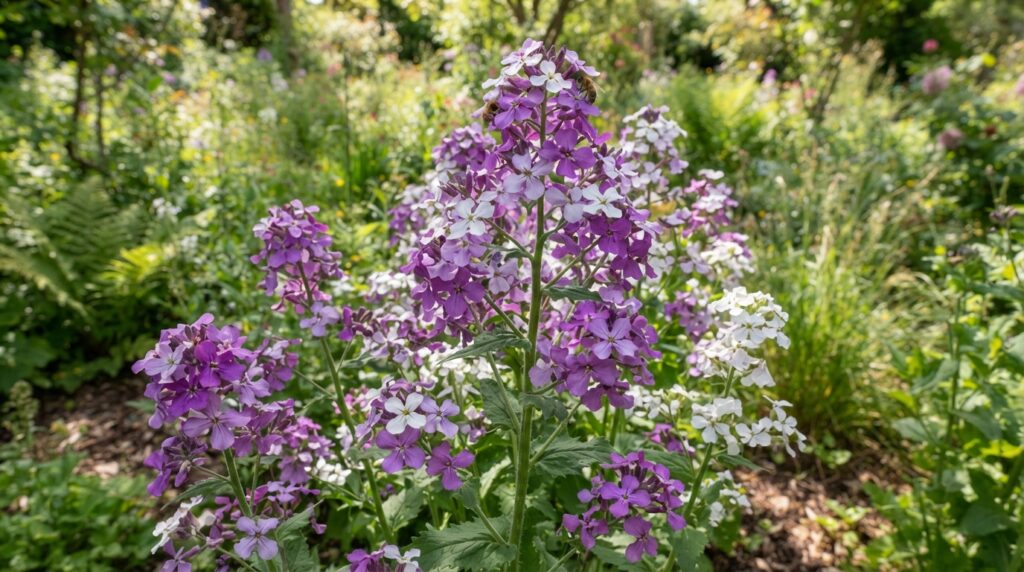
10. Dame’s Rocket (Hesperis matronalis)
Dame’s Rocket is a tall, purple-flowered wildflower that you’ve probably seen along highway medians in early summer without knowing its name. It smells strongest in the evening, which is a fun detail to notice on a summer walk.
A quick note here: in several U.S. states, Dame’s Rocket is classified as invasive, so check your local extension office before planting it on purpose.
11. Dutch Iris
Dutch iris bulbs produce elegant, slender flowers in purple, yellow, and white, usually blooming in late spring right after the tulips fade. I love pairing them with daffodils because the bloom times overlap just enough to create a full month of color.

12. Dicentra (Bleeding Heart)
Dicentra, better known as bleeding heart, produces heart-shaped pink or white flowers that dangle from arching stems like little charms on a bracelet. It’s a shade-loving perennial, so it’s perfect under trees where sun-loving flowers refuse to bloom.

Annual Flowers That Start With D
Annuals complete their whole life cycle in one growing season, which means you get to change up your color scheme every single year if you want to. Here are the D annuals worth your seed budget.
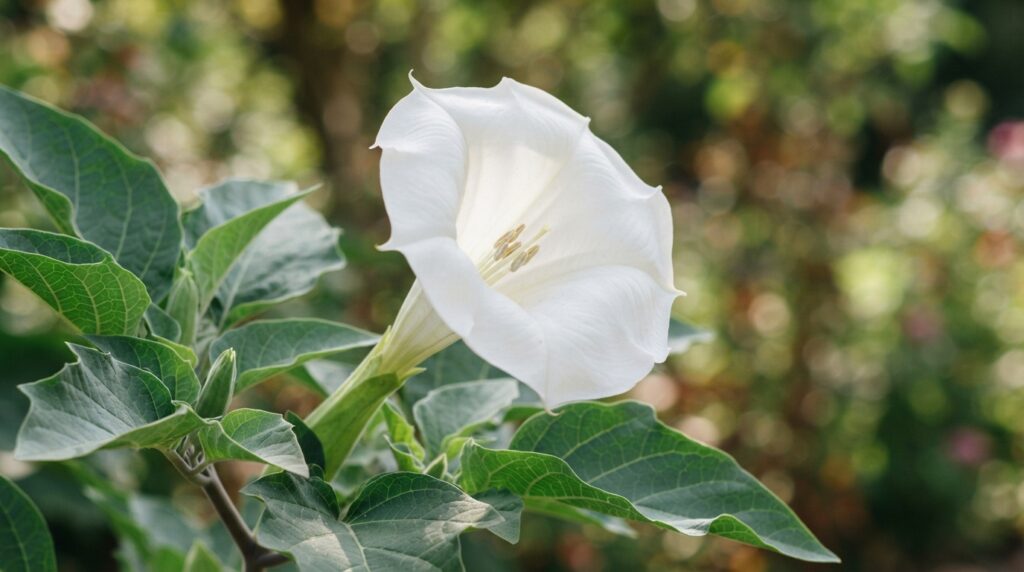
13. Datura (Angel’s Trumpet)
Datura produces huge, fragrant, trumpet-shaped white or purple flowers that open in the evening and close by mid-morning. I grew one in a large pot on my porch, and the scent at dusk was honestly incredible.
I need to be direct with you about this one: every part of Datura is highly toxic if ingested, and it should never be planted anywhere children or curious pets can reach it. It’s a stunning plant, but it deserves real respect.
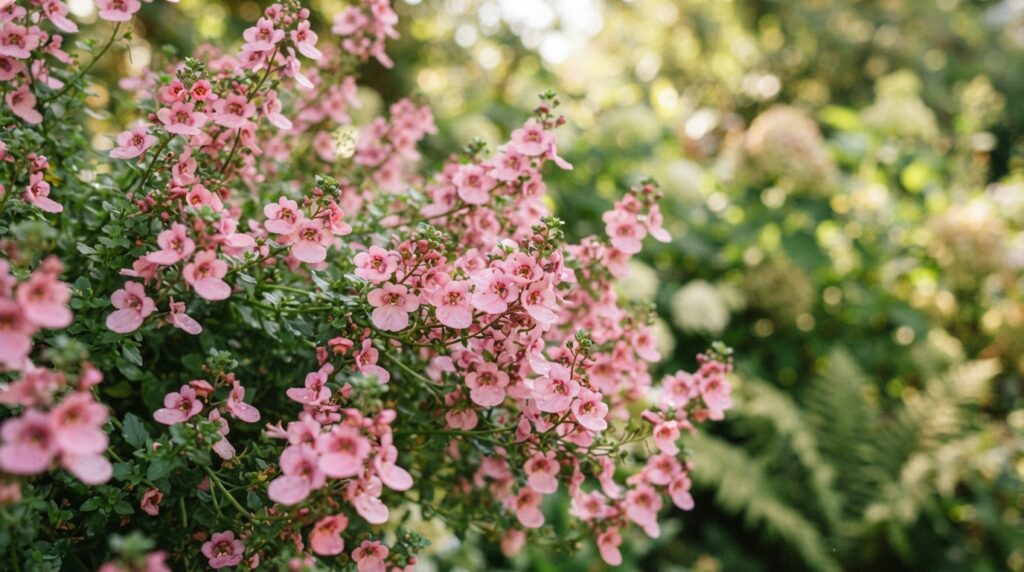
14. Diascia
Diascia is a low, trailing annual with small pink or apricot flowers that spill nicely over the edge of a hanging basket or window box. I use it every year on my front porch because it blooms nonstop from May through the first frost with almost no deadheading required.
15. Dusty Miller
Dusty Miller isn’t grown for its tiny yellow flowers, which are honestly forgettable, but for its silvery, felt-like foliage that makes every other color around it pop. I tuck it between my red geraniums and purple petunias, and it acts like a visual palate cleanser between the two.

16. Dahlberg Daisy
Dahlberg Daisy is a compact, heat-loving annual with tiny golden-yellow daisy flowers and delicate, feathery foliage. It’s one of the best options if you want a groundcover-style filler in a hot, sunny container that gets neglected on busy weeks.

17. Drummond’s Phlox
Drummond’s Phlox is a Texas native wildflower with star-shaped blooms in red, purple, and pink that color entire meadows during peak bloom season. If you’re building a wildflower meadow anywhere in the southern U.S., this one deserves a spot on your seed list.

18. Dill Flower
I almost left this one off the list because dill is usually thought of as an herb, not a flower, but the umbrella-shaped yellow flower clusters are genuinely pretty, and pollinators love them. Let a few dill plants bolt and flower in your vegetable garden, and you’ll attract beneficial insects that help control aphids on your other plants.

Flowering Shrubs and Trees That Start With D
Not every “flower” on this list grows from a seed packet. Some of the most beautiful D blooms come from woody shrubs and small trees that anchor a whole landscape design.
19. Daphne
Daphne is a compact evergreen shrub with clusters of small, intensely fragrant pink, purple, or cream flowers that bloom in early spring. I planted mine near my back door specifically so I’d catch the scent every time I walked outside, and it was one of the best small-garden decisions I’ve made.

20. Dogwood
The flowering dogwood is practically a symbol of American spring, with clusters of white or pink blossoms that appear before the leaves even come in. It’s a small ornamental tree, and I genuinely think it’s one of the most photographed trees in the country every April.

21. Deutzia
Deutzia is a flowering shrub covered in small, star-shaped white or pink flowers in late spring, and it’s tough enough to handle both full sun and light shade. I like it as a low hedge because it’s dense enough for privacy without needing constant pruning.

22. Desert Willow
Desert Willow is a small, drought-tolerant tree with orchid-like pink and purple trumpet flowers, and it’s a genuine workhorse in hot, dry climates like the American Southwest. It attracts hummingbirds like crazy, which is reason enough for me to recommend it.

23. Dog Rose (Rosa canina)
Dog Rose is a wild, thorny shrub rose with simple, five-petaled pink or white flowers, and it’s the ancestor of many modern rose varieties. It also produces bright red rose hips in the fall, which are rich in vitamin C and have been used in teas for generations.

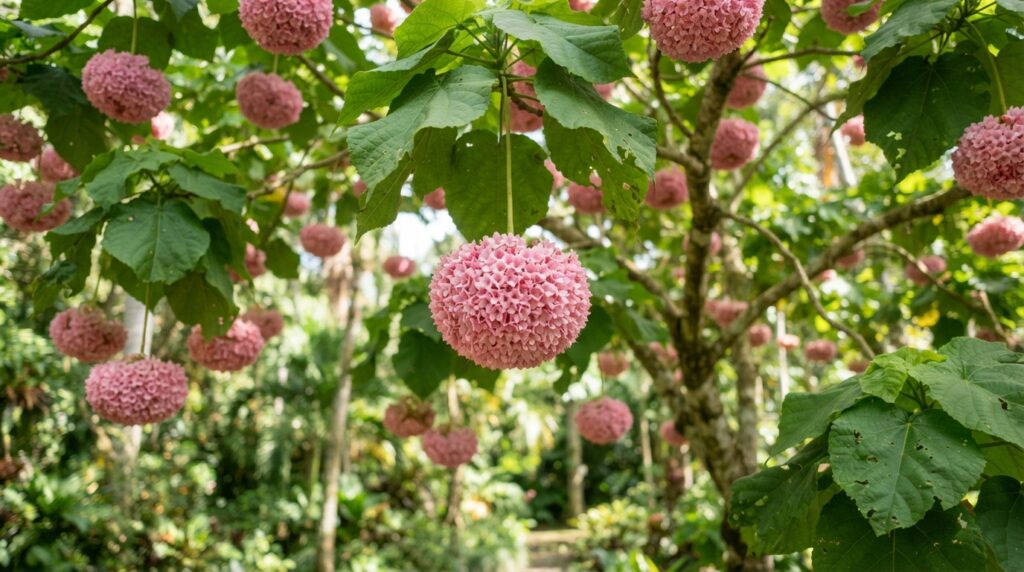
24. Dombeya (Pink Ball Tree)
Dombeya is a tropical shrub or small tree with clusters of pink flowers that hang in perfectly round pom-pom shapes, which is exactly where the “pink ball tree” nickname comes from. It only grows outdoors year-round in the warmest U.S. zones, so most gardeners further north treat it as a container plant they bring inside for winter.
Unique and Exotic Flowers That Start With D
If you want something your neighbors won’t recognize, this section is for you.
25. Desert Rose (Adenium obesum)
Desert Rose is a striking succulent with a swollen, sculptural trunk and clusters of pink or red trumpet flowers at the tips of its branches. Despite the name, it isn’t related to true roses at all, and it’s actually part of the same plant family as oleander.
One important safety note: the ASPCA specifically lists Desert Rose, also called Desert Azalea, Sabi Star, or Impala Lily, as toxic, so it’s a better fit for adult-only spaces than for a family yard with toddlers or pets.

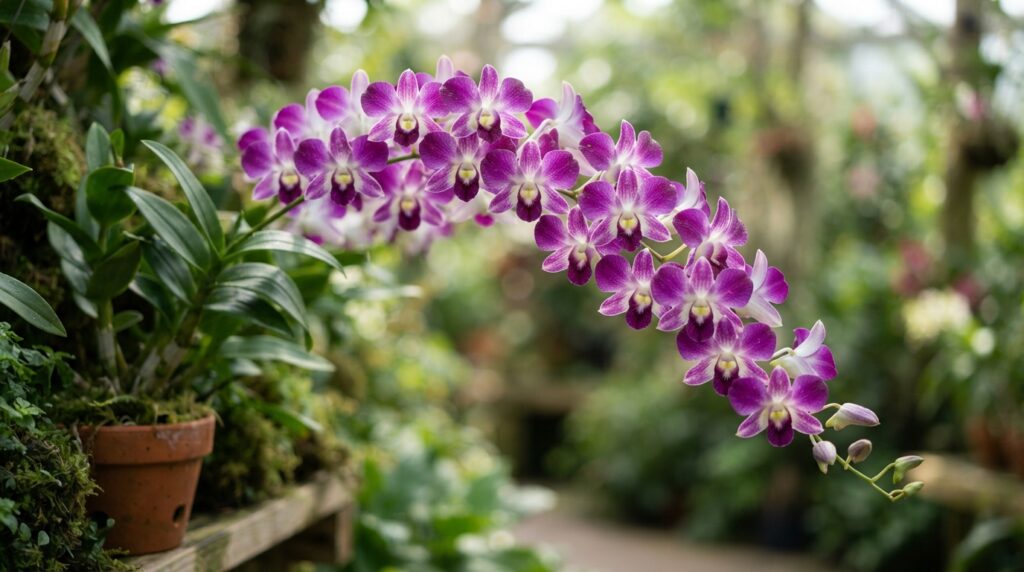
26. Dendrobium Orchid
Dendrobium is one of the largest orchid genera in the world, and its long sprays of white, purple, or pink blooms are a favorite in florist arrangements. I killed my first one by overwatering it, which taught me the hard way that most orchids prefer to almost dry out between waterings.
27. Drumstick Allium
Drumstick Allium produces small, egg-shaped purple flower heads on tall, wiry stems that sway beautifully in any breeze. Bees and butterflies are drawn to it constantly, and it multiplies naturally over the years if you leave the bulbs undisturbed.

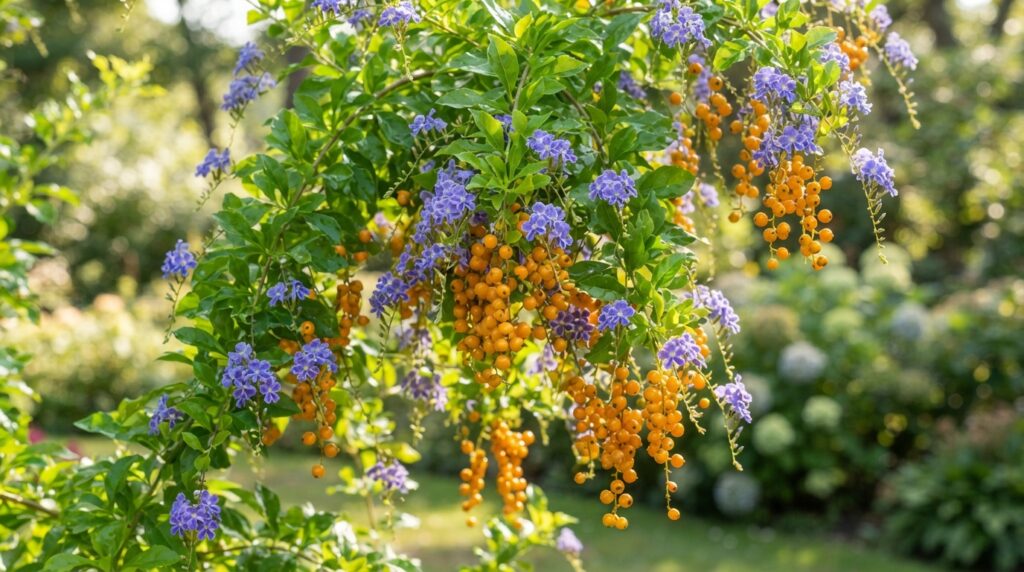
28. Duranta (Golden Dewdrop)
Duranta is a fast-growing tropical shrub with cascading clusters of small purple or blue flowers, often followed by clusters of golden-yellow berries. It’s a hummingbird and butterfly magnet in warm climates, and it can be trained into a small tree with regular pruning.
White Flowers That Start With D
If you’re planning a moon garden, a wedding bouquet, or just love the calm look of an all-white bed, here’s your shortlist. White flowers reflect moonlight, which is why so many night gardens are built almost entirely around this color.
- Daisy (Shasta) – classic white petals with a golden center
- Dahlia – white cultivars like “Kelvin Floodlight” or “White Star”
- Dianthus – fragrant white “pinks” with fringed edges
- Datura – huge white trumpet blooms that open at dusk
- Dogwood – flowering tree with white spring blossoms
- Dutch Iris – slender white blooms in late spring
- Dame’s Rocket – white-flowered variety of this tall wildflower

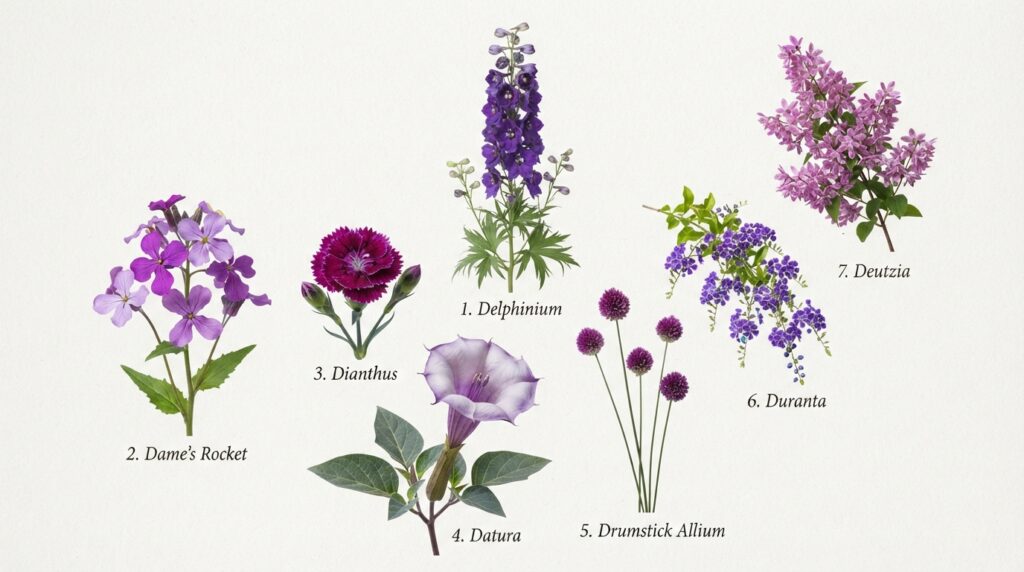
Purple Flowers That Start With D
Purple is one of the most common colors in this letter’s flower family, honestly more than I expected before researching this. If you want a moody, romantic border, combine delphinium spikes with lower-growing dianthus for height contrast.
- Delphinium – tall purple spikes, the classic cottage-garden pick
- Dame’s Rocket – four-petaled purple wildflower blooms
- Dianthus – deep purple “pinks” varieties
- Datura – purple-flowered cultivars alongside the white ones
- Drumstick Allium – small round purple flower heads on wiry stems
- Duranta – cascading clusters of purple-blue flowers
- Deutzia – pink-purple flowering varieties on an arching shrub
Flowers That Start With D for Girl
A few of these flowers double as genuinely beautiful baby names, and I know several people personally who’ve used them.
- Daisy – simple, cheerful, and one of the most-used flower names in the U.S.
- Dahlia – bold and elegant, tied to Mexico’s national flower
- Daphne – soft and fragrant, also rooted in Greek mythology
- Delphine – a less common option inspired by delphinium
Each carries its own soft, nature-inspired charm, and Daisy, Dahlia, and Daphne remain the three most commonly used of the group today.

Flowers That Start With D for Boy
This is where most articles just repeat the girl list and call it a day, so let me be honest with you instead: very few flowers starting with D are used as traditional boys’ names. If you’re drawn to this letter for a boy, a few nature-inspired alternatives share a similar earthy, grounded feel, even though they aren’t flower names.
- Dash – short, energetic, and easy to say
- Dane – simple and grounded, with a slightly vintage feel
- Dell – nature-rooted, meaning “small wooded valley”
- Dahl – a botanical surname tied to Dahlia, often used as a middle name
None of these are direct flower names, but they’re the closest nature-inspired options in the same letter if you love the “D” theme for a boy.

Expert Tips From My Own Garden
After a full season of trial and error, here’s what I’d tell a friend starting from scratch:
- Stake tall bloomers early. Delphinium and dahlia both need support before they hit full height, not after they’ve already flopped in the wind.
- Group by water needs, not just color. I made the mistake of planting drought-tolerant Delosperma next to thirsty Dahlia in year one, and one of them always suffered.
- Check pet safety before you plant. Daffodil, Datura, Desert Rose, and Digitalis all carry real toxicity risks, so map your yard around where your pets and kids actually spend time.
- Deadhead dianthus and diascia weekly. It sounds tedious, but five minutes a week keeps both blooming for months instead of weeks.
- Don’t skip the mulch. A two-inch layer around daylilies and daphne cuts my watering needs almost in half during peak summer heat.
For a deeper dive into darker, moodier color palettes that pair well with several flowers on this list, my article on dark flowers covers deep burgundy and near-black varieties that look striking next to bright D-flower blooms.
Common Mistakes I Made Growing D Flowers (So You Don’t Have To)
I want to be upfront about the mistakes, because most gardening articles only show you the finished, perfect version of a bed. My first year growing D flowers looked nothing like that.
My biggest mistake was planting dahlia tubers too early, right after the last frost date on the calendar, instead of waiting for the soil to warm up. The tubers sat in cold, wet ground for two weeks, and two of them rotted before they ever sprouted. Now I wait until the soil hits about 60°F, which I check with a cheap soil thermometer instead of guessing.
My second mistake was crowding my delphinium too close to a large daylily clump. The daylily’s aggressive root system out-competed the delphinium for water within a single season, and the delphinium never fully recovered. I’ve since learned to give delphinium its own dedicated space, at least 18 inches from any thirsty, fast-spreading neighbor.
Lastly, I underestimated how quickly Datura can self-seed. One plant on my porch dropped seeds into a nearby bed, and the following spring I had volunteer seedlings coming up in a spot I never intended to plant them. Given how toxic the plant is, that’s exactly the kind of surprise you don’t want near a family yard, so now I deadhead mine before the seed pods ever mature.
How I Chose These 30 Flowers
I didn’t just pull this list from the first page of Google. I cross-checked bloom times, USDA hardiness zones, and toxicity data against horticultural extension resources and the ASPCA’s own plant database, then filtered out anything that was really just a duplicate name for a flower already on the list.
I also made a point of including flowers I’ve personally grown, killed, or fallen in love with, rather than just repeating scientific names without real-world context. That’s the gap I noticed in nearly every other article on this topic, and it’s the gap I tried hardest to close here.
Pros and Cons of Building a D-Themed Garden
| Pros | Cons |
|---|---|
| Huge variety across annuals, perennials, shrubs, and trees | Several popular picks (Datura, Digitalis, Desert Rose) are toxic to pets |
| Covers nearly every color, including true purple and pure white | Some, like Dame’s Rocket, are invasive in certain states |
| Great mix of low-maintenance (daylily) and showy (dahlia) options | A few, like delphinium, need real staking and care |
| Strong pollinator support from dandelion through duranta | Tender perennials like dahlia need winter digging in cold zones |
A Real Foxglove Fact Most Gardeners Never Learn
Here’s a piece of information I genuinely didn’t know before researching this article, and I think it’s the kind of detail that makes a flower far more interesting. Digitalis, better known as foxglove, isn’t just a pretty cottage-garden flower. Its leaves are the original source of digoxin, a heart medication first described by British physician William Withering in his 1785 book “An Account of the Foxglove”, and that same compound is still prescribed today for certain heart conditions.
That said, please don’t try to use garden foxglove medicinally. Every part of the plant is poisonous, and the gap between a therapeutic dose and a dangerous one is dangerously narrow, which is exactly why it stays a prescription drug and not a kitchen remedy.
Image prompt (place here): A tall spike of purple foxglove (Digitalis) growing against a rustic wooden fence, shot from a low angle to emphasize its height. ALT text: “digitalis flower that starts with d foxglove spike.”
Frequently Asked Questions
What flower starts with D that’s also a color?
Dahlia isn’t a color name itself, but dahlias come in nearly every color, including a rare true black-red shade that gardeners call “black dahlia.”
Is Daisy the same as Dahlia?
No, and I get asked this a lot. Daisies are simple, flat flowers with a yellow center and white petals, while dahlias have dense, layered petals and come from a completely different plant family.
What is the rarest flower that starts with D?
Among home-garden varieties, Dianella and true species Dendrobium orchids tend to be the least commonly grown, since most gardeners stick to daffodils, dahlias, and daisies.
Are daffodils safe to plant if I have a dog?
Not really. As I mentioned earlier, the ASPCA classifies daffodils as toxic to dogs, with the bulb being the most dangerous part of the plant, so keep them fenced off or out of reach.
What’s the easiest D flower for a total beginner?
I always recommend daylily first. It tolerates poor soil, missed waterings, and beginner mistakes better than almost anything else on this list.
My Final Take
After a full season of testing, killing, and eventually mastering a handful of these flowers, my honest recommendation is to start with three: one easy perennial (daylily), one showstopper (dahlia), and one fragrant filler (dianthus or daphne). That combination gave me color from early spring all the way through the first frost, and it’s the same starter trio I now recommend to every friend who asks me where to begin.
If you’re building out a full alphabet garden, don’t stop here. Go back and browse my guides on flowers that start with A and flowers that start with B for the letters that come before this one, and let me know in the comments which D flower you’re planting first. I’d genuinely love to see how your garden turns out.