


Gothic Flowers: 25 Dark Blooms, Bouquets & Care
If you searched for gothic flowers, you may want more than another list of black roses and purple tulips. You may be planning a shadowy garden, ordering a dramatic gift, building a wedding bouquet, or simply trying to learn which dark blooms are real.
The useful answer starts with one fact. Most flowers sold as black are actually deep burgundy, purple, maroon, red, or brown, and that hidden color is what gives them life. A flat jet-black flower can look artificial, while a near-black bloom changes beautifully as the light moves across it.
I also think “gothic” describes more than color. Shape, texture, scent, foliage, and the container create the mood, so a purple hellebore can feel more mysterious than a dyed black rose. This guide covers gardens, gothic wedding flowers, bouquets, delivery, drying, safety, care, and photography.
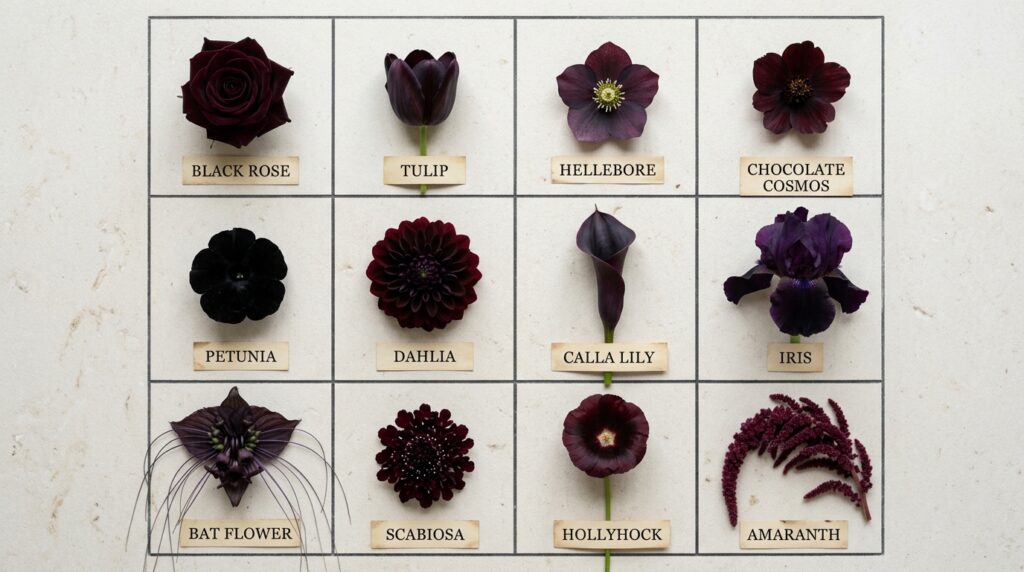
Quick answer: Gothic flowers are naturally dark, unusually shaped, or symbolically dramatic blooms used in moody gardens and floral designs. Good examples include dark roses, dahlias, tulips, hellebores, calla lilies, scabiosa, chocolate cosmos, black bat flowers, amaranth, and near-black petunias.

What Are Gothic Flowers, Really?
Gothic flowers are not a formal botanical group. The term describes a visual style built from dark color, striking form, romantic symbolism, and a sense of age or mystery. That leaves room for velvety burgundy roses, bell-shaped fritillaria, spidery bat flowers, drooping amaranth, silver foliage, bare branches, and dried seed heads.
Color is still the first thing most people notice. Research on dark flower pigmentation shows that high concentrations of pigments called anthocyanins, especially cyanidin-based compounds, can help petals appear extremely dark. A useful scientific review of black flower color also explains that pigment chemistry, petal structure, temperature, and light all affect the final appearance.
This is why online photographs can be misleading. A “black” bloom photographed in shade may show wine-red edges in direct sun, and a dark purple flower may become almost invisible against black mulch. Before buying, I recommend looking at several unedited photographs of the exact cultivar in daylight.
You can explore a broader range of naturally dark flower colors before choosing a strict gothic palette. That guide is useful when you want to compare burgundy, midnight blue, brown, maroon, and deep purple rather than treating every dark bloom as black.
Natural, Dyed, and Styled Dark Flowers
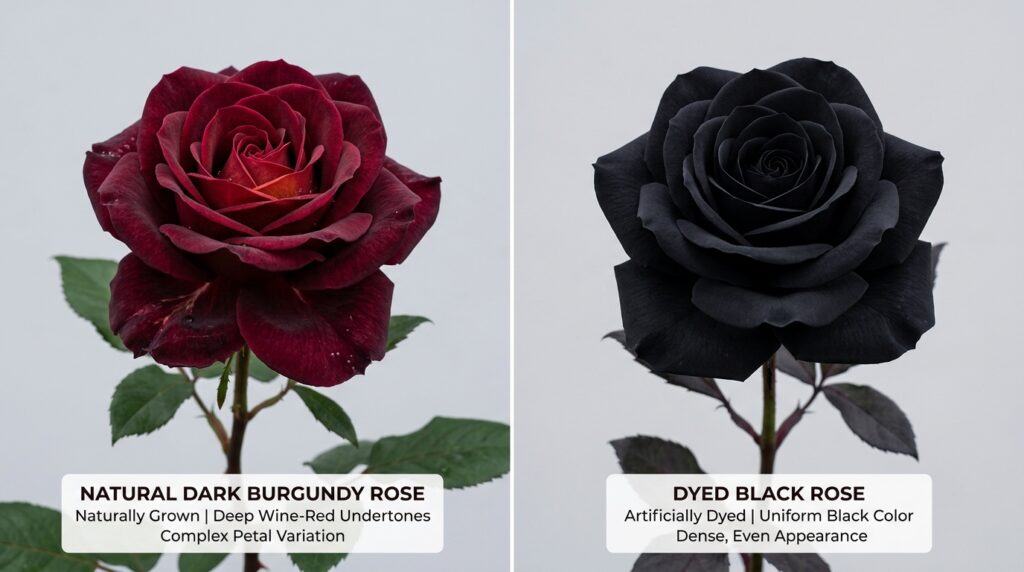
Naturally dark flowers develop their color as they grow, whereas dyed or painted blooms receive added color. Natural petals usually show veins, lighter edges, and tonal variation; treated flowers can look more uniform but may feel stiff or transfer color.
Choose natural cultivars for botanical texture, and professionally dyed blooms when uniformity in black is more important. Ask the florist to disclose any treatment before you pay.
25 Gothic Flower Names Worth Knowing
The best gothic flower names are not created by simply placing the word “black” on a label. Each flower below has its own natural color, shape, season, and practical use. You can compare them one by one and choose those that suit your garden, bouquet, wedding, or home.
1. Black Baccara Rose
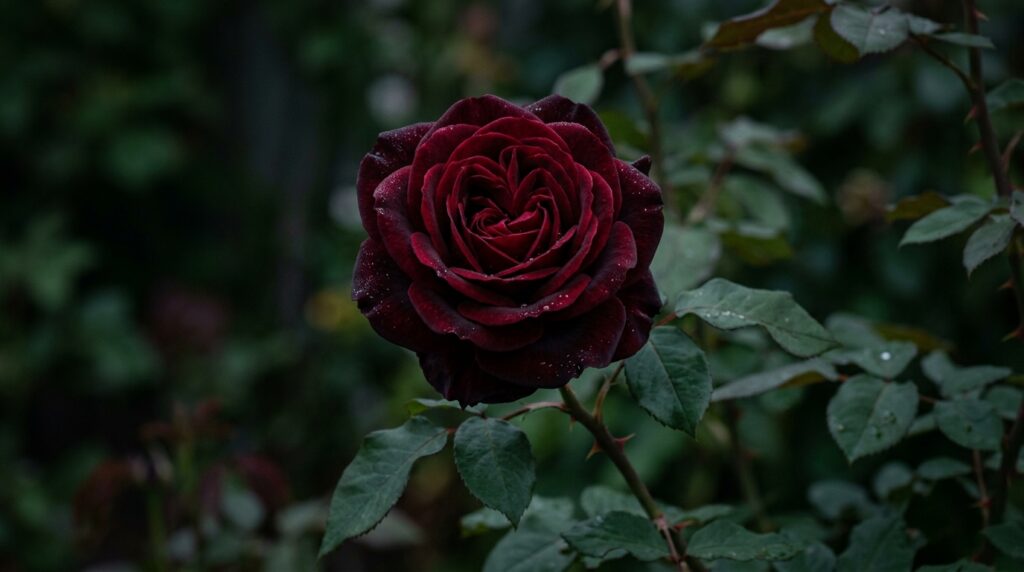
Black Baccara is a hybrid tea rose with velvety, very dark burgundy petals. It looks closest to black in cool or shaded light, but its wine-red edges become clearer in sun. I recommend it as a focal flower for romantic bouquets rather than promising a true black rose.

2. Black Magic Rose
Black Magic rose opens in deep crimson and often carries darker outer petals. Its classic spiral form feels formal, so it works well in wedding arrangements and simple vase displays. Pair it with plum scabiosa or pale foliage to stop the red from blending into a dark background.
3. Queen of Night Tulip
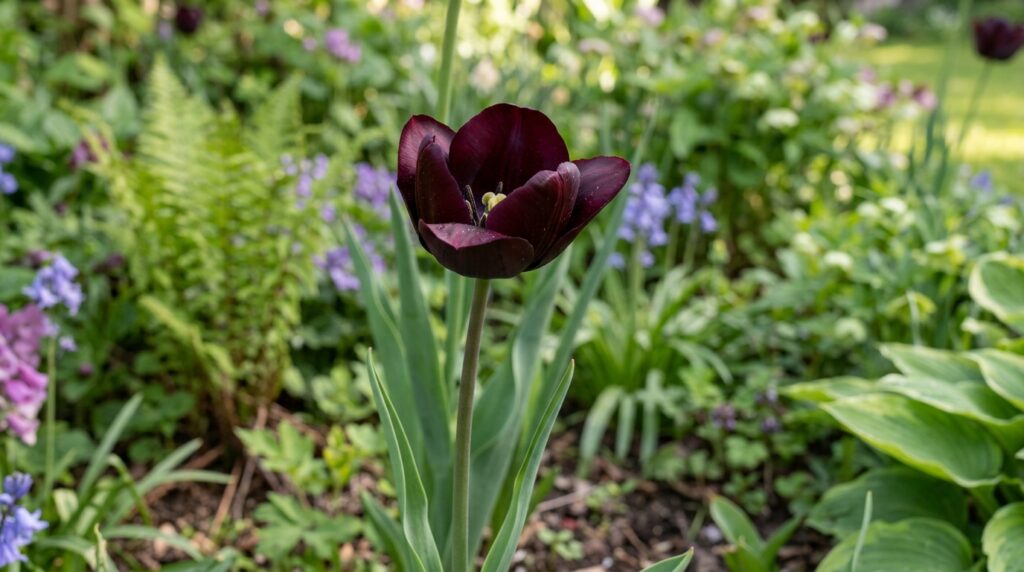
Queen of Night is a late-season tulip with glossy maroon-purple petals that can read as black from a short distance. Its clean cup shape looks especially strong when planted in a group. Use pale gravel, silver foliage, or cream tulips nearby so each dark outline stays visible.
4. Dark Dimension Hyacinth
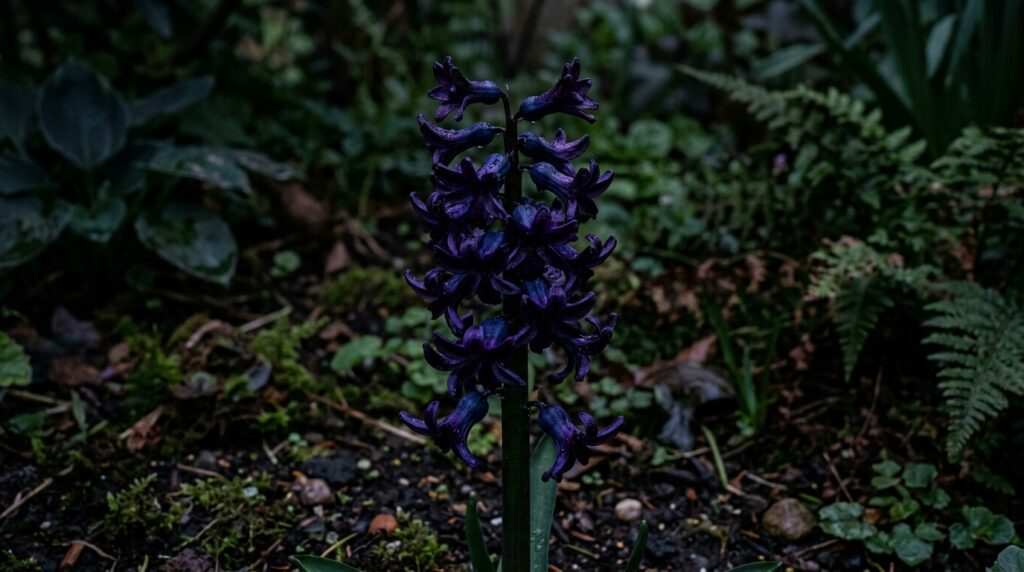
Dark Dimension hyacinth forms a dense spike of deep purple, fragrant spring flowers. The clustered shape brings weight to containers and the front of a border, while the scent adds something a photograph cannot show. You can compare it with other flowers that start with H before planning a spring sequence.
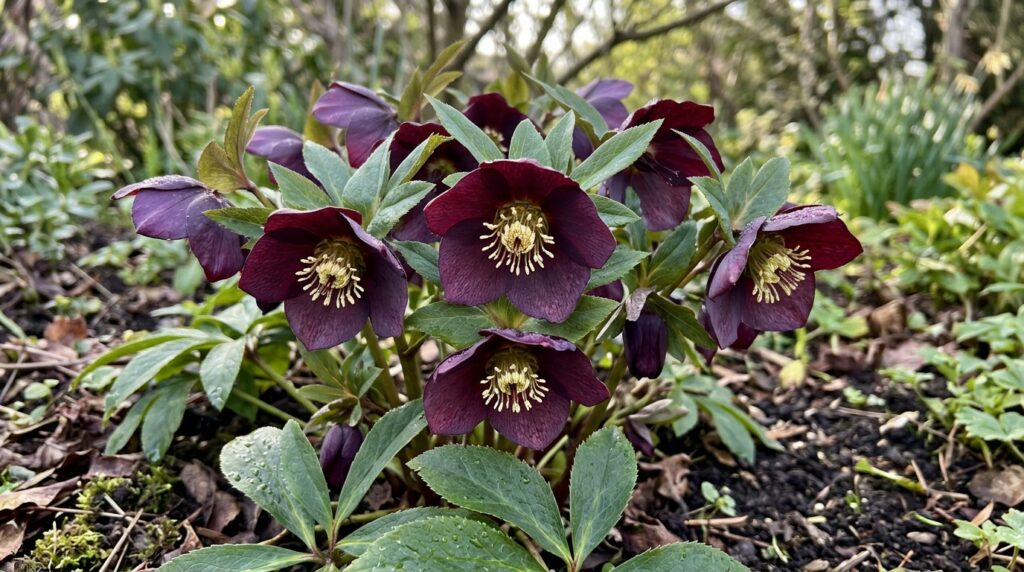
5. Dark Hybrid Hellebore
Dark hybrid hellebores may flower in plum, smoky violet, slate-purple, or near-black. Their nodding heads suit a woodland mood, but the downward angle means they deserve a raised pot, slope, or path edge where you can see inside. They are valuable because they bloom when many garden beds still look quiet.

6. Onyx Odyssey Hellebore
Onyx Odyssey is a double-flowered hellebore with layered, dark purple-black petals. The dense rosette feels old-fashioned and dramatic without needing dye or props. Place it where winter and early-spring light reaches the flowers, then let foliage and, later, perennials cover the space as the season progresses.
7. Black Velvet Petunia
Black Velvet petunia has soft, purple-black petals with a matte, almost fabric-like appearance. It gives beginners a long season of dark color in pots, baskets, or bed edges. I would surround it with one lime or silver plant because a pot filled only with near-black flowers can disappear after sunset.

8. Black Mamba Petunia
Black Mamba is another near-black petunia, often showing a subtle purple sheen when light crosses the petals. Its rounded blooms make a useful low layer beneath taller Gothic plants. A verified collection of dark garden cultivars also lists this variety as a practical near-black choice.

9. Black Barlow Columbine
Black Barlow columbine has double, spurless flowers in dark plum-maroon. The blooms sit on slender stems, so they appear to float rather than form a heavy block. Use it in an informal or woodland-style bed where its delicate shape can soften roses, iris, and dense foliage.

10. Nigra Hollyhock
Nigra hollyhock bears dark maroon flowers on a tall, upright stem. It is ideal against a pale wall, fence, or trellis, where the silhouette remains clear. Give it air movement and inspect leaves for rust, since crowded hollyhocks can lose their beauty long before the flowers finish.

11. Arabian Night Dahlia
Arabian Night dahlia produces full, dark wine-red flowers that deepen toward the center. It is a useful late-season focal bloom for both borders and cutting gardens. Dahlias prefer fertile, moist but well-drained soil, and the dahlia growing profile explains why staking, water, and winter protection may matter.
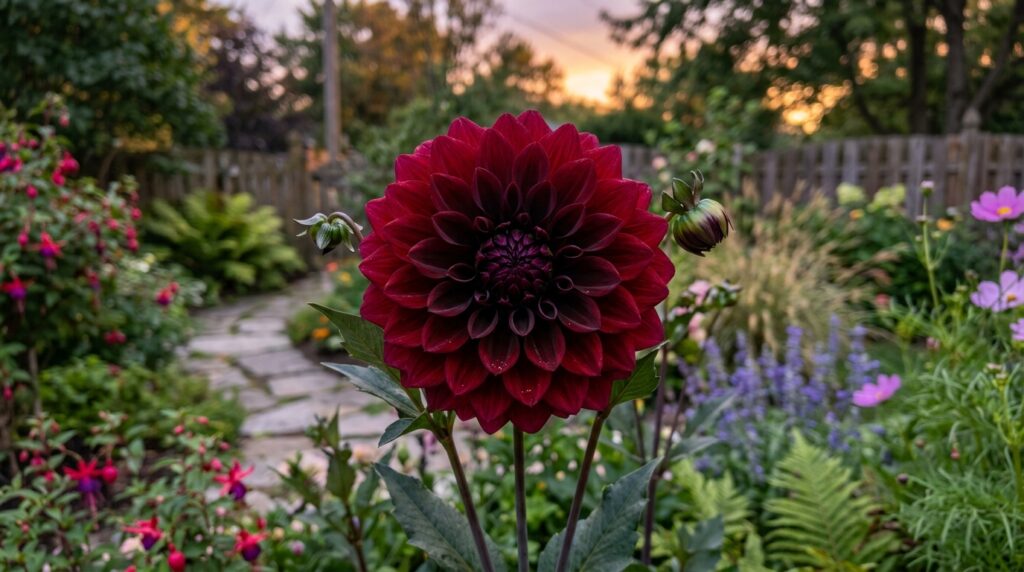
12. Black Narcissus Dahlia
Black Narcissus dahlia has narrow, pointed petals in very dark red, giving the bloom a sharper outline than a rounded decorative dahlia. That spiky form adds movement to a bouquet and contrast beside broad roses. Use side lighting in photos so the individual petals do not merge.

13. Black Star Calla Lily
Black Star calla lily has a sleek burgundy-purple spathe wrapped around a central spadix. Its sculptural line works well in modern bouquets, containers, and small arrangements where a single stem can carry the design. Calla lilies are not true lilies, but they still require care around curious pets and children.

14. Odessa Calla Lily
Odessa calla lily is usually deep aubergine to purple-black, with a smooth surface that reflects light better than a velvety rose. That highlight keeps it visible in dim rooms. For related botanical names and basic comparisons, my flowers that start with C guide includes calla lily, columbine, cornflower, and cosmos.

15. Black Bat Flower
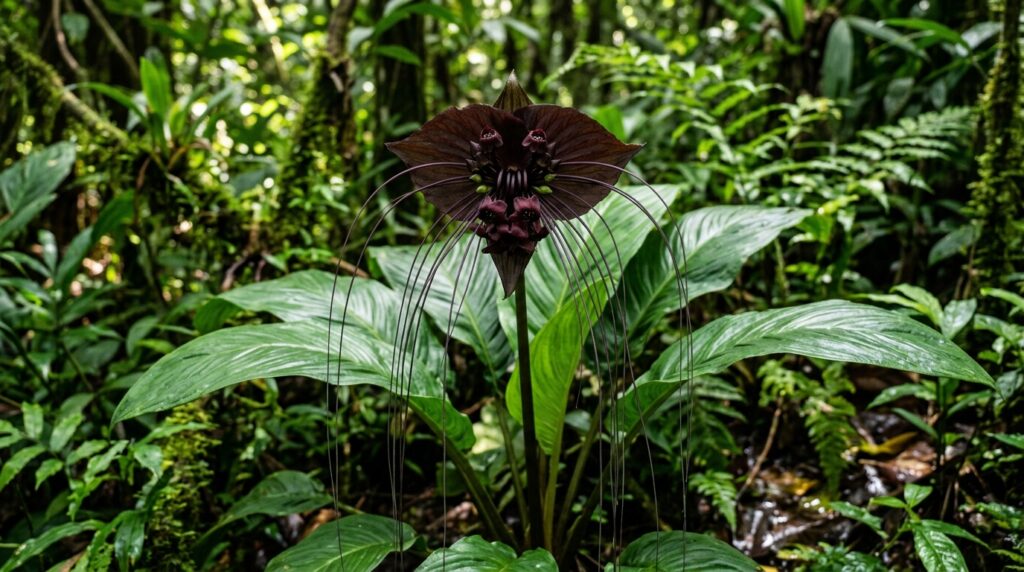
Black bat flower, or Tacca chantrieri, has deep purple bracts shaped like wings and long threadlike bracteoles that resemble whiskers. It prefers humidity, airflow, and low to moderate light, and it declines quickly as a cut flower. The black bat flower care guidance supports growing it as a living collector plant rather than as a bouquet stem.
16. Chocolate Cosmos
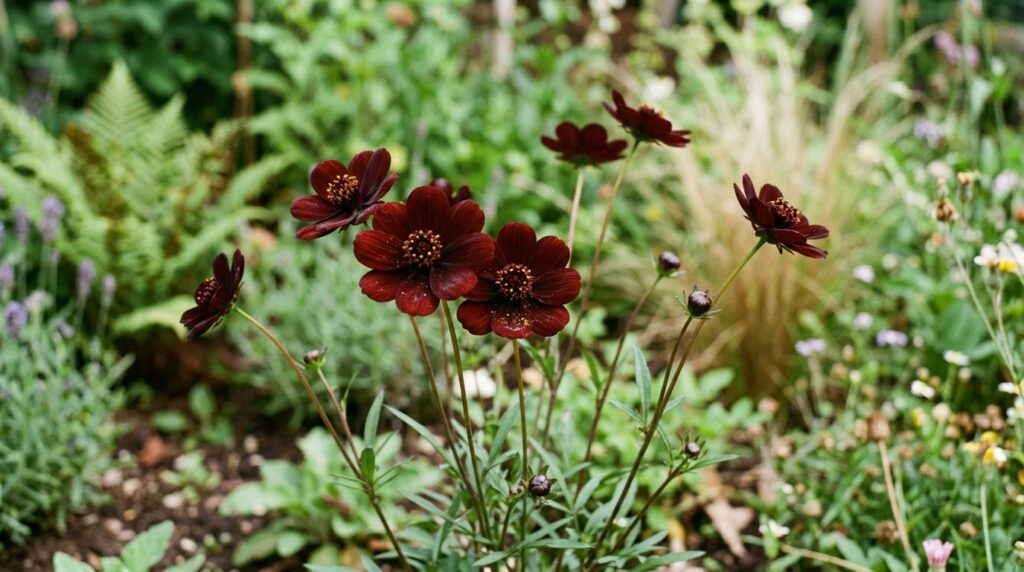
Chocolate cosmos, Cosmos atrosanguineus, carries dark maroon-brown flowers with a warm cocoa-like scent. The small daisy form gives a bouquet breathing room between larger blooms. Grow it in a container or cutting bed where you can enjoy the fragrance, rather than hiding it at the back of a border.
17. Before the Storm Iris
Before the Storm is a tall bearded iris known for very deep violet-purple flowers. Its upright fans and ruffled blooms create a strong late-spring silhouette. Plant it where the rhizome receives adequate light and drainage, then use a pale path or low-foliage to frame the dark falls.

18. Black Is Black Iris
Black Is Black iris also reads as near-black purple, but its velvety falls reveal detail when viewed closely. It works best as a specimen or repeated accent, not as an unbroken dark mass. I recommend photographing it from a slight angle so reflected light separates the standards, falls, and beard.

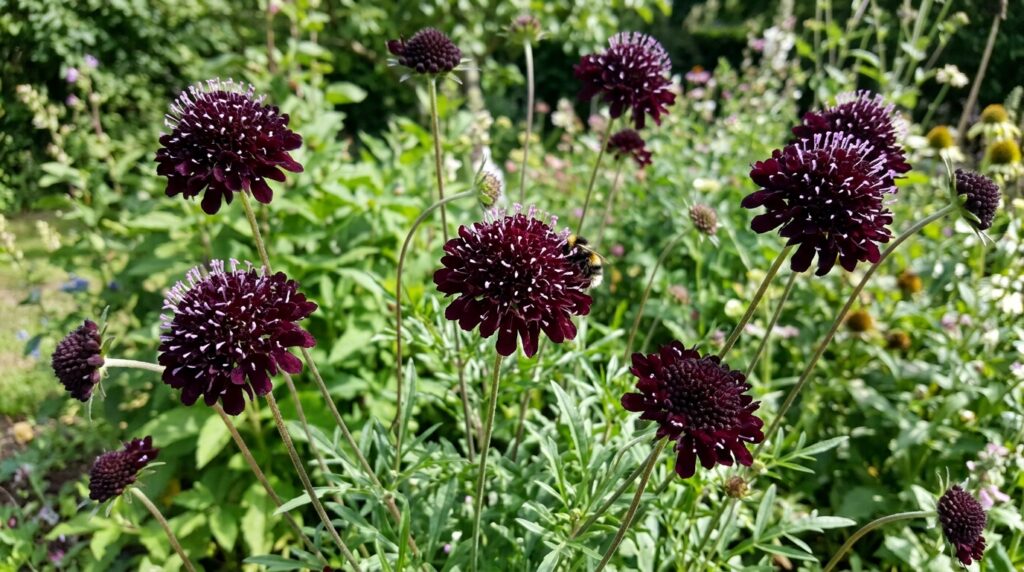
19. Black Knight Scabiosa
Black Knight scabiosa produces burgundy-black pincushion flowers on thin, branching stems. It brings air, texture, and gentle movement to a garden or arrangement. This is one of my favorite balancing flowers because it can make heavy roses and dahlias feel less formal without weakening the dark palette.
20. Black Ball Cornflower
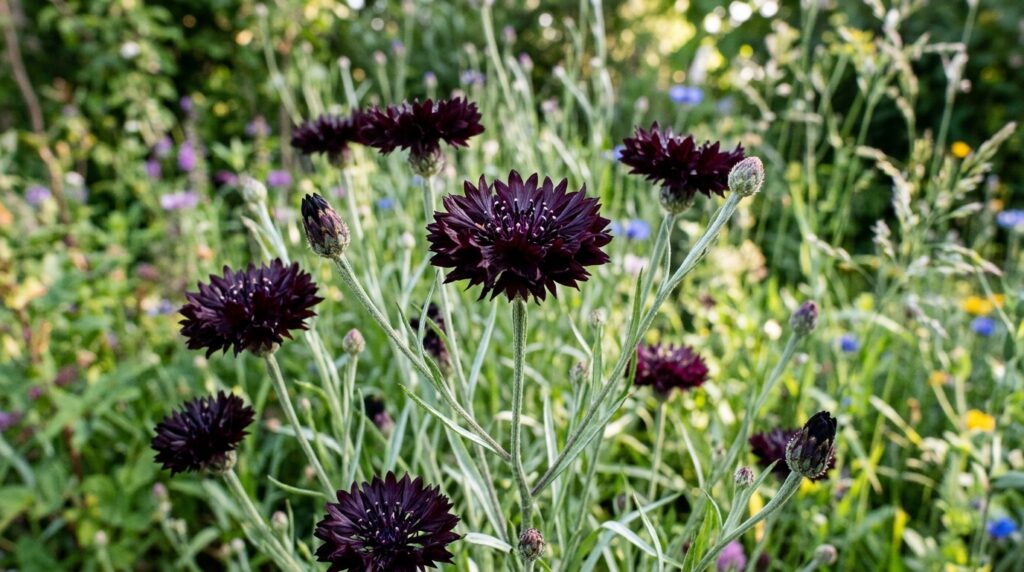
Black Ball cornflower is a deep burgundy-maroon form of Centaurea cyanus. Its fringed petals and compact flower heads suit cutting patches, cottage-style beds, and smaller bouquets. Sow or buy it as a seasonal accent, and let a few lighter stems show through so its ragged outline remains easy to read.
21. Persian Lily
Persian lily, Fritillaria persica, sends up a tall stem lined with hanging plum-purple bells. It looks architectural in a spring border and can act like a dark floral chandelier. Give the bulb well-drained soil and place it behind lower tulips or hellebores so the full stem stays visible.

22. Black Prince Snapdragon
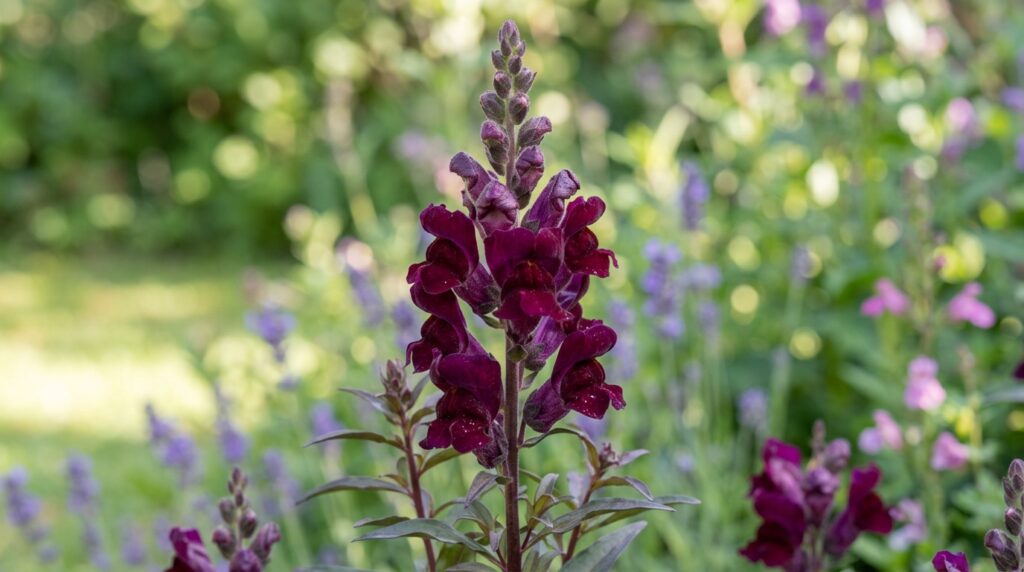
Black Prince snapdragon produces dark crimson-maroon flowers on upright spikes, often above deep-toned foliage. Its line shape is useful in gardens and hand-tied bouquets because it leads the eye upward. Pinching young plants may encourage branching, while regular cutting or deadheading can keep the display active.
23. Dark Purple Lisianthus
Dark purple lisianthus has layered violet or aubergine petals, often with a fresh green center. It looks like a softer rose and lasts well as a professionally conditioned cut flower. Starting lisianthus from seed can be slow, so beginners may find plugs, plants, or florist stems more practical.

24. Burgundy Amaranth
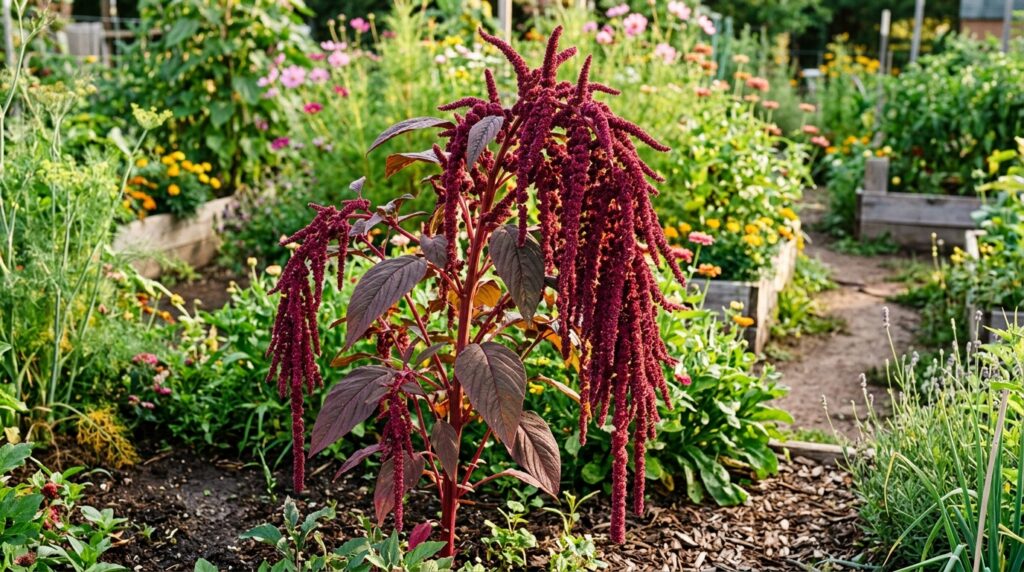
Burgundy amaranth offers upright plumes or hanging tassels in wine-red tones, depending on the type. It supplies height, motion, and a slightly wild texture that round flowers cannot provide. Trailing forms are especially effective in gothic bouquet flowers because they break the edge and create a deliberate cascade.
25. Moulin Rouge Sunflower
Moulin Rouge sunflower has deep red-burgundy petals around a dark central disk. It brings warmth and a recognizable shape to late-season beds without turning the design bright yellow. Use one or three stems as bold accents, then repeat the burgundy elsewhere to connect them with the rest of the scheme.

The Most Convincing Black Gothic Flowers
For black gothic flowers that still look natural, I would begin with Queen of Night tulips, dark iris, near-black petunias, hellebores, and deep calla lilies. These dark gothic flowers show enough purple or red to remain visible while reading, but appear black from a few steps away.
Dark roses are beautiful, but realistic expectations matter. Black Baccara and Black Magic roses are red-based, not ink-black. If a product photograph shows a completely flat black fresh rose with no burgundy undertone, it is likely dyed, painted, heavily edited, or artificially generated.
Gothic Looking Flowers That Are Not Almost Black
Some of the best gothic-looking flowers earn their place through shape rather than color. Bleeding hearts look like small hanging hearts, anemones can have stark dark centers, and love-in-a-mist produces delicate foliage followed by sculptural seed capsules. You can find anemones and other useful bouquet choices in this guide to flowers that start with A.
Black bat flowers are the clearest example of form creating mood. Their dark bracts resemble wings, and long threadlike structures create a whiskered silhouette. They come from warm, humid forest conditions, so the growing profile for black bat flower is worth reading before treating one like an ordinary bedding plant.
How to Design Gothic Garden Flowers That Stay Visible
The hardest part of using gothic garden flowers is not finding dark plants. It is keeping them visible after they are planted. Near-black flowers can disappear against dark soil, deep shade, brown fencing, or a mass of equally dark foliage.
Start with your conditions instead of your mood board. Check daily light, drainage, mature plant size, summer heat, and winter minimums. The official Plant Hardiness Zone Map helps estimate whether a perennial can survive local winter lows, but it does not replace information about heat, moisture, wind, or soil.
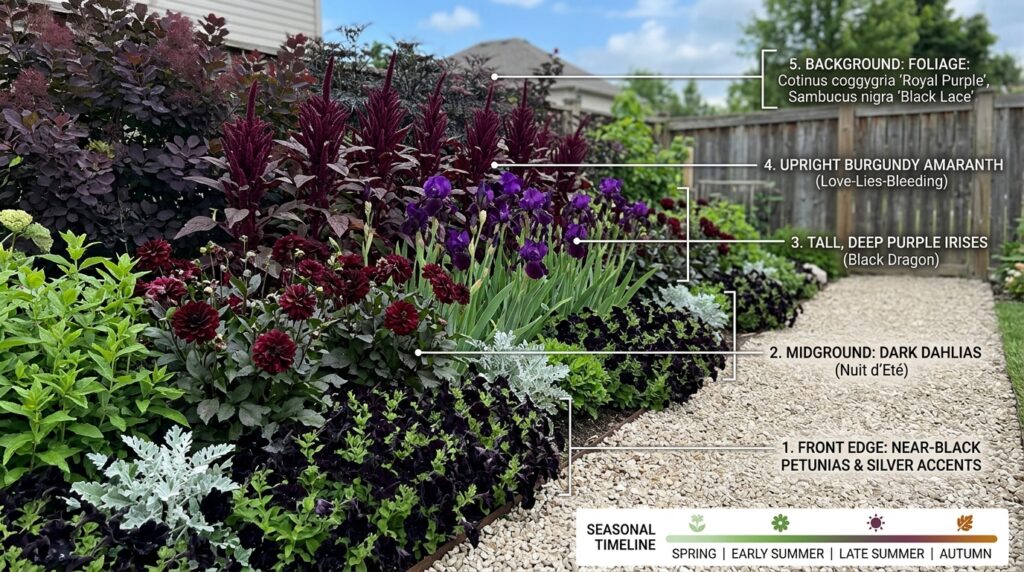
I use five layers to prevent a dark bed from becoming a single flat patch. Height, leaf texture, movement, and a little light color keep each plant visible.
- Structural layer: Dark shrubs, purple foliage, ornamental grass, an arch, or a simple evergreen backdrop.
- Tall layer: Hollyhocks, snapdragons, amaranth, iris, or burgundy sunflowers.
- Focal layer: Dahlias, roses, calla lilies, or large hellebores placed where light reaches them.
- Lower layer: Petunias, pansies, violas, scabiosa, or compact foliage around the front edge.
- Contrast layer: Silver leaves, pale stone, soft green foliage, white flowers, or a reflective container used sparingly.
Dark foliage adds depth when no flower is open. This guide to plants with dark foliage shows how near-black leaves create structure and contrast, while a small silver or chartreuse accent keeps burgundy blooms distinct.
A Bloom Calendar for a Longer Gothic Garden
A single-season shopping trip can leave a bed empty after its first display. Use overlapping bloom periods, foliage, and seed heads to carry the theme.
| Seasonal window | Dark flowers to consider | What carries the design forward |
| Late winter to early spring | Dark hellebores, pansies in mild conditions | Evergreen and deep purple foliage |
| Mid spring | Queen of Night tulips, dark hyacinths, Persian lilies | Emerging iris leaves and silver groundcover |
| Late spring | Dark iris, columbine, early roses | Strong vertical stems and textured foliage |
| Summer | Petunias, hollyhocks, calla lilies, scabiosa, sunflowers | Amaranth, grasses, and repeat-flowering roses |
| Late summer to fall | Dahlias, amaranth, chocolate cosmos | Seed pods, fading grasses, and dried stems |
Bloom time changes with cultivar, temperature, and planting date. Check each label and record what flowers in your space, because those notes improve next year’s plan.
A Simple Gothic Container Recipe
For a beginner, one large container is easier than redesigning a bed. Use drainage and combine an upright plant, a rounded plant, a trailer, and a pale accent.
- One dark calla lily or compact dahlia as the upright focal plant
- Two near-black petunias for rounded volume
- One trailing burgundy foliage plant for movement
- One silver-leaved companion for contrast
- A charcoal, aged stone, or muted metallic container
Read every plant label and replace choices with conflicting water needs. A container lasts longer when all roots prefer similar light and moisture.
How to Build a Gothic Flower Bouquet
Search results for “gothic flowers bouquet” often focus on darkness, but a strong design starts with shape. If every stem is large, round, and almost black, the flowers merge into one block. I prefer a focal form, an airy texture, a line element, and a little negative space.
Use three tones rather than one. A near-black focal flower, burgundy support, and a little plum, silver-green, or antique cream make the darkest bloom stand out without dye.
A Balanced 24-Stem Bouquet Recipe
This recipe makes a medium hand-tied arrangement. Rotate it as you build, and keep some stems longer so the result does not become a tight ball.
- 5 dark burgundy roses
- 3 wine-colored dahlias or dark lisianthus
- 5 black or burgundy scabiosa stems
- 3 dark calla lilies or snapdragons for line
- 3 trailing amaranth stems
- 3 stems of silver-green foliage
- 2 dried seed-pod stems for texture
If dahlias are unavailable, use lisianthus or chrysanthemums; replace calla lilies with dark snapdragons for height. Preserve the color story rather than the exact shopping list.
Three Palettes for Gothic Bouquet Flowers
Gothic bouquet flowers can feel romantic, wild, modern, or theatrical. Choose the mood first, then let the florist match it with fresh seasonal stems.
- Romantic nocturne: Burgundy roses, plum lisianthus, dark scabiosa, antique blush carnations, and smoky foliage.
- Vampire red: Deep red roses, black calla lilies, burgundy amaranth, dark dahlias, and bare branching accents.
- Woodland shadow: Hellebores, dark anemones, seed pods, ferns, chocolate cosmos, and mossy green foliage.
- Modern monochrome: Dark calla lilies, near-black tulips, one type of foliage, and a simple matte vase.
- Dried relic: Burgundy strawflowers, dark preserved foliage, nigella pods, grasses, and amaranth tassels.
Use a clean vase for any arrangement that will sit in water. Guidance for keeping cut flowers fresh recommends washing the container, using fresh water and floral preservative, and limiting bacterial buildup. Remove leaves below the waterline, recut stems with clean tools, and change cloudy water promptly.
Gothic Wedding Flowers Without a Costume Effect
Gothic wedding flowers can be elegant without looking like a themed set. Repeat two or three materials across bouquets, ceremony flowers, and centerpieces, while changing the amount of darkness in each design.
Place the darkest bridal flowers near the center and soften the edge with burgundy, plum, and foliage. Keep centerpieces low and lighter; one dark bloom or pod is enough for a boutonniere.
Ask for a written substitution policy and approve replacements by color, shape, size, and mood. View one sample in venue lighting, because near-black flowers can vanish in a dim room while warm light reveals red undertones.

Gothic Flowers Delivery: What to Check Before Ordering
Gothic flowers delivery is more complicated than ordering a standard mixed bouquet because color names are subjective. “Black,” “midnight,” “plum,” and “merlot” may describe noticeably different flowers. Screens, studio lighting, editing, dye, and seasonal substitutions can widen that gap.
Decide whether you need an exact cultivar or a dark palette. Cultivars suit collectors and precise designs, while a flexible palette lets the florist choose fresher seasonal stems.
Seven Questions to Ask the Seller
These questions reveal more than a dramatic listing photograph. Save event-order answers in writing, and choose another seller if the contents remain unclear.
- Are the flowers naturally dark, dyed, sprayed, or digitally represented?
- Which exact flower types or cultivars are guaranteed?
- What substitutions can be made without additional approval?
- Is the listed size a stem count, bouquet width, or styled photograph?
- Will the flowers arrive open, tight, or partly conditioned?
- What delivery date gives the blooms time to hydrate before the event?
- What happens if the color, condition, or stem count is materially different?
Ask for an arrival window based on the species and whether stems ship dry or in water. Flowers open and recover at different rates, so no single delivery interval suits every order.
Compare Your Buying Options
| Buying route | Main advantage | Main drawback | Best for |
| Local florist | You can discuss color and substitutions directly | Specialty cultivars may require advance notice | Weddings, gifts, and custom bouquets |
| Specialist grower | Better chance of named cultivars and fresh seasonal stems | Availability may be narrow or weather-dependent | Collectors and cutting-garden fans |
| Online bouquet delivery | Convenient ordering and wide visual choice | Listing photos may not match substitutions exactly | Gifts and planned home displays |
| Garden center or nursery | You can inspect living color before buying | Planting stock is seasonal | Containers and permanent beds |
| Dried-flower seller | Long display life and easy advance ordering | Texture is more brittle, and colors may be preserved or dyed | Décor, installations, and keepsakes |
For a gift, ask for the complete list of flowers and consider animals in the home. A beautiful bouquet is not thoughtful if it contains a known household risk.

Gothic Dried Flowers for Long-Lasting Decor
Gothic dried flowers offer forms that fresh arrangements cannot hold for long. Pods, papery petals, twisted stems, and grasses bring an aged quality to wreaths, shelves, and installations, and they can be bought well before an event.
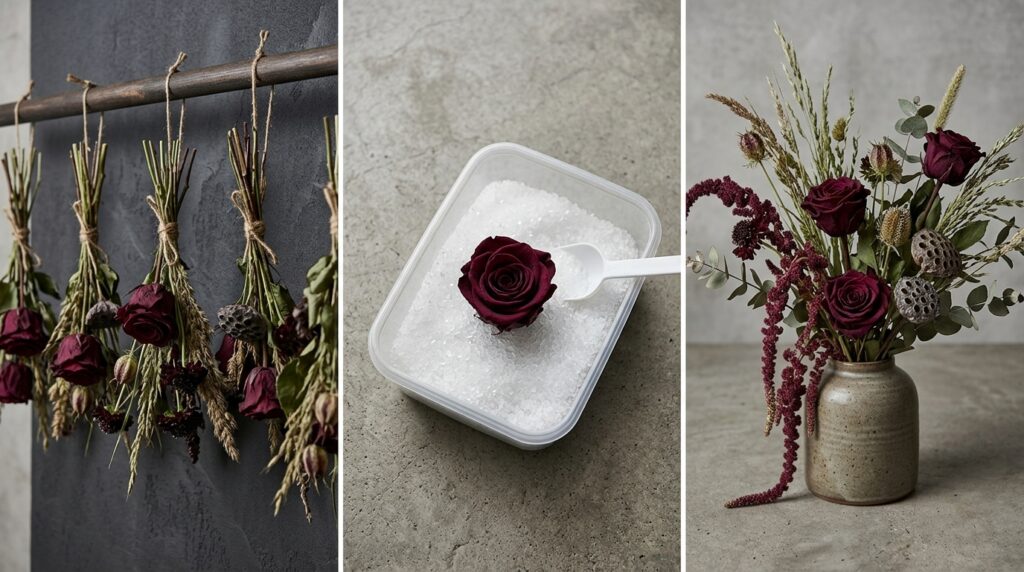
Not every flower dries in the same way. Amaranth, statice, strawflower, celosia, grasses, and many seed heads often air-dry well. Roses, dahlias, and other fuller blooms may keep their shape better with a desiccant, although color and texture will still change.
Air-Drying Method
Remove damaged leaves, make small bundles, and hang them upside down in a dark, dry place with good air circulation. Large bundles trap moisture, and drying time changes with humidity and flower thickness. Keep the result away from steam, direct sun, and frequent handling.
Silica-Gel Method
Silica gel supports petals while drawing out moisture, helping three-dimensional blooms retain more of their form. Detailed flower-drying guidance notes that flowers sealed in silica gel may dry in about 3 to 8 days, depending on thickness and conditions. Follow the product instructions and check carefully, because leaving delicate petals too long can make them fragile.
For a gothic dried arrangement, combine one preserved focal bloom with several natural textures. A dark rose, nigella pods, burgundy amaranth, grasses, and bare twigs look collected rather than merely faded.
Natural, Preserved, or Dyed Dried Flowers
Natural dried flowers become softer and more muted, while preserved or dyed stems may stay flexible and colorful. Ask about treatments near pale surfaces or food, and use a barrier unless the product is approved for contact.
How to Create a Gothic Vampire Flowers Background
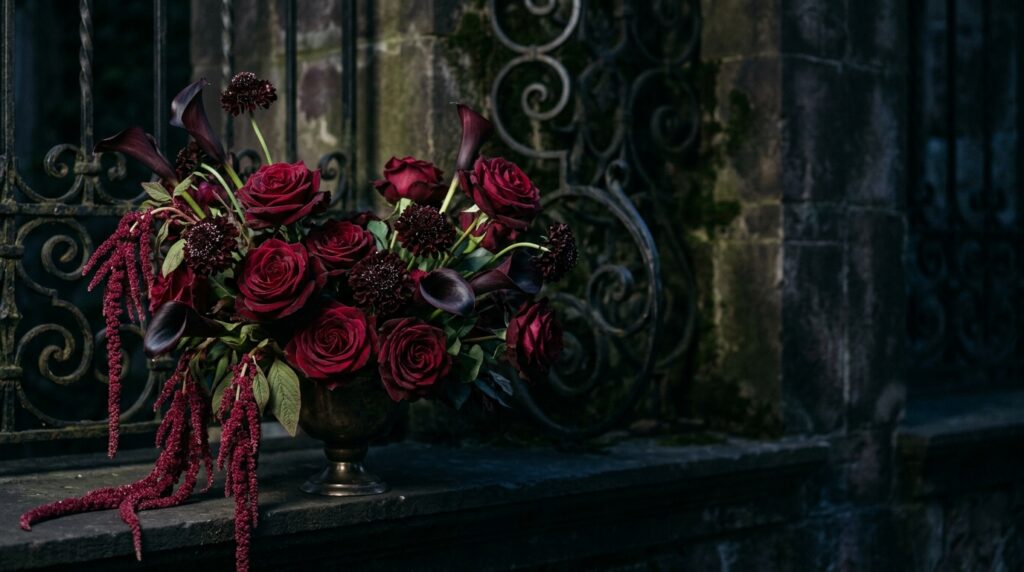
The phrase “gothic vampire flowers background” often evokes images that are dramatic but visually crowded. For a photograph, video backdrop, phone wallpaper, or invitation, the flowers need to be separated from the background. Otherwise, dark petals, leaves, props, and shadows blend into one unreadable mass.
Build the scene in three depths: a sharp focal flower, a supporting cluster, and a soft architectural shape behind them. Use charcoal as the base, burgundy as the floral color, and a little cold blue or antique silver as the highlight.
Lighting a Dark Floral Background
Use one soft side light to reveal petal texture and a weaker rim light to separate the outline. Keep the darkest shadow slightly above absolute black so leaves and stems remain visible. If you are using a phone, tap the burgundy petal rather than the black backdrop when setting exposure.
Leave negative space for a website title, place a wallpaper focal bloom below the clock area, and keep important flowers away from crop edges. When you search “gothic vampire flowers background” or “black gothic flowers,” favor one clear thumbnail silhouette over many tiny props.

Care and Safety Before You Plant or Display
Some gothic plants require caution, but dark color does not signal toxicity. Identify every plant by botanical name instead of judging its appearance or symbolism. By the end, you will know exactly how to plant succulents in pots, care for them through the seasons, and multiply the ones you already own for free.
Monkshood is sometimes included in gothic flower lists because of its hooded blue-purple blooms and historic associations. It is not a casual recommendation. A detailed monkshood safety profile describes the genus as poisonous, advises gloves when handling it, and warns against planting it near edible roots.
Lilies also need special attention in homes with cats. The flower and plant safety guidance for pets explains that flowers in the Lilium and Hemerocallis groups can cause severe or fatal poisoning in cats, even after small exposures such as pollen. Call a veterinarian or poison-control service immediately if exposure may have occurred.
Roses, sunflowers, orchids, statice, snapdragons, and petunias appear in that guidance as non-toxic options, but this does not mean edible. Thorns, chemicals, wire, ribbon, and swallowed plant material can still cause harm.
A Safer Selection Checklist
Use this checklist for gardens, bouquets, dried designs, and photography props. If identification is uncertain, keep the plant away from food, children, and animals.
- Confirm the botanical and cultivar name from a reliable label.
- Check toxicity for the specific animal species in the home.
- Wear gloves when handling irritating or poisonous plants, and wash tools afterward.
- Keep thorny stems, wire, pins, and desiccants away from children and animals.
- Never assume a decorative flower is edible.
- Store florist chemicals, dyes, sprays, and silica gel in labeled containers.
- Contact a qualified professional promptly after suspected ingestion or exposure.
Everyday Care for Dark Blooms
Match care to the plant, not the theme, because bulbs, dahlias, petunias, and bat flowers have different needs. Dark petals show marks easily, so water the soil, provide airflow, use clean tools, and keep vase foliage above the water.
Expert Tips, Common Mistakes, and Honest Pros and Cons
Design for contrast before buying more. Silver foliage, spacing, and light can make one charcoal bloom look darker than several flowers lost against black leaves.
Treat cultivar names as search clues, not color guarantees, and request current-batch photographs when precision matters. Repeat a few plants at different heights, then record the supplier, cultivar, actual color, vase performance, location, and bloom period.
Mistakes That Weaken the Gothic Effect
These mistakes affect gardens, events, listings, and digital backgrounds. Remove one competing element before adding anything new.
- Using only one dark shade, which removes depth
- Placing black-looking flowers against an equally dark wall or mulch
- Believing a heavily edited listing photograph without checking daylight images
- Ignoring seasonal availability and accepting poor substitutions
- Filling every gap, which removes shape and negative space
- Mixing too many strong fragrances at face or table height
- Forgetting toxicity, thorns, dye transfer, or fragile dried materials
- Buying plants before checking light, drainage, mature size, and winter survival
Pros and Cons of Gothic Flowers
| Pros | Cons |
| Distinctive look for gardens, gifts, events, and photography | Near-black colors can disappear in poor lighting |
| Wide palette from burgundy and plum to brown and midnight blue | Product photographs may exaggerate darkness |
| Works with fresh, living, preserved, and dried materials | Some famous gothic plants are toxic or difficult to grow |
| Strong contrast with pale stone, silver foliage, and light flowers | Named cultivars and seasonal stems may cost more or need advance ordering |
| Can feel romantic, modern, wild, or historical | Dyed products may transfer color or look less natural |
| Seed heads and foliage extend the style beyond bloom time | A one-color design can become visually heavy |
Start with one reliable dark flower and one contrasting companion. Expand only after seeing how the colors behave in your light, which also protects your budget.
Frequently Asked Questions About Gothic Flowers
What flowers are considered gothic flowers?
Gothic flowers include near-black, burgundy, maroon, purple, brown, blue, or blood-red blooms, plus unusually shaped flowers with a mysterious mood. It is a design description, so foliage, pods, fragrance, and movement also count.
Are naturally black flowers real?
Most black-labeled flowers are dark versions of another color. Pigment and petal structure create a blackish effect, but sunlight reveals red, purple, blue, or brown undertones, whereas dye yields a flatter, more graphic result.
Which gothic flowers are easiest for beginners?
Near-black petunias, dark pansies, Queen of Night-type tulips, scabiosa, and sunflowers are approachable when their needs fit your space. Start in a container; save specialized bat flowers and poisonous monkshood for informed situations.
Can I order a truly black gothic flower bouquet?
You can order a black-looking bouquet, but ask whether the color comes from cultivars, dye, paint, or a mixture. Send a palette and confirm treatment, stem count, substitutions, delivery stage, and pet-safety needs.
What flowers work best for gothic dried arrangements?
Amaranth, statice, strawflower, celosia, grasses, nigella pods, and seed heads retain useful shapes. Add a few dried roses, then store the piece away from humidity, sun, food, and frequent handling.
Final Thoughts
The best gothic flowers are not necessarily the darkest ones. They are the flowers that remain beautiful in your real light, suit your garden or event, and work safely in the space where you plan to use them. Burgundy, plum, brown, silver, and deep green often create more atmosphere together than pure black alone.
Start small if you are unsure. Build one container, order one sample bunch, or make one 24-stem arrangement using the recipe above. Once you see which tones, shapes, and textures feel right to you, use that result as the foundation for your garden, wedding flowers, delivery order, or next dark floral display.