


How to Remove Sweat Stains From Hats Without Ruining Them
There is a particular kind of disappointment that comes with taking off a favorite cap and seeing a chalky white ring, a yellowed band, or a darker patch around the forehead. Most hats do not need an aggressive wash to look better. A wrong cleaning method can change color, soften an older brim, or leave a black hat looking dusty.
If you are searching for how to remove sweat stains from hats, start with the hat, not the cleaner. A cap is a mix of fabric, stitching, glue, a sweatband, and sometimes a structured brim, so a method that works on a washable cotton dad hat may be a bad choice for a fitted cap or straw hat.
I would use the least moisture and the mildest cleaner that works, then move up only if the stain remains. That approach takes a few extra minutes, but it protects the part you actually care about: the shape, color, and feel of the hat you want to keep wearing.
Why sweat leaves white, yellow, or dark marks on hats
Sweat is mostly water, but it also carries sodium, chloride, and other dissolved substances, as explained in this review of sweat composition. When the moisture dries, some of that residue can stay on the sweatband or fabric, especially where the hat touches your forehead.
The color of the mark tells you something useful. A bright white or gray line on a dark cap is often surface residue, while a yellow, brown, or darker area may include body oils, hair products, sunscreen, transferred dye, or actual color change in the fabric.
That difference matters because surface residue usually responds well to a careful wipe. A true discoloration may need a short, fabric-safe treatment, and some old marks are not removable because the dye or fibers have already changed.
Before you clean: the 90-second hat check
Before mixing anything, read the care tag inside the hat and look at the brim, crown, and sweatband. Care labels are designed to tell you whether an item can be washed, dried, or dry cleaned, and care-label guidance is a helpful reminder that those instructions should outrank any online cleaning hack.
Next, do a color-transfer test. Dampen a clean white cloth with cool water, press it against a hidden spot inside the crown or beneath the band, and check whether dye comes away. If color transfers, use only the gentlest dry or barely damp method, or take the hat to a professional cleaner.
| What you see | Safest starting point | Avoid at first | Why it matters |
|---|---|---|---|
| White line on a black or navy cap | Dry brush, then a barely damp cloth | Heavy paste or soaking | You may be lifting mineral residue rather than a deep stain. |
| Yellow or brown sweatband | Diluted detergent spot clean | Heat and hard scrubbing | The mark may include oil, deodorant residue, and sweat. |
| Structured fitted cap | Clean only the band with low moisture | Full submersion and machine washing | Structure and brim materials can be affected by excess water and spinning. |
| Straw hat | Soft dry brush or dry cloth | Soaking, paste, and rubbing | Moisture and friction can distort or damage the weave. |
| Wool, suede, leather, or vintage hat | Follow the label or use a specialist | DIY stain removers | These materials need more specific care than an everyday cotton cap. |
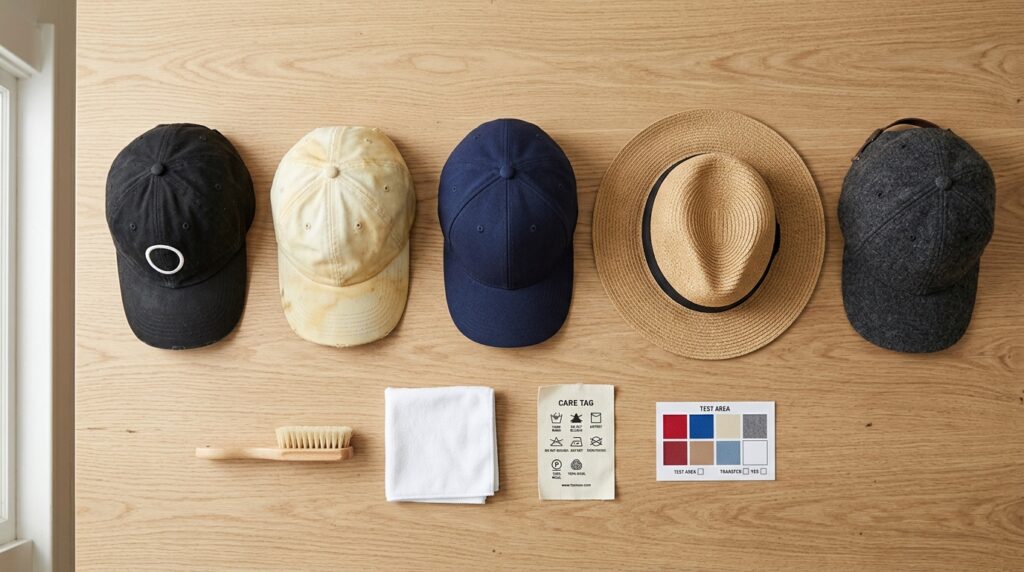
The stain may be residue, not a permanent mark
Run a dry fingertip lightly over the edge of a white ring. If it feels slightly crusty or powdery, treat it as surface residue first rather than reaching for a paste or bleach alternative.
Use a soft brush or clean, dry microfiber cloth to loosen the residue in one direction. Then inspect the hat under natural light before adding moisture, because a surprising amount of a pale ring can disappear at this stage.
Check the brim before you use water
Newer caps often use plastic brim inserts, but older or vintage caps can be less predictable. If you do not know the age or construction of the hat, act as though the brim dislikes water and keep all liquid away from its edge.
This is one place where restraint saves a hat. A spotless sweatband is not a win if the visor becomes soft, rippled, or permanently bent afterward.
The safest all-purpose method for most everyday hats
For a washable cotton or polyester baseball cap, start with a focused spot clean. Many cap makers advise a damp cloth, mild color-safe detergent, and air drying, with a gently folded-forward sweatband rather than a fully soaked cap.
This method works because it gives the cleaner direct access to the place where sweat was actually collected. You do not need to wet every panel, embroidery detail, or brim to clean one stained band.
What you need
- Cool water and a mild color-safe detergent: Mix a few drops into a small cup of cool water. Avoid bleach and strong cleaners, which add unnecessary risk to dye and stitching.
- Two clean white cloths: One applies the solution, and the other removes it. White cloths reveal dye transfer before it becomes a larger problem.
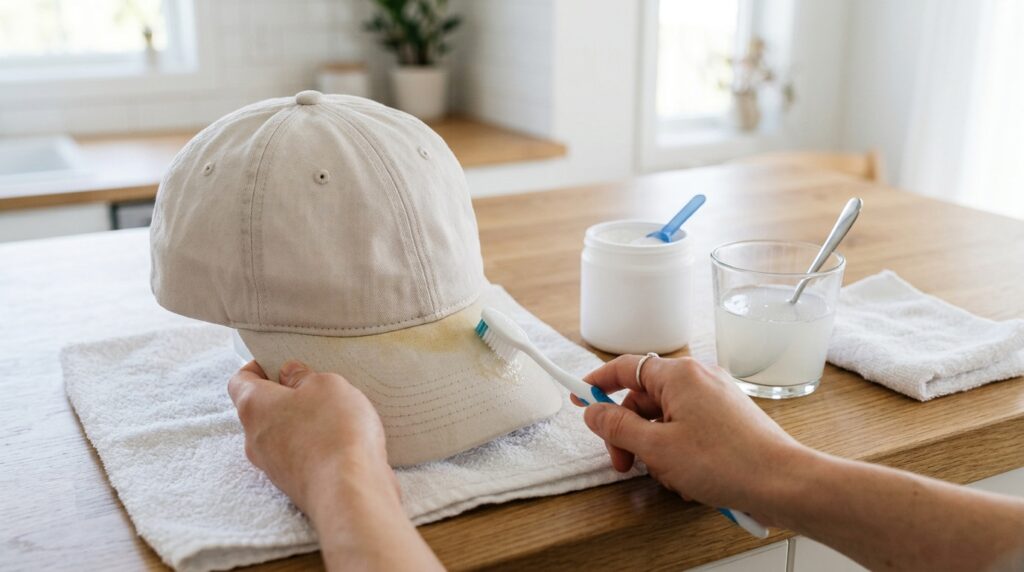
- A soft toothbrush or hat brush: Use soft bristles and light pressure. A stiff brush can roughen fabric or leave a fuzzy patch on a dark hat.
- A dry towel and a round support: A rolled towel, small bowl, or cap form helps the crown keep its shape. Never twist or wring the hat.
Step-by-step spot-cleaning method
- Brush the dry hat first. Lift away dust, loose salt residue, and lint before adding liquid. This keeps you from making a pale stain spread into a larger damp patch.
- Fold the sweatband forward gently. Work from the inside of the hat when you can, so you treat the source of the stain rather than overworking the visible outer panel. If the band is stitched down firmly, clean it in place without pulling.
- Dab, do not flood, the stained area. Dip a cloth or soft brush in the diluted detergent, then blot off excess moisture before touching the hat. Use small circles on the band and short, gentle strokes on the fabric.
- Pause and inspect after one minute. A short pause gives the detergent time to loosen residue without leaving the fabric wet for too long. If color begins to move onto the cloth, stop immediately and switch to a dry-cloth method.
- Lift the cleaner with a second cloth. Dampen the second cloth with plain cool water, wring it out very well, and blot the treated area until it no longer feels soapy. Leaving detergent behind can create its own visible ring when the hat dries.
- Reshape and air dry away from direct heat. Put the towel or bowl inside the crown and let the hat dry naturally. Avoid a dryer, radiator, direct midday sun, or hair dryer, because heat can shrink fibers, fade color, or affect glue and structured elements.
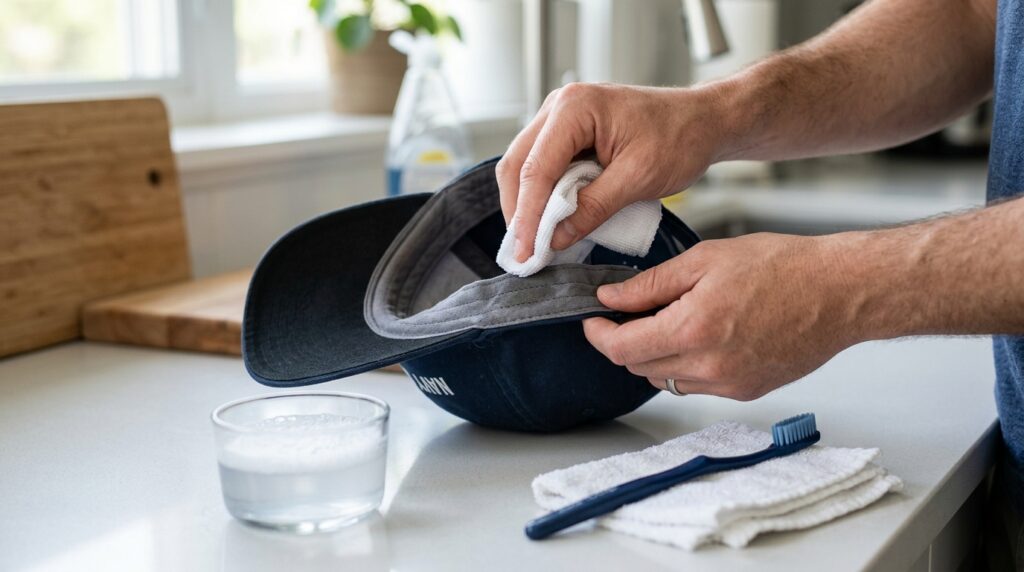
How to remove white sweat stains from hats
White sweat stains on hats are often the easiest to improve because they may be dried mineral residue near the surface. Start dry, then use only a tiny amount of moisture, especially on a dark cap where leftover powder or an uneven wet area can be more obvious than the original ring.
The fastest, low-risk approach is to brush the band and the stained outer edge with a soft, dry brush. Then wipe the area with a clean white cloth that is barely damp with cool water, turning the cloth frequently so you do not put residue back onto the fabric.
If the white line remains, add one tiny drop of mild detergent to your damp cloth and blot the mark. Finish by blotting once more with a separate cloth dampened with plain water, then let the cap dry on a rounded support.
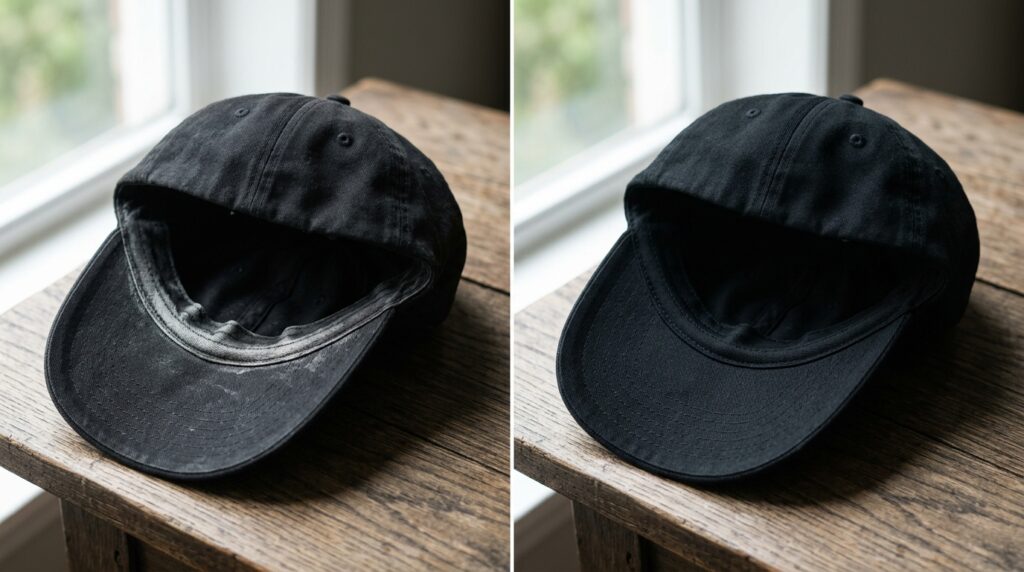
How to remove sweat stains from black hats
The main danger with black hats is not only fading. Dark fabric also shows lint, dried detergent, baking soda dust, and uneven water marks, so use less product than you think you need.
For how to remove sweat stains from black hats, I would clean the band first and move outward only if avisible ring remains. Use a white microfiber cloth, cool water, and a few drops of color-safe detergent, then remove any remaining cleaner with a second barely damp cloth.
Do not use hydrogen peroxide, chlorine bleach, lemon juice, or a heavy chalky paste on a black cap. If a pale patch remains after the residue has been lifted, it may be color loss rather than dirt, and further scrubbing will not restore the original dye.
How to get sweat stains out of hats quickly
For a fresh white ring, a dry brush followed by a barely damp microfiber wipe is the quickest method. It can take five minutes, plus air-drying time, and it avoids the damage that comes from rushing a structured cap into a sink or machine.
For a fresh yellow or greasy mark, use the same quick method but include a tiny amount of diluted mild detergent. Do not judge the result until the area is dry, because darker damp fabric can hide a remaining stain.
How to remove sweat stains from fitted hats
Fitted hats deserve a more conservative approach because their shape and brim are part of what makes them look right. Even when the fabric is washable, a full soak can affect the crown, visor, embroidery, and any older internal materials.
For how to remove sweat stains from fitted hats, treat the sweatband like the cleaning target and the rest of the cap like something to protect. Work with a damp, not-dripping cloth or soft brush, and keep the underside of the brim as dry as possible.
- Support the crown with a dry towel. This keeps the cap stable while you work and prevents the front panel from collapsing inward. It also makes it easier to see where moisture is going.
- Lift the sweatband away from the crown if it moves easily. Fold it forward only as far as the stitching allows. Then clean the inside edge with diluted detergent using a soft brush or cloth.
- Use controlled strokes from the band toward the outer mark. This helps remove residue without creating a wide wet outline across the front panels. Rinse the cloth often rather than making the solution stronger.
- Wipe away the cleaner with a separate water-dampened cloth. The cloth should be nearly dry to the touch. Press, lift, and move to a clean part of the cloth instead of rubbing the same place repeatedly.
- Dry the fitted hat in its natural curve. Put it over a bowl or a bundled towel and leave it in a shaded, ventilated place. Do not hang it by the brim or put it on a heater.
How to remove sweat stains from caps without washing
“Without washing” should mean no soaking, machine cycle, or dishwasher, not necessarily zero moisture. A lightly damp cloth is often the safest way to remove a sweat ring from a cap while keeping the hat’s body dry.
Start with the dry-brush step, then use a cloth so well wrung out that it does not drip when you press it. Work only on the band and mark, dry the area with a towel, and let airflow finish the job.
This is also the method I would choose for hats with patches, glued embellishments, or sentimental value. It may not erase a very old stain in one try, but it gives you the best chance of improving the hat without changing its structure.
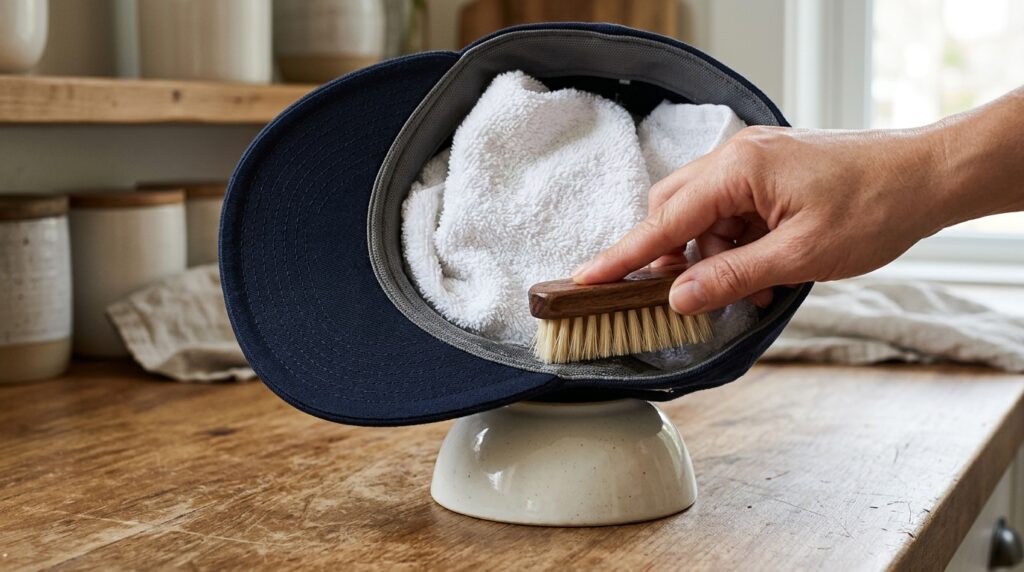
How to remove sweat stains from hats with baking soda
Baking soda can help with odor and may provide gentle physical lift on some washable cotton or polyester hats, but it is not a universal stain remover. I would see it as a backup for a washable, light-colored, unstructured hat after mild detergent has not done enough, not as the first treatment for every cap.
For how to remove sweat stains from hats with baking soda, make a thin paste with one teaspoon of baking soda and just enough cool water to make it spreadable. Test it on an inner, hidden area first. Apply a small amount to the stained band, wait 15 to 20 minutes, then gently lift it with a soft,* damp cloth.
Use a second cloth with plain cool water to remove any remaining powder, then air-dry before judging the result. Baking soda left in dark fabric can look like a new sweat stain, so this final wipe is not optional.
Skip this method on black or very dark hats, wool, straw, leather, suede, silk, and vintage caps. The issue is not that baking soda is inherently disastrous, but that residue, friction, and uncertain dye effects make it a poor first choice for delicate or high-value hats.
Does OxiClean remove sweat stains from hats?
Yes, an oxygen-based cleaner can help with stubborn sweat discoloration on a hat that is labeled washable and passes a color-transfer test. The official hat-cleaning directions for an oxygen cleaner also stress checking for colorfastness, following the package dilution instructions, and avoiding wool, silk, leather, and dry-clean-only materials.
For a structured cap, I would choose the low-moisture spot-cleaning version rather than submerging the entire hat. Mix the cleaner exactly as directed, dab it only onto the stain with a soft brush or white cloth, wipe it with plain cool water, and reshape the hat for air-drying.
Do not use an oxygen cleaner as a reason to ignore the care label. A product can be effective at lifting a stain while still being the wrong choice for a particular brim, fabric dye, patch, or trim.
How to remove sweat stains from straw hats
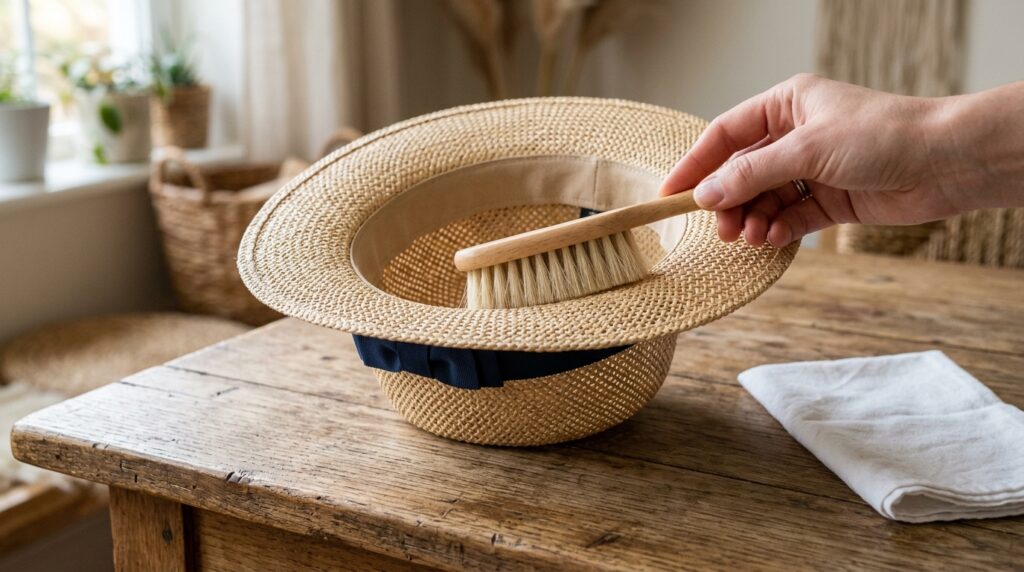
Straw hats need patience, not a wet cleaning session. Start with a soft dry brush or dry microfiber cloth and work along the weave, using light strokes that lift dust and dried salt without catching or roughing the straw.
For how to remove sweat stains from straw hats, do not soak the hat, scrub with a paste, or saturate the sweatband. If the care label permits a little moisture, use a white cloth that is barely damp, blot the visible mark, and let the hat dry in a cool shaded place with its shape supported.
If the stain is on a leather or fabric band, clean the band as a separate material rather than treating the whole hat. When the straw has a fixed yellow, gray, or brown area that does not lift with a dry method, a professional hat cleaner is the better choice.
The same caution applies to hats with braided trim, painted straw, glued ribbon, or a clearly delicate weave. These are not the hats to experiment on with vinegar, baking soda, or stain spray from the laundry room.
How to remove sweat stains from hats at home by material
The best at-home method changes with the fabric. The table below helps you choose a starting point without pretending that every hat can be washed the same way.
| Hat material or construction | Best first method | If the stain remains | What I would avoid |
| Cotton cap | Spot clean with cool water and mild detergent | Short baking-soda spot treatment if allowed | Hot water, dryer heat, hard brushing |
| Polyester or synthetic blend | Damp-cloth spot clean | Label-approved oxygen cleaner | Strong solvents and full soaking |
| Wool hat | Follow the label and use gentle wool care | Professional cleaning | Bleach, rubbing, and heat |
| Straw hat | Dry brush, then minimal damp blotting if allowed | Professional hat care | Soaking, paste, and rubbing |
| Leather or suede trim | Dry cloth and specialist advice | Professional cleaning | Water and household stain sprays |
| Vintage or unknown brim | Dry brush and small spot test | Specialist cleaning | Full submersion or machine washing |
For wool, follow the specific care instructions rather than assuming that “gentle” means any detergent will do. These wool-care recommendations favor mild detergent, controlled water temperature, careful handling, and no aggressive rubbing.
For stubborn perspiration marks on washable fabrics, established laundry guidance recommends pretreatment and fabric-safe follow-up cleaning, but a hat still needs more caution than a shirt because its shape matters. The perspiration-stain treatment guidance is useful for choosing a product type, while the hat’s label tells you whether the method itself is safe.
How to get sweat stains out of hats without ruining them
Think in three layers: remove the loose residue, clean only the stained fibers, then dry the hat in its original shape. Most ruined hats skip the second part and go straight to an all-over soak or a harsh product.
If I had one favorite cap to save, I would do two gentle rounds of spot cleaning before trying one strong round. This is slower, but it gives you a clear view of whether the mark is fading, dye loss, or a stain that needs professional care.
Does sweat come out of hats?
Often, yes. Fresh sweat residue and odor usually improve when you deal with them before heat, time, and repeated wear set the mark deeper into the band or fabric.
The phrase “come out” can mean different things, though. You may remove the salt and odor completely but still see a lighter patch if the original dye has faded, which is why gentle testing is more useful than repeated aggressive cleaning.
Dry the hat completely before deciding it has failed. A damp cap can temporarily show darker panels, false tide marks, or uneven color that disappears after several hours of air-drying.
Does sweat permanently stain hats?
No, sweat does not automatically permanently stain hats. A fresh mark may be mostly removable residue, but an old yellow, brown, or pale patch can become harder to improve when body oils, hair products, heat, sunlight, or previous cleaning have changed the fibers or color.
Treat a permanent-looking patch as a stop sign, not a challenge to scrub harder. If the area looks lighter than the surrounding fabric after cleaning, you may be seeing dye loss, and cleaning products cannot safely restore color to the fiber.
How to prevent sweat stains on hats
The easiest stain to remove is the one that never gets a chance to dry into the band. You do not need a complicated routine, but a small habit after hot weather, sports, yard work, or a long drive can keep your favorite hats looking newer.
After a sweaty wear, turn the hat upside down on a clean towel and let the inside air out. Once it is dry, use a soft brush or dry cloth on the sweatband before residue turns into a visible line.
- Rotate hats instead of wearing one every day. A second everyday cap gives the first one time to air dry between wears. This reduces the repeated wet-dry cycle that makes a sweatband look tired quickly.
- Use a washable or replaceable hat liner when the style allows. A liner takes the direct contact from sweat and skin products, so the cap’s original band has less to absorb. Choose one that does not pull on stitching or leave adhesive residue when removed.
- Keep sunscreen, hair products, and forehead makeup in mind. Let them settle before putting on your cap when possible. These products can transfer onto the band, making a simple salt ring behave more like an oily stain.
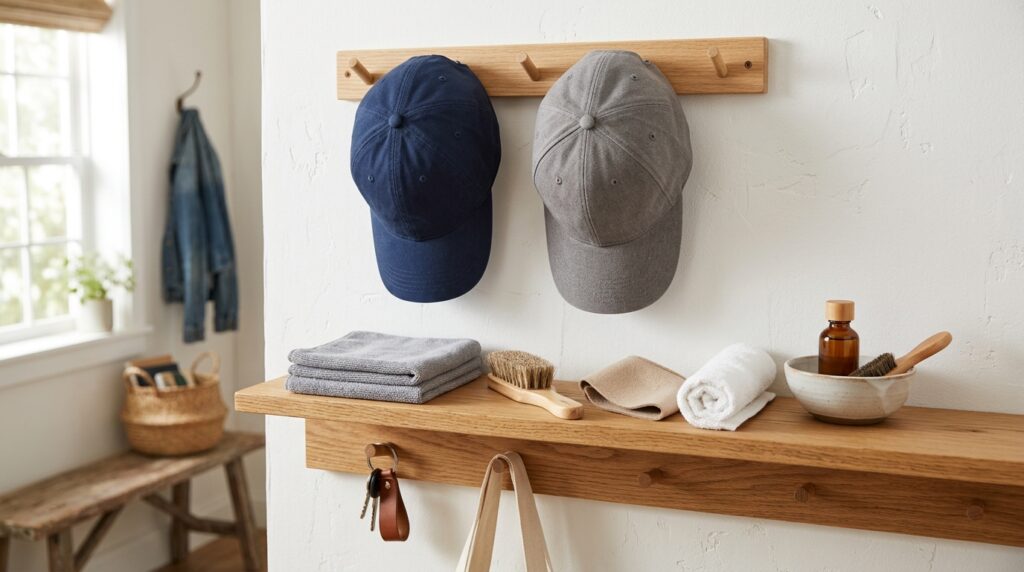
- Make a tiny hat-care kit in your laundry area. Keep a white microfiber cloth, soft brush, mild detergent, and a clean towel together. Our laundry room organization ideas can help you give these small but useful tools a permanent home.
- Clean small marks early. A two-minute wipe after a hot day is kinder to the hat than a deep clean after a full season. This matches the general stain-removal principle that early treatment is easier than trying to revive an old mark.
A quick buying guide: what helps and what is not worth it
You do not need a cabinet full of specialty products. Buy tools that help you use less moisture, less friction, and less guesswork.
| Item | When it helps | Watch out for |
| White microfiber cloths | Every hat, especially dark colors | Keep them plain and clean |
| Soft toothbrush or hat brush | Sweatbands and woven fabric | Avoid stiff bristles |
| Mild color-safe detergent | Washable cotton and polyester | Dilute it and remove it fully |
| Washable hat liner | Sports, heat, and outdoor work | Check that it does not pull seams |
| Round drying form or small bowl | Fitted and structured caps | Do not force it into the crown |
| Oxygen cleaner | Label-approved stubborn stains | Not for every fabric or trim |
If you want to stock one all-purpose set, I would choose white cloths, a soft brush, mild detergent, and a rounded drying support first. Those four items handle most routine sweat marks without turning hat care into an expensive project.
For other fabric emergencies, follow the same cautious sequence: identify, test, treat, and inspect. Our guide to removing avocado stains follows that same practical mindset for a different type of stubborn mark.
Common mistakes that make sweat stains worse
- Throwing the hat in the dishwasher or washing machine without checking the label: Water pressure, heat, and spinning can alter the cap’s shape. A short hand spot-clean is easier to control.
- Using hot water because the stain looks stubborn: Heat isn’t always better for sweat marks. Start cool unless the care label clearly says otherwise.
- Scrubbing the outer panel while it’s wet until it looks clean: Wet fabric can hide a stain and make you over-scrub. Pause, let it dry, and assess the real result.
- Mixing several household cleaners together: More ingredients do not always mean more cleaning power. Use a single treatment, remove it completely, and reassess.
- Drying the hat in direct heat: A cap can lose shape long after the stain is gone. Use a towel or bowl inside the crown and air dry.
Expert tips for a cleaner-looking result
- Clean the inside band first, even when the outer mark bothers you more. Treating that source reduces the chance of pushing residue into the outer panel. It also limits wetting of the cap’s front.
- Use white cloths for every test and rinse. A colored cloth can release dye unnoticed. White fabric shows color transfer and remaining detergent.
- Keep your brushstrokes short and follow the fabric’s direction. They lower the chance of a visible brushed patch. They also give you more control around seams and embroidery.
- Treat odor and staining as separate problems. Dry baking soda may help with odor in a washable cap, but a visible ring still needs targeted cleaning. Shake it out fully before wearing.
- Keep the hat out of the dryer until you are satisfied with the stain result. Air drying gives you room to reassess and repeat safely if needed. Heat removes that option.
Frequently asked questions
Does OxiClean remove sweat stains from hats?
It can help on a washable, colorfast hat when you follow its package directions and limit the treatment to the stained area. Do not use it on materials or trims the label excludes, and do not treat it as a substitute for checking whether a structured cap should be submerged.
How to remove sweat stains from hats without washing?
Brush away dry residue, then blot the sweatband with a white cloth that is barely damp with cool water and a tiny amount of mild detergent. Follow with a second plain-water cloth, reshape the hat, and air dry it without soaking the crown or brim.
How to remove sweat stains from caps without washing?
Use the same low-moisture spot-cleaning method, focusing on the inside sweatband before the outer panel. This is especially useful for fitted caps, snapbacks, and hats with patches or stiff brims that should not be fully immersed.
How to get sweat stains out of hats quickly?
For a fresh white salt line, dry-brush it first, then wipe it with a barely damp microfiber cloth. For a fresh yellow mark, add diluted mild detergent, lift it with a plain-water cloth, and let the cap dry naturally before deciding whether it needs a second pass.
Does sweat permanently stain hats?
Not always. Fresh sweat residue often comes out, but age, heat, sunlight, body oils, and previous harsh cleaning can leave discoloration or dye loss that does not respond to more stain remover.
Final takeaway
The best answer to the question of how to remove sweat stains from hats is not “wash the whole thing.” First identify the material and construction, then start with a dry brush, a white cloth, cool water, and a mild cleaner only where the mark actually is.
Take the gentle route first, especially with black, fitted, wool, straw, or vintage hats. If the mark improves but does not disappear, you have protected the hat while learning whether you are dealing with residue, a true stain, or color change, which is a much better outcome than ruining a favorite cap in one rushed cleaning session.